
Goshortsai
Turn photos into AI videos for free with Goshortsai. Sign in daily for free credits, upload an image, describe the motion, and generate.

Turn photos into AI videos for free with Goshortsai. Sign in daily for free credits, upload an image, describe the motion, and generate.

An online AI photo editor where you type what you want. Remove objects, swap backgrounds, restore old photos and restyle portraits.

Give your AI agents persistent long-term memory with sub-15ms recall, automatic conflict resolution, and zero database lock-in.

Make 5–20 s videos with sound from text, a photo or a first and last frame with FLUX 3 Max. 720p or 1080p, pay per second, from $9.90.

Turn your pet's photos into a private virtual room, daily care, albums and dated memories.
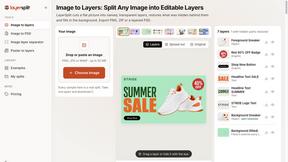
Split a flat image into named, transparent layers with the background filled in. Export PNG files, a ZIP or a layered PSD. Your first split is free.

Curated AI Tool Finder for research, study, image, video, writing, coding, assistants, voice, and music.
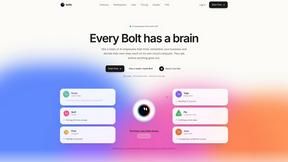
AI employees with a brain and their own cloud computer. They think, remember your business and work 24/7.

Try on clothes, glasses, rings, hairstyles, and hair colors on your own photos with AI.

Online AI image studio for creating and editing visuals from text and reference images, with control over style, format, resolution, and quality.

AI video ads, UGC-style videos, and product visuals for cross-border sellers and e-commerce brands.

AI creative studio for cinematic photo and video concepts, prompts, and visual inspiration.

Restore old photos with RestoreOldPhoto.ai: repair scratches, creases and fading, sharpen faces and details, and optionally colorize family memories.

Turn text ideas or reference images into videos through conversation, with agent-assisted prompts and a choice of video models.

Open-source Android comic & manga reader with encrypted cloud streaming and AI ad-page stripping.

Your AI agent picks relevant directories, submits your product in your browser and tracks every step. One-time purchase.
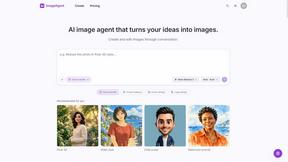
Create and edit AI images through conversation, using text or reference images and refining results in chat.

All-in-one AI workspace to generate images, videos, and audio with multiple leading AI models.

An adaptive AI tutor that turns topics or your materials into courses, lessons, and answers tailored to how you learn.
Free AI age filter: upload an adult portrait, add 10-40 years, meet your older self. No app needed.
Photomaxxer is an AI-powered dating profile optimizer that falls into the category of specialized AI assistants. It uses a proprietary model trained on real swipe data to analyze photos against key traits, providing a comprehensive assessment aimed at significantly increasing match rates on dating platforms. Users often explore alternatives to Photomaxxer for various reasons, including budget constraints, a need for different feature sets like video analysis or profile writing assistance, or compatibility requirements with specific operating systems or dating apps. Some may seek tools with different pricing models or those that integrate more deeply with their existing tech stack. When evaluating an alternative AI dating assistant, key considerations should include the underlying technology's accuracy and data sources, the speed and actionability of feedback, and the platform's security and privacy protocols. It's crucial to assess how well the solution integrates with your workflow and whether its analytical framework aligns with your specific dating profile goals.
Photomaxxer is an AI-powered tool that analyzes your dating app photos using a model trained on real women's swipe data to optimize your profile and boost your match rate.
It is designed for anyone using dating apps, from beginners to experienced users looking to improve their profile's performance and attract more matches.
Its core features include a comprehensive profile assessment, instant feedback within minutes, high-accuracy ratings based on micro-traits, and tailored, personalized advice.
Based on its operational description, Photomaxxer analyzes photos uploaded directly from a user's device, implying a local-first processing approach that prioritizes user privacy and data security.