
ACA: Automated Client Acquisition
One platform for cold email, LinkedIn, lead magnets, content and a shared AI reply inbox, run in the app or by your AI agent.

One platform for cold email, LinkedIn, lead magnets, content and a shared AI reply inbox, run in the app or by your AI agent.

AI poster generator and sizing guide for polished visuals in seconds.
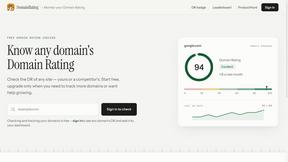
Look up any domain's Domain Rating for free, track its trend over time, and drop a live DR badge into your footer.

Launchyourgem: Launch, Discover & Rank Indie Products and AI Tools



AI-powered platform that evaluates the safety of LinkedIn automation tools and helps reduce the risk of account restrictions.

Nevisible is an AI-sourced pipeline platform that makes suppliers readable to AI, uncovers AI-sourced buyers and tracks AI answers for manufacturers.


Your AI agent picks relevant directories, submits your product in your browser and tracks every step. One-time purchase.


Paste a URL and AI designs on-brand Open Graph images from your page's colours, fonts and logo. Free, no sign-up.

Compare social media and content SaaS with verified pricing, ranked by open scorecards.


AI SEO agent that finds pages ranking for your keywords, pitches the people behind them from your inbox, and follows up. You approve every send.

AI social listening agent: finds people on Reddit and X describing your problem, scores buying intent and drafts a reply you approve.

Free ad creative hub: 1,750+ prompts behind viral AI ads, 118 hook frameworks, teardowns, swipe files and 27 free AI tools.

Plan, approve, publish, and analyze social content with an AI assistant and API, CLI, and MCP automation.


AI growth tool for X and LinkedIn: write posts in your voice, schedule at your best times, find leads on X and see what works.
Tin Computer is an AI growth agent purpose-built for small SaaS teams, categorically operating at the intersection of organic marketing automation and product engineering. Unlike traditional marketing tools that require manual campaign setup, Tin Computer functions as a continuous growth engine by directly integrating with your existing tech stack—GitHub, Stripe, Google Analytics, Search Console, PostHog, Sentry, and Vercel—to ship real pull requests that improve SEO content, fix bugs, and optimize onboarding flows. Users commonly seek alternatives due to specific pricing constraints, a need for deeper platform integrations beyond the supported stack, or a desire for more granular control over the AI’s code contributions versus a fully automated PR pipeline. When evaluating alternatives, focus on compatibility with your existing development and analytics infrastructure, the ability to handle both content and code changes autonomously, and whether the solution provides measurable organic growth without requiring additional ad spend or cold outreach. The primary considerations when selecting an alternative should center on stack alignment and automation depth. Look for tools that can natively connect to your version control system, payment processor, and analytics platforms without requiring custom middleware. Equally important is the level of autonomy the alternative offers—does it merely suggest optimizations, or does it generate and ship actionable pull requests that your team can review and merge? Finally, assess whether the solution delivers a holistic growth playbook covering SEO, product engineering, and analytics simultaneously, as siloed tools often fail to compound growth across owned surfaces. The ideal alternative will replicate Tin Computer’s ability to turn a dormant project into a revenue-generating asset by continuously learning from your product data and shipping improvements directly into your codebase.
Tin Computer is an AI growth agent designed for small SaaS teams. It acts as a continuous growth playbook by optimizing organic SEO, fixing product bugs, improving onboarding flows, and analyzing funnel diagnostics. The tool plugs directly into your existing tech stack—including GitHub, Stripe, Google Analytics, Search Console, PostHog, Sentry, and Vercel—and ships real pull requests that your team can review and merge. It focuses exclusively on organic and AI-search (GEO) growth, eliminating the need for ad spend or cold outreach.
Tin Computer is built for small SaaS teams that want to automate their growth without increasing marketing or engineering headcount. It is ideal for technical founders, product managers, and growth engineers who already use a modern stack with GitHub for version control, Stripe for payments, and analytics tools like PostHog or Google Analytics. The tool is particularly effective for teams looking to revive dormant side projects or scale existing products by continuously shipping improvements across SEO content, code fixes, and user onboarding.
Tin Computer offers three core feature categories: organic SEO growth (blog posts, comparison pages, and technical fixes), product engineering (bug fixes, small features, and onboarding tweaks), and analytics (funnel diagnostics, cohort analysis, and experiment tracking). It operates autonomously by learning from your product data and generating pull requests that your team reviews and merges. The tool integrates natively with platforms like GitHub, Stripe, Google Analytics, Search Console, PostHog, Sentry, and Vercel, ensuring seamless compatibility with your existing workflow.
Tin Computer is designed with security in mind, operating exclusively through your existing integrations with platforms like GitHub and Stripe. It does not require ad spend or cold outreach, minimizing external attack surfaces. The tool generates pull requests that your team manually reviews and approves before merging, ensuring no code is deployed without human oversight. For specific security protocols, such as data encryption and access controls, you should consult Tin Computer’s official documentation or contact their support team directly.