
AI Agents Marketplace vs Practical AI (Practical AI for SMB)
Side-by-side comparison to help you choose the right product.

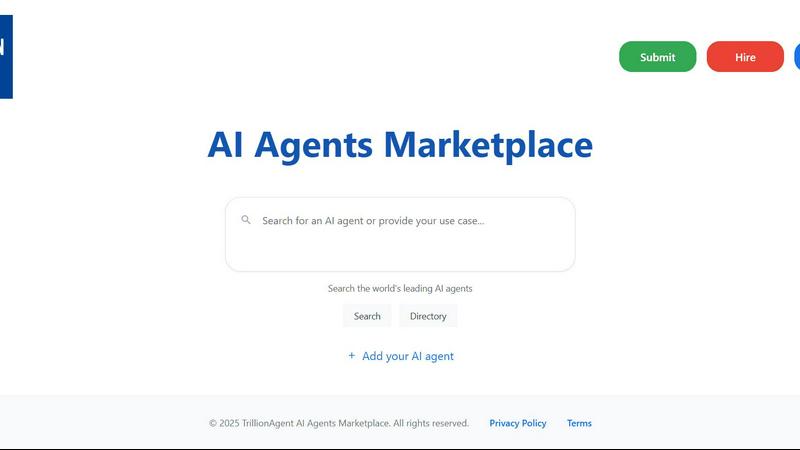
AI Agents Marketplace
Deploy pre-built AI agents that integrate seamlessly with your existing tech stack.
Last updated: March 1, 2026

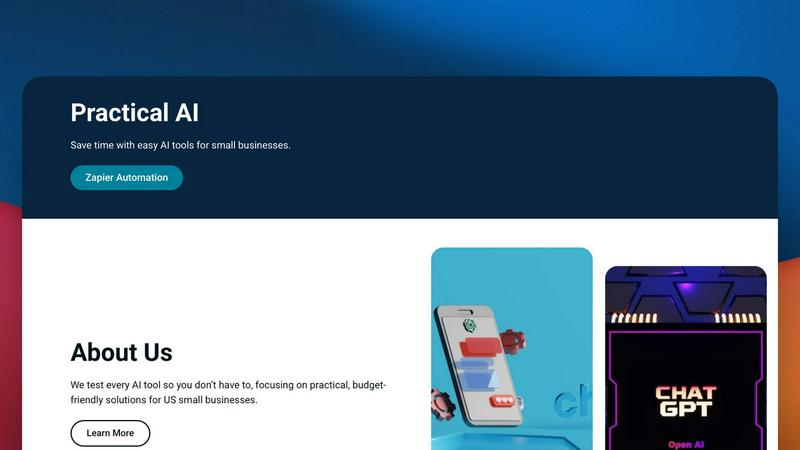
Practical AI (Practical AI for SMB)
Practical AI delivers tested, budget-friendly automation guides and AI tool reviews to streamline SMB workflows and save time.
Last updated: April 4, 2026
Visual Comparison
AI Agents Marketplace
Practical AI (Practical AI for SMB)
Feature Comparison
AI Agents Marketplace
Structured Role-Based Taxonomy
The marketplace is built on a meticulously engineered taxonomy of over 300 human-role-equivalent categories, such as "Data Analyst," "SEO Specialist," or "Full-Stack Developer." This structure moves beyond simple keyword tagging, enabling precise, intent-based discovery. It ensures that businesses can find agents designed for specific operational functions, guaranteeing a higher degree of compatibility and integration readiness with their existing tech stack and business processes from the outset.
AI-Powered Natural Language Search
Beyond traditional filters, the platform integrates a sophisticated natural language search engine. Users can describe their operational need or technical requirement in plain English (e.g., "an agent to clean and normalize daily Salesforce CRM data exports"). The AI parses this intent to surface the most relevant, compatible agents, dramatically reducing discovery time and improving match accuracy by understanding context, required inputs, and expected outputs.
Seamless Integration & Deployment Framework
The marketplace is designed as a transactional hub, not just a directory. It provides standardized technical schemas, API documentation, and compatibility metrics for listed agents. This allows development and operations teams to evaluate integration requirements, authentication protocols, and data handoff mechanisms directly within the platform, streamlining the procurement-to-deployment pipeline and reducing friction in embedding new AI capabilities into live environments.
Monetization & Distribution Platform for Developers
For AI developers and solution providers, the marketplace offers a robust channel to distribute and monetize agent-based products. It handles discovery, vetting, and commercial transactions, providing developers with access to a targeted audience actively seeking to integrate AI talent. This ecosystem accelerates go-to-market strategies and provides a scalable revenue model, backed by the platform's trust and structured categorization.
Practical AI (Practical AI for SMB)
Manually Tested Integration Blueprints
Every automation guide and tool review is manually tested in real-world business scenarios before publication. This ensures compatibility between apps like Gmail, Slack, Google Sheets, and AI APIs, providing reliable, step-by-step technical instructions that SMB owners can deploy with confidence, eliminating guesswork and failed integrations.
Industry-Specific Zapier Automation Libraries
The platform offers specialized, pre-built automation libraries tailored for specific SMB verticals such as local couriers, laundromats, and landscapers. These blueprints detail exact triggers, actions, and filters within Zapier to connect field service software, payment processors, and communication tools, creating cohesive operational systems.
AI Stack Reviews & Compatibility Analysis
Focuses on reviewing AI tools and software not in isolation, but through the lens of integration potential. Reviews assess how well tools like Jasper, Copy.ai, or customer service bots connect with the existing SMB tech ecosystem via Zapier, Make, or native APIs, highlighting setup complexity and data sync capabilities.
Ready-to-Deploy Prompt & Workflow Templates
Provides a repository of pre-engineered prompts for ChatGPT/Claude and complete Zapier workflow templates. These are designed for immediate implementation, covering use cases from generating marketing copy to parsing customer inquiries, reducing the learning curve and accelerating time-to-value for AI integration.
Use Cases
AI Agents Marketplace
Augmenting DevOps & Engineering Teams
Engineering organizations can integrate specialized AI agents directly into their CI/CD pipelines and development environments. Use cases include deploying agents for automated code review, infrastructure provisioning scripts, real-time security vulnerability scanning, or production log analysis. This creates a scalable, autonomous layer within the tech stack that augments human engineers, accelerates release cycles, and maintains code quality and system reliability.
Scaling Data Operations & Business Intelligence
Data teams can discover and deploy agents for specific ETL tasks, real-time data quality monitoring, dashboard generation, or predictive analytics modeling. Instead of building one-off scripts or manual processes, teams can integrate pre-built, specialized AI agents that plug directly into their data warehouses (like Snowflake or BigQuery) and visualization tools, creating a more agile and automated data ops framework.
Automating Customer Experience & Support
Businesses can architect a hybrid customer support stack by integrating AI agents for tier-1 query resolution, sentiment analysis on support tickets, automated follow-up communications, and knowledge base article generation. These agents can be seamlessly integrated with existing CRM platforms (like HubSpot or Zendesk) and communication channels, providing 24/7 coverage and escalating only complex cases to human agents.
Enhancing Creative & Marketing Production
Marketing and creative departments can operationalize AI for content generation, graphic design asset creation, A/B test analysis, and SEO optimization. By finding and integrating role-specific agents (e.g., a "Social Media Copywriter" agent or a "Brand Design Assistant"), teams can maintain brand consistency while automating high-volume, repetitive creative tasks, freeing human talent for strategic initiatives.
Practical AI (Practical AI for SMB)
Automating Local Service Dispatch & Logistics
For courier or landscaping businesses, implement a Zapier automation that captures service requests from a website form, triggers an AI tool to optimize routes based on addresses, and automatically dispatches details via SMS to the nearest fleet driver, while syncing the job to a Google Sheets tracker.
Streamlining Customer Service & Lead Response
Set up a workflow where incoming customer emails or Facebook Messenger queries are routed through Zapier to ChatGPT for initial analysis and draft response generation. A human agent reviews and sends the polished response, drastically cutting response time and ensuring 24/7 initial contact.
AI-Driven Content Marketing & SEO Execution
Create a content pipeline where Zapier triggers a blog post generation in an AI writing tool based on a keyword calendar. The drafted post is then sent for SEO optimization via another integrated AI tool and finally posted to WordPress or Shopify, automating a large portion of the content marketing workflow.
Remote Operational Monitoring for Brick-and-Mortar SMBs
For laundromat or retail owners, integrate IoT sensor data or payment system alerts with Zapier. Receive instant Slack or SMS notifications for machine faults, low inventory, or successful payments, and even trigger automated maintenance tickets or restocking orders without manual intervention.
Overview
About AI Agents Marketplace
The AI Agents Marketplace is the definitive integration layer for the modern enterprise tech stack, engineered to operationalize autonomous AI talent at scale. It functions as a centralized, transactional hub that bridges the gap between sophisticated AI automation and tangible business outcomes by providing a structured directory for discovering, evaluating, and deploying specialized AI agents. The platform is architected for two core user groups: businesses seeking to augment their operational capabilities with pre-vetted, role-specific AI agents, and developers or AI companies aiming to distribute and monetize their agent-based solutions within a high-intent ecosystem. Its primary value proposition is a deeply structured, searchable taxonomy of over 300 human-role-equivalent categories, enabling precise, intent-based matching that ensures compatibility with existing workflows. By leveraging an AI-powered natural language search engine, the marketplace cuts through the fragmentation of standalone AI tools, allowing technical teams to seamlessly integrate agents for specific tasks—from data engineering and DevOps to customer experience orchestration and creative production. This focus on discoverability, role-based categorization, and seamless deployment makes it an essential component for organizations building a scalable, hybrid human-AI workforce, directly addressing integration complexity and accelerating time-to-value for AI-driven automation.
About Practical AI (Practical AI for SMB)
Practical AI for SMB is a specialized content and resource hub engineered to demystify and operationalize artificial intelligence and automation for US-based small and medium-sized businesses. It functions as a technical blueprint repository, cutting through industry hype by providing manually vetted, real-world tested guides. The core value proposition lies in its deep integration focus, offering clear, step-by-step instructions on connecting popular AI stacks like OpenAI's ChatGPT and Anthropic's Claude with no-code automation platforms, primarily Zapier. This enables SMBs to construct robust workflows that automate repetitive tasks, streamline operations, enhance marketing efforts, and improve customer service without requiring in-house technical expertise or significant capital investment. Founded by automation specialist Aapt Dubey, who brings direct experience from building over 800 workflows, the platform emphasizes practical, budget-friendly solutions. Content is rigorously tested in actual business scenarios, covering industry-specific Zapier automations for local service sectors, AI tool reviews, content creation systems, and ready-to-use prompt engineering templates, ensuring compatibility and reliability for the SMB tech stack.
Frequently Asked Questions
AI Agents Marketplace FAQ
How does the marketplace ensure the quality and reliability of listed AI agents?
The platform employs a multi-layered vetting process that includes technical validation of the agent's API and integration specs, performance benchmarking against stated capabilities, and security review of data handling practices. Additionally, a transparent review and rating system from enterprise users provides social proof and real-world performance data, allowing buyers to make informed decisions based on compatibility and proven results in similar tech stacks.
What is required to integrate an AI agent from the marketplace into my existing systems?
Integration typically requires API access, which is standardized through the marketplace's framework. Key requirements include validating authentication methods (API keys, OAuth), ensuring data schema compatibility between the agent's expected input/output and your internal systems, and configuring the agent within your workflow orchestration tool (like Zapier, n8n, or a custom middleware). Detailed technical documentation for each agent is provided to streamline this process.
Can we customize or fine-tune an AI agent after deployment?
Customization capabilities depend on the specific agent and its provider. The marketplace categorizes agents based on their flexibility: some are closed, off-the-shelf solutions, while others offer configuration panels, allow for fine-tuning on proprietary data, or provide white-label options. Filtering and search features allow you to specifically seek out agents with the customization and integration depth your use case requires.
How does the pricing and licensing model work for AI agents?
Pricing models are set by the individual agent developers and are clearly listed on each agent's profile. Common models include subscription-based SaaS pricing (monthly/annual), usage-based pricing (per API call, per task), or enterprise licensing. The marketplace facilitates the transaction and billing, providing a unified procurement experience. You can filter agents by their pricing model to align with your operational budget and cost structure.
Practical AI (Practical AI for SMB) FAQ
What technical skills are needed to use your guides?
No advanced technical skills are required. Our guides are designed for SMB owners and operators with minimal tech expertise. We provide complete, step-by-step instructions for setting up automations in user-friendly platforms like Zapier, focusing on clear configuration steps and visual aids where possible.
Do you only cover Zapier for automation?
While Zapier is a primary focus due to its extensive app compatibility and ease of use for SMBs, our principles and many guides apply to the broader no-code automation ecosystem. We discuss concepts compatible with platforms like Make (Integromat) and highlight workflows based on universal triggers and actions.
How do you ensure your tool reviews are unbiased?
We maintain an unbiased stance by manually testing every tool in practical business scenarios. Our affiliate disclosure is transparently posted. Reviews prioritize integration capability, cost-effectiveness for SMBs, and real performance metrics over promotional content, focusing on the tool's fit within a practical tech stack.
Are your automations suitable for any industry?
We provide both general automation concepts and highly industry-specific blueprints. While core principles of connecting email, CRM, and communication tools are universal, we offer dedicated, tested libraries for specific verticals like local services, which include tailored app connections and logic unique to those operations.
Alternatives
AI Agents Marketplace Alternatives
The AI Agents Marketplace is a centralized platform in the AI Assistants category, designed for discovering and deploying specialized, role-based AI agents that integrate directly into your existing tech stack. It focuses on precise, taxonomy-driven matching to ensure compatibility and operational scalability for businesses building a hybrid workforce. Users often explore alternatives due to specific integration requirements, budget constraints, or a need for different feature sets like custom agent development tools or alternative deployment models. Platform lock-in, security protocols, and the depth of API documentation are also common decision drivers. When evaluating an alternative, prioritize its compatibility with your core systems, the granularity of its agent taxonomy for precise role matching, and the robustness of its integration framework. Assess the total cost of ownership, including deployment and maintenance overhead, and ensure the platform's security model aligns with your data governance policies.
Practical AI (Practical AI for SMB) Alternatives
Practical AI (Practical AI for SMB) is a specialized content and resource hub focused on AI assistants and automation for small to medium-sized businesses. It provides manually tested, step-by-step guides and workflows that integrate tools like ChatGPT, Claude, and Zapier to help SMBs automate operations without technical expertise. Users often explore alternatives for several reasons. These can include budget constraints, the need for different platform integrations beyond the core stack, or a requirement for more hands-on consulting services versus self-serve guides. Specific feature sets, such as support for certain CRM or project management tools, also drive the search for other solutions. When evaluating an alternative, prioritize compatibility with your existing tech stack, such as your CRM, email platform, or communication tools. Look for proven, real-world use cases relevant to your industry and ensure the resource or service offers clear documentation and support that matches your team's technical comfort level.