
Amor vs CommuteHub
Side-by-side comparison to help you choose the right product.

Amor
Amor sources top GitHub engineers for Ashby using advanced contribution analytics.
Last updated: March 1, 2026

CommuteHub
CommuteHub is an API-first platform that centralizes and personalizes parking and commute management for scalable TDM.
Last updated: February 28, 2026
Visual Comparison
Amor
CommuteHub
Feature Comparison
Amor
GitHub-First Talent Graph
Amor constructs a dynamic talent graph by continuously analyzing over 8 million developer profiles and 66 million repositories. It evaluates objective metrics such as commit frequency, weekend activity, and the significance of project contributions to algorithmically identify the most consistently active and skilled engineers. This data-centric approach ensures sourcing is based on demonstrated technical ability rather than self-reported experience.
Advanced Technical Filtering
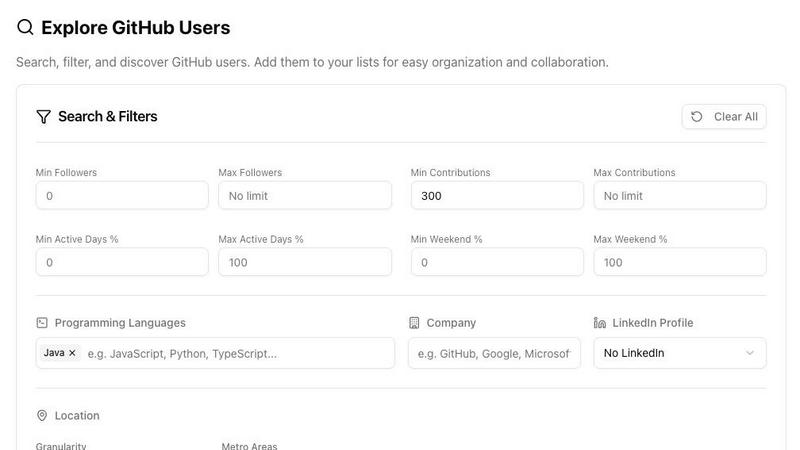
The platform enables granular search across a multitude of technical dimensions. Users can filter candidates by specific programming languages, contribution frequency (e.g., 500+ commits in the last year), repository types, and starred projects. This allows for precise targeting of engineers with the exact tech stack and activity level required for a role, saving hours of manual screening.
Smart Profile Enrichment & Export
Amor automatically enriches GitHub profiles with actionable data, including email addresses parsed from commit history and discovered LinkedIn URLs. Profiles are presented with easy-to-skim summaries of technical interests and skills. Crucially, candidate lists can be exported in a pre-formatted, Ashby-compatible CSV, complete with smart tags and source data for seamless ATS integration.
Collaborative Hiring Workspace
Built for team efficiency, Amor provides tools for collaborative sourcing. Users can create and share candidate lists, add internal comments and notes directly onto profiles for team visibility, and streamline the handoff process to hiring managers. This shared workspace reduces duplication of effort and accelerates collective decision-making.
CommuteHub
Advanced Parking Management Integration
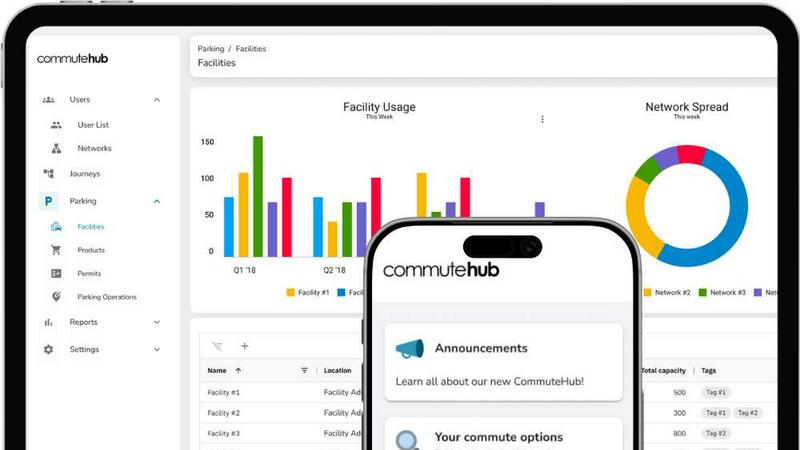
This feature seamlessly integrates with existing parking infrastructure and access control systems to provide real-time availability, digital reservations, and dynamic pricing controls. It transforms static parking assets into a flexible, data-generating component of the broader mobility ecosystem, enabling optimized space utilization and reducing congestion at facility entrances.
Automated & Flexible Incentive Fulfillment
CommuteHub automates the entire incentive lifecycle, from validation and fraud detection to routing approvals and distributing rewards. Administrators can configure unlimited fulfillment options, including built-in premium perks, direct cash subsidies, or custom digital inventories, all managed through a flexible mobility wallet integrated into the user experience.
Verified Multi-Modal Trip Data & Analytics
The platform aggregates high-fidelity trip data from multiple sources, including GPS-tracked journeys, verified-in-app carpools, and integrated mobility service APIs. This data feeds into customizable dashboards and interactive maps, providing organizations with trusted, auditable insights for performance tracking, regulatory compliance, and strategic transportation planning.
Personalized Commute Concierge Engine
Leveraging user profile data, location, and employer affiliations, CommuteHub's AI-driven engine delivers a hyper-personalized interface. It surfaces the most relevant local transportation options, parking availability, commuter benefits, and gamified rewards programs to each individual, simplifying decision-making and driving engagement with sustainable choices.
Use Cases
Amor
Scaling In-House Engineering Teams
Internal recruiting teams at high-growth tech companies use Amor to scale their hiring pipelines without compromising on quality. By sourcing from the vast, untapped GitHub ecosystem, they find expert engineers with proven coding habits and cultural indicators (like open-source involvement) that align with their company's pace and technical bar, significantly reducing time-to-hire.
Recruiting Agency Competitive Edge
Technical recruiting agencies leverage Amor to access exclusive candidate pools that are invisible to LinkedIn-centric competitors. The platform enables them to identify and place top-tier, senior engineering talent faster by providing deep, verifiable technical insights that build compelling candidate narratives for their clients, leading to faster placements and a stronger market reputation.
Engineering-Led Candidate Screening
Engineering managers and technical leads utilize Amor to gain an unbiased, data-rich view of potential candidates before the formal interview stage. By reviewing contribution patterns, project types, and technical summaries, they can quickly assess genuine expertise and work ethic, ensuring only the most qualified and culturally aligned engineers enter the interview pipeline.
Building Diverse Talent Pipelines
Organizations focused on DEI initiatives use Amor to source from underrepresented communities in tech. Since the platform indexes activity rather than profiles on traditional networks, it helps discover highly skilled engineers based purely on merit and output, helping to build more diverse and inclusive engineering teams from a broader, global talent pool.
CommuteHub
Enterprise Campus Mobility Optimization
Large corporations and university campuses use CommuteHub to create a unified commute experience for thousands of employees or students. The platform integrates parking management with shuttle tracking, bike-share programs, and ride-matching services, reducing single-occupancy vehicle reliance and simplifying the daily journey for everyone on site.
Public Sector TDM Program Deployment
Metropolitan planning organizations and public transit authorities deploy CommuteHub to administer region-wide transportation demand management programs. The platform enables them to offer personalized commute planning, distribute incentives for using public transit, and gather verified data to demonstrate program effectiveness for funding and compliance purposes.
Dynamic Parking & Toll Lane Management
Organizations managing high-demand corridors or facilities utilize CommuteHub's advanced parking module to implement dynamic pricing, reservation systems, and seamless integration with toll lane transponders. This optimizes traffic flow, maximizes revenue from parking assets, and provides users with predictable, hassle-free access.
Sustainability Reporting & Carbon Accounting
Companies committed to ESG (Environmental, Social, and Governance) goals leverage CommuteHub's robust analytics to automatically quantify their carbon footprint reduction. The platform calculates avoided vehicle miles and CO2 emissions from verified sustainable trips, generating the precise data needed for annual sustainability reports and corporate social responsibility disclosures.
Overview
About Amor
Amor is a data-driven, GitHub-native sourcing platform engineered to identify and connect with elite software engineering talent through direct analysis of their real-world coding activity. It bypasses the limitations of traditional resume-based recruiting by processing billions of data points from over 8 million developer profiles and 66 million repositories. The platform surfaces the top 1% of engineers based on objective metrics like commit frequency, meaningful project contributions, and coding patterns. Built for technical recruiters, engineering managers, and talent sourcers, Amor's core value proposition is unlocking access to a hidden talent pool of highly active, technically proficient developers who may not be visible on professional networks like LinkedIn. It dramatically reduces sourcing time and improves candidate quality by providing data-rich, actionable insights directly from the developer's primary workspace: their GitHub profile. The platform features deep integration capabilities, including one-click export to Ashby-compatible CSV format, enabling seamless workflow compatibility and accelerating the entire technical hiring pipeline from discovery to applicant tracking system (ATS) import.
About CommuteHub
CommuteHub by RideAmigos is a comprehensive, API-first parking and transportation demand management (TDM) platform engineered to consolidate and optimize complex mobility ecosystems. It serves as a centralized operating system for large employers and public TDM organizations, enabling them to deploy sophisticated, data-driven programs that influence sustainable commuting behavior at scale. The platform's core value proposition lies in its ability to unify fragmented mobility options—such as real-time parking availability, transit passes, ride-matching, and incentive programs—into a single, personalized user interface. Built for infinite scalability, CommuteHub integrates deeply with existing infrastructure and third-party services, providing unparalleled automation for program management, participant outreach, and fraud detection. Its robust analytics engine delivers verified, high-quality trip data from GPS tracking, service integrations, and self-reported logs, transforming raw information into actionable insights for strategic planning, compliance reporting, and measuring environmental impact. By leveraging a tech-stack oriented architecture, CommuteHub future-proofs mobility programs, ensuring seamless adaptability and continuous optimization of the commuter experience while directly supporting organizational sustainability and congestion-reduction goals.
Frequently Asked Questions
Amor FAQ
How does Amor find candidate contact information?
Amor parses and extracts email addresses directly from developers' public Git commit histories on GitHub, where emails are often embedded. The platform also searches for and attaches publicly available LinkedIn profile URLs and other social handles to the enriched candidate profile, providing multiple channels for outreach.
What makes Amor different from LinkedIn Recruiter?
Amor is GitHub-native, focusing on real-time coding activity and technical output, while LinkedIn relies on self-reported career histories and networking activity. Amor accesses a largely non-overlapping talent pool of engineers who are actively building but may not maintain a polished LinkedIn presence, offering a data-driven complement to traditional sourcing.
Can I integrate Amor with my existing Applicant Tracking System (ATS)?
Yes, Amor offers direct integration compatibility with Ashby through a one-click export feature. Candidate lists can be exported as a pre-formatted CSV file that is optimized for import into Ashby, complete with enriched data, tags, and source information to streamline your existing workflow.
How does Amor ensure data privacy and compliance?
Amor operates strictly on publicly accessible data from GitHub profiles and repositories. The platform complies with GitHub's Terms of Service and API usage policies. All data processing is designed for sourcing purposes only, and users are responsible for ensuring their outreach practices comply with relevant recruitment regulations like GDPR.
CommuteHub FAQ
What systems does CommuteHub integrate with?
CommuteHub is built on an API-first architecture designed for deep compatibility. It integrates with major parking access control and revenue management systems, GIS platforms, payroll and HRIS for benefit management, third-party mobility service providers (e.g., micromobility, rideshare), and single sign-on (SSO) providers for seamless enterprise authentication.
How does CommuteHub verify trips for incentives and reporting?
The platform employs a multi-method verification stack. This includes GPS trip tracking via its mobile app, validation through integrated API connections with partner mobility services, and verified "in-app" carpool matching. For modes where digital verification is limited, it supports user-logged trips with configurable validation rules to ensure data quality and prevent fraud.
Can the platform support programs in multiple languages and regions?
Yes, CommuteHub offers built-in multi-language support and is designed to handle regional complexities. It can manage different currencies, local transit systems, and region-specific incentive structures within a single administrative instance, making it ideal for global enterprises or diverse metropolitan areas.
How scalable is CommuteHub for a growing organization or program?
CommuteHub is engineered for infinite scalability on the cloud. Its infrastructure can effortlessly handle from hundreds to hundreds of thousands of users. The platform's automation tools for outreach, data validation, and incentive management ensure that operational overhead does not increase linearly with program size, allowing for efficient scaling.
Alternatives
Amor Alternatives
Amor is a data-driven technical sourcing platform in the HR and recruiting category. It integrates with ATS systems like Ashby to identify elite engineering talent through deep analysis of GitHub contributions, moving beyond traditional resume-based methods. Users often explore alternatives for several reasons. These can include budget constraints, a need for different platform integrations beyond Ashby, or a requirement for sourcing channels other than GitHub. Some teams may also seek tools with a broader focus that includes other developer platforms or professional networks. When evaluating an alternative, key considerations should be its core data source and integration compatibility. Assess whether it connects seamlessly with your existing tech stack, including your ATS and other HR tools. Also, scrutinize the depth and objectivity of its talent analytics to ensure it provides actionable, data-rich insights for building a high-caliber team.
CommuteHub Alternatives
CommuteHub is a comprehensive parking and transportation demand management (TDM) platform within the HR & Recruiting tech stack. It centralizes mobility options, parking management, and data analytics to help organizations implement sophisticated, data-driven commuting programs that enhance user experience and support sustainability objectives. Users often explore alternatives due to specific integration requirements with existing HRIS, payroll, or building management systems. Other considerations include budget constraints, the need for more niche feature sets, or a preference for a different deployment model, such as on-premise versus cloud-native solutions. When evaluating an alternative, prioritize API-first architectures and documented compatibility with your current tech ecosystem. Assess core capabilities in real-time data aggregation, dynamic policy enforcement, and reporting granularity to ensure the platform can scale and adapt to evolving organizational and employee needs.