
AutoPhish vs Clinic Comply
Side-by-side comparison to help you choose the right product.

AutoPhish
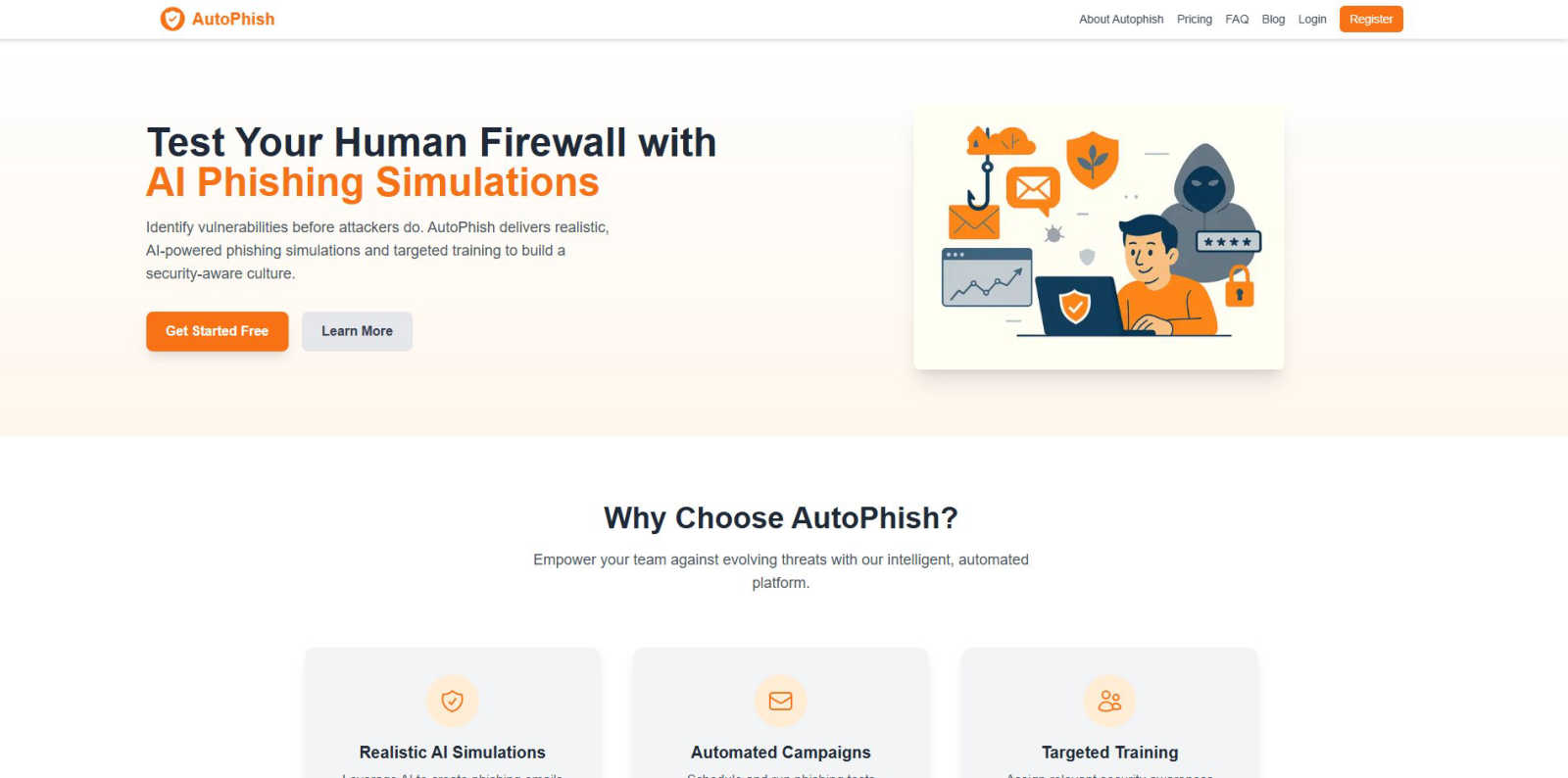
AutoPhish automates AI-driven phishing simulations and training to fortify your team's cybersecurity posture.
Last updated: March 1, 2026

Clinic Comply
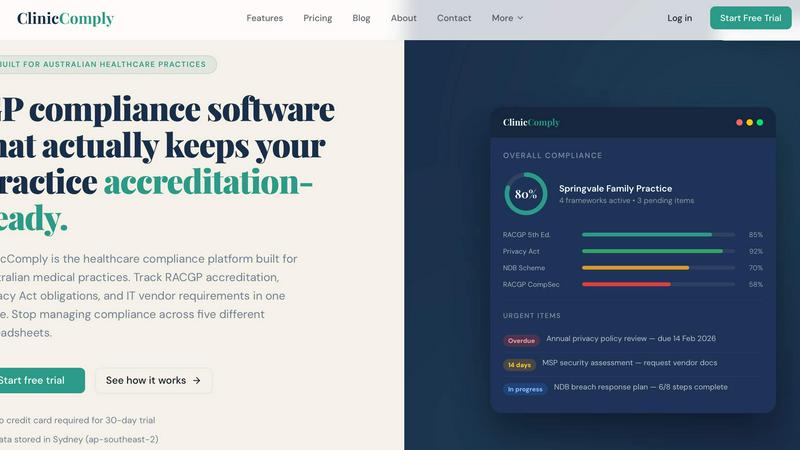
ClinicComply is an integrated platform that centralizes RACGP and Privacy Act compliance for Australian healthcare practices.
Last updated: March 19, 2026
Visual Comparison
AutoPhish
Clinic Comply
Feature Comparison
AutoPhish
AI-Powered Phishing Simulation Engine
This core feature leverages a sophisticated AI model, likely built on transformer architectures similar to those used in large language models, to generate and adapt phishing email content. It analyzes real-world phishing campaigns to produce simulations with convincing pretexts, urgent language, and spoofed sender addresses that are highly tailored to your industry. The engine ensures technical realism, testing defenses against look-alike domains and sophisticated payload-less attacks that bypass traditional email gateways.
Automated Campaign Management & Scheduling
AutoPhish provides a fully automated workflow engine for end-to-end campaign management. Administrators can configure multi-stage phishing tests, define target user groups via integration with directories like Active Directory or Azure AD, and schedule campaigns to run at specific intervals. This automation ensures consistent, policy-driven security testing that operates on a continuous cycle, freeing security teams from manual execution and allowing for scalable, organization-wide coverage.
Role-Based Targeted Training Modules
Following simulation results, the platform dynamically assigns tailored security awareness training. It uses role-based access control (RBAC) logic and behavioral analytics from simulation clicks to serve relevant educational content. For instance, a finance department employee who fails a CEO fraud simulation would receive specific training on wire transfer protocols, while an HR staff member would get content focused on credential phishing. This targeted approach maximizes training efficacy and ROI.
Comprehensive Analytics & Reporting Dashboard
The platform features a centralized dashboard with advanced reporting capabilities. It provides granular metrics on click-through rates, vulnerability heat maps by department, and individual user risk scores. These analytics are exportable and can be integrated into SIEM or GRC platforms for a unified security posture view. The dashboard also tracks progress over time, measuring the improvement in employee resilience and the effectiveness of training interventions.
Clinic Comply
Framework-Specific Compliance Mapping
Unlike generic GRC tools, Clinic Comply is pre-configured with over ten Australian healthcare compliance frameworks. Each framework, such as RACGP 5th Edition, is meticulously mapped to its actual assessment criteria. This provides practices with guided, actionable checklists that directly correlate to what an accreditation assessor will examine, ensuring the platform's live compliance score is meaningful and authoritative for the Australian context.
Integrated Evidence Library & Vendor Portal
The platform eliminates document chaos by providing a centralized, secure evidence library. Users can upload files directly or, crucially, use the integrated Vendor Portal to send secure upload links to IT vendors and MSPs. Documents received via this portal are automatically catalogued and intelligently linked to the relevant checklist criteria, streamlining what is traditionally a weeks-long process of email chasing and manual filing.
Automated Compliance Scoring & Reporting
Clinic Comply dynamically calculates an overall and framework-specific compliance score based on completed checklist items and linked evidence. This real-time dashboard provides an instant, visual health check of the practice's accreditation status. The system also enables one-click generation of structured evidence packs, formatted for easy presentation during assessor visits, saving immense preparation time.
Team Task Delegation & Deadline Management
The platform is built for collaborative workflow management. Compliance tasks can be assigned to specific team members with clear deadlines, and the system provides visibility into pending and overdue items. This feature ensures accountability, prevents tasks from being overlooked, and provides clinic managers with a clear overview of team progress toward compliance objectives.
Use Cases
AutoPhish
Proactive Security Posture Assessment for IT Teams
IT and security operations teams use AutoPhish to conduct regular, automated phishing simulations across the entire organization. This provides empirical data on the human risk surface, identifying which departments or individuals are most vulnerable. The resulting analytics inform where to allocate security resources and training budgets most effectively, transforming subjective concerns into quantifiable, actionable intelligence for risk management.
Compliance and Audit Readiness
Organizations in regulated industries (finance, healthcare, government) deploy AutoPhish to meet compliance mandates such as GDPR, HIPAA, PCI-DSS, and ISO 27001, which require regular security awareness training and testing. The platform's automated scheduling, detailed audit logs, and comprehensive reporting provide demonstrable proof of due diligence and ongoing employee education programs for auditors and regulators.
Onboarding and Continuous Employee Education
HR and People teams integrate AutoPhish into the employee onboarding lifecycle. New hires can be automatically enrolled in a baseline phishing simulation and training module. Subsequently, the platform supports a continuous education model with scheduled, recurring campaigns that keep security top-of-mind, helping to cultivate a persistent culture of security awareness rather than treating it as an annual checkbox exercise.
Simulating Advanced Persistent Threat (APT) Campaigns
For mature security teams, AutoPhish is used to model sophisticated, multi-vector attack campaigns that mimic Advanced Persistent Threats. Security architects can configure a series of interconnected simulations—starting with a phishing email, leading to a fake login page, and followed by a simulated malware download—to test the organization's detection and response protocols across different layers of defense, from email gateways to endpoint detection and response (EDR) systems.
Clinic Comply
Preparing for RACGP Accreditation Assessment
A medical practice uses Clinic Comply to systematically work through the entire RACGP 5th Edition checklist in the months leading to an assessment. The team assigns criteria, uploads policies and registers to the evidence library, and uses the vendor portal to collect necessary agreements from IT providers. The practice manager downloads the compiled evidence pack directly from the platform for the assessor.
Managing Privacy Act and NDB Scheme Obligations
A clinic utilizes the platform to maintain ongoing compliance with the Privacy Act and NDB Scheme. They track the annual review cycle for their privacy policy, ensure staff training is documented, and maintain an up-to-date data breach response plan within the system. The platform acts as the definitive record for demonstrating due diligence to regulators.
Onboarding and Monitoring IT Service Vendors
When engaging a new IT Managed Service Provider (MSP), the practice uses Clinic Comply's Vendor Portal to request essential security documentation, such as data processing agreements and security policies. All received documents are stored against the relevant compliance criteria, creating a complete and audit-ready vendor risk management record.
Multi-Practice or Multi-Site Compliance Governance
A healthcare organization managing several clinics employs Clinic Comply to standardize compliance processes across all sites. Each location operates within its own instance while leadership gains a consolidated, high-level view of overall compliance scores and urgent action items, enabling efficient centralized governance and support.
Overview
About AutoPhish
AutoPhish is an advanced, AI-driven cybersecurity platform engineered to proactively strengthen an organization's human firewall through realistic phishing simulations and targeted security awareness training. It is designed for IT security teams, compliance officers, and business leaders across all industries who need to quantify and mitigate human-centric security risks. The core value proposition lies in its seamless integration of generative AI to create hyper-realistic, context-aware phishing email templates that mimic current threat actor tactics, techniques, and procedures (TTPs). This technical approach ensures simulations are not generic but are tailored to specific industry verticals and job functions, providing accurate vulnerability assessments. The platform automates the entire lifecycle of security awareness campaigns, from domain verification and secure email dispatch using SPF, DKIM, and DMARC protocols to scheduling, execution, and detailed analytics. By automating resource-intensive tasks, AutoPhish enables continuous, consistent testing and training without straining IT budgets or personnel. Its API-first architecture and compatibility with existing security stacks allow for streamlined workflows, making it a critical tool for building a resilient, security-aware organizational culture against evolving social engineering attacks.
About Clinic Comply
Clinic Comply is a purpose-built, cloud-native compliance management platform engineered specifically for the Australian healthcare ecosystem. It functions as a centralized, integrated system of record, replacing the fragmented and error-prone practice of managing compliance across disparate spreadsheets, shared drives, and email threads. The platform is architected for general practitioners, clinic managers, and healthcare administrators who require a robust, always-on solution to maintain accreditation readiness. Its core value proposition lies in its deep integration with Australian regulatory frameworks, including the RACGP 5th Edition Standards, the Privacy Act 1988 (APPs), and the Notifiable Data Breaches (NDB) Scheme. By providing a single source of truth, Clinic Comply automates evidence linking, vendor document collection, and progress tracking, significantly reducing administrative overhead and compliance risk. This allows medical practices to shift focus from manual compliance tasks back to core patient care, all while ensuring their data is securely hosted within the Sydney (ap-southeast-2) AWS region.
Frequently Asked Questions
AutoPhish FAQ
How does AutoPhish ensure the safe delivery of simulation emails?
AutoPhish prioritizes secure delivery through a technical integration with your email infrastructure. It requires domain verification, which involves configuring SPF (Sender Policy Framework) and DKIM (DomainKeys Identified Mail) records for your domain. This process authorizes AutoPhish's mail servers to send emails on your behalf legitimately, ensuring simulations are delivered to the inbox (not quarantined) while maintaining email authentication standards and preventing domain spoofing.
Can AutoPhish integrate with our existing IT and security stack?
Yes, AutoPhish is built with integration and compatibility in mind. It offers API access for programmatic campaign management and data extraction. It can integrate with Single Sign-On (SSO) providers like Okta or Azure AD for user authentication and synchronization. Furthermore, its reporting data can often be fed into Security Information and Event Management (SIEM) systems or other dashboards to correlate human risk with other security events.
What happens if an employee fails a phishing simulation?
The platform is designed for education, not punishment. When an employee clicks a simulated phishing link, they are typically redirected to an immediate, interactive training page that explains the red flags in the email they missed. Administrators are alerted through the dashboard, and the system can automatically assign follow-up, role-specific training modules to that user to reinforce learning, all managed through the automated workflow.
Is there a risk of data exposure or privacy violation with this tool?
AutoPhish is architected with data privacy and security as foundational principles. It operates on a least-privilege access model, syncing only necessary user data (like email and department) for campaign targeting. Simulation content is generated and managed within the platform, and no sensitive corporate data or real credentials are used in the simulations. The platform complies with major data protection regulations, and all data is encrypted in transit and at rest.
Clinic Comply FAQ
What Australian compliance frameworks does Clinic Comply support?
Clinic Comply natively supports over ten key Australian healthcare frameworks including the RACGP 5th Edition Standards, the Privacy Act 1988 (APPs), the Notifiable Data Breaches (NDB) Scheme, RACGP Computer and Information Security Standards, My Health Record, HDAA for dental practices, AGPAL, NDIS Practice Standards, and state-specific laws like the Victorian Health Records Act and NSW HRIP Act. New frameworks are added as standards evolve.
How does the platform handle data security and storage?
Security is paramount. Clinic Comply stores all customer data exclusively within Amazon Web Services (AWS) data centers located in Sydney (ap-southeast-2). This ensures data sovereignty and benefits from enterprise-grade AWS security infrastructure, including encryption at rest and in transit, providing a secure environment for sensitive healthcare compliance documentation.
Can we collaborate with our entire team on the platform?
Yes, Clinic Comply is designed for team-based workflow management. You can invite clinic managers, doctors, nurses, and administrative staff to the platform. Tasks can be delegated to specific users with deadlines, and the system provides clear visibility on progress, pending actions, and overdue items to ensure collective accountability.
How does the Vendor Portal work?
The Vendor Portal allows you to send a secure, unique upload link directly to your IT vendors or MSPs from within Clinic Comply. They can upload requested documents (e.g., security assessments, data agreements) directly through this link without needing a platform login. The documents are automatically received and filed in your evidence library, linked to the relevant compliance criterion.
Alternatives
AutoPhish Alternatives
AutoPhish is a Business Intelligence and Productivity platform specializing in automated, AI-driven phishing simulation and security awareness training. It helps organizations proactively identify human vulnerabilities and reinforce their security culture through realistic, automated campaigns. Users often explore alternatives to AutoPhish to find solutions that better align with their specific tech stack, budget, or feature requirements. Common drivers include the need for deeper integration with existing SIEM, IAM, or HRIS platforms, a different pricing model, or more granular control over simulation scenarios and reporting analytics. When evaluating alternatives, prioritize platforms with robust API support for seamless workflow integration. Assess the depth of reporting, the flexibility of campaign automation, and the ability to deliver role-based, targeted training. Ensure the solution's deployment model and compatibility align with your organization's security architecture and compliance needs.
Clinic Comply Alternatives
Clinic Comply is a specialized productivity and management platform designed to streamline healthcare compliance for Australian medical practices. It centralizes the tracking of accreditation, privacy laws, and vendor management, moving clinics away from fragmented spreadsheets. Users often explore alternatives to find a solution that better aligns with their specific tech stack, budget, or required feature integrations. Needs can vary based on practice size, desired automation depth, or compatibility with existing practice management software. When evaluating other platforms, key considerations include native API availability for critical integrations, data security protocols compliant with Australian standards, and the platform's ability to adapt to evolving RACGP and Privacy Act frameworks. The right tool should seamlessly embed into your clinic's operational workflow.