
AutoPhish vs The Ultimate Piano
Side-by-side comparison to help you choose the right product.

AutoPhish
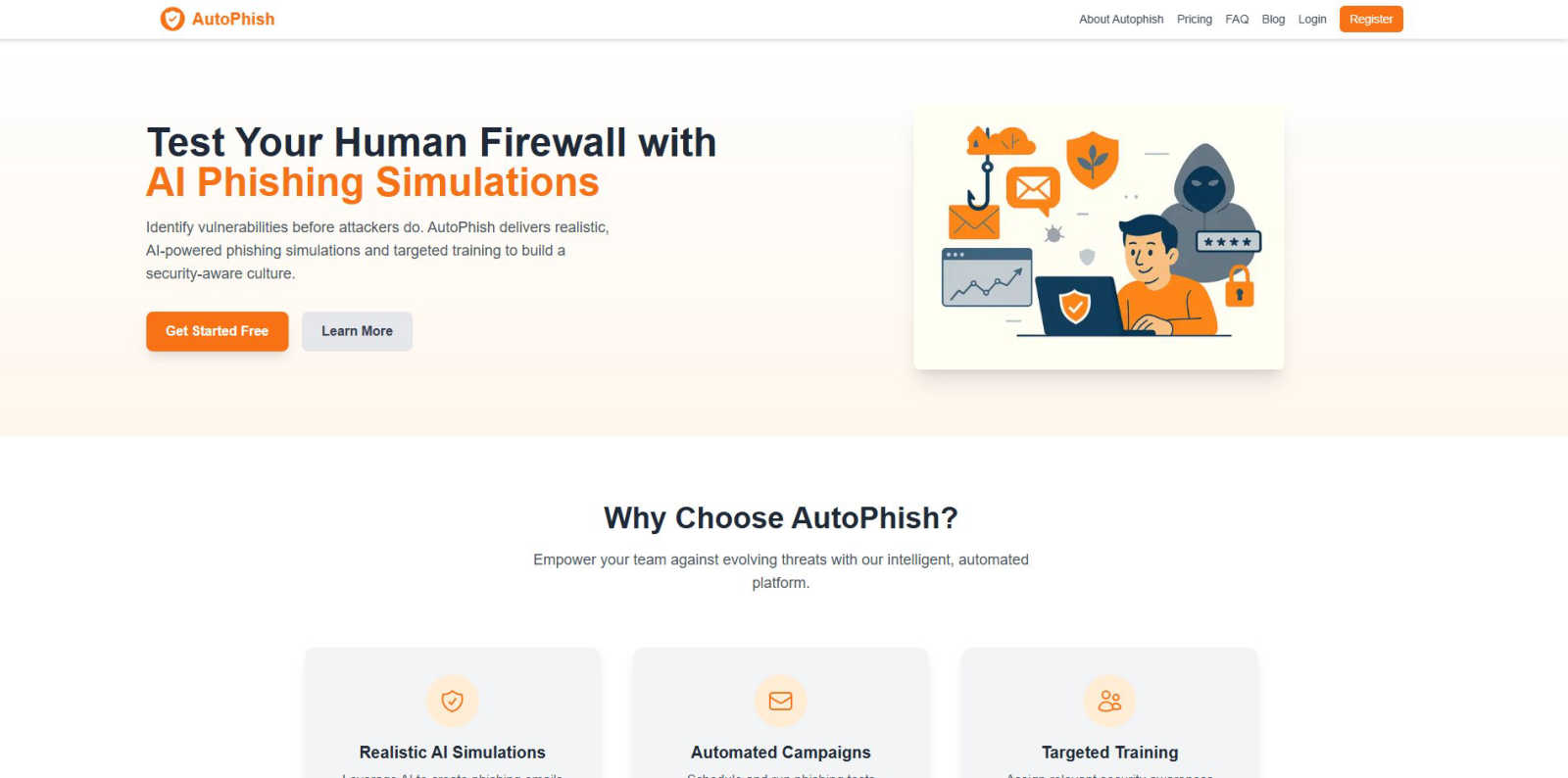
AutoPhish automates AI-driven phishing simulations and training to fortify your team's cybersecurity posture.
Last updated: March 1, 2026

The Ultimate Piano
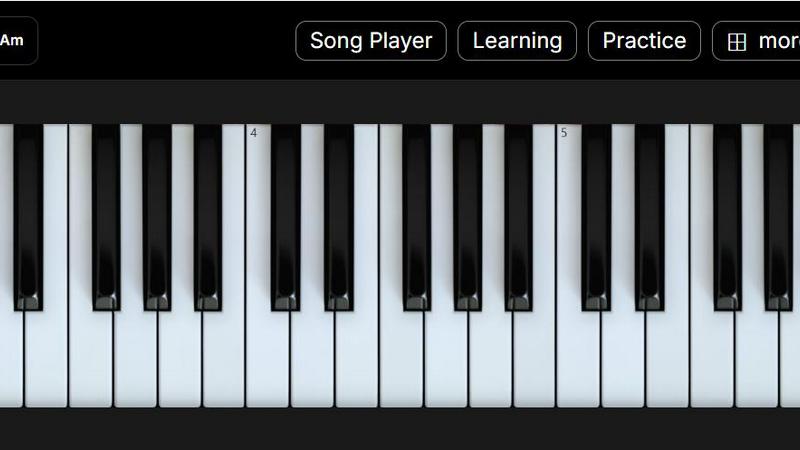
Practice piano online with browser-based MIDI support and real-time learning tools.
Last updated: March 4, 2026
Visual Comparison
AutoPhish
The Ultimate Piano
Feature Comparison
AutoPhish
AI-Powered Phishing Simulation Engine
This core feature leverages a sophisticated AI model, likely built on transformer architectures similar to those used in large language models, to generate and adapt phishing email content. It analyzes real-world phishing campaigns to produce simulations with convincing pretexts, urgent language, and spoofed sender addresses that are highly tailored to your industry. The engine ensures technical realism, testing defenses against look-alike domains and sophisticated payload-less attacks that bypass traditional email gateways.
Automated Campaign Management & Scheduling
AutoPhish provides a fully automated workflow engine for end-to-end campaign management. Administrators can configure multi-stage phishing tests, define target user groups via integration with directories like Active Directory or Azure AD, and schedule campaigns to run at specific intervals. This automation ensures consistent, policy-driven security testing that operates on a continuous cycle, freeing security teams from manual execution and allowing for scalable, organization-wide coverage.
Role-Based Targeted Training Modules
Following simulation results, the platform dynamically assigns tailored security awareness training. It uses role-based access control (RBAC) logic and behavioral analytics from simulation clicks to serve relevant educational content. For instance, a finance department employee who fails a CEO fraud simulation would receive specific training on wire transfer protocols, while an HR staff member would get content focused on credential phishing. This targeted approach maximizes training efficacy and ROI.
Comprehensive Analytics & Reporting Dashboard
The platform features a centralized dashboard with advanced reporting capabilities. It provides granular metrics on click-through rates, vulnerability heat maps by department, and individual user risk scores. These analytics are exportable and can be integrated into SIEM or GRC platforms for a unified security posture view. The dashboard also tracks progress over time, measuring the improvement in employee resilience and the effectiveness of training interventions.
The Ultimate Piano
Web-Based MIDI & Audio Engine
The platform leverages the Web MIDI API for flawless, low-latency communication with external MIDI keyboards, controllers, and sustain pedals. Simultaneously, its Web Audio API-powered engine generates high-quality, realistic piano samples, ensuring professional audio output directly in the browser. This technical stack guarantees broad hardware and OS compatibility without requiring proprietary drivers, enabling instant playability across desktop and mobile devices.
Real-Time Chord Detection & Music Theory Visualization
As you play, a sophisticated algorithm analyzes incoming MIDI note data in real time to detect and display chord names and inversions. This is coupled with an interactive chord explorer and a scale trainer covering 14 scale types, which visually highlights notes on the keyboard and staff. This feature transforms abstract music theory into a tangible, interactive model, facilitating immediate comprehension and application during practice sessions.
Integrated Multimedia Practice Players
The Ultimate Piano features dedicated modules for MIDI files, local audio (MP3/WAV), and YouTube integration. The MIDI player displays falling notes on a scrollable staff. The audio and YouTube players include advanced DSP features like pitch-invariant time stretching for slowing down tracks, automatic BPM and key detection, and customizable A-B loop points. This allows for deep, analytical practice alongside any source material.
Customizable Workspace & Data Export
The interface is fully customizable, from keyboard color schemes and note labeling (sharps/flats) to adjustable ranges and transparent backgrounds for overlay use. It includes a built-in MIDI recorder that captures performances as standard MIDI files for export and use in other DAWs. This flexibility supports diverse workflows, from personal practice to professional content creation and educational instruction.
Use Cases
AutoPhish
Proactive Security Posture Assessment for IT Teams
IT and security operations teams use AutoPhish to conduct regular, automated phishing simulations across the entire organization. This provides empirical data on the human risk surface, identifying which departments or individuals are most vulnerable. The resulting analytics inform where to allocate security resources and training budgets most effectively, transforming subjective concerns into quantifiable, actionable intelligence for risk management.
Compliance and Audit Readiness
Organizations in regulated industries (finance, healthcare, government) deploy AutoPhish to meet compliance mandates such as GDPR, HIPAA, PCI-DSS, and ISO 27001, which require regular security awareness training and testing. The platform's automated scheduling, detailed audit logs, and comprehensive reporting provide demonstrable proof of due diligence and ongoing employee education programs for auditors and regulators.
Onboarding and Continuous Employee Education
HR and People teams integrate AutoPhish into the employee onboarding lifecycle. New hires can be automatically enrolled in a baseline phishing simulation and training module. Subsequently, the platform supports a continuous education model with scheduled, recurring campaigns that keep security top-of-mind, helping to cultivate a persistent culture of security awareness rather than treating it as an annual checkbox exercise.
Simulating Advanced Persistent Threat (APT) Campaigns
For mature security teams, AutoPhish is used to model sophisticated, multi-vector attack campaigns that mimic Advanced Persistent Threats. Security architects can configure a series of interconnected simulations—starting with a phishing email, leading to a fake login page, and followed by a simulated malware download—to test the organization's detection and response protocols across different layers of defense, from email gateways to endpoint detection and response (EDR) systems.
The Ultimate Piano
Structured Music Theory Education
Educators and self-learners utilize the scale trainer, chord detection, and real-time sheet music display to demystify music theory. By visually connecting finger positions on the keyboard to their notation and harmonic function, users can systematically study intervals, chord progressions, and scale patterns, accelerating the internalization of theoretical concepts through interactive repetition.
Song Learning & Transcription Practice
Musicians load any MP3 or YouTube tutorial into the integrated player. Using the slowdown and looping functions, they can isolate difficult passages, practice them in sync with the original track, and use the real-time note display on the staff to aid in transcription and accurate replication of complex solos or accompaniments.
Portable Sketchpad for Composers & Producers
Composers leverage the zero-install, browser-based nature and MIDI recording feature to capture musical ideas anywhere. By connecting a portable MIDI keyboard to a laptop or tablet, they can sketch melodies and harmonies, record them directly as a MIDI file, and later export the raw MIDI data into their primary DAW (like Logic Pro, Ableton Live, or FL Studio) for further production.
Accessible Early Childhood Music Introduction
Parents and teachers activate Kids Mode, which replaces traditional key labels with engaging animal icons. This touch-friendly interface, combined with the platform's immediate auditory feedback on tablets, provides a fun, low-pressure introduction to pitch relationships and keyboard geography for young children, fostering early musical curiosity.
Overview
About AutoPhish
AutoPhish is an advanced, AI-driven cybersecurity platform engineered to proactively strengthen an organization's human firewall through realistic phishing simulations and targeted security awareness training. It is designed for IT security teams, compliance officers, and business leaders across all industries who need to quantify and mitigate human-centric security risks. The core value proposition lies in its seamless integration of generative AI to create hyper-realistic, context-aware phishing email templates that mimic current threat actor tactics, techniques, and procedures (TTPs). This technical approach ensures simulations are not generic but are tailored to specific industry verticals and job functions, providing accurate vulnerability assessments. The platform automates the entire lifecycle of security awareness campaigns, from domain verification and secure email dispatch using SPF, DKIM, and DMARC protocols to scheduling, execution, and detailed analytics. By automating resource-intensive tasks, AutoPhish enables continuous, consistent testing and training without straining IT budgets or personnel. Its API-first architecture and compatibility with existing security stacks allow for streamlined workflows, making it a critical tool for building a resilient, security-aware organizational culture against evolving social engineering attacks.
About The Ultimate Piano
The Ultimate Piano is a sophisticated, browser-based digital audio workstation (DAW) and interactive learning platform engineered for modern pianists and music producers. Built on robust web technologies like Web Audio API and Web MIDI API, it delivers a professional-grade piano practice environment directly within your browser, eliminating the need for software downloads or complex installations. This platform is designed for a wide technical audience, from beginners seeking a structured learning path to advanced musicians and educators requiring a versatile, integrable tool for practice, composition, and theory visualization. Its core value proposition lies in its seamless integration capabilities—connecting hardware MIDI keyboards, loading external MIDI and audio files, and interfacing with platforms like YouTube—all while providing real-time analytical feedback. By merging a high-fidelity sound engine with comprehensive music theory tools and customizable workflows, The Ultimate Piano serves as a centralized, cloud-accessible hub for skill development, making advanced musical practice and theory comprehension more accessible and efficient than ever before.
Frequently Asked Questions
AutoPhish FAQ
How does AutoPhish ensure the safe delivery of simulation emails?
AutoPhish prioritizes secure delivery through a technical integration with your email infrastructure. It requires domain verification, which involves configuring SPF (Sender Policy Framework) and DKIM (DomainKeys Identified Mail) records for your domain. This process authorizes AutoPhish's mail servers to send emails on your behalf legitimately, ensuring simulations are delivered to the inbox (not quarantined) while maintaining email authentication standards and preventing domain spoofing.
Can AutoPhish integrate with our existing IT and security stack?
Yes, AutoPhish is built with integration and compatibility in mind. It offers API access for programmatic campaign management and data extraction. It can integrate with Single Sign-On (SSO) providers like Okta or Azure AD for user authentication and synchronization. Furthermore, its reporting data can often be fed into Security Information and Event Management (SIEM) systems or other dashboards to correlate human risk with other security events.
What happens if an employee fails a phishing simulation?
The platform is designed for education, not punishment. When an employee clicks a simulated phishing link, they are typically redirected to an immediate, interactive training page that explains the red flags in the email they missed. Administrators are alerted through the dashboard, and the system can automatically assign follow-up, role-specific training modules to that user to reinforce learning, all managed through the automated workflow.
Is there a risk of data exposure or privacy violation with this tool?
AutoPhish is architected with data privacy and security as foundational principles. It operates on a least-privilege access model, syncing only necessary user data (like email and department) for campaign targeting. Simulation content is generated and managed within the platform, and no sensitive corporate data or real credentials are used in the simulations. The platform complies with major data protection regulations, and all data is encrypted in transit and at rest.
The Ultimate Piano FAQ
What are the technical requirements to use The Ultimate Piano?
You only need a modern web browser (like Chrome, Edge, Firefox, or Safari) that supports the Web MIDI API for hardware connectivity and the Web Audio API for sound generation. No additional plugins or software installations are required. For the best experience, a stable internet connection is recommended, though core features remain functional offline after initial load.
Can I connect my digital piano or MIDI controller?
Yes, full compatibility is provided through the Web MIDI API. Connect your USB-MIDI keyboard or interface directly to your computer. The browser will prompt you to allow MIDI access, after which The Ultimate Piano will automatically detect your device. It also supports sustain pedal input for authentic articulation and expression during play.
How does the integration with YouTube work?
The platform includes a dedicated YouTube player module. You can paste any YouTube video URL into the player. It then provides independent control over the video's playback speed (with maintained pitch), allows you to set precise A-B loop points for repetitive practice, and save time-stamped markers for quick navigation, all while you play along on the keyboard.
Is my performance data stored or uploaded to servers?
The Ultimate Piano prioritizes client-side processing. Your MIDI recordings, loaded files, and custom settings are typically stored locally in your browser's cache or local storage. According to the privacy statement, data processing for site functionality may involve cookies, but your musical performance data itself is not automatically uploaded to external servers without your explicit action.
Alternatives
AutoPhish Alternatives
AutoPhish is a Business Intelligence and Productivity platform specializing in automated, AI-driven phishing simulation and security awareness training. It helps organizations proactively identify human vulnerabilities and reinforce their security culture through realistic, automated campaigns. Users often explore alternatives to AutoPhish to find solutions that better align with their specific tech stack, budget, or feature requirements. Common drivers include the need for deeper integration with existing SIEM, IAM, or HRIS platforms, a different pricing model, or more granular control over simulation scenarios and reporting analytics. When evaluating alternatives, prioritize platforms with robust API support for seamless workflow integration. Assess the depth of reporting, the flexibility of campaign automation, and the ability to deliver role-based, targeted training. Ensure the solution's deployment model and compatibility align with your organization's security architecture and compliance needs.
The Ultimate Piano Alternatives
The Ultimate Piano is a browser-based digital piano and interactive learning platform, falling into the categories of music production and online education. It provides a no-download solution for practice, theory, and ear training directly within a web browser. Users often seek alternatives for various technical and practical reasons. These include needing offline functionality, requiring deeper DAW integration, seeking different subscription or pricing models, or looking for specific feature sets like advanced MIDI routing, VST plugin support, or compatibility with particular operating systems and hardware setups. When evaluating alternatives, key technical considerations are the platform's core stack (web app, desktop software, mobile app), its MIDI implementation and latency, file format support (MIDI, MusicXML), API or plugin ecosystem for extensibility, and the overall architecture for real-time audio processing. The ideal choice aligns with your existing tech environment and workflow requirements.