
buzzcutlab vs Skipclips
Side-by-side comparison to help you choose the right product.

buzzcutlab
BuzzCut Lab is the API for buzz cuts, converting guard sizes into precise lengths and personalized styling data.
Last updated: March 1, 2026

Skipclips
Skipclips integrates AI summaries and tags to instantly surface key insights from podcasts and shows.
Last updated: March 1, 2026
Visual Comparison
buzzcutlab
Skipclips
Feature Comparison
buzzcutlab
Guard Size Converter & Visualizer
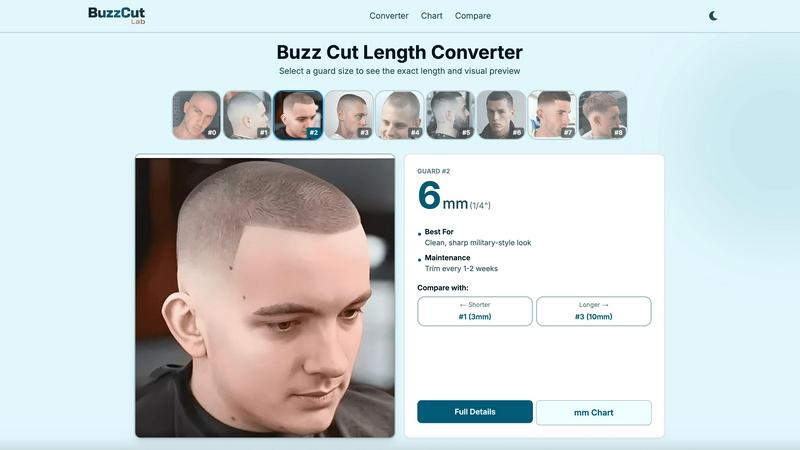
This core feature acts as a real-time translation layer between clipper guard numbers (#0-#8) and precise physical measurements in millimeters and inches. Users select a guard, and the system instantly displays the exact length alongside a visual hair preview. This eliminates compatibility confusion across different clipper brands and models, providing a standardized reference for achieving the intended cut length with technical accuracy.
Face Shape Analyzer with AI Recommendations
This tool integrates basic image analysis to provide personalized grooming configurations. Users can upload a photo, and the system processes facial structure to generate data-driven recommendations for the most flattering guard sizes and fade styles. This feature personalizes the platform's output, ensuring the technical specifications (guard length) align optimally with the user's unique biological parameters for an enhanced aesthetic result.
Hair Growth Timeline & Projection Tool
This is a predictive scheduling interface that visualizes the hair growth journey from any starting guard size to a target length. It projects week-by-week growth and provides automated trim checkpoints. This allows users to plan their maintenance cycle with precision, integrating their grooming routine into a long-term schedule for consistent look management without manual calculation.
Comparative Style Analysis Engine
This feature provides side-by-side technical comparisons of different buzz cut lengths, such as the popular #2 vs. #3 guard. It breaks down aspects like exact length, scalp visibility, maintenance frequency, and stylistic best use cases in a structured data table. This enables users to conduct an informed A/B test of styles before any physical cut is made, based on quantitative and qualitative data points.
Skipclips
AI-Powered Episode Summarization
Skipclips' core AI engine automatically processes hours of audio and video to generate comprehensive, structured summaries. This feature distills key arguments, narratives, and conclusions into digestible formats, enabling users to grasp the essence of long-form content in minutes rather than hours, seamlessly feeding into note-taking and research applications.
Structured Topic & Tagging System
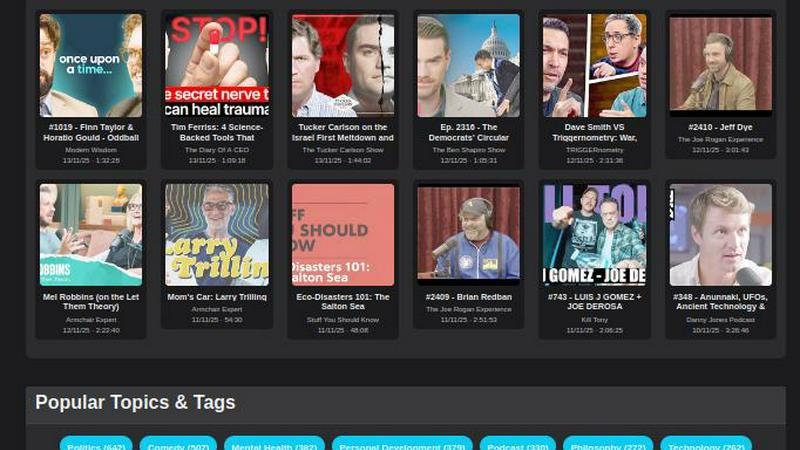
The platform applies a rich, multi-layered metadata system to all processed content. This includes auto-generated tags for topics, guests, and key themes, creating a searchable knowledge graph. This structure allows for precise filtering and discovery, turning a library of episodes into a queryable database for your tech stack.
Cross-Show Guest & Theme Tracking
Skipclips indexes guests and recurring themes across its entire content library. This feature enables users to follow a specific expert's appearances on different shows or monitor the evolution of a topic like "geopolitics" or "AI ethics" over time and across various creator perspectives, all through a unified interface.
API-Ready Structured Data Export
Designed for integration, Skipclips provides API access to its structured data outputs, including transcripts, summaries, and tags. This allows teams to pipe analyzed content directly into custom dashboards, CRMs, research databases, or content management systems, automating the flow of insights into existing workflows.
Use Cases
buzzcutlab
First-Time Buzz Cut Execution
A user new to clippers utilizes the Guard Size Converter to understand what a #2 guard (6mm) actually looks like, then employs the Face Shape Analyzer to confirm it's suitable. They follow the visual guide to execute their first self-haircut with confidence, ensuring tool selection and technique are correctly aligned from the start, minimizing error.
Optimized Grooming Routine Maintenance
An individual with an established buzz cut uses the Growth Timeline Tool. Starting from their current #3 guard (10mm) cut, they input a target length of #5 (16mm). The platform generates a week-by-week growth visualization and alerts them for optimal trim times to maintain a sharp shape during the grow-out phase, systematizing their upkeep.
Style Transition Planning and Comparison
A user considering a change from a very short #1 guard (3mm) to a longer, textured #4 guard (13mm) uses the Comparative Analysis Engine. They review the detailed breakdown of length, feel, and maintenance differences, and then use the Growth Timeline to understand the duration and interim stages of the transition, enabling informed planning.
Personalized Styling Based on Biometrics
A user unsure which style complements their features uploads a photo to the Face Shape Analyzer. The system processes their facial contours and recommends, for example, a #2 guard on top with a fade for an oval face. This provides a customized grooming configuration that leverages data to enhance personal appearance beyond generic advice.
Skipclips
Accelerated Academic & Market Research
Researchers and analysts can use Skipclips to rapidly survey expert discussions and interviews within a specific field. Instead of manually listening to dozens of hours of podcasts, they can query summarized insights and tagged segments, dramatically speeding up literature review and competitive intelligence gathering.
Content Creator & Journalist Workflow
Content creators and journalists leverage Skipclips to monitor trends, find quotes, and identify expert guests efficiently. The platform's search and clipping capabilities allow for quick sourcing of relevant audio/video segments to support articles, scripts, or social media content, integrating findings directly into their production pipeline.
Enterprise Knowledge Management
Organizations can integrate Skipclips' API to curate and analyze industry-relevant long-form media for internal knowledge bases. Teams can stay informed on market trends, competitor mentions, and technological advancements through automatically summarized and categorized briefs delivered to their internal systems.
Curated Learning & Personal Development
Avid learners and professionals use Skipclips to curate personalized learning tracks from top-tier podcast and video content. By following specific tags or shows, they build a structured, searchable repository of insights on topics like leadership or technology, enhancing their personal knowledge management system.
Overview
About buzzcutlab
Buzzcutlab is a precision-engineered digital platform designed to demystify and systematize the process of achieving the perfect buzz cut. It functions as a comprehensive toolkit for personal grooming, translating the often ambiguous world of clipper guard numbers into actionable, data-driven insights. The platform is architected for a wide user base, from grooming novices seeking a foolproof first cut to seasoned enthusiasts aiming to optimize their maintenance routine. Its core value proposition lies in its integration of multiple specialized tools—a unit converter, visual comparator, AI-driven face shape analyzer, and growth projection timeline—into a single, cohesive ecosystem. By providing clear millimeter and inch equivalencies, visual style comparisons, and personalized recommendations, Buzzcutlab eliminates guesswork. It ensures compatibility between a user's desired aesthetic, their facial structure, and their chosen clipper hardware, effectively acting as a middleware layer between human intention and grooming tool execution. The result is a consistently clean, sharp look achieved with technical efficiency.
About Skipclips
Skipclips is an advanced AI-powered long-form content discovery and analysis platform engineered for seamless integration into the modern knowledge worker's tech stack. It serves as a critical intelligence layer for podcasts, interviews, and creator-led video content, transforming hours of audio and video into structured, searchable, and actionable data. The platform is designed for professionals, researchers, students, and avid learners who need to extract key insights from long-form media efficiently without sacrificing depth. Its core value proposition lies in its sophisticated AI engine that automatically generates comprehensive episode summaries, detailed topic breakdowns, and a rich metadata layer of tags. This allows users to track themes, follow guests across multiple shows, and pinpoint notable moments with precision. Skipclips effectively solves the time-consumption problem of long-form content, offering API-ready structured data that can complement research workflows, content creation pipelines, and personal knowledge management systems, making it an indispensable tool for data-driven content consumption.
Frequently Asked Questions
buzzcutlab FAQ
What does the clipper guard number actually mean in technical terms?
The guard number (#0 through #8) is a standardized index that corresponds to a specific distance between the clipper blade and the scalp, determining hair length. Buzzcutlab provides the precise technical specification: each number equates to a fixed measurement, e.g., #1 = 3mm, #2 = 6mm (1/4"), #3 = 10mm (3/8"), scaling up to #8 = 25mm. This standardization ensures compatibility and clear expectation setting across different hardware.
What is the functional difference between a #2 and a #3 guard?
The primary difference is length and its resulting properties. A #2 guard leaves 6mm (1/4") of hair, offering a clean, sharp look with low scalp visibility, requiring maintenance every 1-2 weeks. A #3 guard leaves 10mm (3/8"), providing a softer appearance with minimal scalp visibility and a longer maintenance cycle of 2-3 weeks. The choice integrates desired aesthetics with commitment to upkeep frequency.
How does the Face Shape Analyzer provide a personalized recommendation?
The analyzer uses image processing algorithms to assess key facial proportions and contours from an uploaded photo. It cross-references this biometric data with a styled database of guard lengths and fade templates known to complement specific face shapes (e.g., oval, square, round). The output is a configured suggestion, such as a specific guard size for the top and a recommended fade style for the sides, creating a personalized grooming blueprint.
Can I use multiple guard sizes in a single haircut, and how does Buzzcutlab assist?
Absolutely. Most modern buzz cuts, like fades, integrate multiple guard sizes. Buzzcutlab assists by providing the exact measurements for each guard, allowing you to plan the gradient precisely (e.g., transitioning from a #1 on the sides to a #3 on top). The Comparison Tool helps you understand the visual and length difference between these guards, ensuring a smooth and technically correct blend during execution.
Skipclips FAQ
What types of content does Skipclips analyze?
Skipclips is specifically engineered to analyze long-form audio and video content. This primarily includes podcasts, in-depth interviews, documentary-style YouTube videos, and creator-led shows. The platform focuses on content where deep, substantive discussion occurs, transforming it into structured data.
How does Skipclips integrate with my existing tech stack?
Skipclips is built as an API-first platform. The structured data it generates—summaries, transcripts, tags, and metadata—is accessible via API, allowing for direct integration into note-taking apps like Obsidian or Notion, research databases, custom internal dashboards, and content management systems to automate insight aggregation.
Can I search for specific topics or guests across different shows?
Yes, this is a core functionality. Skipclips' AI indexes all processed content by topic, person, and theme. You can search for a specific guest to see every episode they appear in across the platform's library, or search for a topic like "quantum computing" to find relevant discussions from multiple shows and creators.
How current is the content library on Skipclips?
Skipclips maintains a continuously updated library, processing new episodes from a wide array of included shows shortly after they are published. The "New Episodes" section on the site highlights recent additions, ensuring users have access to timely insights and analysis from the latest long-form discussions.
Alternatives
buzzcutlab Alternatives
Buzzcutlab is a specialized digital grooming platform, operating within the lifestyle and personal care tech category. It functions as a comprehensive toolkit, providing users with data-driven tools like a guard size converter, face shape analyzer, and growth timeline to achieve a precise, personalized buzz cut. Users may seek alternatives for various technical and practical reasons. These include a need for broader platform compatibility, such as integration with existing smart home ecosystems or mobile OS-specific features. Others might prioritize different pricing models, a more extensive library of hairstyle data, or advanced AR visualization capabilities that go beyond static photo analysis. When evaluating an alternative, consider its API and integration potential with other apps or devices in your tech stack. Assess the core algorithm's accuracy for personalized recommendations and the data security protocols for any photo uploads. The user interface's responsiveness across web and mobile platforms is also critical for a seamless grooming workflow.
Skipclips Alternatives
Skipclips is an AI-powered platform in the long-form content analysis category, designed to integrate into professional tech stacks. It transforms podcasts and video interviews into structured, searchable data through automated summaries and topic tagging, enabling efficient insight extraction for knowledge workers. Users often explore alternatives to Skipclips to find solutions that better align with specific needs. Common considerations include budget constraints, the requirement for different feature sets like transcription accuracy or integration capabilities with existing tools, and platform-specific needs such as support for certain content sources or data export formats. When evaluating an alternative, prioritize its core AI analysis quality, API availability for workflow integration, and data structuring capabilities. The ideal tool should seamlessly complement your existing software ecosystem, providing clean, actionable output that enhances your research or content consumption processes without creating data silos.