
Caller vs Decode This Text
Side-by-side comparison to help you choose the right product.

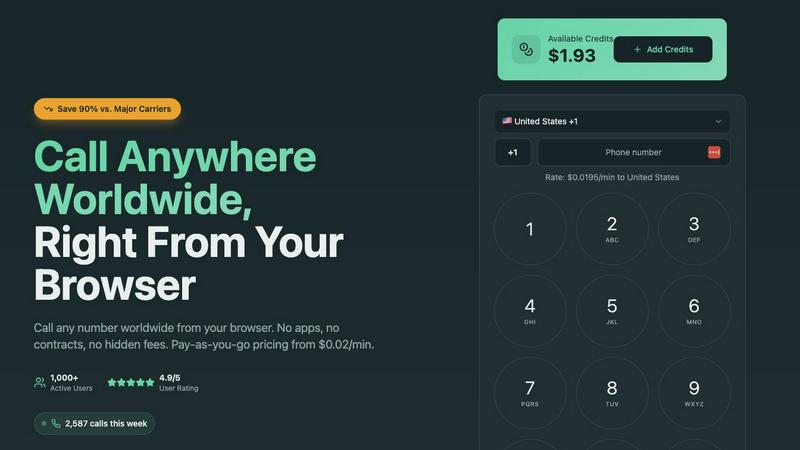
Caller enables instant browser-based international calls with transparent pay-as-you-go rates from $0.02/min.
Last updated: March 1, 2026

Decode This Text
Decode This Text provides instant, human-like analysis of confusing conversations in just 30 seconds.
Last updated: February 28, 2026
Visual Comparison
Caller
Decode This Text

Feature Comparison
Caller
Browser-Based WebRTC Calling
Caller's core technology is built on the WebRTC framework, allowing users to initiate and receive voice calls directly from their web browser without any plugins or downloads. This ensures maximum compatibility across devices and operating systems, from laptops to tablets. The architecture leverages secure peer-to-peer-like connections optimized by global media servers, ensuring low-latency, high-definition audio that bypasses the limitations and costs of traditional Public Switched Telephone Network (PSTN) routing.
Transparent Pay-As-You-Go Billing
The platform operates on a pure usage-based billing model with no monthly subscriptions, contracts, or hidden fees. Users pre-pay for credits that never expire and are charged only for completed call minutes at published rates starting from $0.02 per minute. This financial model, powered by a real-time billing API, provides complete cost control and transparency, making it ideal for variable usage patterns and for businesses looking to optimize communication expenses with precise, auditable spending.
Global Number Provisioning API
Beyond outbound calling, Caller offers an API-driven service for provisioning dedicated virtual phone numbers in countries like the US and UK. Users can acquire local, toll-free, or mobile numbers to use as a professional caller ID or for establishing a business presence. This feature integrates seamlessly with the core calling stack, enabling instant activation and management of numbers directly from the user dashboard for use in outbound communication strategies.
Enterprise-Grade Security & Encryption
All communication on the Caller platform is secured with bank-level SSL/TLS 1.2+ encryption, ensuring that both signaling (call setup) and media (audio streams) are protected from interception. This end-to-end security model safeguards sensitive business conversations and payment transactions. The platform's infrastructure is designed with privacy-by-design principles, requiring no personal phone verification for outbound calls, which enhances user anonymity and simplifies onboarding.
Decode This Text
Screenshot & Text Input Parsing
The platform supports multiple, flexible input methods for seamless integration into any user's tech stack. Users can directly paste message text or, more innovatively, upload a screenshot of their chat interface. The system's OCR (Optical Character Recognition) and parsing engine automatically extract and structure the conversation, eliminating manual transcription. This feature ensures compatibility with any messaging app (WhatsApp, iMessage, Slack, etc.), making the decoding process universally accessible and frictionless, regardless of the source platform.
Tone and Sentiment Analysis Engine
At its core, Decode This Text employs a robust sentiment analysis API that quantifies the emotional temperature of a message. It doesn't just label text as positive or negative; it provides a nuanced percentage-based score (e.g., 75% friendly, 40% effort) for tone, intent, and investment. This technical analysis identifies sarcasm, passive-aggression, or genuine warmth that might be missed by the human eye, offering an objective, data-backed read on the subtextual emotional state of the sender.
Behavioral Pattern Detection
This feature utilizes temporal and linguistic pattern recognition algorithms. It analyzes metadata and content patterns that users often overlook, such as consistent late-night messaging, avoidance of specific questions, gradual shortening of replies, or delayed response times. By flagging these behavioral cues, the tool provides insights into long-term communication trends, helping users understand if a change in interaction style is a one-off event or part of a significant pattern.
AI-Generated Response Suggestions
Integrated directly into the analysis workflow, this feature provides actionable output. After decoding a message, the system generates three tailored response options—calm, direct, or firm—formulated to align with the user's desired outcome and the analyzed context of the conversation. This turns analysis into immediate utility, offering compatible next steps that users can deploy with confidence, effectively closing the loop between interpretation and action.
Use Cases
Caller
Distributed Tech Team Collaboration
Remote engineering and development teams use Caller for daily stand-ups, pair programming sessions, and urgent discussions with international colleagues or clients. The browser-based nature eliminates compatibility issues across different OS environments (Linux, macOS, Windows) and allows developers to jump into a call directly from a shared link or their workflow tool (like Slack or a project management dashboard) without context-switching to a separate app.
Global Customer Support & Sales Outreach
Sales and support teams leverage Caller to make cost-effective outbound calls to customers and prospects in over 200 countries. The clear HD audio quality ensures professional conversations, while the pay-as-you-go model aligns perfectly with variable call volumes. Teams can use dedicated international numbers as their caller ID to build local trust and increase answer rates, all managed through a centralized web interface.
Freelancer & Digital Nomad Operations
Freelancers, consultants, and digital nomads who travel frequently use Caller as their primary communication tool. It provides a consistent, reliable calling interface accessible from any browser worldwide, avoiding expensive international roaming charges and SIM card swaps. They can maintain a professional presence by using a dedicated number from their home country while calling clients or service providers globally at local-rate prices.
Automated System Integration & Alerting
Developers integrate Caller's capabilities into custom applications and automated systems for voice-based alerts and notifications. Using its API, systems can programmatically initiate calls to deliver critical alerts (e.g., system downtime, security breaches, or appointment reminders) to on-call personnel or end-users. This use case highlights the platform's utility as a programmable communication layer within a larger software stack.
Decode This Text
Decoding Romantic and Dating Ambiguity
Users can paste confusing texts from dating apps or partners (e.g., "I'll let you know," or post-date radio silence). The tool analyzes tone and intent to clarify if the sender is genuinely busy, losing interest, or being avoidant. It helps answer pressing questions like "Why did they ghost after three months?" by providing a reality-check based on linguistic and behavioral evidence, preventing over-analysis and regretful replies.
Interpreting Professional and Workplace Communication
This use case focuses on integrating clarity into professional environments. Users can decode cryptic one-word emails from a boss, vague feedback like "we'll keep your resume on file," or nuanced Slack messages. The analysis clarifies underlying tones of anger, dissatisfaction, or genuine neutrality, and provides professionally compatible response strategies to navigate office politics and communication with appropriate tact.
Navigating Friends and Family Dynamics
The tool helps analyze group chat silences, passive-aggressive comments from relatives, or changing communication patterns from friends. By inputting these social exchanges, users receive an objective breakdown of the group or individual's dynamic, identifying potential conflicts, disengagement, or simple misunderstandings, enabling more empathetic and effective personal communication.
Pre-Send Message Validation and Review
Before sending an emotionally charged or important reply, users can input their drafted response into the system to analyze its likely perceived tone and impact. This proactive use case acts as a communication firewall, allowing individuals to stress-test their messages, adjust tone, and ensure their intent is clearly and effectively communicated, thereby preventing escalation or misunderstanding.
Overview
About Caller
Caller is a modern, browser-based Voice over IP (VoIP) platform engineered to replace traditional telephony and complex communication stacks. It provides a pure web application for making high-definition voice calls to any phone number globally, eliminating the need for physical hardware, mobile apps, or desktop software installations. Built on a cloud-native architecture, Caller leverages WebRTC (Web Real-Time Communication) protocols to facilitate real-time audio streaming directly within any modern web browser like Chrome, Firefox, or Edge. The platform is designed for developers, remote teams, freelancers, and businesses that require seamless, scalable, and cost-effective international communication integrated directly into their workflow. Its core value proposition lies in its frictionless setup, transparent pay-as-you-go pricing model, and enterprise-grade audio infrastructure, offering up to 90% savings compared to legacy carriers while maintaining professional call quality and robust security with SSL/TLS encryption.
About Decode This Text
Decode This Text is a sophisticated AI-powered communication analysis engine designed to parse and interpret the subtext of digital conversations. It functions as a critical layer of intelligence for personal and professional communication, transforming ambiguous text messages, emails, and chat logs into actionable insights. The platform is engineered for individuals seeking to eliminate guesswork from their interactions, providing a clear breakdown of emotional tone, sender intent, and engagement patterns. Its core value proposition lies in its seamless integration into a user's daily workflow—acting as a real-time communication co-pilot. By leveraging advanced natural language processing (NLP) models, it deciphers context, detects non-obvious patterns like response timing and evasiveness, and generates contextually appropriate response options. This tool is built for anyone navigating complex digital dialogues, from analyzing a vague message from a date to interpreting a terse email from a manager, ensuring users respond with confidence and clarity, backed by data-driven analysis.
Frequently Asked Questions
Caller FAQ
What technology does Caller use for browser-based calling?
Caller is built on the standardized WebRTC (Web Real-Time Communication) API, which is natively supported by all major modern browsers. This technology handles the real-time capture and encoding of audio directly in the browser, establishes a secure peer-to-peer connection (facilitated by STUN/TURN servers for network traversal), and manages the streaming of high-definition voice data over UDP for optimal performance and low latency, eliminating the need for any external software.
Do I need a phone number or SIM card to use Caller?
No, you do not need a personal phone number or SIM card to make outbound calls with Caller. You simply sign up with an email address, add credits, and start calling. Your caller ID can be set to a private number or to a dedicated virtual number purchased through Caller's number provisioning service. This makes it ideal for privacy and for users who want a separate business line.
How does the pay-as-you-go credit system work?
You pre-purchase credits into your Caller account wallet via secure payment methods. These credits have no expiration date. When you make a call, the platform's billing system deducts credits in real-time based on the per-minute rate of the destination country and the exact duration of the connected call. You only pay for completed minutes, and you can track your remaining balance and usage history in your account dashboard at any time.
Can I use Caller on my mobile device?
Yes, Caller is fully functional on mobile devices. Because it is a web application built on WebRTC, it works within the mobile web browsers (like Safari on iOS or Chrome on Android) on smartphones and tablets. There is no native app to download from an app store; you simply navigate to the Caller website, log in, and the calling interface will be optimized for your mobile screen, providing the same features and call quality.
Decode This Text FAQ
How does Decode This Text ensure my privacy and data security?
The platform is built with a privacy-first architecture. As stated, no human ever reads your texts. All analysis is performed by automated AI systems. Conversations are processed anonymously and are not stored for long-term profiling or used to train public models, ensuring complete confidentiality and integration into your personal communication security protocol.
What messaging platforms and formats are compatible?
The system is platform-agnostic due to its dual input method. It is compatible with any digital text source. You can directly copy-paste text from SMS, WhatsApp, Signal, Email, Slack, Discord, and social media DMs. Alternatively, the screenshot upload feature with OCR integration means you can use it with any app or platform that displays text on your screen, ensuring universal compatibility.
Can it analyze long conversation threads or only single messages?
Yes, the engine is designed to parse and analyze full conversation threads. When you paste a multi-message exchange or upload a screenshot of a long chat, the NLP model evaluates the context, flow, and patterns across the entire dialogue. This provides a more accurate and comprehensive analysis than a single message in isolation, as it understands relational dynamics and historical context.
How accurate is the AI's analysis compared to a human perspective?
The AI is trained on vast datasets of human communication and is designed to identify consistent linguistic and psychological cues. While not infallible, it provides an objective, data-driven perspective free from personal bias. Many users report it feeling like a "wise older sibling" because it highlights patterns and tones they were too emotionally involved to see, offering a highly effective and consistently available second opinion.
Alternatives
Caller Alternatives
Caller is a browser-based international calling platform, operating within the productivity and management software category. It enables instant voice calls globally without app downloads, using a pay-as-you-go model for cost-effective communication. Users often explore alternatives to find solutions that better align with their specific tech stack, such as native mobile app integration, API access for custom workflows, or bundled subscription models. Needs can vary based on required call features, compliance standards, and existing communication infrastructure. When evaluating an alternative, prioritize core technical compatibility: does it integrate with your CRM or support systems? Assess the underlying infrastructure for call quality and uptime guarantees. Finally, scrutinize the pricing architecture for transparency and scalability against your projected usage patterns.
Decode This Text Alternatives
Decode This Text is a productivity tool focused on communication analysis. It operates within the text interpretation and interpersonal intelligence software category, helping users parse ambiguous messages by providing insights into tone, intent, and suggested responses. Users often seek alternatives for various technical and operational reasons. Common drivers include budget constraints, the need for specific API integrations, or compatibility requirements with existing CRM or communication platforms like Slack or Microsoft Teams. Others may require more advanced features, such as batch processing or deeper sentiment analysis engines. When evaluating an alternative, prioritize its technical stack and integration capabilities. Assess whether it offers a RESTful API for custom workflows, supports real-time analysis within your primary communication apps, and provides data export options. Security protocols and data handling policies are also critical, especially for business use.