
DevHub vs Skene
Side-by-side comparison to help you choose the right product.

DevHub
DevHub is a community-voted directory for discovering and submitting developer tools and integrations.
Last updated: February 28, 2026

Skene is growth infrastructure you own and prompt directly into your codebase.
Last updated: February 28, 2026
Visual Comparison
DevHub
Skene
Feature Comparison
DevHub
Community-Driven Curation Engine
At the heart of DevHub is its powerful community curation engine. Developers submit and review tools, with visibility determined by a transparent upvote system. This ensures that listings are ranked by genuine utility and integration potential within real-world tech stacks, rather than marketing spend. The system automatically surfaces trending projects and filters out low-quality submissions, creating a trusted, peer-reviewed directory.
Real-Time Project Launches & Discovery
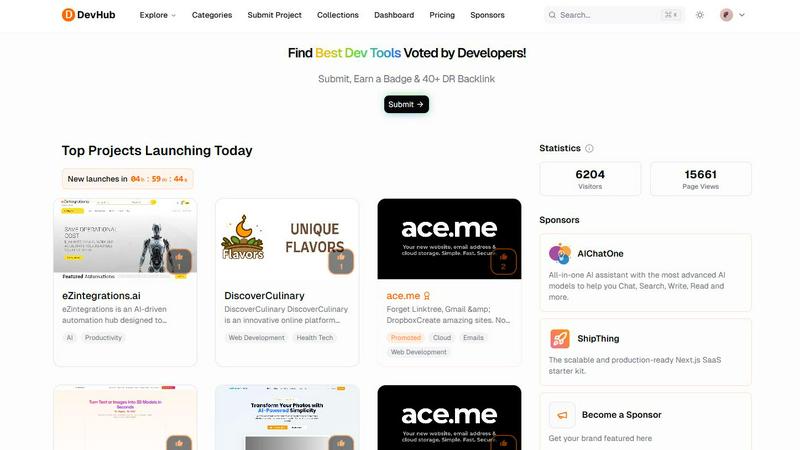
DevHub features a dedicated "Launching Today" section that showcases new tools, libraries, and SaaS products as they go live. This real-time feed is invaluable for early adopters and tech scouts who need to stay ahead of the curve. The countdown timer and categorization make it easy to discover the latest innovations in AI, web development, DevOps, and more, ensuring you never miss a pivotal release.
Technical Stack Integration Focus
Listings on DevHub are rich with technical context. Each project page emphasizes compatibility, integration methods, supported frameworks, and API documentation. This allows developers to quickly assess if a new database driver, React component library, or cloud SDK will seamlessly fit into their existing architecture, reducing evaluation time and technical debt risk.
Creator Incentives & Backlink Program
To encourage high-quality submissions, DevHub offers a formal incentives program. Project creators who list their tools can earn verified badges that boost credibility. More importantly, they receive a permanent, high Domain Rating (DR 40+) backlink from the DevHub domain, providing significant SEO value and driving qualified, technical traffic directly to their documentation or repo.
Skene
Codebase Signal Analysis
Skene performs deep, automated analysis of your connected GitHub or GitLab repository to extract actionable growth signals. It scans your framework, component structure, and user flow logic to identify onboarding friction points, activation opportunities, and retention risks directly from the source code, providing a foundational context layer for all subsequent AI-driven optimizations.
AI-Prompted Growth Implementation
Growth workflows are managed through natural language prompts within your existing development environment, such as Cursor or a terminal. After analysis, you can instruct Skene to generate and implement specific improvements—like refining an onboarding tour or adjusting a activation checkpoint—turning strategic insights into shipped code without manual intervention.
Self-Optimizing User Flows
The system continuously monitors user interactions against the signals in your codebase. It automatically A/B tests different user journey variations and implements the winning flows. This creates a closed feedback loop where onboarding and activation processes become smarter and more effective over time, with no manual dashboard tuning required.
Integrated Growth Manifest & Context
Skene generates a persistent growth-manifest.json file within your project (e.g., in ./skene-context/). This file acts as a centralized, version-controlled source of truth for all your product's growth logic, analytics definitions, and user journey states, ensuring your AI agents and tools have consistent, up-to-date context.
Use Cases
DevHub
Tech Stack Modernization Research
Development teams tasked with modernizing legacy systems or adopting new paradigms (e.g., microservices, serverless) use DevHub to research and compare next-generation tools. They can filter by category, read community reviews on performance and ease of integration, and build a shortlist of vetted options for their specific Node.js, Go, or Python-based environments.
Open-Source Library Discovery & Evaluation
Individual developers and open-source maintainers leverage DevHub to find new libraries and dependencies. Before adding a package to their project, they can check its community rating on DevHub, see discussion about maintenance activity and security, and discover alternative tools, ensuring they choose robust, well-supported components for their React, Vue, or other framework-based applications.
SaaS Product Launch & Market Validation
Startups and indie hackers launching a new developer-focused API, SDK, or SaaS platform use DevHub as a launchpad. Submitting their product provides immediate exposure to a targeted audience, generates initial user sign-ups, and delivers crucial early feedback. The backlink and badge also aid in building domain authority and establishing trust from day one.
Staying Current with Emerging Technologies
CTOs, engineering managers, and developers dedicated to continuous learning use DevHub's curated feeds and collections to monitor emerging trends. Whether it's exploring new AI model APIs, DevOps orchestration tools, or database solutions, the platform serves as a radar for technological shifts, helping teams make informed decisions about future skills and infrastructure investments.
Skene
Autonomous Onboarding Optimization
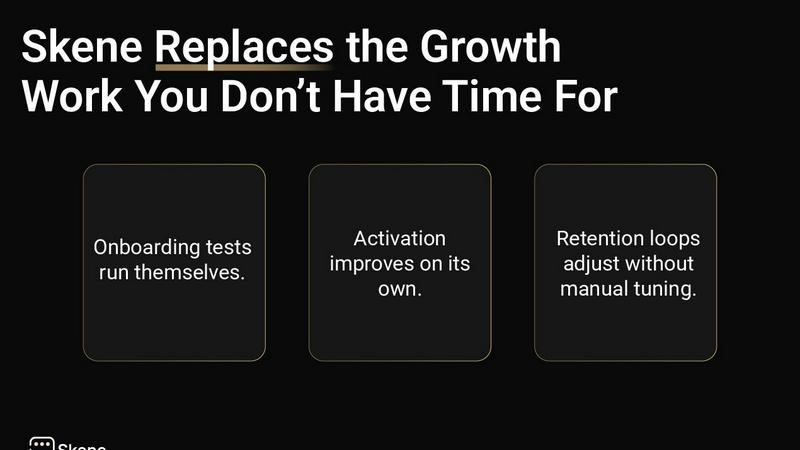
For SaaS products, Skene automatically analyzes where new users drop off during initial setup. It then generates, tests, and deploys refined onboarding tours and tooltips directly within the application's UI, significantly improving time-to-value and activation rates without any engineering overhead.
Continuous Activation Funnel Management
Startups can use Skene to perpetually audit and improve their core activation funnel. The system identifies which features are correlated with long-term retention, detects where users struggle to reach them, and prompts the implementation of guided flows or UI adjustments to boost key feature adoption.
Lifecycle Automation for Customer Success
Teams can automate complex customer lifecycle workflows based on code-level signals. For example, Skene can trigger re-engagement nudges or educational content when it detects a user has not interacted with a newly shipped feature, helping to drive adoption and reduce churn autonomously.
Tech Stack Consolidation for Developers
Development teams frustrated with managing multiple analytics, onboarding, and engagement tools can replace their entire legacy growth stack with Skene. It consolidates these functions into a single, code-native infrastructure that is owned, versioned, and modified within the same workflow used for feature development.
Overview
About DevHub
DevHub is a community-driven discovery and curation platform engineered for developers, engineers, and tech enthusiasts. It serves as a centralized, real-time directory for the latest tools, libraries, frameworks, APIs, and SaaS products shaping the modern technology landscape. The platform's core value proposition lies in its crowd-sourced intelligence, where the global developer community actively submits, reviews, and upvotes projects. This model creates a dynamic, self-regulating ecosystem that filters out noise and highlights quality based on genuine user experience and technical merit, ensuring the most innovative and impactful tools gain visibility. For developers, DevHub solves the critical problem of fragmented discovery across forums, blogs, and social media, offering a single, trusted hub to stay updated on cutting-edge solutions that integrate with contemporary tech stacks like React, Node.js, Python, and cloud-native architectures. For creators, indie hackers, and companies launching new projects, it provides a vital channel for exposure, technical validation, and direct community feedback, complete with incentives like verified badges and high-domain-authority backlinks. By focusing on real-time launches and community governance, DevHub positions itself as an essential resource for anyone looking to build, scale, or optimize their development workflow with the right, vetted tools.
About Skene
Skene is an AI-powered Product-Led Growth (PLG) infrastructure designed for modern development teams, particularly indie developers and early-stage startups. It redefines growth tooling by integrating directly with your codebase and IDE, eliminating the need for external, siloed dashboards and brittle third-party scripts. Skene operates as a fully automated iteration engine that autonomously optimizes key growth funnels like onboarding, activation, and retention. By analyzing your repository structure and deriving signals directly from your code, it intelligently identifies friction points and activation drop-offs. It then automatically tests and implements improved user flows, creating a self-optimizing product experience. This "growth as code" philosophy allows developers to own, version, and prompt their growth infrastructure just like their core product, ensuring seamless compatibility with existing tech stacks and AI agents. The core value proposition is clear: replace a fragmented legacy growth stack with a unified, code-native system that ships growth loops instead of managing widgets, all without expanding your team.
Frequently Asked Questions
DevHub FAQ
How does the project submission and review process work?
The process is community-driven. Any registered user can submit a tool by providing details like its name, description, category, website, and relevant tech stack tags. The submission enters a moderation queue where the community can upvote it. Projects that gain significant positive traction and meet platform guidelines are prominently featured. This ensures quality is maintained through collective technical scrutiny.
What kind of backlink do creators receive, and what is its SEO value?
Creators of approved projects receive a permanent "dofollow" backlink from the DevHub domain to their project's official website. DevHub has a Domain Rating (DR) of over 40, which is a strong metric of its authority in search engines' eyes. This high-quality backlink can significantly improve the project's own search engine ranking for relevant technical keywords, driving organic traffic.
Is DevHub free to use for browsing and submitting projects?
Yes, DevHub operates on a freemium model for its core functions. Browsing, searching, and upvoting tools are completely free. Submitting a project for listing is also free and comes with the potential to earn the creator badge and backlink. The platform may offer premium sponsorship or featured listing options for enhanced visibility, but the fundamental discovery and submission mechanics are accessible to all.
How can I ensure my tool is listed in the correct category for maximum visibility?
When submitting your project, you must select from DevHub's predefined categories (e.g., AI, SaaS, Mobile Development, Business Analytics). It is crucial to choose the most accurate category and provide detailed tags related to your tech stack (e.g., "Python," "React," "REST API"). This ensures your tool appears in relevant searches and category feeds, reaching developers actively looking for solutions in that specific domain.
Skene FAQ
How is Skene different from traditional customer experience software?
Traditional tools rely on manual tour creation, external JavaScript snippets, and brittle UI selectors that break with every deployment. Skene is fundamentally different; it reads your actual codebase to understand your application's structure and automatically generates and maintains all growth components. When you push new code, Skene's flows update themselves, ensuring robustness and deep integration.
How long does it take to set up?
Setup is designed to be completed in less than 60 seconds. You simply grant Skene read-only access to your GitHub or GitLab repository. The system then automatically analyzes your codebase to generate the initial PLG flows and context layer. No initial code changes or API modifications are required to get started.
Is my code secure?
Yes, security is a primary design consideration. Skene only ever requires read-only access to your repository. All code analysis is performed in a secure, isolated environment. Your proprietary code is not stored or used for any purpose other than generating your specific growth infrastructure and signals.
What kind of analytics do you provide?
Skene provides analytics focused on growth outcomes, not just pageviews. The dashboard shows real-time user progress through defined journeys, completion rates, engagement metrics, and bottleneck identification. You can track critical metrics like time-to-value and directly measure the impact of each automated improvement on your activation and retention goals.
Alternatives
DevHub Alternatives
DevHub is a community-driven discovery platform for developers, operating in the tech tool and integration directory category. It centralizes real-time information on libraries, frameworks, APIs, and SaaS products, using crowd-sourced upvotes to surface the most impactful tools for modern tech stacks. Developers may seek alternatives for various reasons, including specific feature gaps, different pricing models, or a need for deeper integration with their existing project management or development workflow tools. The requirements can vary significantly based on team size, primary tech stack, and discovery methodology. When evaluating an alternative, key considerations include the depth of community vetting, the structure and specificity of tool categorization, and how well the platform aligns with your primary programming languages and infrastructure. The ideal solution should streamline your research process and connect you with tools that integrate seamlessly into your environment.
Skene Alternatives
Skene is an automated Product-Led Growth (PLG) iteration engine, falling into the productivity and growth management category. It integrates directly with your codebase to autonomously optimize user onboarding, activation, and retention loops, eliminating the need for manual growth teams. Users often explore alternatives for several reasons. These can include budget constraints, a need for different pricing models like subscription-based plans, or specific feature requirements not covered by Skene's automated, outcome-based approach. Platform compatibility, such as needing a solution for a different tech stack or a preference for more manual control via traditional dashboards, also drives the search. When evaluating an alternative, key considerations should be its integration method with your existing infrastructure and whether it supports your framework. Assess if the tool's automation level matches your needs, from fully autonomous optimization to manual A/B testing suites. Finally, scrutinize the pricing structure to ensure it aligns with your growth stage and budget.