
Fallom vs HookMesh
Side-by-side comparison to help you choose the right product.

Fallom
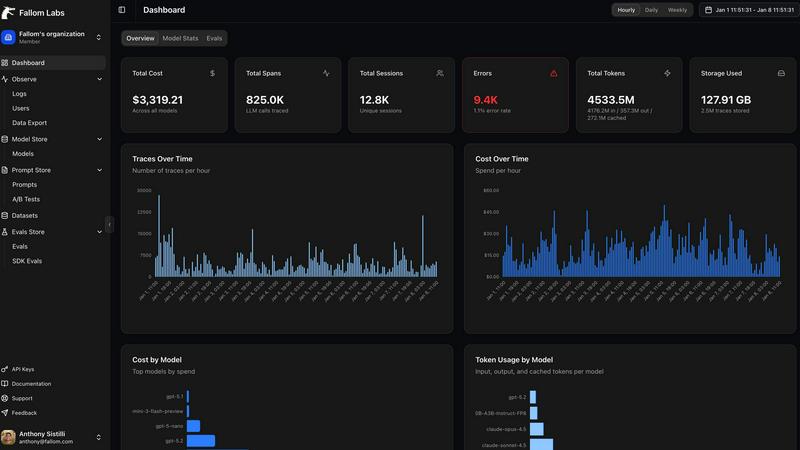
Fallom provides real-time observability and cost tracking for LLMs, ensuring transparency and compliance for your AI.
Last updated: February 28, 2026

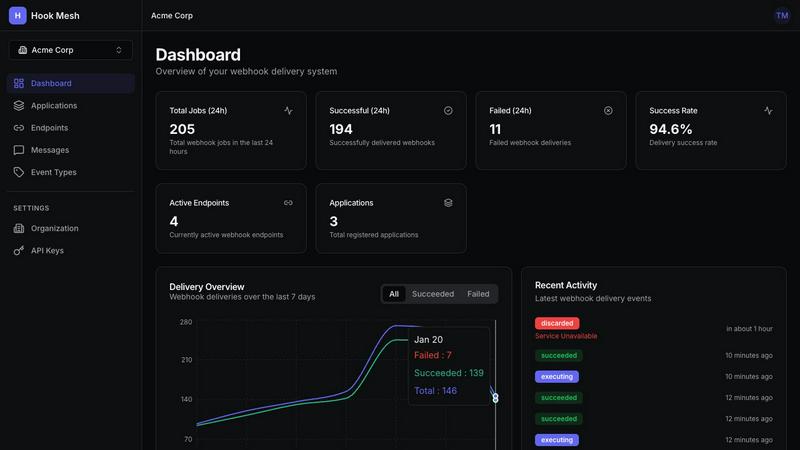
Effortlessly implement reliable webhooks with automatic retries and a self-service portal for your SaaS product.
Last updated: February 27, 2026
Visual Comparison
Fallom
HookMesh
Feature Comparison
Fallom
Real-Time Observability
Fallom provides comprehensive real-time observability for AI agents, allowing users to track tool calls and analyze timing. This feature enhances debugging processes, enabling teams to identify and resolve issues with confidence.
Cost Attribution
With Fallom, organizations can achieve full cost transparency by tracking expenses per model, user, and team. This feature is essential for budgeting and chargeback purposes, ensuring that teams can monitor and manage their AI operational costs effectively.
Compliance Ready
Fallom is designed to support various regulatory requirements, including the EU AI Act, SOC 2, and GDPR. This feature includes full audit trails, input/output logging, model versioning, and user consent tracking, helping organizations maintain compliance with ease.
Session Tracking
Fallom allows for grouping traces by session, user, or customer, providing complete context for every interaction. This feature is invaluable for understanding user behavior and optimizing AI performance across different workloads.
HookMesh
Reliable Delivery
HookMesh ensures that no webhook is ever lost by implementing automatic retries and exponential backoff strategies. With capabilities like circuit breakers, the platform can auto-disable failing endpoints and re-enable them upon recovery, providing a level of reliability critical for modern applications.
Customer Portal
The self-service customer portal is an embeddable UI that allows users to manage their webhook endpoints effortlessly. It provides essential features such as delivery logs, which offer full request and response visibility, enabling easier troubleshooting and monitoring of webhook events.
Developer Experience
Designed with developers in mind, HookMesh facilitates rapid deployment of webhooks. Through a comprehensive REST API and official SDKs for languages like JavaScript, Python, and Go, developers can integrate webhook functionality in just a few lines of code, significantly reducing development time.
One-Click Replay
One of the standout features of HookMesh is the one-click replay functionality for failed webhook deliveries. This allows users to instantly retry any failed events without needing to dig through logs or manually resend data, streamlining the error resolution process.
Use Cases
Fallom
Debugging AI Workflows
Developers and data scientists can use Fallom to debug complex AI workflows by analyzing latency issues and timing waterfalls. This ensures that multi-step agent interactions are efficient and effective, leading to improved user experiences.
Cost Management in AI Operations
Organizations can leverage Fallom's cost attribution feature to monitor spending on LLMs per model and user. This is crucial for financial planning and ensuring that teams stay within budget while utilizing AI technologies.
Compliance and Audit Readiness
Fallom aids compliance officers by providing comprehensive audit trails and user consent tracking. This is particularly important for businesses operating in regulated industries that require rigorous documentation of AI interactions.
Performance Analytics
Fallom's real-time dashboard and customer analytics allow organizations to monitor usage patterns, identify power users, and assess the performance of various models. This data-driven approach helps teams make informed decisions about AI deployments.
HookMesh
E-Commerce Order Processing
In an e-commerce environment, businesses can leverage HookMesh to manage order completion notifications. When an order is completed, the webhook sends relevant information to inventory and shipping systems, ensuring seamless operations and timely updates for customers.
SaaS User Onboarding
SaaS companies can use HookMesh to facilitate user onboarding processes. By sending webhooks upon user registration, relevant systems can trigger welcome emails, set up user accounts, and initiate onboarding workflows, enhancing the overall user experience.
Payment Gateway Notifications
For businesses using payment gateways, HookMesh can manage webhook notifications related to payment confirmations and failures. This ensures that the finance team is alerted in real-time, allowing for immediate action to resolve payment issues.
API Integration Tracking
Organizations that provide APIs can utilize HookMesh to track and manage webhook notifications regarding API usage. By monitoring events such as rate limits and usage statistics, businesses can make informed decisions about scaling their services and managing resources.
Overview
About Fallom
Fallom is a cutting-edge AI-native observability platform specifically designed for managing large language model (LLM) and agent workloads. By offering real-time monitoring and end-to-end tracing of every LLM call, Fallom empowers organizations to achieve comprehensive insights into their AI operations. The platform captures essential data such as prompts, outputs, tool calls, tokens, latency, and per-call costs. This information equips development teams, data scientists, and compliance officers with the necessary tools to debug issues quickly and efficiently. Fallom provides session-level context and detailed timing waterfalls, making it easier to understand complex multi-step agent workflows. Furthermore, it is built with enterprise readiness in mind, featuring robust audit trails, model versioning, and consent tracking to meet compliance requirements. Utilizing a single OpenTelemetry-native SDK, Fallom can be integrated into applications within minutes, significantly enhancing teams' ability to monitor usage in real-time and effectively attribute costs across various models, users, and teams.
About HookMesh
HookMesh is a state-of-the-art solution tailored for businesses seeking to simplify and optimize webhook delivery in their SaaS products. Built to tackle the inherent complexities of developing webhooks in-house, HookMesh alleviates challenges such as implementing retry logic, managing circuit breakers, and diagnosing delivery issues. This platform is engineered specifically for developers and product teams who wish to maintain their focus on core functionalities rather than getting mired in the intricacies of webhook management. With its robust, battle-tested infrastructure, HookMesh guarantees reliable delivery of webhook events through mechanisms like automatic retries, exponential backoff, and idempotency keys. The self-service customer portal enhances user experience by allowing easy endpoint management, comprehensive visibility into delivery logs, and one-click replay for failed webhooks. Ultimately, HookMesh empowers organizations to streamline their webhook strategy, ensuring events are delivered consistently and reliably while providing peace of mind.
Frequently Asked Questions
Fallom FAQ
What kind of organizations can benefit from Fallom?
Fallom is ideal for organizations that utilize large language models and AI agents, particularly those in regulated industries such as finance, healthcare, and technology, where compliance and observability are crucial.
How quickly can Fallom be integrated into existing applications?
With its OpenTelemetry-native SDK, Fallom can be integrated into applications in under five minutes, making it a highly efficient solution for organizations looking to enhance their AI observability.
What compliance regulations does Fallom support?
Fallom is designed to meet various compliance requirements, including the EU AI Act, SOC 2, GDPR, and others, ensuring that organizations can maintain regulatory standards in their AI operations.
Can Fallom help with performance testing of AI models?
Yes, Fallom provides evaluation tools that allow teams to run tests on LLM outputs, enabling them to catch potential regressions before deployment and ensure high-quality AI performance.
HookMesh FAQ
How does HookMesh ensure reliable webhook delivery?
HookMesh employs a series of strategies including automatic retries with exponential backoff, idempotency keys, and circuit breakers to guarantee that webhook events are delivered reliably, even in the face of transient failures.
Is there a limit to the number of webhooks I can send?
HookMesh offers a free tier that includes 5,000 webhooks per month. For higher volume needs, paid tiers are available, which allow for increased message capacity and additional features.
Can I integrate HookMesh with my existing applications?
Yes, HookMesh provides an easy integration process through its SDKs available for popular programming languages like JavaScript, Python, and Go. Developers can implement webhook functionality with minimal effort.
What support options are available for users?
HookMesh offers varying levels of support depending on the pricing tier chosen. Users on the free tier have access to community support, while higher tiers provide email support and priority assistance for critical issues.
Alternatives
Fallom Alternatives
Fallom is an AI-native observability platform specifically designed for managing large language model (LLM) and agent workloads. By offering real-time insights and comprehensive monitoring capabilities, it empowers organizations to optimize their AI operations effectively. Users commonly seek alternatives to Fallom for various reasons, including pricing concerns, specific feature requirements, or compatibility with existing platforms. As organizations evaluate their options, they should consider factors such as the level of observability provided, ease of integration with current tech stacks, and the ability to meet compliance requirements. When searching for an alternative, it's crucial to identify solutions that offer robust monitoring capabilities, real-time cost tracking, and enterprise-grade compliance features. Additionally, the ease of integration and support for tools like OpenTelemetry can significantly influence the effectiveness of the chosen platform. By focusing on these aspects, organizations can select an observability solution that best aligns with their operational needs and strategic goals.
HookMesh Alternatives
HookMesh is a state-of-the-art platform designed to streamline webhook delivery for software-as-a-service (SaaS) applications. It simplifies the complexities associated with webhook management, such as ensuring reliable delivery, handling retries, and providing a self-service customer portal for endpoint management. Users often seek alternatives to HookMesh due to various factors, including pricing structures, specific feature sets, or the need for integration with different platforms that may not align with HookMesh's offerings. When searching for an alternative to HookMesh, users should consider several key factors. First, assess the reliability of webhook delivery and whether the platform provides robust retry logic and error handling. Additionally, evaluate the user experience, particularly the availability of a customer portal for managing webhooks and gaining insights into delivery status. Finally, look for seamless integration capabilities with existing systems to ensure that the chosen solution meets your technical and business requirements.