
fnel vs Skippership
Side-by-side comparison to help you choose the right product.

fnel
Fnel provides real-time funnel analytics for solo founders with a one-line JavaScript integration.
Last updated: March 1, 2026

Skippership
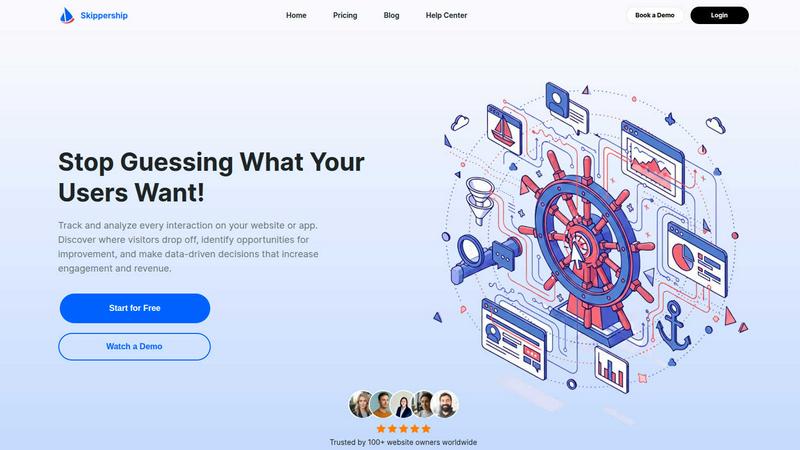
Skippership uses AI to analyze user behavior and fix friction points across your tech stack.
Last updated: March 1, 2026
Visual Comparison
fnel
Skippership
Feature Comparison
fnel
Real-Time Funnel Visualization
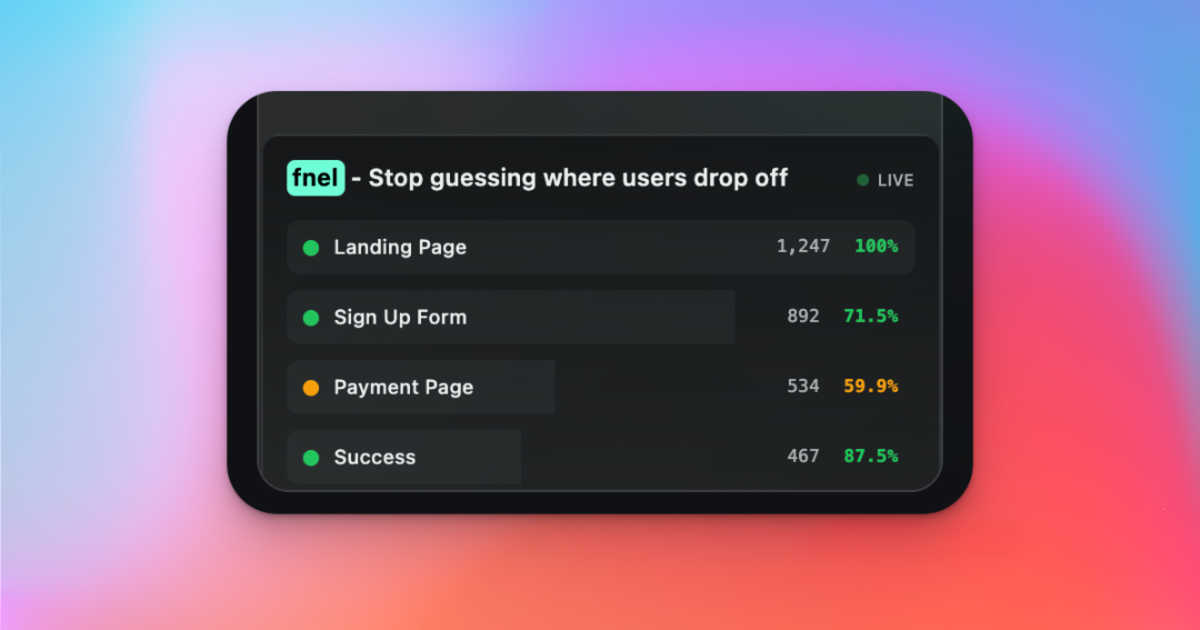
fnel provides instant, visual funnel analytics that update in real-time as user events flow in. Unlike traditional tools that require batch processing and delayed reports, you can see exactly how users are moving through your defined steps—like landing page, signup, and payment—the moment it happens. This live dashboard displays conversion rates and drop-off percentages at each stage, giving you an immediate pulse on your key user journeys without any configuration lag or complex query building.
One-Line Code Integration
Designed for developer velocity, fnel can be integrated into your application with a single line of code. After installing the lightweight npm package (npm install fnel) and initializing it with your API key, you can immediately start tracking events using simple fnel.track() calls. This eliminates the days or weeks typically spent instrumenting events and defining schemas in other platforms, getting you from zero to actionable funnel insights in under five minutes.
Smart Drop-Off Alerts
The platform automatically monitors your funnels and detects anomalies in real-time. If a particular step—such as a payment page—suddenly experiences a higher-than-normal drop-off rate, fnel triggers an immediate alert. This proactive notification system ensures you are informed of potential issues like broken forms, UX regressions, or performance problems as they happen, allowing for rapid investigation and resolution before they significantly impact conversion.
A/B Test Validation at Funnel Level
fnel allows you to attribute events to specific A/B test variants directly within your funnel analysis. By passing variant data in your track() calls, you can compare how different versions of a page or flow perform at each step of the user journey. This provides statistically significant insights into which variant drives better conversion through the entire funnel, moving beyond superficial click-through rates to understand true impact on your core business metrics.
Skippership
AI-Powered Behavior Analytics
Skippership's AI engine automatically processes and analyzes vast amounts of session data to surface actionable insights without manual effort. It intelligently identifies patterns, pinpoints critical friction points like unexpected drop-offs or rage clicks, and provides contextual suggestions for improvement. This transforms raw interaction data into clear, prioritized recommendations, enabling teams to focus on fixes that have the highest impact on conversion and user experience.
Session Replay & Journey Analysis
Gain complete visibility into the user experience with full session recordings that capture every click, scroll, and input. This feature allows you to watch real user journeys to uncover usability issues, understand context behind behaviors, and identify exactly where visitors encounter confusion or friction. It provides the qualitative context needed to complement quantitative data, making it an essential tool for diagnosing conversion blockers and optimizing flows.
Interactive Heatmaps (Click, Scroll, Move)
Visualize aggregate user interaction data with dynamic heatmaps that reveal exactly where users click, how far they scroll, and where their mouse moves. These visual tools highlight which page elements attract attention and which are ignored, enabling data-backed decisions for layout optimization, content placement, and call-to-action effectiveness to directly boost engagement and guide users toward conversion goals.
Seamless Platform Integrations
Built for compatibility, Skippership offers out-of-the-box, no-code integration with over 50 essential platforms in the modern tech stack. This includes CMS platforms like WordPress and Shopify, analytics tools like Google Analytics, e-commerce systems like WooCommerce and Magento, and project management tools like Jira. These integrations ensure data flows effortlessly between systems, unifying insights and streamlining workflows without disrupting existing operations.
Use Cases
fnel
Optimizing SaaS User Onboarding
For SaaS founders, understanding where new users fall off during the initial activation journey is critical. By tracking a funnel from signup and email verification to onboarding steps and final feature activation, fnel visually identifies the exact stage where users disengage. This enables targeted improvements, such as simplifying a confusing onboarding tutorial or fixing a bug in the email verification flow, directly increasing user activation rates and reducing early churn.
Fixing E-commerce Checkout Leaks
E-commerce store owners can implement fnel to visualize the classic checkout funnel: cart view, shipping information entry, payment details, and order confirmation. The real-time dashboard highlights the step with the largest percentage drop-off—for example, a 40% abandonment at the payment page—prompting immediate investigation into issues like unexpected shipping costs, lack of payment options, or form field errors that are killing conversions.
Validating Marketing Campaigns for Agencies
Marketing agencies and lead-generation businesses can use fnel to prove campaign ROI. By tracking a funnel from lead form submission through qualification steps to the final booked demo call, teams can see which traffic sources or ad creatives actually drive qualified leads through the entire pipeline, not just initial clicks. This step-level conversion data provides concrete evidence of what marketing efforts truly convert and where leads are being lost in the nurturing process.
Rapid Product-Market Fit Validation
Indie hackers and solo founders launching an MVP can use fnel to quickly gauge initial user interest and engagement. By setting up a simple funnel for their core flow—landing page visit, signup, and first key action—they can see in real-time if users are progressing or dropping off en masse. This immediate feedback loop is essential for iterating on the product experience early, before investing heavily in scaling, to ensure the solution resonates with the target audience.
Skippership
E-commerce Conversion Rate Optimization
For online stores, Skippership is instrumental in diagnosing and fixing checkout abandonment. Teams can use session replays to watch failed purchase attempts, employ heatmaps to see if key product information is missed, and leverage AI insights to identify common errors like form field confusion or unexpected shipping costs. Integrating with platforms like Shopify or Magento allows for direct correlation between user friction and sales data.
SaaS Product UX Improvement
Product teams at SaaS companies use Skippership to understand how users navigate complex applications. By analyzing session recordings and journey paths, they can identify where users struggle with new features or get stuck in onboarding flows. The AI's ability to flag rage clicks on non-interactive elements helps quickly pinpoint UI/UX flaws, leading to faster iterations and improved user retention.
Marketing Landing Page Performance
Marketing teams leverage Skippership to A/B test and optimize landing page effectiveness. Heatmaps show if visitors are engaging with primary CTAs or scrolling past vital content. Session replays reveal whether the page copy matches user intent. By tracking goals for form submissions or clicks, marketers can make data-driven design and copy changes to improve lead generation quality and volume.
Technical Debugging & Issue Triage
Development and support teams use session replays as a powerful diagnostic tool. When users report bugs or strange behavior, teams can instantly replay the exact session to see the issue in context, including console errors and network activity. This accelerates the debugging process, reduces back-and-forth communication, and provides clear evidence for bug reports in integrated systems like Jira.
Overview
About fnel
fnel is a purpose-built, developer-first analytics platform engineered to deliver immediate, actionable insights into user conversion funnels. It directly addresses the complexity and overhead of traditional analytics suites like Google Analytics or Mixpanel by focusing exclusively on funnel visualization and drop-off analysis. The core value proposition is speed and simplicity of integration. With a single line of code, developers and founders can instrument their application to track key user journey events and instantly visualize where potential customers are abandoning their flow. Built for the modern tech stack with a straightforward JavaScript/TypeScript SDK, fnel integrates seamlessly into any web application. It is the ideal tool for solo founders, indie hackers, and early-stage startup teams operating with lean resources who need to move quickly and make data-driven decisions without administrative burden. The platform allows you to validate product-market fit, optimize signup sequences, improve checkout processes, and enhance onboarding flows without getting bogged down in weeks of configuration, complex event schemas, or navigating endless, generic dashboards. fnel provides crystal-clear clarity on user behavior, enabling you to identify and fix conversion leaks faster and grow your product more efficiently.
About Skippership
Skippership is an all-in-one, AI-powered user behavior analytics platform engineered for modern product, marketing, and UX teams. It eliminates the guesswork from digital optimization by providing complete, actionable visibility into how visitors interact with your website or application. Designed to integrate seamlessly into existing tech stacks, Skippership consolidates critical tools—including session recordings, interactive heatmaps, goal tracking, and user journey analysis—into a single, intuitive dashboard. Its core differentiator is a sophisticated AI engine that automatically analyzes session data to identify critical pain points, such as rage clicks or checkout errors, and suggests practical, real-time solutions. Built with performance and compliance at its foundation, Skippership offers a lightweight implementation that safeguards site speed, alongside robust security features aligned with GDPR and CCPA standards. With native integrations for over 50 platforms like Shopify, WordPress, Jira, and Google Analytics, it empowers businesses of all sizes to make precise, data-driven decisions that directly boost engagement, strengthen customer retention, and increase revenue.
Frequently Asked Questions
fnel FAQ
How is fnel different from Google Analytics or Mixpanel?
fnel is purpose-built exclusively for funnel analysis and speed of implementation. Unlike GA or Mixpanel, which are broad analytics suites requiring complex event schema design and dashboard configuration, fnel requires just one code snippet. It provides immediate, step-level funnel visualization and automated drop-off detection out of the box. There's no noise from unrelated reports—just focused insights on where users leave your core flows and what to fix next.
Is there a free plan to get started?
Yes, fnel offers a Free Starter plan designed for initial validation. It includes up to 5,000 events per month and allows tracking for up to 3 separate funnels. You get access to the real-time dashboard and basic drop-off analysis. You can start using it immediately without providing a credit card, making it risk-free to integrate and test. You can upgrade to the Pro plan when you need higher event volumes and advanced features.
What tech stack is fnel compatible with?
fnel is built for modern web applications. It is distributed as a lightweight npm package (fnel) and can be integrated into any JavaScript or TypeScript frontend application, including those built with React, Vue, Svelte, Next.js, or plain JS. The simple API (fnel.track()) sends events to fnel's backend, requiring no complex backend instrumentation, making it compatible with any server-side technology or hosting platform.
How does the A/B test validation feature work?
You can pass variant information as properties when calling fnel.track(). For example, fnel.track('pricing_page', { variant: 'annual_plan' }). fnel will then segment your funnel data by these variants, allowing you to compare the conversion performance of 'annual_plan' versus 'monthly_plan' users at each subsequent step in the journey. This provides a clear, funnel-based view of which test variant leads to more completed goals, not just initial engagement.
Skippership FAQ
How does Skippership ensure it doesn't slow down my website?
Skippership is built with a lightweight, asynchronous tracking script that has a minimal performance footprint. The code is optimized for efficiency, ensuring data collection does not block page rendering or impact core web vitals. Our architecture leverages modern cloud infrastructure to handle processing externally, keeping your site's speed and user experience intact.
Is Skippership compliant with data privacy regulations like GDPR and CCPA?
Yes, privacy and compliance are foundational to Skippership. We are built to align with GDPR, CCPA, and other major privacy frameworks. We employ data minimization, do not track sensitive personal information, provide easy opt-out mechanisms, and secure all data with SSL/TLS encryption. You can configure cookie consent banners and manage data processing to meet your regional requirements.
Can I integrate Skippership with my existing analytics and marketing stack?
Absolutely. Skippership offers seamless, no-code integrations with over 50 popular platforms, including Google Analytics, WordPress, Shopify, HubSpot, Jira, and more. These integrations allow you to correlate behavior analytics with other data sources, create unified dashboards, and trigger actions in other tools, ensuring Skippership fits perfectly into your existing workflow without creating data silos.
What kind of insights does the AI engine provide?
The AI engine automates the analysis of user sessions to surface actionable insights. It identifies specific pain points such as rage clicks, dead clicks, form field errors, and sudden checkout exits. Beyond just identifying issues, it provides contextual suggestions—for example, it may recommend making a non-clickable element interactive or simplifying a multi-step form based on observed user behavior patterns.
Alternatives
fnel Alternatives
fnel is a developer-first, real-time funnel analytics platform designed for solo founders and indie hackers. It simplifies conversion tracking by providing immediate visual insights into user drop-offs with a one-line JavaScript integration, eliminating the complexity of traditional analytics suites. Users often explore alternatives to fnel for various reasons. Common considerations include budget constraints, the need for broader analytics features beyond funnels, or specific platform requirements like deeper CRM integrations or on-premise deployment. The search typically stems from evolving project needs or different team structures. When evaluating an alternative, focus on integration simplicity, real-time data capabilities, and the specificity of funnel analysis. Consider your tech stack compatibility, the level of developer effort required for setup, and whether the tool's focus aligns with your primary goal of identifying and fixing conversion leaks without unnecessary overhead.
Skippership Alternatives
Skippership is an AI-powered user behavior analytics platform within the broader digital analytics and optimization category. It provides comprehensive visibility into user interactions by combining session replays, heatmaps, and funnel analysis, all driven by an AI engine that automatically identifies friction points across your website or application. Users often explore alternatives to find a solution that aligns precisely with their budget, specific feature requirements, or existing technology ecosystem. Common considerations include the depth of integration with a current tech stack, the need for specialized analytics like mobile app support, or different pricing models that better suit a company's scale and workflow. When evaluating alternatives, focus on core capabilities like session replay fidelity, the sophistication of heatmap tools, and the strength of platform integrations. Equally important is assessing how the tool fits into your specific stack, its implementation complexity, and whether its data processing and security protocols meet your compliance standards. The goal is to find a solution that delivers actionable insights without creating technical debt or performance overhead.