
Coloring Book Engine vs Image3D AI
Side-by-side comparison to help you choose the right product.

Coloring Book Engine
Coloring Book Engine locally integrates AI and GPU workflows to produce publish-ready books and videos.
Last updated: February 28, 2026

Image3D AI
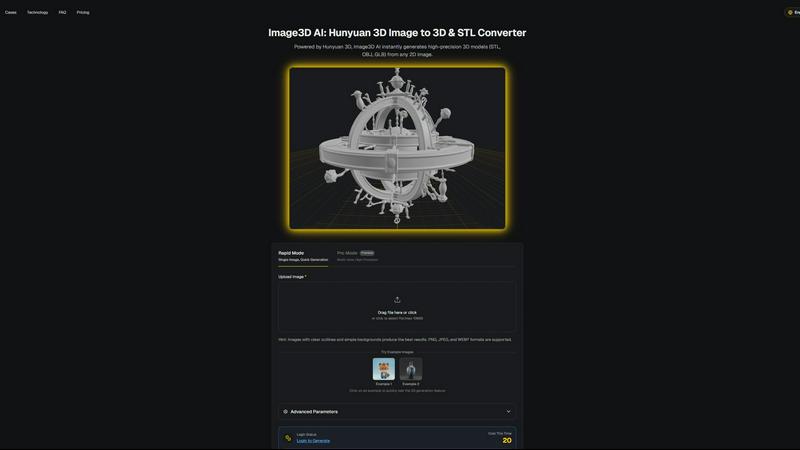
Image3D AI instantly converts 2D images into production-ready 3D models for printing and game engines.
Last updated: March 1, 2026
Visual Comparison
Coloring Book Engine
Image3D AI
Feature Comparison
Coloring Book Engine
BYOK AI Integration & Local GPU Processing
CBE is built on a hybrid processing architecture. You integrate your own API keys for AI-driven ideation and sketch generation, maintaining control over costs and data. For production tasks like line art cleaning, colorization previews, and video rendering, the engine utilizes your local DirectML-compatible GPU. This split ensures sensitive artwork never leaves your machine for core processing, while still providing access to powerful cloud-based AI models for creative brainstorming.
Batch Production & Project Workspace
The software is engineered for scale with a centralized project workspace that supports batch operations. You can generate, import, and manage dozens of coloring pages within a single project file. This system allows for efficient organization of entire book series, enabling creators to apply consistent styling, layouts, and exports across multiple pages simultaneously, dramatically reducing repetitive manual work.
KDP-Ready Export & Print Optimization
CBE handles the technical specifications required for platforms like Amazon KDP (Kindle Direct Publishing). It automates the configuration of correct trim sizes, bleed areas, and margins. A key technical feature is its advanced line art processing, which uses local GPU algorithms to transform fuzzy AI-generated edges into crisp, print-sharp black lines, ensuring professional physical book quality directly from the export module.
Integrated Marketing Asset Creation
Beyond book files, the engine includes a native video rendering module. It transforms your static coloring pages into animated coloring videos and short-form clips, perfectly formatted for social media platforms like YouTube Shorts and TikTok. This feature uses the local GPU to render previews with real-world color palettes, simulating how colors actually appear on paper, not just on screen.
Image3D AI
Hunyuan 3D Engine Integration
At the core of Image3D AI is its integration with Tencent's Hunyuan 3D engine, a cutting-edge AI model specifically trained for 3D reconstruction. This technology enables the platform to perform sophisticated depth estimation and geometry inference from a single 2D image, generating detailed, high-precision 3D models. This backend engine is what allows for the rapid, sub-60-second conversion times and the production of models with clean topology suitable for professional applications, setting it apart from basic conversion tools.
Multi-Format Export for Seamless Integration
Image3D AI is engineered for compatibility, offering export in industry-standard 3D file formats including STL, OBJ, and GLB. This ensures generated models can be directly imported into downstream software stacks without conversion hassles. STL files are optimized for 3D printing slicers, OBJ files are universally compatible with 3D editing suites like Blender and Maya, and GLB files are the modern standard for web-based viewing, AR applications, and game engines like Unity and Unreal Engine.
Dual Generation Modes (Rapid & Pro)
The platform provides two distinct operational modes to match project requirements and resource constraints. Rapid Mode is designed for speed and simplicity, generating a 3D model from a single image quickly. Pro Mode utilizes multi-view input for a physically accurate reconstruction, delivering higher precision and detail for complex objects. This flexibility allows users to optimize the balance between generation speed and model fidelity based on their specific use case.
PBR Material Support
For game development and realistic rendering workflows, Image3D AI supports Physically Based Rendering (PBR) materials. When generating models, the AI can infer and apply realistic material properties, resulting in assets that are visually accurate and ready for real-time rendering in modern game engines. This feature eliminates the need for manual material setup, further accelerating the asset creation pipeline for developers and digital artists.
Use Cases
Coloring Book Engine
Independent Artist & Solo Publisher
For the individual creator, CBE consolidates the entire publishing stack. An artist can start with an AI-assisted sketch using their own API key, refine the line art locally on their GPU, compile a print-ready PDF with proper bleed, and generate promotional videos-all within one application. This eliminates the need for separate subscriptions to AI services, design software, and video editors, streamlining the solo operation.
Small Publishing Studio or Team
The Organization license is structured for collaborative workflows within a small team or studio. Multiple licensed seats allow team members to work on different projects or aspects of a single large project within the shared CBE environment. The batch workflow and consistent export settings ensure brand and quality consistency across all publications managed by the team.
AI-Free Traditional Artwork Packaging
For traditional artists who avoid AI-generated content, CBE serves as a powerful packaging and production engine. Artists can import their hand-drawn sketches, utilize the software's local GPU tools for line cleaning and enhancement, then leverage the layout, KDP export, and video creation modules to professionally prepare and market their entirely original artwork.
Rapid Series and Niche Catalog Development
Creators focusing on building a large catalog or a series within a specific niche benefit from the batch workflow and AI-assisted ideation. The ability to rapidly generate thematic sketches, process them in bulk, and output uniformly styled books enables quick scaling. This use case is ideal for entrepreneurs targeting multiple specific interests or seasonal markets on publishing platforms.
Image3D AI
Game Development & Rapid Prototyping
Game developers can use Image3D AI to rapidly generate 3D assets from concept art or reference images, drastically speeding up the prototyping phase. The tool's ability to produce models with PBR material support means these assets can be directly imported into engines like Unity or Unreal Engine for immediate testing and iteration, streamlining the pre-production workflow and enabling faster creative validation.
3D Printing & Maker Projects
For 3D printing enthusiasts and professionals, Image3D AI acts as a powerful image-to-STL converter. It transforms logos, sketches, or product photos into watertight, print-ready 3D meshes. The platform's focus on generating clean geometry ensures the resulting STL files are optimized for slicing software, reducing the need for manual repair and preparation before sending a model to the printer.
E-commerce & AR Product Visualization
E-commerce businesses can leverage Image3D AI to convert standard 2D product photos into interactive 3D models. These models can be embedded on product pages for 360-degree viewing or used in Augmented Reality (AR) applications to allow customers to visualize products in their own space. This enhances online shopping experiences, reduces return rates, and provides a significant competitive advantage.
Architectural Visualization & Design
Architects and designers can quickly generate basic 3D massing models or detailed site elements from sketches, floor plans, or inspiration images. This capability saves considerable modeling time from scratch, allowing for faster client presentations, early-stage design exploration, and efficient integration of concept models into more detailed BIM or CAD software workflows.
Overview
About Coloring Book Engine
Coloring Book Engine (CBE) is a comprehensive, desktop-based production suite engineered for the modern coloring book creator. It functions as a complete, integrated toolkit that moves beyond simple PDF generation to facilitate the entire commercial publishing pipeline. The software is architected for artists, independent publishers, and entrepreneurial hobbyists who demand professional-grade output without the complexity of managing disparate applications. Its core value proposition lies in a highly optimized, batch-oriented workflow that accelerates production from initial concept to final, print-ready files and marketing assets. A defining technical feature is its BYOK (Bring Your Own Key) AI integration framework, which allows users to plug in their preferred AI service APIs (like OpenAI or Anthropic) for ideation and sketching, ensuring data privacy and avoiding locked-in subscription costs. Furthermore, CBE leverages local GPU acceleration for core rendering tasks such as line art refinement and coloring video generation, keeping sensitive project data on-device. This powerful combination of flexible cloud AI and local processing provides an unparalleled, end-to-end solution for scaling a coloring book business efficiently and securely.
About Image3D AI
Image3D AI is a professional-grade platform that revolutionizes the 3D asset creation pipeline by converting static 2D images into production-ready 3D models in seconds. Powered by Tencent's advanced Hunyuan 3D engine, it performs complex technical inference to generate high-precision 3D geometry and textures from a single input image. This AI-powered tool fundamentally democratizes high-fidelity 3D generation, making it accessible to professionals and enthusiasts without requiring deep expertise in traditional 3D modeling software like Blender or Maya. Its core value proposition lies in its seamless integration into diverse, tech-heavy workflows, offering multi-format export capabilities that ensure immediate compatibility with industry-standard tools. Whether for rapid prototyping in game development, creating watertight meshes for 3D printing, generating assets for AR/VR experiences, or building interactive 3D models for e-commerce, Image3D AI bridges the gap between 2D concepts and 3D reality with unprecedented speed, precision, and workflow efficiency.
Frequently Asked Questions
Coloring Book Engine FAQ
Is Coloring Book Engine a desktop app or a cloud service?
Coloring Book Engine is a native desktop application for Windows. The majority of its processing, especially for GPU-accelerated tasks like line art cleaning and video rendering, occurs locally on your machine. It integrates with cloud-based AI services only when you choose to supply your own API keys for the ideation and sketching phase, giving you control over what data is processed externally.
What exactly does it speed up for coloring book creators?
CBE dramatically accelerates the end-to-end production pipeline. It eliminates context-switching between multiple tools by combining AI ideation, line art refinement, page layout, print-ready PDF export, and social media video creation into one optimized workspace. The batch processing capability allows you to apply changes and generate exports for dozens of pages simultaneously, turning a process that could take days into a matter of hours.
Is this a subscription?
No. Coloring Book Engine operates on a one-time, lifetime license model for the software itself. You pay once for your chosen license (Personal or Organization) and receive the application with free bug-fix updates. The only ongoing costs are pay-as-you-go fees for your own AI API usage when you utilize those optional features, aligning costs directly with your production volume.
Can I use this tool without AI?
Absolutely. CBE supports a complete AI-free workflow. You can import your own hand-drawn or digitally created artwork directly into the engine. From there, you can use all the local processing features: clean up lines, layout your book, export KDP-ready PDFs, and create coloring videos- all without ever connecting to an external AI service.
Image3D AI FAQ
What image formats are supported for conversion?
Image3D AI supports common raster image formats including PNG, JPEG, and WEBP. For optimal results, uploaded images should be under 10MB in size. The platform works best with high-contrast images that have clear subject outlines and simple, uncluttered backgrounds to aid the AI in accurate geometry inference.
What is the difference between Rapid Mode and Pro Mode?
Rapid Mode is designed for speed, generating a 3D model from a single input image in about 60 seconds. It's ideal for logos, sketches, or simple objects. Pro Mode requires multiple views (e.g., front, side, back) of an object to perform a more accurate, physically-based 3D reconstruction. This mode yields higher precision and detail, making it suitable for converting complex real-world objects like shoes or consumer products.
Which 3D file format should I download?
The choice depends on your downstream application. Download the STL format for 3D printing, as it is the standard mesh format for slicer software. Choose OBJ for further editing in traditional 3D software like Blender, Maya, or 3ds Max, as it supports textures and is widely compatible. Select GLB for web display, AR experiences, or game engines, as it is a compact, single-file format that contains the model, textures, and material data.
How can I improve the quality of my generated 3D model?
To maximize conversion quality, start with a high-quality source image that has good lighting, clear edges, and a simple background. For object reconstruction, using Pro Mode with multiple, consistent views will yield the most accurate result. Understanding the tool's parameters, such as selecting the "Geometry" mode for 3D printing (which focuses on mesh integrity over textures), can also tailor the output to your specific workflow needs.
Alternatives
Coloring Book Engine Alternatives
Coloring Book Engine is a specialized desktop application within the design tools category, focusing on the end-to-end production of commercial coloring books and promotional assets. It distinguishes itself with a local workflow, batch processing, and a BYOK (Bring Your Own Key) model for AI integration, offering creators control over their tech stack and data privacy. Users may explore alternatives for various reasons, including budget constraints, specific feature requirements like different export formats or platform compatibility, or a preference for subscription-based cloud services versus a one-time desktop purchase. The need for integrated video creation tools or different AI model support can also drive the search. When evaluating other solutions, consider the core workflow: does it support batch processing for efficiency? Check export capabilities for print-on-demand platforms and digital distribution. Crucially, examine the AI integration model—whether it's proprietary, BYOK, or absent—as this impacts cost, privacy, and flexibility. Finally, assess if the tool is a standalone desktop app, a web service, or part of a larger creative suite.
Image3D AI Alternatives
Image3D AI is a professional-grade 3D generation platform that automates the conversion of 2D images into production-ready 3D models. It falls within the design tools category, specifically targeting workflows for 3D printing, game development, and digital content creation. Its core appeal is streamlining a traditionally complex technical process into a fast, accessible service. Users often explore alternatives for various technical and operational reasons. These can include specific budget constraints, the need for different feature sets like animation or texture painting, or requirements for integration with a particular software stack or platform. Evaluating the total cost of ownership and output quality for one's specific use case is crucial. When assessing an alternative solution, key technical considerations should guide the decision. Prioritize the engine's reconstruction accuracy, the range of supported export formats for your pipeline, and the tool's ability to generate clean, manifold meshes suitable for your end application, be it real-time rendering or additive manufacturing.