
Image3D AI vs Postproxy
Side-by-side comparison to help you choose the right product.

Image3D AI
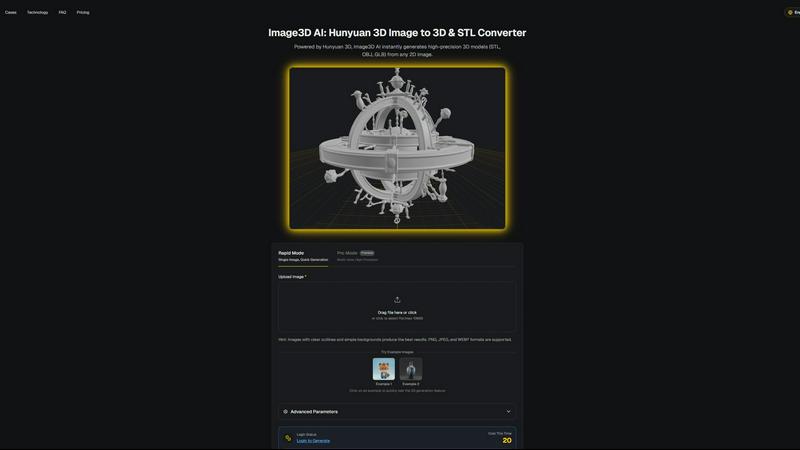
Image3D AI instantly converts 2D images into production-ready 3D models for printing and game engines.
Last updated: March 1, 2026

Postproxy
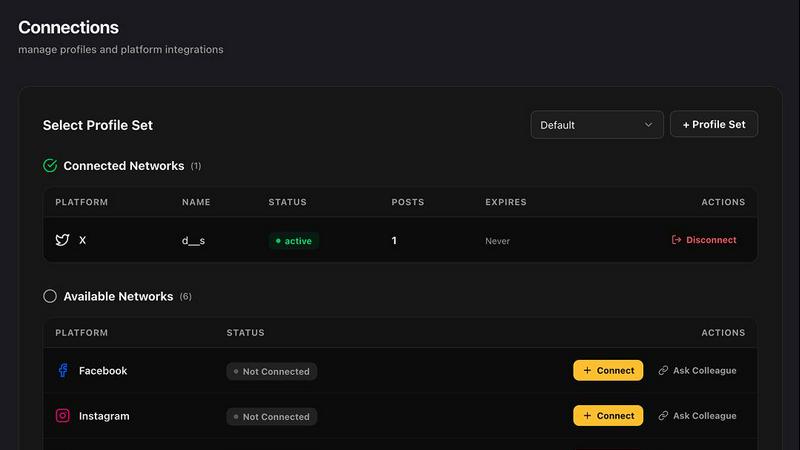
Postproxy simplifies social media publishing by unifying multiple platform integrations into a single efficient API.
Last updated: February 27, 2026
Visual Comparison
Image3D AI
Postproxy
Feature Comparison
Image3D AI
Hunyuan 3D Engine Integration
At the core of Image3D AI is its integration with Tencent's Hunyuan 3D engine, a cutting-edge AI model specifically trained for 3D reconstruction. This technology enables the platform to perform sophisticated depth estimation and geometry inference from a single 2D image, generating detailed, high-precision 3D models. This backend engine is what allows for the rapid, sub-60-second conversion times and the production of models with clean topology suitable for professional applications, setting it apart from basic conversion tools.
Multi-Format Export for Seamless Integration
Image3D AI is engineered for compatibility, offering export in industry-standard 3D file formats including STL, OBJ, and GLB. This ensures generated models can be directly imported into downstream software stacks without conversion hassles. STL files are optimized for 3D printing slicers, OBJ files are universally compatible with 3D editing suites like Blender and Maya, and GLB files are the modern standard for web-based viewing, AR applications, and game engines like Unity and Unreal Engine.
Dual Generation Modes (Rapid & Pro)
The platform provides two distinct operational modes to match project requirements and resource constraints. Rapid Mode is designed for speed and simplicity, generating a 3D model from a single image quickly. Pro Mode utilizes multi-view input for a physically accurate reconstruction, delivering higher precision and detail for complex objects. This flexibility allows users to optimize the balance between generation speed and model fidelity based on their specific use case.
PBR Material Support
For game development and realistic rendering workflows, Image3D AI supports Physically Based Rendering (PBR) materials. When generating models, the AI can infer and apply realistic material properties, resulting in assets that are visually accurate and ready for real-time rendering in modern game engines. This feature eliminates the need for manual material setup, further accelerating the asset creation pipeline for developers and digital artists.
Postproxy
Unified API
Postproxy offers a single API endpoint that handles publishing to all supported social media platforms simultaneously. This eliminates the need for multiple integrations, allowing users to streamline their publishing processes and reduce operational complexity.
Automated Content Adaptation
With Postproxy, content is automatically transformed to meet the specific requirements of each platform. This means users do not have to manually adjust their posts for different formats, media limits, or text validations, ensuring a more efficient workflow.
Error Handling and Delivery Guarantees
Postproxy incorporates robust error handling mechanisms, including automatic retries and rate limit management. Users can trust that their posts will be delivered reliably, with comprehensive reporting on publish states, helping identify successes and failures without manual intervention.
Simplified Authentication Management
Postproxy takes the hassle out of authentication by managing OAuth flows, token storage, and automatic refreshes. This streamlined process allows developers to focus on creating and publishing content rather than navigating complex authentication protocols.
Use Cases
Image3D AI
Game Development & Rapid Prototyping
Game developers can use Image3D AI to rapidly generate 3D assets from concept art or reference images, drastically speeding up the prototyping phase. The tool's ability to produce models with PBR material support means these assets can be directly imported into engines like Unity or Unreal Engine for immediate testing and iteration, streamlining the pre-production workflow and enabling faster creative validation.
3D Printing & Maker Projects
For 3D printing enthusiasts and professionals, Image3D AI acts as a powerful image-to-STL converter. It transforms logos, sketches, or product photos into watertight, print-ready 3D meshes. The platform's focus on generating clean geometry ensures the resulting STL files are optimized for slicing software, reducing the need for manual repair and preparation before sending a model to the printer.
E-commerce & AR Product Visualization
E-commerce businesses can leverage Image3D AI to convert standard 2D product photos into interactive 3D models. These models can be embedded on product pages for 360-degree viewing or used in Augmented Reality (AR) applications to allow customers to visualize products in their own space. This enhances online shopping experiences, reduces return rates, and provides a significant competitive advantage.
Architectural Visualization & Design
Architects and designers can quickly generate basic 3D massing models or detailed site elements from sketches, floor plans, or inspiration images. This capability saves considerable modeling time from scratch, allowing for faster client presentations, early-stage design exploration, and efficient integration of concept models into more detailed BIM or CAD software workflows.
Postproxy
Automated Social Media Campaigns
Businesses can leverage Postproxy to automate their social media campaigns, ensuring that content is published consistently across various platforms without the need for manual intervention.
Cross-Platform Content Distribution
Content creators can use Postproxy to distribute their posts across multiple social media channels simultaneously, ensuring a wider reach and consistent messaging across their audience.
Integration with Automation Tools
Developers can easily integrate Postproxy with automation platforms like n8n and Zapier, allowing for seamless workflows that trigger content publishing based on events or schedules, enhancing productivity.
Scaling Publishing Efforts
Organizations looking to scale their social media presence can utilize Postproxy to handle increased publishing demands without the complexity and overhead of managing multiple integrations, thus facilitating growth.
Overview
About Image3D AI
Image3D AI is a professional-grade platform that revolutionizes the 3D asset creation pipeline by converting static 2D images into production-ready 3D models in seconds. Powered by Tencent's advanced Hunyuan 3D engine, it performs complex technical inference to generate high-precision 3D geometry and textures from a single input image. This AI-powered tool fundamentally democratizes high-fidelity 3D generation, making it accessible to professionals and enthusiasts without requiring deep expertise in traditional 3D modeling software like Blender or Maya. Its core value proposition lies in its seamless integration into diverse, tech-heavy workflows, offering multi-format export capabilities that ensure immediate compatibility with industry-standard tools. Whether for rapid prototyping in game development, creating watertight meshes for 3D printing, generating assets for AR/VR experiences, or building interactive 3D models for e-commerce, Image3D AI bridges the gap between 2D concepts and 3D reality with unprecedented speed, precision, and workflow efficiency.
About Postproxy
Postproxy is an innovative API solution designed to simplify and unify social media publishing across multiple platforms, including Instagram, Facebook, YouTube, LinkedIn, and X. It serves as a centralized hub for developers and automators, enabling seamless integration with existing workflows without the need to handle the complexities of individual platform APIs. By automating OAuth processes, managing rate limits, and providing robust analytics, Postproxy replaces the chaotic environment of multiple platform-specific integrations with a single reliable endpoint. This makes it an ideal choice for businesses and developers who utilize automation tools like n8n, Zapier, and CI/CD systems. With Postproxy, users can effortlessly generate AI content, apply routing rules, and publish at scale, all while ensuring a consistent and reliable publishing experience. The free plan allows users to get started easily, providing the flexibility to scale as their needs grow.
Frequently Asked Questions
Image3D AI FAQ
What image formats are supported for conversion?
Image3D AI supports common raster image formats including PNG, JPEG, and WEBP. For optimal results, uploaded images should be under 10MB in size. The platform works best with high-contrast images that have clear subject outlines and simple, uncluttered backgrounds to aid the AI in accurate geometry inference.
What is the difference between Rapid Mode and Pro Mode?
Rapid Mode is designed for speed, generating a 3D model from a single input image in about 60 seconds. It's ideal for logos, sketches, or simple objects. Pro Mode requires multiple views (e.g., front, side, back) of an object to perform a more accurate, physically-based 3D reconstruction. This mode yields higher precision and detail, making it suitable for converting complex real-world objects like shoes or consumer products.
Which 3D file format should I download?
The choice depends on your downstream application. Download the STL format for 3D printing, as it is the standard mesh format for slicer software. Choose OBJ for further editing in traditional 3D software like Blender, Maya, or 3ds Max, as it supports textures and is widely compatible. Select GLB for web display, AR experiences, or game engines, as it is a compact, single-file format that contains the model, textures, and material data.
How can I improve the quality of my generated 3D model?
To maximize conversion quality, start with a high-quality source image that has good lighting, clear edges, and a simple background. For object reconstruction, using Pro Mode with multiple, consistent views will yield the most accurate result. Understanding the tool's parameters, such as selecting the "Geometry" mode for 3D printing (which focuses on mesh integrity over textures), can also tailor the output to your specific workflow needs.
Postproxy FAQ
What platforms does Postproxy support?
Postproxy currently supports major social media platforms including Instagram, Facebook, YouTube, LinkedIn, and X, allowing users to publish across multiple channels simultaneously.
How does Postproxy handle errors during publishing?
Postproxy is designed with robust error handling features, including automatic retries for failed posts and clear reporting on publish states. This ensures users are informed about the status of their content without needing to manually check each platform.
Is there a free trial available for Postproxy?
Yes, Postproxy offers a free plan that allows users to get started without the need for a credit card. This plan is designed for users to explore the capabilities of the API before scaling up their usage.
How can I integrate Postproxy into my existing workflows?
Integrating Postproxy is straightforward. Simply create an account to obtain an API key, connect your social media accounts, and then use the unified API to publish content. This seamless integration minimizes the need for complex setup procedures.
Alternatives
Image3D AI Alternatives
Image3D AI is a professional-grade 3D generation platform that automates the conversion of 2D images into production-ready 3D models. It falls within the design tools category, specifically targeting workflows for 3D printing, game development, and digital content creation. Its core appeal is streamlining a traditionally complex technical process into a fast, accessible service. Users often explore alternatives for various technical and operational reasons. These can include specific budget constraints, the need for different feature sets like animation or texture painting, or requirements for integration with a particular software stack or platform. Evaluating the total cost of ownership and output quality for one's specific use case is crucial. When assessing an alternative solution, key technical considerations should guide the decision. Prioritize the engine's reconstruction accuracy, the range of supported export formats for your pipeline, and the tool's ability to generate clean, manifold meshes suitable for your end application, be it real-time rendering or additive manufacturing.
Postproxy Alternatives
Postproxy is a unified API designed for seamless social media publishing across multiple platforms, including Instagram, Facebook, YouTube, LinkedIn, and X. It simplifies the complexities of individual platform integrations by automating processes such as OAuth handling, rate limiting, and content adaptation, making it particularly valuable for developers and those in automation roles. Users often seek alternatives to Postproxy for reasons such as pricing structures, specific feature sets, or compatibility with different platforms. When evaluating alternatives, it is crucial to consider factors such as integration capabilities, ease of use, scalability options, and whether the service aligns with the specific needs of your social media strategy.