
incentX vs ScopeSnap
Side-by-side comparison to help you choose the right product.

incentX
incentX automates incentive payouts with transaction-level accuracy, integrating directly with your ERP and CRM.
Last updated: February 28, 2026

ScopeSnap
ScopeSnap's AI instantly transforms discovery notes into structured project scopes and client-ready proposals.
Last updated: March 18, 2026
Visual Comparison
incentX
ScopeSnap
Feature Comparison
incentX
Transaction-Level Calculation Engine
At the heart of incentX is a powerful engine that automates all incentive calculations directly from granular, ERP-integrated transaction data. This eliminates reliance on estimated sales figures or manual spreadsheet entries, ensuring payouts are based on actual orders, shipments, margins, and returns. The system applies complex rules and filters at this transactional level, allowing for reporting by product, region, rep, or any other dimension, guaranteeing unmatched accuracy and eliminating commission overpayments.
Real-Time Visibility & Forecasting Dashboard
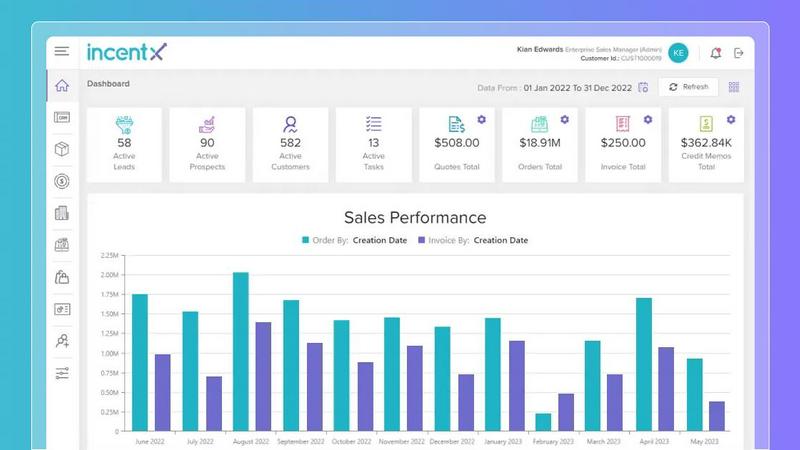
The platform provides all stakeholders with a real-time, unified view into incentive accruals, payouts, and performance metrics. Finance and operations teams gain transaction-level forecasting capabilities, predicting costs by product, team, or region based on actual margin and fulfillment data from the ERP. This real-time dashboard reduces end-of-period surprises, enables proactive budget management, and gives sales reps transparent visibility into the earnings calculations, drastically reducing disputes.
Seamless CRM & ERP Ecosystem Integration
incentX is built with a tech-stack oriented architecture, designed for deep, bidirectional integration with your existing enterprise systems. It connects directly to your CRM (e.g., Salesforce) for plan governance and to your ERP (e.g., NetSuite, SAP) as the definitive source for transaction data. This native compatibility ensures incentive workflows are automatically synced with real business operations, eliminating data silos and the need for manual data reconciliation or IT-dependent custom scripts.
Unified Platform for Multi-Type Incentive Management
Unlike point solutions that only handle sales commissions, incentX is a comprehensive suite that manages both sell-side and buy-side incentives on a single platform. This includes sales compensation, partner rebates, royalties management, trade promotions, and vendor chargebacks. All programs are powered by the same transactional data foundation, providing consolidated reporting, consistent logic, and streamlined administration across the entire revenue program.
ScopeSnap
AI-Powered Scope Generation
This core feature ingests raw, unstructured text from various sources like call transcripts, Slack exports, or handwritten notes. Using advanced language models, it automatically identifies key requirements, user actions, and system functionalities, structuring them into a preliminary project backlog complete with epics and detailed scope items. It intelligently flags assumptions and surfaces open questions for the team to review, providing a powerful head start on scope definition.
Interactive Scope Refinement Board
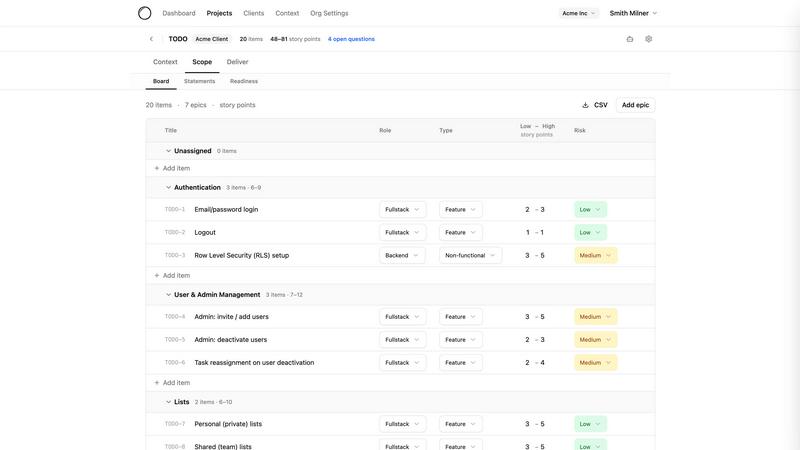
The generated scope is presented in a dynamic, kanban-style board interface where teams can collaboratively review, edit, and organize items. This feature allows for direct manipulation of the backlog: dragging items between stages, breaking down large epics, assigning development roles (e.g., Frontend, Backend, DevOps), and attaching custom time or complexity estimates to each task, ensuring every aspect of the project is quantified.
Automated Proposal & SOW Document Builder
Once the scope is finalized and estimated, this feature automates the creation of client-facing documentation. Users can select a template (Proposal or Statement of Work), and ScopeSnap populates it with the structured scope, estimates, assumptions, and defined deliverables. The output is a polished, professional PDF or shareable document, eliminating hours of manual copying, pasting, and formatting from disparate sources.
Integration-First Data Context
Understanding that discovery happens across tools, ScopeSnap is built with compatibility in mind. It supports direct paste-in from a wide array of sources and is designed for a workflow that sits alongside communication platforms like Zoom, Google Meet, email clients, and note-taking apps. This ensures all relevant project context can be easily aggregated into the scoping engine without disruptive context switching.
Use Cases
incentX
Automating Complex Sales Commission Plans
Organizations with multi-tiered, territory-based, or product-margin-driven sales compensation models use incentX to automate payout calculations. By pulling real transaction data on closed deals, shipments, and profitability directly from the ERP, the platform ensures commissions are calculated accurately against actual performance, not forecasts. This eliminates spreadsheet errors, reduces rep disputes, and aligns sales behavior directly with corporate revenue and margin goals.
Streamlining Partner & Channel Rebate Programs
Companies managing extensive partner networks leverage incentX to automate rebate accruals and payments. The platform connects to order management systems to track partner sales in real-time, applying agreed-upon tiered or volume-based rebate rules automatically. This eliminates "shadow accounting," ensures timely and accurate partner payments, maximizes ROI on channel programs, and provides full audit trails for all claims and payouts.
Ensuring Accurate Royalty Payouts & Compliance
For businesses that license IP or distribute branded products, incentX automates royalty management. It calculates royalties based on actual net sales data ingested from the ERP, not estimates. This ensures licensors and licensees have a single, transparent source of truth, facilitates accurate and timely payments, and generates audit-ready reports that simplify compliance with complex licensing agreements and financial regulations.
Managing Vendor Chargebacks & Deductions
Retailers and distributors use incentX to gain control over vendor chargeback processes. The platform matches every deduction and claim from vendors against specific transactions, purchase orders, and return records within the ERP. This provides full invoice-level visibility, validates claims efficiently, reduces invalid deductions, and streamlines the reconciliation process, improving supplier relationships and protecting margins.
ScopeSnap
Freelance Developer Client Onboarding
For solo developers, ScopeSnap streamlines the process of converting initial client discussions into a fixed-scope proposal. After a discovery call, the freelancer can paste their notes and meeting transcript into the tool to quickly generate a structured scope, identify edge cases, and produce a credible, detailed estimate and SOW to secure the project with clear boundaries and expectations.
Software Agency Pre-Sales Scoping
Agencies can use ScopeSnap to bring consistency and speed to their sales engineering phase. Sales teams can input notes from multiple stakeholder interviews, and the platform will synthesize a unified scope document. This allows for rapid iteration with internal technical leads to validate feasibility and cost before presenting a polished, accurate proposal to the prospective client.
Technical Consultant Requirement Analysis
Consultants tasked with defining project specifications for third-party teams can use ScopeSnap as an analysis tool. By processing all gathered business and technical requirements, the AI helps identify gaps, dependencies, and implicit assumptions, enabling the consultant to deliver a comprehensive, well-structured scope of work document to the development team for execution.
Iterative Project Scope Refinement
For projects following agile or iterative methodologies, ScopeSnap can be used at the start of each new phase or sprint. Teams can feed in notes from refinement sessions or user feedback to quickly generate and estimate the backlog for the upcoming cycle, maintaining a living document that accurately reflects the evolving project trajectory.
Overview
About incentX
incentX is a unified incentive automation platform engineered to replace fragmented, error-prone compensation management processes. It serves as a centralized system of record for all incentive types—including sales commissions, partner rebates, royalties, trade promotions, and vendor chargebacks—by anchoring every calculation to actual transaction-level data from your core business systems. The platform is specifically designed for revenue, finance, and operations teams in complex, data-driven organizations, seamlessly integrating with existing CRM and ERP stacks like Salesforce, SAP, and Oracle to create a single source of truth. Its core value proposition lies in eliminating the manual inefficiencies and inaccuracies of spreadsheet-based management, thereby reducing payout disputes, enabling precise forecasting, and ensuring audit-ready compliance. By automating incentives with transactional precision, incentX empowers businesses to design impactful plans that directly align compensation with real revenue, margin, and fulfillment metrics, driving profitable growth and operational control.
About ScopeSnap
ScopeSnap is an AI-powered scoping and proposal platform engineered for freelance developers, technical consultants, and software development agencies. It directly addresses the critical, yet often chaotic, phase between client discovery and project kickoff. The core value proposition is transforming unstructured input—such as meeting transcripts, email threads, and scattered notes—into a structured, actionable, and estimatable project scope. By leveraging AI to parse context and generate a preliminary backlog of epics and user stories, ScopeSnap mitigates the risk of missed requirements and vague deliverables that plague custom software estimation. The platform provides a centralized workspace to iteratively refine this scope, assign roles, set time estimates, and resolve ambiguities. Finally, it seamlessly compiles the polished scope into client-ready professional documents like Proposals or Statements of Work (SOW). This end-to-end workflow is designed for integration into modern development practices, replacing manual, error-prone processes with a systematic, tech-stack compatible tool that ensures clarity from the first conversation to the signed contract.
Frequently Asked Questions
incentX FAQ
How does incentX integrate with our existing tech stack?
incentX is designed as an integration-first platform with pre-built connectors and robust APIs for seamless compatibility. It typically integrates bidirectionally with your CRM (like Salesforce) for plan management and rep visibility, and directly with your ERP or financial system (such as SAP, Oracle NetSuite, or Microsoft Dynamics) to pull real-time transaction data for calculations. This architecture ensures it works within your existing ecosystem without requiring a complete overhaul.
What types of incentive plans can we model on the platform?
The platform supports a vast array of complex incentive structures. You can model tiered commissions, bonuses, SPIFFs, margin-based plans, territory-based rules, and multi-level channel rebates. It handles royalties based on net sales, trade promotion accruals, and chargeback validations. The system uses transaction-level templates, allowing you to build, test, and launch sophisticated plans tied to real revenue, product, customer, or regional data.
How does incentX improve forecast accuracy for finance teams?
incentX enables transaction-level forecasting by tying projected incentive costs directly to fulfilled orders and actual margin data from your ERP, rather than relying on sales pipeline guesses. Finance teams can forecast payouts by product line, sales team, or region based on this real data, leading to highly accurate accruals, better cash flow management, and the elimination of budget overruns from commission surprises.
Does incentX help reduce disputes with sales reps or partners?
Absolutely. A primary benefit is the transparency provided by transaction-level visibility. Sales reps and partners can access a clear, real-time view of their earnings dashboard, which shows the exact transactions (e.g., invoice numbers, product SKUs, margins) that contributed to their payout. This self-service transparency eliminates guesswork, reduces back-and-forth inquiries, and builds trust, thereby significantly decreasing disputes.
ScopeSnap FAQ
What types of input does ScopeSnap accept for scope generation?
ScopeSnap is designed to process unstructured text from a wide variety of sources common in the discovery phase. You can directly paste in content from video call transcripts (e.g., Otter.ai, Rev), email correspondence, notes from apps like Notion or Google Docs, bullet-point lists, and even rough voice memo transcriptions. The AI is optimized to parse conversational language and extract actionable requirements.
How does ScopeSnap handle different tech stacks and project types?
The platform is technology-agnostic in its core scoping function. It focuses on identifying functional requirements, user stories, and features rather than prescribing implementations. During the refinement stage, you assign roles and estimates based on your team's specific expertise—whether it's a React frontend, a Node.js backend, mobile development, or cloud architecture. The output documents are templated to suit various project types, from web apps to SaaS platforms.
Can I collaborate with my team or client within ScopeSnap?
ScopeSnap provides a collaborative workspace for internal team refinement, allowing members to review, edit, and estimate the scope board. Client-facing sharing is typically handled through the generated Proposal or SOW documents, which are exported and sent via your existing communication channels. This maintains a clear separation between internal scoping work and the finalized client deliverable.
Is the AI-generated scope final, or does it require human review?
The AI-generated scope is a powerful starting point, but it is not final. It is explicitly designed for human-in-the-loop refinement. The platform surfaces open questions and flagged assumptions precisely to guide your review. Technical leads and project managers must critically review, adjust, break down, and estimate each item to ensure technical accuracy, completeness, and alignment with the client's true needs before generating a final proposal.
Alternatives
incentX Alternatives
incentX is a unified incentive automation platform that falls within the business and finance software category, specifically for incentive compensation management. It centralizes the calculation of sales commissions, partner rebates, and royalties by integrating directly with core systems like CRM and ERP to ensure transaction-level accuracy and real-time visibility. Users may explore alternatives to incentX for various reasons, including budget constraints, specific feature requirements not covered by the platform, or the need for a different technical architecture that better aligns with their existing tech stack. The search often stems from a need for a solution that offers a precise fit for unique business processes or integration landscapes. When evaluating an alternative, key considerations should include the depth of native integrations with your current CRM, ERP, and data warehouse, the platform's ability to handle complex, transaction-based calculations without manual work, and the provision of real-time, audit-ready reporting. The ideal solution should eliminate spreadsheet dependency and seamlessly become a part of your operational workflow.
ScopeSnap Alternatives
ScopeSnap is a project scoping and proposal generation tool in the productivity and management software category. It uses AI to help freelance developers and software agencies transform initial client discussions into structured, estimatable tasks and professional proposals. Users often explore alternatives to ScopeSnap for various reasons, such as specific budget constraints, the need for different feature sets, or deeper integration with their existing tech stack and project management ecosystem. The right tool must align with a team's operational workflow and technical environment. When evaluating alternatives, key considerations include the platform's ability to integrate with your current tools, its compatibility with your development methodology, and how it handles the iterative refinement of technical requirements. The focus should be on finding a solution that seamlessly fits into your existing software development lifecycle.