
LLMWise vs SVG to 3D
Side-by-side comparison to help you choose the right product.

LLMWise
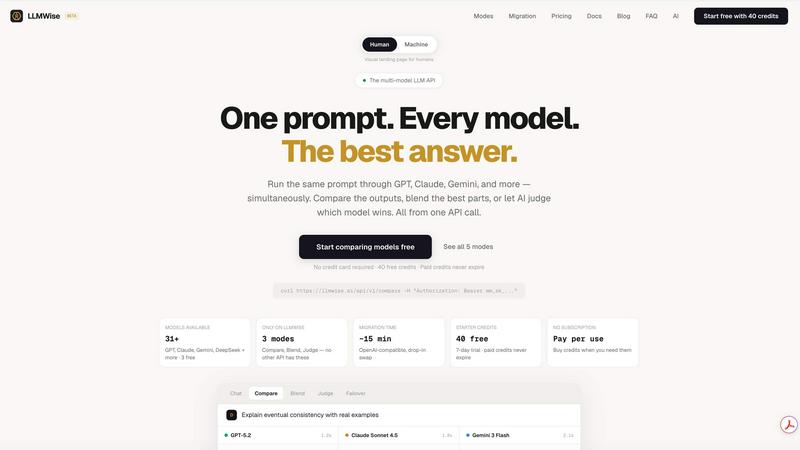
LLMWise offers a single API to seamlessly access and compare multiple AI models, charging only for what you use.
Last updated: February 27, 2026
SVG to 3D
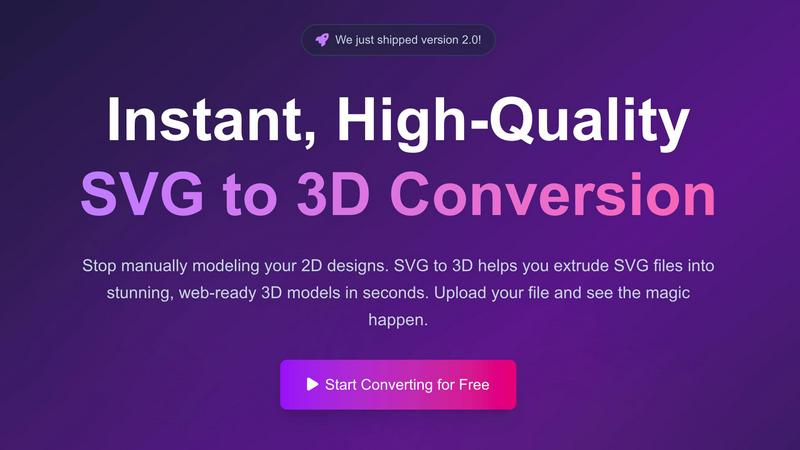
Effortlessly convert SVG files into high-quality, web-ready 3D models with advanced controls and fast processing.
Last updated: February 27, 2026
Visual Comparison
LLMWise
SVG to 3D
Feature Comparison
LLMWise
Smart Routing
LLMWise's smart routing feature automatically directs prompts to the most appropriate LLM based on the task at hand. For instance, code-related queries are sent to GPT, while creative writing prompts might go to Claude. This intelligent selection ensures optimal performance and accuracy for every request, allowing developers to focus on building rather than managing multiple APIs.
Compare & Blend
The compare and blend functionalities enable users to execute prompts across various models simultaneously. By comparing different outputs side-by-side, developers can easily identify which model performs best for their specific needs. The blend feature synthesizes the strongest responses from multiple models into a cohesive answer, significantly improving the overall quality of results.
Resilient Architecture
LLMWise is designed with resilience in mind, featuring a circuit-breaker failover mechanism that reroutes requests to backup models if a primary provider experiences downtime. This ensures that applications remain operational and reliable, minimizing disruptions and enhancing user experience even during outages.
Testing & Optimization
The platform provides robust testing and optimization tools, including benchmark suites and automated regression checks. Developers can conduct batch tests to evaluate performance in terms of speed, cost, and reliability, allowing for continuous improvement of their applications. This focus on optimization helps teams ensure they are leveraging resources efficiently while maintaining high-quality outputs.
SVG to 3D
One-Click GLB Export
SVG to 3D allows users to export 3D models as GLB files with just one click. This feature is tailored for web developers, making it easy to integrate the 3D models into websites using Three.js or React Three Fiber, adding a dynamic visual element to any project.
3D-Print Ready STL Files
The tool supports clean STL exports, which are essential for 3D printing. Users can directly take their 3D models from SVG to STL, ensuring a hassle-free transition from digital design to physical object, ideal for fabrication and prototyping.
Real-Time 3D Preview and Adjustments
Users can fine-tune every aspect of their 3D models with real-time previews. This feature allows for adjustments to thickness, bevels, and the application of PBR materials, helping to ensure the final output is polished and professional.
Privacy and Security First
SVG to 3D prioritizes user privacy by processing files locally in the browser whenever possible. This means that sensitive designs remain secure, with no need for uploads to external servers, giving users peace of mind while working on their projects.
Use Cases
LLMWise
Software Development
Developers can utilize LLMWise to streamline coding tasks by routing prompts directly to the most competent model for code generation. This not only saves time but also reduces the complexity of managing multiple API keys, making the development process smoother and more efficient.
Creative Writing
Writers can leverage the blend feature of LLMWise to generate more compelling narratives. By combining the strengths of different models, writers can enhance their creative outputs, producing high-quality content that resonates with their audience while benefiting from diverse perspectives.
Language Translation
LLMWise simplifies the translation process by utilizing the best models for language tasks. Developers can send translation prompts to models specifically trained for linguistic accuracy, ensuring that the translations are not only quick but also contextually and culturally appropriate.
AI Research and Development
Researchers can take advantage of the testing and optimization features to benchmark various models against specific criteria. This allows them to evaluate the effectiveness of different AI solutions, fostering innovation and helping to identify the most suitable models for their research projects.
SVG to 3D
Web Development Enhancement
Web developers can utilize SVG to 3D to convert flat SVG icons into interactive 3D models. This capability enhances user engagement on websites, allowing for visually striking interfaces that capture users' attention.
3D Printing Prototyping
Designers and engineers can convert their 2D designs into 3D models that are ready for 3D printing. This use case is crucial for those looking to fabricate prototypes or custom parts without the need for complex CAD software.
UI/UX Design Mockups
UI/UX designers can leverage the tool to present depth in their design mockups. By creating 3D representations of UI elements, they can impress clients and stakeholders with more realistic and engaging presentations of their concepts.
Creative Artwork and Logo Design
Artists and graphic designers can transform their 2D artwork and logos into 3D models, allowing for new creative expressions and applications. This feature opens up possibilities for unique branding, merchandise, and digital art installations.
Overview
About LLMWise
LLMWise is an innovative platform that streamlines access to numerous large language models (LLMs) through a single API. By integrating models from industry leaders such as OpenAI, Anthropic, Google, Meta, xAI, and DeepSeek, LLMWise offers developers a simplified way to leverage the best AI for any task without the hassle of managing multiple providers. Its intelligent routing system ensures that each prompt is matched to the most suitable model, whether it involves coding, creative writing, or translation tasks. With features like side-by-side comparison and output blending, users can enhance the quality of their results. Ideal for developers seeking to optimize their AI workflows, LLMWise eliminates complexity while providing powerful tools to enhance application performance.
About SVG to 3D
SVG to 3D is a powerful online tool designed to transform 2D SVG vector graphics into high-quality 3D models. It caters to web developers, designers, and 3D printing enthusiasts who seek a fast, efficient, and user-friendly solution for converting their designs. With SVG to 3D, you can quickly extrude logos, icons, and artwork without the need for heavyweight software like Blender or Cinema 4D. The tool is optimized for seamless integration into web projects, allowing for the generation of lightweight GLB files ideal for use in Three.js and React Three Fiber. By providing advanced controls for fine-tuning your models, SVG to 3D empowers users to create stunning, professional-grade 3D assets in mere seconds, enhancing efficiency in design workflows.
Frequently Asked Questions
LLMWise FAQ
How does LLMWise ensure optimal model selection?
LLMWise employs an intelligent routing system that analyzes each prompt and directs it to the best-performing model based on task type, ensuring optimal results for different applications.
Can I use my existing API keys with LLMWise?
Yes, LLMWise supports bring your own key (BYOK) functionality, allowing users to integrate their existing API keys from various providers, which helps in managing costs effectively.
What happens if a model fails during a request?
In the event of a model failure, LLMWise's resilient architecture features a circuit-breaker failover mechanism that reroutes requests to backup models, ensuring uninterrupted service and reliability.
Are there any hidden fees with LLMWise?
LLMWise operates on a pay-per-use model with no subscription fees. Users pay only for the credits they consume, and there are no hidden costs associated with using the platform.
SVG to 3D FAQ
How do I start converting my SVG files to 3D?
To get started, simply upload your SVG file using the drag-and-drop interface or by clicking to browse your files. The process is quick and user-friendly.
What file formats can I export my 3D models in?
SVG to 3D offers multiple export formats, including GLB, GLTF, OBJ, and STL. This versatility ensures your models are compatible with various applications and platforms.
Is there a limit to the size of SVG files I can upload?
Yes, there is a maximum file size limit of 5 MB for SVG uploads. This ensures fast processing and efficient conversions.
Is my data secure when using SVG to 3D?
Absolutely. The tool processes files locally in your browser, minimizing risk and ensuring that your data remains private and secure without external uploads.
Alternatives
LLMWise Alternatives
LLMWise is an innovative API platform that consolidates access to multiple large language models (LLMs) such as GPT, Claude, and Gemini, among others. It simplifies the AI integration process by providing intelligent routing that ensures users can leverage the best model for every specific task, whether it’s for creative writing, coding, or translation. As a solution designed for developers, LLMWise falls under the AI Assistants category, streamlining the complexities of managing different AI providers. Users often seek alternatives to LLMWise for various reasons, including pricing structures, feature sets, or specific platform requirements that may not be addressed by a single provider. When exploring alternatives, it is essential to consider factors such as ease of integration, model performance, pricing flexibility, and the ability to test and optimize outputs. Evaluating these aspects will help ensure that the chosen solution aligns with the specific needs of your project and enhances overall productivity.
SVG to 3D Alternatives
SVG to 3D is a specialized tool designed to transform 2D SVG vector graphics into high-quality 3D models. It falls under the category of AI Assistants, specifically tailored for web developers, designers, and 3D printing enthusiasts seeking an efficient way to create 3D assets from flat designs. Users often explore alternatives to SVG to 3D due to various factors such as pricing, available features, or compatibility with their specific platforms and workflows. When selecting an alternative, it is essential to consider factors like ease of use, export options, and the software’s ability to integrate seamlessly with existing projects. Look for tools that offer real-time previews, diverse export formats, and user-friendly interfaces, ensuring that you can effectively meet your project requirements without unnecessary complexity.