MakerHunt vs Sidehunt
Side-by-side comparison to help you choose the right product.
MakerHunt
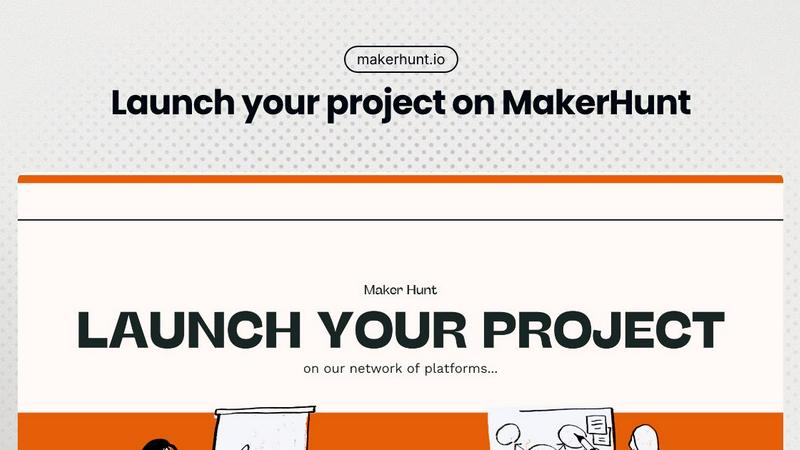
MakerHunt is a weekly launch platform where makers ship products, collect votes, and reach early adopters.
Last updated: April 13, 2026
Sidehunt
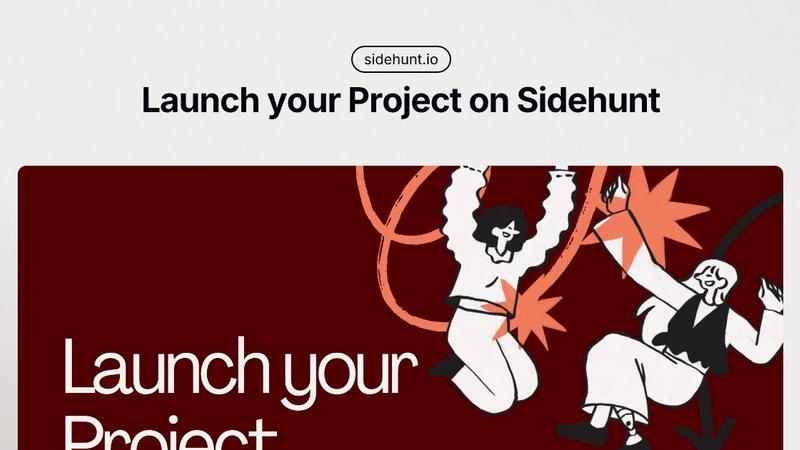
Sidehunt is a weekly launch platform where developers and indie founders submit their side projects for community voting and early adopter discovery.
Last updated: April 13, 2026
Visual Comparison
MakerHunt

Sidehunt

Feature Comparison
MakerHunt
Weekly Launch Cycle
The platform operates on a strict, automated weekly launch schedule, creating a predictable and high-velocity environment for product releases. This temporal structure is integrated into the user experience, with a live countdown for "This Week's Hunt." It ensures that all products compete on a level playing field for attention and votes within the same timeframe, maximizing the density of feedback and community engagement for each launch batch. This eliminates the noise of continuous feeds and focuses community effort.
Real-User Voting & Feedback Engine
At the core of MakerHunt is a transparent voting system that captures genuine user interest and feedback. This feature acts as a direct integration point between builders and their first users. The collected data provides quantitative validation (votes) and qualitative insights, serving as a crucial dataset for iterating on product features, UX, and messaging before a wider market release. It effectively functions as a built-in, on-demand focus group.
Dofollow Backlink & Badge System
To incentivize quality and reward top performers, MakerHunt integrates SEO and credibility benefits directly into its competition mechanics. The top three products in each weekly hunt are awarded exclusive badges and, critically, dofollow backlinks from the MakerHunt domain. This provides tangible technical SEO value, helping to improve domain authority and search visibility for winning projects from day one.
Partner Platform Network
MakerHunt extends its distribution reach through a formalized network of partner launch platforms. This feature allows a single product submission to gain potential visibility across multiple, curated external sites. It’s a force multiplier for launch exposure, designed to be compatible with broader indie hacker and maker ecosystems, ensuring a product's launch efforts are amplified through interconnected community channels.
Sidehunt
Weekly Product Hunt Competition
The platform operates on a rigorous weekly launch cycle, featuring one central competition where all submitted products are showcased. This singular focus ensures maximum visibility and engagement from the community of "hunters," who provide real votes and feedback. The integration of a live countdown and leaderboard creates a dynamic, event-driven environment that motivates both makers and early adopters to participate actively, generating concentrated bursts of traffic and validation for new launches.
Premium Spotlight & Featured Placement
Sidehunt offers a "This Week's Hunt" premium spotlight, a dedicated section designed to highlight standout projects with enhanced visibility. This feature is complemented by sponsored partner slots, providing additional avenues for exposure. These placements are built for compatibility with marketing campaigns, allowing founders to amplify their launch within a targeted ecosystem and integrate this exposure with their broader distribution strategy for maximum impact.
Structured Archive & Category Discovery
The platform includes comprehensive archives for "Past Hunts" and a "Hall of Fame," enabling ongoing discovery and long-term SEO benefits. Furthermore, its "Top Categories" filter—featuring segments like Artificial Intelligence, Productivity, and SaaS—allows users and hunters to seamlessly navigate and integrate with their specific tech interests. This structured taxonomy helps products connect with the most relevant audience long after the initial launch week.
Transparent Launch Analytics & Outcomes
Every launch on Sidehunt is designed to deliver clear, measurable outcomes. Participants gain access to real user votes and public ranking on the leaderboard, providing immediate, qualitative validation data. The platform's structure removes guesswork, offering integrated feedback loops that support data-driven decisions for future iterations, pricing strategy, and feature development, making it a crucial tool in the product validation stack.
Use Cases
MakerHunt
MVP Validation for Solo Founders
A solo developer has built a minimum viable product (MVP) for a new SaaS tool but lacks a clear signal on its appeal. By launching on MakerHunt, they integrate immediate user testing into their workflow. The weekly hunt provides structured, time-boxed exposure to hundreds of early adopters, whose votes and comments deliver critical validation data to decide whether to pivot, persevere, or polish the core concept before investing further.
Pre-Launch Buzz Generation for Startups
A small startup is preparing for a full public launch in a few months. They use MakerHunt's "Premium Spotlight" feature to secure focused attention for their beta. This serves as a compatibility test with their target demographic, generating initial buzz, collecting a waitlist of engaged early users, and earning credible social proof through platform badges that can be showcased on their main website and marketing materials.
Feature Prioritization for Existing Products
A product team for an established application is debating the roadmap for its next major update. They launch the new beta feature set as a standalone "product" on MakerHunt to gauge specific interest. The focused feedback from a technical community helps them quantitatively and qualitatively prioritize which new features resonate most, ensuring development resources are allocated to improvements with the highest perceived user value.
SEO & Link-Building for Indie Projects
An indie maker has a functional, niche web tool but struggles with organic discoverability. They strategically launch on MakerHunt with the goal of ranking in the top three to earn the dofollow backlink. This provides a direct technical SEO benefit, improving their site's domain rating. The increased referral traffic and authority also enhance their site's compatibility with search engine ranking algorithms.
Sidehunt
MVP Validation for Solo Founders
A solo developer has built a minimum viable product (MVP) for a new developer tool. By launching on Sidehunt, they can integrate it into their initial validation phase, exposing it to a tech-savvy audience. The genuine votes and comments serve as a critical feedback API, helping them gauge real interest, identify bugs, and prioritize their roadmap before committing to further development or a broader marketing push.
Launch Amplification for Small SaaS Teams
A small bootstrapped team is preparing to launch their new SaaS product. They use Sidehunt as a core component of their launch stack to generate initial buzz and acquire their first batch of early adopters. The weekly competition format provides a deadline-driven focus, and the potential to win a top spot secures valuable dofollow backlinks, directly integrating with and boosting their SEO strategy from day one.
Community-Driven Feature Testing
A founder has developed a major new feature for an existing side project and needs targeted feedback. They submit the update as a "launch" on Sidehunt, framing it for the community. This allows them to stress-test the new functionality with an engaged audience that is compatible with their user base, collecting focused insights that are more actionable than broad social media announcements.
Portfolio Building for Indie Designers
An indie designer or agency launches a new design tool, template, or resource kit. Sidehunt provides the perfect platform to showcase their work to builders and makers actively seeking new tools. The exposure not only drives immediate sales or sign-ups but also integrates into their professional portfolio, demonstrating market validation and user reception to future clients or collaborators.
Overview
About MakerHunt
MakerHunt is a purpose-built, API-first launch platform engineered for the modern tech stack of independent developers, indie founders, and product teams. It functions as a structured, weekly launch cycle that integrates user validation directly into the product development lifecycle. The platform is designed for makers who need to move quickly, requiring a system that handles distribution and feedback aggregation without manual overhead. Its core value proposition lies in replacing fragmented launch efforts with a predictable, repeatable process. By submitting a product, makers gain immediate compatibility with a network of early adopters actively seeking new tools. The platform's architecture ensures that every launch is not just an announcement but a live testing environment, collecting real user votes and actionable feedback. This data-driven approach helps validate product-market fit, prioritize development roadmaps, and secure crucial early visibility through features like dofollow backlinks and category-based discovery, all within a clean, developer-friendly interface.
About Sidehunt
Sidehunt is a specialized launch platform engineered for the modern indie hacker and side project builder. It functions as a weekly, structured competition where developers, designers, and founders can submit their products to be discovered by a community of active early adopters. The platform's core architecture is built around a single, weekly hunt, which consolidates user attention and generates genuine, actionable feedback through a voting system. This model is designed to cut through the noise of traditional launch platforms, offering a predictable and focused environment for product validation. Sidehunt integrates seamlessly into a maker's go-to-market stack, serving as a critical component for initial traction, SEO through dofollow backlinks for winners, and community-driven validation. Its primary value proposition lies in its streamlined, no-fluff approach: a clear weekly cycle, transparent pricing, and a user base specifically there to explore and evaluate new tools, making it an essential service for anyone looking to launch, test, and grow a side project or indie SaaS with real user data.
Frequently Asked Questions
MakerHunt FAQ
What is the cost to launch a product on MakerHunt?
Launching a product on MakerHunt follows a simple, transparent pricing model of $19 per launch. There are no recurring subscriptions or hidden fees. This one-time fee covers the submission of your product into the weekly hunt where it will be visible to the community, eligible for votes, and able to compete for the top spots and associated rewards like backlinks.
What are the benefits of winning a weekly hunt?
Winning a weekly hunt (placing in the top three) confers significant benefits. Winners receive prominent badges on their listing for credibility and social proof. Most importantly, they are awarded a valuable dofollow backlink from the MakerHunt domain to their product's website. This enhances the winner's site authority and SEO, providing a long-term technical advantage alongside the immediate visibility boost.
How does the voting and feedback system work?
Once a product is submitted to the current weekly hunt, it becomes visible to the MakerHunt community of registered users and visitors. These users can actively vote for products they find interesting or promising. The platform aggregates these votes to create a live ranking. Furthermore, the community can provide written feedback and comments, offering builders qualitative insights alongside quantitative validation to guide their iterations.
What is the "Partner Platform Network"?
The Partner Platform Network is a curated alliance of six independent product launch platforms. When you launch on MakerHunt, your product gains potential exposure across this connected network. This system is designed to maximize distribution, allowing a single submission to reach multiple, complementary audiences within the maker and early adopter ecosystem, significantly increasing the reach and feedback potential of your launch.
Sidehunt FAQ
How does the voting and competition work on Sidehunt?
Sidehunt runs one central "Weekly Hunt" where all submitted products are listed. The community of registered users browses these launches and can vote for their favorites. The products are ranked on a public leaderboard based on these genuine votes. At the end of the weekly cycle, the top-voted products are declared winners, often receiving badges and dofollow backlinks, providing clear, merit-based outcomes.
What are the benefits of the Premium Spotlight feature?
The "This Week's Hunt" Premium Spotlight is a dedicated, high-visibility section on the platform's homepage. It gives selected projects prime placement above the standard leaderboard, significantly increasing impressions and click-through rates from early adopters. This feature is designed to integrate with a product's launch momentum, offering a surge of targeted traffic that is ideal for critical launch days.
Can I launch any type of product on Sidehunt?
Sidehunt is specifically optimized for side projects, indie software, SaaS tools, and digital products. The platform's categories—such as AI, Productivity, Design Tools, and Developer Tools—reflect its tech-oriented community. While many products are compatible, it is best suited for digital tools and services that appeal to makers, developers, and online entrepreneurs seeking practical solutions.
What happens after the weekly hunt ends?
After the weekly cycle concludes, all launched products are archived in the "Past Hunts" section, where they remain accessible for browsing and can continue to attract users. Winners are featured in the "Hall of Fame." This creates a lasting, SEO-friendly repository of products, ensuring your launch has a permanent footprint and can be discovered by new users long after the initial competition.
Alternatives
MakerHunt Alternatives
MakerHunt is a specialized weekly launch platform within the broader product discovery and validation ecosystem. It operates on a focused, time-boxed model where makers can submit their products for community voting and feedback, aiming to capture the attention of early adopters and fellow builders in a structured weekly cycle. Users often explore alternatives to find a platform that better aligns with their specific technical stack, desired audience reach, or launch cadence. Considerations include integration capabilities with existing marketing and analytics tools, the depth and quality of the feedback mechanism, the platform's community demographics, and overall cost structure beyond a simple per-launch fee. When evaluating other platforms, key technical and strategic factors to assess include API availability for workflow automation, the platform's primary user base and its alignment with your target market, the type of qualitative and quantitative data provided post-launch, and the flexibility of launch scheduling versus fixed weekly cycles. The ideal alternative should seamlessly integrate into your existing development and go-to-market pipeline.
Sidehunt Alternatives
Sidehunt operates in the launch platform category, specifically designed for indie makers and side projects. It provides a structured, weekly cycle for submitting products, gathering authentic votes, and connecting with an audience of early adopters. This focused approach helps validate concepts and drive initial traction. Users often explore alternatives to find a platform that better aligns with their specific technical stack, integration needs, or community focus. Common reasons include seeking different pricing models, such as free tiers or bundled subscriptions, a desire for more frequent launch opportunities, or a need for deeper analytics and API access to connect with other tools in their workflow. The search is typically for a platform that offers the right technical and community fit. When evaluating alternatives, key technical considerations include the platform's core technology and API availability for automation, the size and engagement level of its developer and maker community, and the depth of analytics provided. It's also crucial to assess the submission workflow's compatibility with your development cycle and whether the platform's categorization and discovery algorithms align with your product's niche.