
MindMap AI vs rfpaihub
Side-by-side comparison to help you choose the right product.

MindMap AI
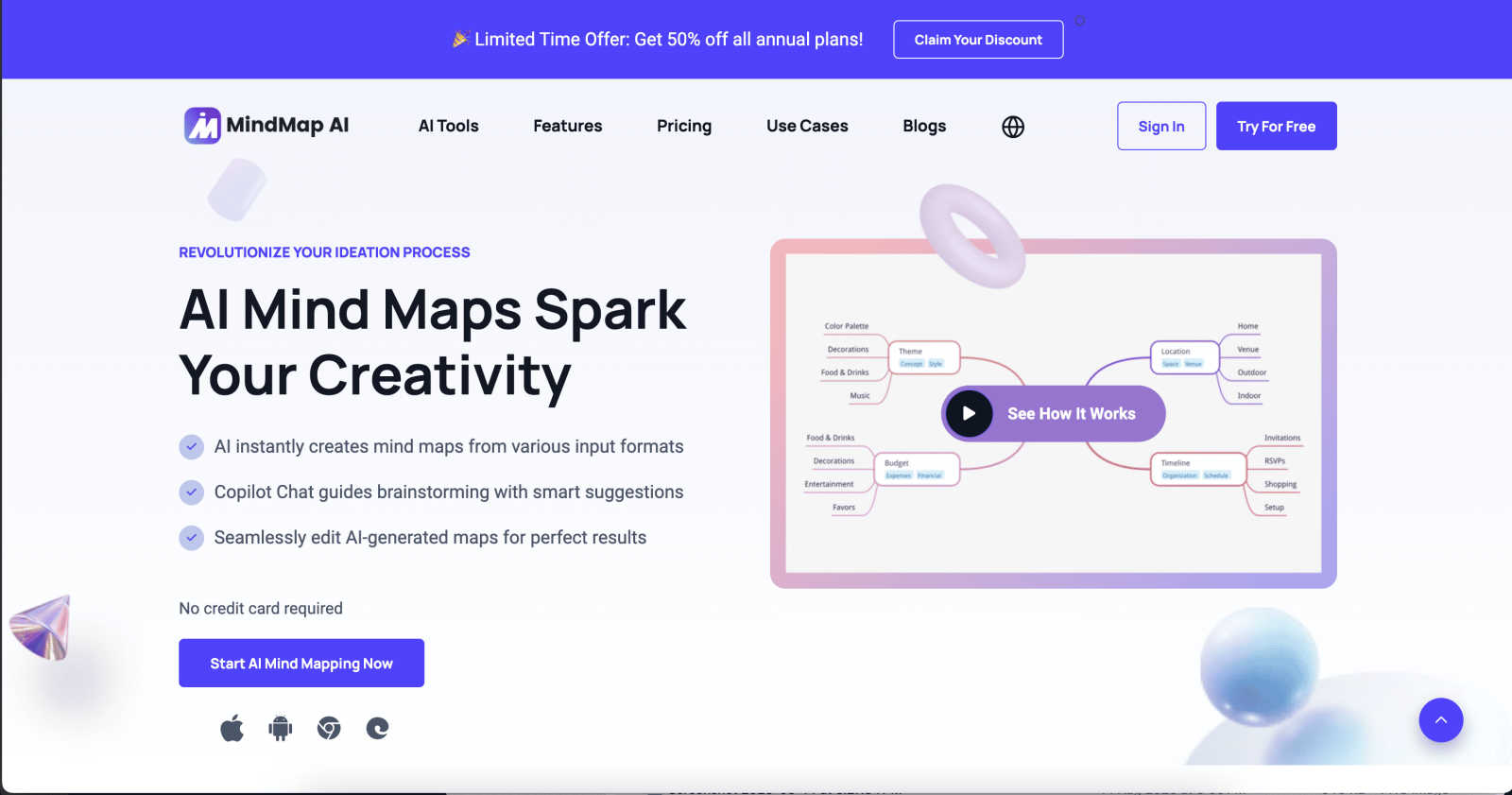
MindMap AI transforms documents and ideas into structured, editable mind maps with reliable AI co-editing support.
Last updated: March 1, 2026

rfpaihub
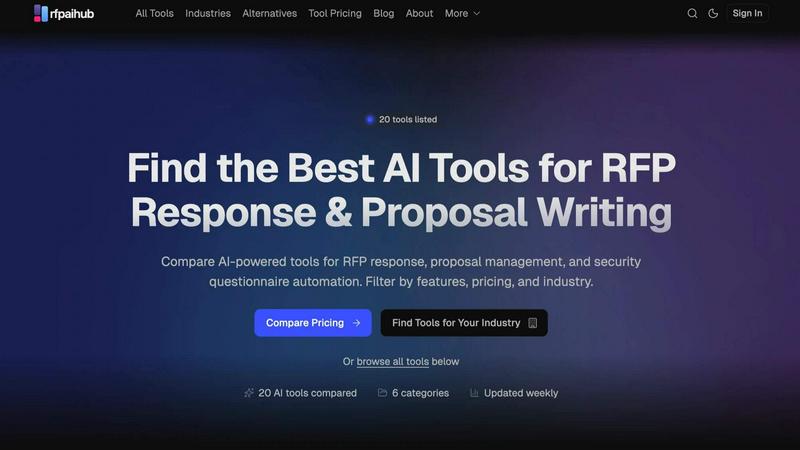
Rfpaihub is a tech stack hub to find and compare AI tools that automate RFP responses and integrate with your proposal workflow.
Last updated: April 13, 2026
Visual Comparison
MindMap AI
rfpaihub
Feature Comparison
MindMap AI
AI Thinking Mode for Accuracy
MindMap AI employs a step-by-step reasoning engine that comprehensively understands context, hierarchy, and relationships before generating mind maps. This ensures that every mind map is structured, meaningful, and accurate from the first attempt, eliminating random branches and enhancing clarity.
File-to-Map Conversion
MindMap AI allows users to transform various content types—including text, PDFs, images, audio, video, Markdown, and CSV—into well-organized mind maps instantly. This feature saves time and effort, enabling users to focus on thinking and planning rather than manual formatting.
Multi-Language Support
With support for over 25 languages, MindMap AI enables users to create and edit mind maps with consistent accuracy and structure, regardless of the language. This ensures effective collaboration and communication across diverse teams and regions without compromising layout or meaning.
Continuous Editing
The platform features a reliable AI co-editing function that allows users to build their mind maps either manually or with AI assistance. Users can expand, summarize, add arrows, reorganize, and style elements quickly while retaining full manual control to ensure the final product meets their specific needs.
rfpaihub
Curated Tool Comparison Engine
The platform's core feature is its detailed comparison matrix, allowing users to filter and evaluate AI RFP tools side-by-side based on specific technical attributes. Users can filter by integration capabilities (e.g., CRM like Salesforce, document repositories like SharePoint), core features such as AI drafting or security libraries, target industry, and team size. This goes beyond basic listings to provide a stack-oriented analysis, crucial for ensuring new software complements existing infrastructure without creating data silos or workflow disruptions.
Industry and Role-Based Filtering
Understanding that needs vary drastically between a fintech company handling complex DDQs and a SaaS startup crafting narrative proposals, RFP AI Hub offers advanced categorization. Users can browse tools specifically tagged for industries like Healthcare, Finance, or Government, or filter by primary user role such as Proposal Manager, Security Officer, or Sales Engineer. This ensures the recommendations are contextually relevant and address the unique compliance, terminology, and process requirements of different verticals and team functions.
In-Depth Tool Profiles and Analysis
Each listed tool features a comprehensive profile that breaks down its technical specifications and operational fit. Details typically include supported import/export formats, API availability, knowledge base structuring methodology, AI model partnerships, and granular feature lists for response drafting, collaboration, and analytics. This depth transforms the directory from a simple list into a research platform, giving technical evaluators the necessary data to assess long-term viability and scalability within their tech ecosystem.
Vendor-Neutral Directory with Clear Methodology
RFP AI Hub operates as an unbiased, free directory. Its editorial policy and published methodology ensure that comparisons are based on factual feature analysis and user-reported data, not paid placements. This vendor-neutral stance is a critical feature for buyers seeking objective information. The platform encourages tool submissions at no cost, fostering a comprehensive and current database that reflects the true state of the market, allowing for a trustworthy evaluation free from commercial bias.
Use Cases
MindMap AI
Project Planning
MindMap AI is perfect for project managers needing to visualize complex plans and tasks. Users can convert project outlines and documentation into mind maps, making it easier to track progress and collaborate with team members.
Research Analysis
Academics and researchers can utilize MindMap AI to synthesize large amounts of information from various sources. The platform's ability to convert documents and media into mind maps aids in organizing insights and drawing connections between different findings.
Curriculum Development
Educators can harness MindMap AI to map out curriculum frameworks, ensuring that all educational objectives are met. By visualizing course structures, teachers can create comprehensive lesson plans that are easy to navigate and adjust as needed.
Brainstorming Sessions
Teams can leverage MindMap AI during brainstorming sessions to capture and organize ideas in real time. By visualizing thoughts collaboratively, teams can refine concepts and prioritize tasks more effectively, leading to improved outcomes.
rfpaihub
Technical Stack Integration Research
A company using a specific CRM (e.g., HubSpot), a cloud storage solution (e.g., Google Drive), and a project management tool (e.g., Jira) needs an RFP AI tool that integrates seamlessly. A sales operations manager uses RFP AI Hub to filter tools by these specific integration capabilities, comparing API documentation and pre-built connectors to identify solutions that will sync bid data, automate content pulls, and update records without manual intervention, ensuring a cohesive tech stack.
Security Compliance Team Tool Selection
A security team overwhelmed by completing hundreds of vendor security questionnaires annually needs an automation solution. The CISO directs a team member to use RFP AI Hub, filtering for the "Security Questionnaire Automation" category and further by compliance frameworks like SOC 2 or ISO 27001. They compare tools based on their curated library of pre-vetted security answers, audit trail features, and ability to handle complex question-answer mappings to select a platform that reduces review cycles and maintains answer integrity.
Scaling Proposal Operations for Growth
A fast-growing SaaS company's proposal team is bottlenecked by manual processes. The VP of Sales seeks to implement an AI-powered proposal management platform. Using RFP AI Hub, they filter tools by "Proposal Writing" features, team size ("Enterprise"), and look for advanced functionality like conditional formatting, brand control, and analytics dashboards. This enables them to compare solutions that not only draft content but also provide the governance and insight needed to scale operations efficiently.
Industry-Specific Solution Sourcing
A healthcare technology provider responding to RFPs from hospital systems must address highly specific regulatory and operational questions (e.g., HIPAA, EHR integration). A proposal specialist uses RFP AI Hub's industry filter for "Healthcare" to discover tools whose AI models and content libraries are trained on or cater to healthcare terminology and compliance requirements, significantly improving answer relevance and reducing the regulatory review burden.
Overview
About MindMap AI
MindMap AI is a cutting-edge, AI-native mind mapping platform designed for modern professionals and teams that require precision, speed, and seamless workflow integration. Unlike traditional mind mapping tools, MindMap AI serves as a dynamic thinking and knowledge synthesis engine that efficiently organizes unstructured data from various sources like PDFs, documents, presentations, images, audio recordings, videos, and raw text into coherent and editable visual maps. This transformation enables users to convert chaotic information into actionable intelligence, facilitating better decision-making. With a robust tech-stack oriented architecture, it is compatible across web browsers, mobile applications, and browser extensions, ensuring a fluid user experience. Its multi-format export capabilities (Word, PPTX, PDF, PNG, Markdown) make it an essential tool for planning, strategy alignment, research analysis, and project initiation. MindMap AI is designed to help organizations move from fragmented ideas to structured execution with unmatched efficiency.
About rfpaihub
RFP AI Hub is a specialized, free-to-use online directory designed for technical sales, proposal, and security teams navigating the complex landscape of AI-powered response automation. It functions as a centralized, curated platform for comparing software solutions that streamline the response process for Requests for Proposals (RFPs), security questionnaires (like SIG, CAIQ, VSA), and vendor assessments. The platform serves professionals who need to integrate these tools into their existing tech stack, focusing on compatibility, feature depth, and workflow-specific functionality. Its core value proposition lies in its ability to cut through market noise by providing a filtered, structured comparison based on critical technical and operational criteria, enabling teams to make informed, efficient software selection decisions that align with their specific integration needs and response workflows.
Frequently Asked Questions
MindMap AI FAQ
What types of content can I convert into mind maps?
MindMap AI allows for the conversion of various content types, including PDFs, documents, images, audio, video, Markdown files, and CSV data, into structured mind maps.
Is there support for multiple languages?
Yes, MindMap AI supports over 25 languages, enabling users to create and edit mind maps with accuracy and consistency across different languages.
Can I collaborate with others using MindMap AI?
Absolutely. MindMap AI features co-editing capabilities, allowing multiple users to work on mind maps simultaneously, enhancing collaboration and productivity.
What makes MindMap AI different from traditional mind mapping tools?
Unlike traditional tools, MindMap AI utilizes advanced AI algorithms to ensure that mind maps are created with context, hierarchy, and relationships in mind, resulting in structured and meaningful outputs right from the start.
rfpaihub FAQ
What types of tools does RFP AI Hub compare?
RFP AI Hub provides comparisons across a focused spectrum of AI-powered response automation software. Primary categories include dedicated RFP Response software, comprehensive Proposal Management platforms, and specialized Security Questionnaire Automation tools. The directory also covers supporting solutions for Knowledge Base management, Document Generation, and Contract & Bid Management, allowing users to find tools for every stage of the response lifecycle.
How does the platform ensure its comparisons are accurate and unbiased?
The platform operates on a clear, published editorial policy and methodology. It functions as a free directory, and tool inclusion is not contingent on payment. Comparisons are built on factual, verifiable data regarding features, integrations, and pricing gathered from vendor materials, product documentation, and user feedback. This vendor-neutral model is designed to eliminate commercial bias, providing a trusted resource for objective technical evaluation.
Is RFP AI Hub free for both tool seekers and software vendors?
Yes, the platform is completely free for end-users to browse, filter, and compare tools without requiring an account. For software vendors, submitting a product for listing and review on RFP AI Hub is also conducted at no cost. This approach aims to build a comprehensive and current market overview that benefits the entire ecosystem by lowering the barrier to information and discovery.
Can I use RFP AI Hub to find tools for my specific tech stack?
Absolutely. A core functionality of RFP AI Hub is its focus on integration and compatibility. The filtering system allows you to seek out tools based on their supported integrations with popular CRMs (Salesforce, Microsoft Dynamics), cloud storage services, communication platforms (Slack, Teams), and other business software. This enables you to prioritize solutions that will connect natively with your existing infrastructure.
Alternatives
MindMap AI Alternatives
MindMap AI is a cutting-edge mind mapping platform designed for professionals and teams seeking to enhance their productivity and streamline their workflows. It falls under the category of productivity and management tools, offering an innovative solution for transforming unstructured data into dynamic, editable visual maps. Users frequently seek alternatives to MindMap AI for various reasons, including pricing, feature sets, and compatibility with specific platforms or devices. When evaluating alternatives, it's essential to consider factors such as the ability to convert various file formats, the integration of AI features for enhanced collaboration, and the overall user experience across different devices. Additionally, assessing the export capabilities and how well the tool fits into existing workflows can greatly influence the decision-making process.
rfpaihub Alternatives
RFP AI Hub is a specialized platform in the productivity and proposal management category. It serves as a centralized directory for comparing AI-powered tools that automate RFP responses, proposal creation, and security questionnaire handling. The platform allows users to filter options based on features, pricing, and industry fit to find the right technical solution. Users often explore alternatives to find a tool that aligns perfectly with their existing tech stack and workflow requirements. Common reasons include seeking different pricing models, more advanced or specific automation features, or better integration capabilities with their current CRM, document management, and collaboration systems. The need for a tool that seamlessly embeds into their operational environment is a primary driver. When evaluating alternatives, focus on core technical compatibility. Key considerations include the tool's API availability for custom integrations, its native connectors to essential platforms like Salesforce or Microsoft 365, and the depth of its AI customization for your specific industry knowledge base. The ideal solution should not only automate content but also fit invisibly into your established proposal tech stack.