
Mod vs Skene
Side-by-side comparison to help you choose the right product.

Mod is a CSS framework designed to accelerate SaaS app development with a versatile library of ready-to-use UI compon...

Skene is growth infrastructure you own and prompt directly into your codebase.
Last updated: February 28, 2026
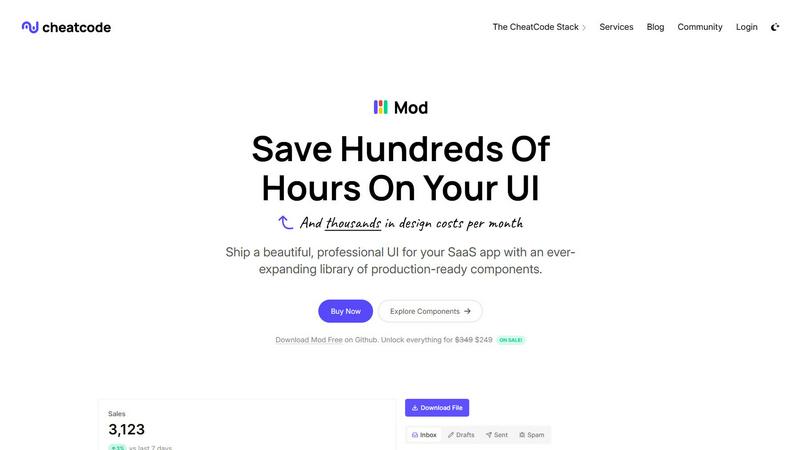
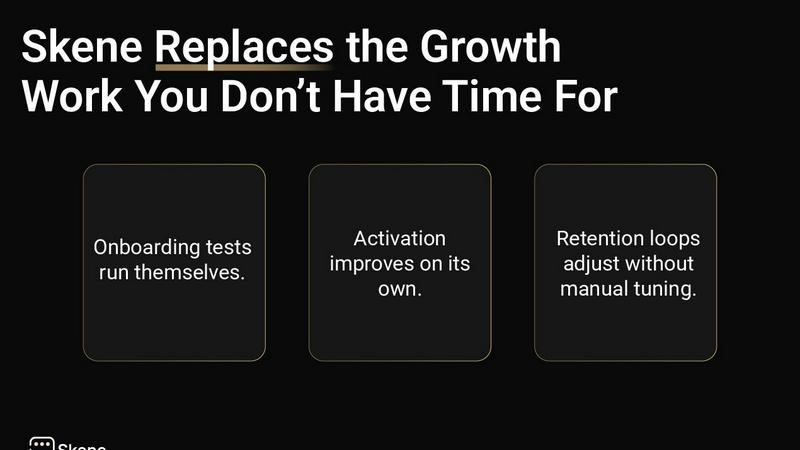
Visual Comparison
Mod
Skene
Feature Comparison
Mod
Comprehensive Component Library
Mod offers a rich library of over 88 components, including buttons, forms, modals, and navigation elements. This extensive range allows developers to mix and match components to tailor their applications to specific needs, reducing development time and effort.
Extensive Style Options
With 168 distinct styles at your disposal, Mod enables you to enhance your application’s aesthetic appeal. The variety of styles allows for customization of colors, typography, and layouts, ensuring that your UI can align perfectly with your brand's identity.
Dark Mode Support
Mod includes built-in support for dark mode, a crucial feature for modern applications. This allows users to toggle between light and dark themes, enhancing user experience and accessibility, particularly in low-light environments.
Framework-Agnostic Compatibility
One of Mod's key strengths is its framework-agnostic nature. It can be integrated with popular frameworks like Next.js, Nuxt, Vite, Svelte, Rails, and Django, making it an ideal choice for developers working across various tech stacks. This compatibility ensures that teams can leverage Mod's capabilities regardless of their existing technology choices.
Skene
Codebase Signal Analysis
Skene performs deep, automated analysis of your connected GitHub or GitLab repository to extract actionable growth signals. It scans your framework, component structure, and user flow logic to identify onboarding friction points, activation opportunities, and retention risks directly from the source code, providing a foundational context layer for all subsequent AI-driven optimizations.
AI-Prompted Growth Implementation
Growth workflows are managed through natural language prompts within your existing development environment, such as Cursor or a terminal. After analysis, you can instruct Skene to generate and implement specific improvements—like refining an onboarding tour or adjusting a activation checkpoint—turning strategic insights into shipped code without manual intervention.
Self-Optimizing User Flows
The system continuously monitors user interactions against the signals in your codebase. It automatically A/B tests different user journey variations and implements the winning flows. This creates a closed feedback loop where onboarding and activation processes become smarter and more effective over time, with no manual dashboard tuning required.
Integrated Growth Manifest & Context
Skene generates a persistent growth-manifest.json file within your project (e.g., in ./skene-context/). This file acts as a centralized, version-controlled source of truth for all your product's growth logic, analytics definitions, and user journey states, ensuring your AI agents and tools have consistent, up-to-date context.
Use Cases
Mod
Rapid SaaS Development
For startups looking to launch quickly, Mod provides a comprehensive set of tools that facilitate rapid development of SaaS applications. By utilizing its extensive component library and style options, developers can create functional UIs in a fraction of the time.
Customizable Dashboards
Mod’s components can be used to create customizable dashboards for data visualization and user management. This is particularly useful for SaaS products that require user interaction with complex datasets, enabling developers to build intuitive interfaces.
E-commerce Applications
Developers can leverage Mod's responsive design and extensive styling options to build engaging e-commerce platforms. The ability to create visually appealing product pages and streamlined checkout processes can significantly enhance user experience and conversion rates.
Multi-Framework Projects
For teams working on projects that require integrations across different frameworks, Mod's framework-agnostic feature allows for a unified design language. This flexibility ensures that all components maintain consistency across various parts of the application, regardless of the underlying technology.
Skene
Autonomous Onboarding Optimization
For SaaS products, Skene automatically analyzes where new users drop off during initial setup. It then generates, tests, and deploys refined onboarding tours and tooltips directly within the application's UI, significantly improving time-to-value and activation rates without any engineering overhead.
Continuous Activation Funnel Management
Startups can use Skene to perpetually audit and improve their core activation funnel. The system identifies which features are correlated with long-term retention, detects where users struggle to reach them, and prompts the implementation of guided flows or UI adjustments to boost key feature adoption.
Lifecycle Automation for Customer Success
Teams can automate complex customer lifecycle workflows based on code-level signals. For example, Skene can trigger re-engagement nudges or educational content when it detects a user has not interacted with a newly shipped feature, helping to drive adoption and reduce churn autonomously.
Tech Stack Consolidation for Developers
Development teams frustrated with managing multiple analytics, onboarding, and engagement tools can replace their entire legacy growth stack with Skene. It consolidates these functions into a single, code-native infrastructure that is owned, versioned, and modified within the same workflow used for feature development.
Overview
About Mod
Mod is an advanced CSS framework specifically designed for building Software as a Service (SaaS) user interfaces. It is part of the CheatCode developer stack, which also includes Joystick for full-stack JavaScript development and Push for deployment solutions. Mod stands out with its extensive library of over 88 customizable components, 168 unique styles, and more than 1,500 icons, allowing developers to create visually appealing and highly functional applications quickly. The framework supports dark mode and is built on a responsive, mobile-first design philosophy, ensuring that applications look great on any device. Its framework-agnostic approach allows seamless integration with popular technologies such as Next.js, Nuxt, Vite, Svelte, Rails, and Django, making it a versatile choice for both solo developers and teams. The simple pricing model and regular yearly updates reduce design costs significantly, enabling developers to focus on innovation while efficiently shipping polished SaaS applications.
About Skene
Skene is an AI-powered Product-Led Growth (PLG) infrastructure designed for modern development teams, particularly indie developers and early-stage startups. It redefines growth tooling by integrating directly with your codebase and IDE, eliminating the need for external, siloed dashboards and brittle third-party scripts. Skene operates as a fully automated iteration engine that autonomously optimizes key growth funnels like onboarding, activation, and retention. By analyzing your repository structure and deriving signals directly from your code, it intelligently identifies friction points and activation drop-offs. It then automatically tests and implements improved user flows, creating a self-optimizing product experience. This "growth as code" philosophy allows developers to own, version, and prompt their growth infrastructure just like their core product, ensuring seamless compatibility with existing tech stacks and AI agents. The core value proposition is clear: replace a fragmented legacy growth stack with a unified, code-native system that ships growth loops instead of managing widgets, all without expanding your team.
Frequently Asked Questions
Mod FAQ
What types of applications can be built using Mod?
Mod is ideal for building SaaS applications, e-commerce platforms, dashboards, and any other web application requiring a robust and customizable UI. Its extensive component and style library supports a wide range of use cases.
Is Mod easy to integrate with existing projects?
Yes, Mod is designed to be framework-agnostic, allowing for seamless integration with popular frameworks like Next.js, Nuxt, Vite, Svelte, Rails, and Django. This makes it straightforward to incorporate Mod into existing projects.
Does Mod support mobile-first design?
Absolutely. Mod is built on a responsive, mobile-first design philosophy, ensuring that applications created with it are optimized for all devices, providing an excellent user experience regardless of screen size.
How often does Mod receive updates?
Mod benefits from regular yearly updates, ensuring that developers have access to the latest features, improvements, and bug fixes. This commitment to keeping the framework current helps developers maintain and enhance their applications effectively.
Skene FAQ
How is Skene different from traditional customer experience software?
Traditional tools rely on manual tour creation, external JavaScript snippets, and brittle UI selectors that break with every deployment. Skene is fundamentally different; it reads your actual codebase to understand your application's structure and automatically generates and maintains all growth components. When you push new code, Skene's flows update themselves, ensuring robustness and deep integration.
How long does it take to set up?
Setup is designed to be completed in less than 60 seconds. You simply grant Skene read-only access to your GitHub or GitLab repository. The system then automatically analyzes your codebase to generate the initial PLG flows and context layer. No initial code changes or API modifications are required to get started.
Is my code secure?
Yes, security is a primary design consideration. Skene only ever requires read-only access to your repository. All code analysis is performed in a secure, isolated environment. Your proprietary code is not stored or used for any purpose other than generating your specific growth infrastructure and signals.
What kind of analytics do you provide?
Skene provides analytics focused on growth outcomes, not just pageviews. The dashboard shows real-time user progress through defined journeys, completion rates, engagement metrics, and bottleneck identification. You can track critical metrics like time-to-value and directly measure the impact of each automated improvement on your activation and retention goals.