
Bargou One vs Pathoura
Side-by-side comparison to help you choose the right product.

Bargou One
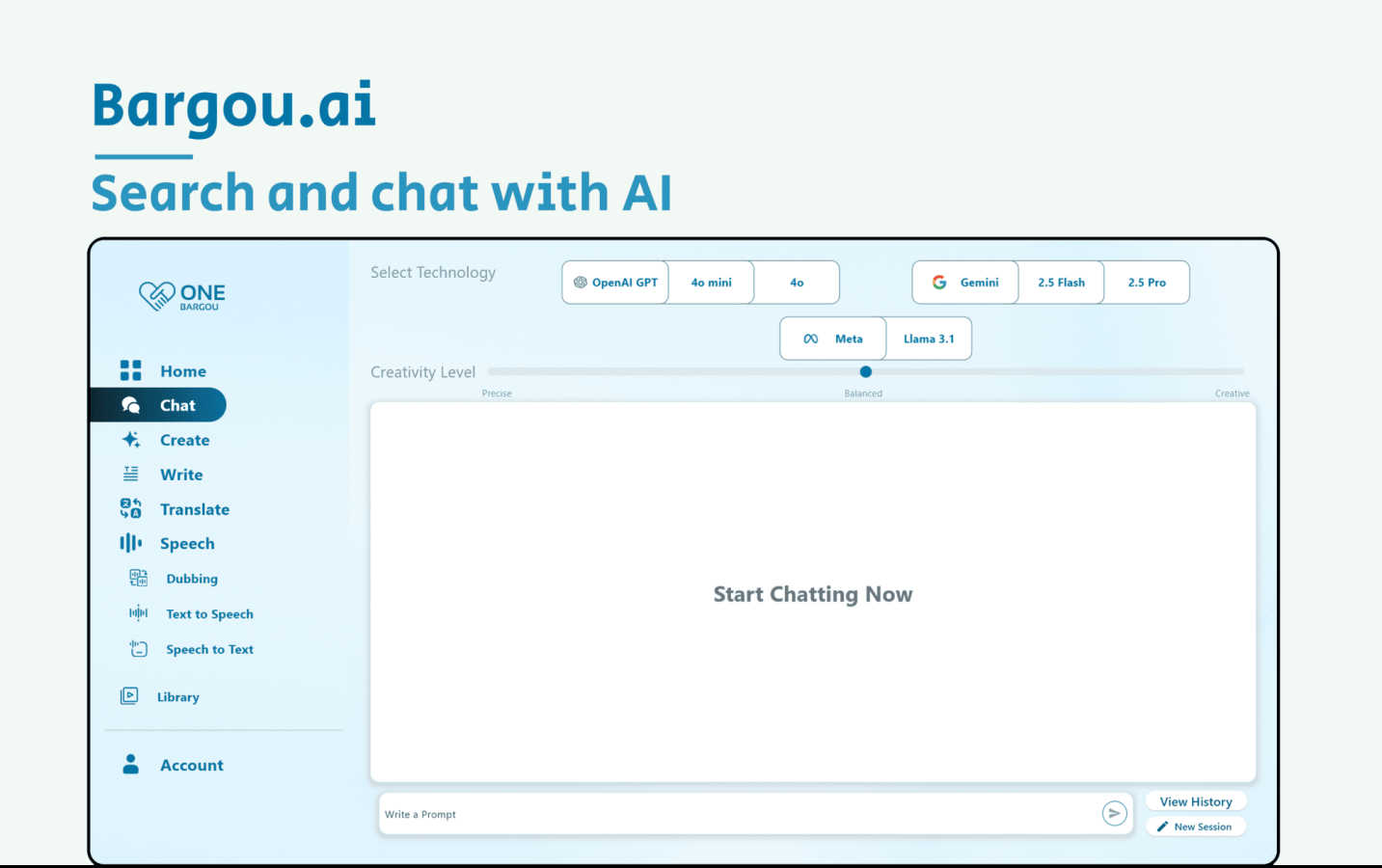
Bargou One is an integrated AI suite for creating, translating, and transcribing content across all platforms.
Last updated: March 1, 2026

Pathoura
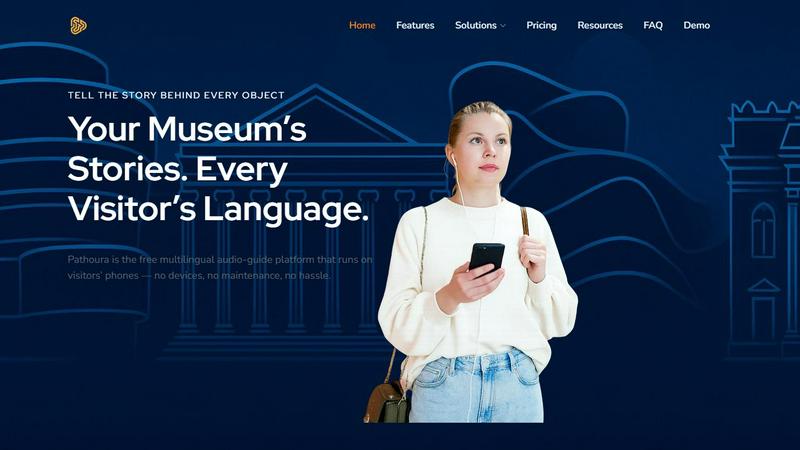
Pathoura is an AI platform that creates multilingual smartphone audio guides for museums.
Last updated: March 1, 2026
Visual Comparison
Bargou One
Pathoura
Feature Comparison
Bargou One
Intelligent Dubbing & Translation
This feature provides real-time, context-aware language translation and dubbing for audio and video content. It goes beyond simple word-for-word substitution, leveraging integrated AI models to preserve nuance, tone, and intent. This allows users to understand foreign-language media effortlessly and create multilingual versions of their own content, effectively acting as "Smart Ears" for global communication and consumption.
Advanced Text-to-Speech (TTS)
Bargou One's TTS engine converts written text into natural, human-like audio. It is designed to support various languages and accents, providing a vocal output that is clear and expressive. This feature is ideal for creating audiobooks, generating voiceovers for videos, or offering an auditory alternative for written content, thereby eliminating reading hassles and making information more accessible.
Accurate Speech-to-Text (STT)
The platform offers high-accuracy speech recognition that transcribes spoken words into written text in real-time. This functionality serves as a virtual typewriter for meetings, interviews, lectures, or personal dictation. It supports seamless integration for note-taking and content creation, ensuring that verbal ideas are captured efficiently and accurately without manual typing.
Multimodal Content Generation
Powered by a composite AI stack, this feature enables the generation of original images, music, and video content from textual prompts. It synthesizes capabilities from leading generative models to help users brainstorm visual concepts, create soundtracks, or produce video clips. This unleashes creative potential for marketers, designers, and social media managers seeking to produce unique multimedia assets rapidly.
Pathoura
Cloud-Native Web Dashboard
The central management hub is a fully cloud-based dashboard, accessible from any modern browser. This interface allows staff to upload exhibit text and images, organize content into thematic zones, generate AI narrations, and publish updates in real-time. Its architecture ensures all changes are instantly propagated to visitor-facing endpoints without requiring app updates or device syncing, providing unparalleled agility for content management.
AI-Powered Translation & Narration
Integrated directly into the content workflow, this feature uses advanced large language models (LLMs) and neural text-to-speech engines. It automatically translates exhibit scripts into over 20 languages and generates expressive, human-like voiceovers in seconds. The system allows for preview and editorial fine-tuning before committing credits, enabling high-quality, scalable multilingual output without the need for professional recording studios or translators.
QR-Code/Link Based Visitor Access
Pathoura employs a device-agnostic access model. Each exhibit point is assigned a unique QR code and/or numerical code. Visitors simply scan or enter the code using their smartphone's camera or browser, triggering instant playback of the audio guide directly in the mobile web browser. This ensures full compatibility with iOS and Android devices without requiring app downloads, software installations, or specific hardware dependencies.
Real-Time Analytics & Consent Management
The platform includes a robust analytics suite that tracks visitor engagement metrics, such as play counts and language preferences, directly within the dashboard. It is built with privacy-by-design, featuring integrated consent management tools that allow sites to comply with data regulations by storing visitor preferences for technologies like cookies, ensuring a transparent and compliant user experience.
Use Cases
Bargou One
Global Team Collaboration
Distributed teams can use Bargou One to transcribe multilingual meeting notes in real-time using STT, then translate and dub recordings for team members in different regions. This ensures clear understanding and alignment across language barriers, streamlining project management and communication for international businesses and remote workforces.
Content Creator Production Suite
Video creators and social media managers can leverage the platform to generate script ideas, create voiceovers with TTS in multiple languages, dub existing videos for new audiences, and produce custom thumbnail images or background music with the content generation tools. This creates a full-cycle production environment within one application.
Academic Research & Learning
Students and researchers can utilize Bargou One to transcribe lectures (STT), translate foreign academic papers or videos (Dubbing), and have long texts read aloud (TTS) for improved comprehension and note-taking. This suite of tools accelerates the research process and aids in understanding complex material in multiple languages.
Accessibility Support
The platform provides essential tools for accessibility, such as converting written content to speech for visually impaired users (TTS) and transcribing spoken dialogue to text for the hearing impaired (STT). This use case demonstrates Bargou One's compatibility with inclusive technology practices, making digital content more accessible to a wider audience.
Pathoura
Replacing Hardware Audio Guide Rentals
Institutions can decommission their fleets of physical audio devices and the associated rental kiosks. Pathoura's QR-code system eliminates the costs of device procurement, maintenance, sanitization, and battery management, while also removing the logistical burden of distribution and collection from staff, redirecting resources to visitor services.
Rapid Deployment for Temporary Exhibitions
For rotating or special exhibitions, curators can use the web dashboard to quickly build a tailored audio guide. Content can be created, translated, and narrated within hours, and QR codes can be printed and displayed alongside exhibits almost immediately, allowing for agile, cost-effective interpretation that aligns with tight exhibition schedules.
Enhancing Accessibility for International Visitors
Museums seeking to serve a global audience can leverage the AI translation and narration engine to offer guides in dozens of languages simultaneously. This breaks down language barriers inclusively and efficiently, providing a consistent, high-quality experience for all visitors without the prohibitive cost and time of manual translation and recording.
Sustainable & Low-Overhead Heritage Site Tours
Outdoor heritage sites, historical walking tours, or sculpture parks can implement Pathoura without concerns for weather-proofing hardware or providing internet connectivity for apps. Durable printed QR signs placed at points of interest allow visitors to access on-demand narration using their own data plans, promoting a sustainable, low-maintenance operational model.
Overview
About Bargou One
Bargou One is a sophisticated, all-in-one AI productivity suite engineered to consolidate multiple advanced AI technologies into a single, unified platform. It is designed for professionals, creators, and students who require a seamless workflow across communication, content creation, and language processing tasks. The platform's core value proposition lies in its technical integration, harmonizing powerful AI models from industry leaders like OpenAI, Google, and Meta within a user-friendly interface. This eliminates the need to juggle disparate tools and APIs, offering a cohesive environment for intelligent text handling, multimedia generation, and real-time translation. Bargou One empowers users to break down language barriers, automate content production, and enhance digital communication, all through a technically robust stack that prioritizes compatibility and streamlined user experience across desktop and mobile ecosystems.
About Pathoura
Pathoura is a cloud-native, AI-powered audio-guide platform engineered to modernize visitor engagement for museums, galleries, and heritage sites. It fundamentally replaces legacy hardware rentals and dedicated mobile applications with a streamlined, web-based technology stack. The platform's core architecture is built around a comprehensive web dashboard, enabling both technical and non-technical staff to create, manage, and analyze multilingual audio content with operational ease. Its primary value proposition lies in eliminating physical infrastructure—such as audio devices and their associated charging, maintenance, and e-waste—by leveraging visitors' own smartphones via QR-code or direct link access. Pathoura integrates advanced AI for real-time translation and natural-sounding voice synthesis across 20+ languages, drastically reducing the cost and complexity of producing professional, inclusive interpretation. This tech-stack oriented approach ensures seamless integration into daily workflows, allowing institutions to focus resources on storytelling and content creation rather than IT logistics, while offering scalable tools for monetization and deep visitor analytics.
Frequently Asked Questions
Bargou One FAQ
What AI models does Bargou One integrate?
Bargou One is built on a integrated tech stack that leverages and combines advanced AI technologies from leading providers, including OpenAI (for language and generation models), Google (for translation and speech services), and Meta (for certain AI research applications). This multi-model approach ensures high performance and versatility across different task types.
On which platforms is Bargou One available?
Bargou One emphasizes broad compatibility and is available as a downloadable application across all major desktop and mobile operating systems. This includes native apps for Windows, macOS, Linux, Android (via Google Play), and iOS (via the App Store), as well as through the Snap store for certain Linux distributions.
Can I use Bargou One for commercial content creation?
Yes, the content generation features, including image, music, and video creation, are designed to support commercial use cases such as marketing, advertising, and social media content production. However, users should review the specific Terms of Service regarding licensing and ownership of the AI-generated outputs for commercial projects.
How does the real-time dubbing feature work?
The real-time dubbing feature uses a pipeline of integrated AI services. First, Speech-to-Text converts the audio to text. Then, the translation AI processes the text into the target language. Finally, a Text-to-Speech engine with appropriate voice characteristics generates the new audio track, aiming to synchronize with the original timing for a natural viewing experience.
Pathoura FAQ
What technology do visitors need to use Pathoura?
Visitors only need a smartphone (iOS or Android) with a standard mobile web browser (like Chrome or Safari) and a camera to scan QR codes. No specific app download, account creation, or advanced device capabilities are required. The experience is delivered via responsive web audio players that are compatible with all modern devices.
How does the AI translation and narration ensure quality?
The platform utilizes state-of-the-art LLMs for contextual translation that adapts to museum terminology, followed by neural text-to-speech engines that produce natural cadence and intonation. Content managers have full control to preview, edit, and re-generate any translation or audio clip before publishing, allowing for human oversight to guarantee accuracy and narrative quality.
Can we use our own pre-recorded audio files?
Yes, the Pathoura dashboard supports flexible content ingestion. While the AI narration provides speed and scalability, you can also upload and attach your own professionally recorded audio files (e.g., in MP3 format) to any exhibit, offering complete creative control over the vocal presentation for specific content.
How does Pathoura handle visitor data privacy?
Pathoura is built with data privacy as a core component. It includes a configurable consent management system that allows your institution to control the use of technologies like cookies. Visitor data collected for analytics is anonymized and aggregated by default, and the platform is designed to help you comply with regulations like GDPR by managing visitor consent preferences transparently.
Alternatives
Bargou One Alternatives
Bargou One is a comprehensive AI assistant platform that consolidates multiple advanced technologies into a single interface. It falls into the category of all-in-one AI productivity suites, designed to handle tasks ranging from content creation and translation to transcription and real-time chat. Its core value is the integration of diverse AI models for text, audio, and visual workflows. Users often explore alternatives for several key reasons. These include specific budget constraints or pricing models, the need for deeper functionality in a particular niche like image generation or code writing, and requirements for specific platform integrations or API access that better fit their existing tech stack. The desire for a different user experience or more granular control over individual AI models can also drive the search. When evaluating an alternative, consider your primary use case and required output quality. Assess the platform's compatibility with your current tools and its ability to connect via API for automated workflows. Scrutinize the underlying AI models and providers powering each feature, as this directly impacts performance. Finally, review the pricing structure, data security policies, and the flexibility of the platform to adapt to your evolving needs.
Pathoura Alternatives
Pathoura is an AI-powered audio guide platform designed for museums and cultural institutions. It operates within the category of AI-assisted content creation and delivery, specifically engineered to replace legacy hardware and app-dependent systems with a modern, web-native solution. Users often explore alternatives due to specific integration requirements, budget constraints, or a need for different feature sets such as custom branding, advanced analytics, or alternative pricing models like perpetual licensing. Platform compatibility with existing content management systems or specific technical architectures can also drive the search. When evaluating alternatives, key considerations should include the core technology stack, API availability for custom integrations, the method of visitor access (app-based vs. web-based), the sophistication of AI translation and narration engines, and the overall total cost of ownership. The ideal solution should align with your institution's operational workflow and long-term digital strategy.