
Doodle Duel vs Prefactor
Side-by-side comparison to help you choose the right product.

Doodle Duel
Doodle Duel is a real-time multiplayer game where you sketch prompts and an AI judges creativity to crown a winner.
Last updated: February 28, 2026

Prefactor
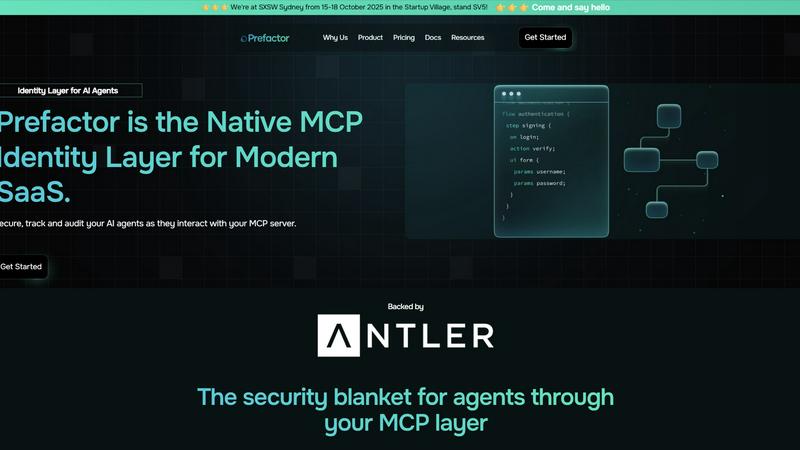
Prefactor is the essential control plane for governing AI agents in production at scale.
Last updated: March 1, 2026
Visual Comparison
Doodle Duel

Prefactor
Feature Comparison
Doodle Duel
Real-Time Multiplayer Engine
Doodle Duel is built on a robust real-time synchronization engine that allows up to 30 players to connect and compete simultaneously. Utilizing WebSocket protocols, the platform ensures that prompts, timers, and submissions are perfectly synced across all devices. This architecture supports instant room creation via shareable codes, enabling friends to join a session in seconds without account creation, downloads, or complex lobby systems, making it a frictionless social gaming experience.
AI-Powered Judging Integration
The game's standout feature is its integration with leading AI vision models from Google Gemini and OpenAI. This system acts as an impartial judge, analyzing every submitted doodle against the given prompt. It evaluates on multiple vectors including accuracy to the theme, creative interpretation, and stylistic elements, generating a score and often witty feedback. This removes subjective bias and adds a layer of consistent, tech-driven fairness to each duel.
Cross-Platform Browser Compatibility
Doodle Duel is developed as a Progressive Web Application (PWA) with full cross-browser compatibility. It requires no native app installation and is accessible on any device with a modern web browser (Chrome, Safari, Firefox, Edge). The drawing interface is optimized for both touchscreen and mouse input, ensuring a smooth and responsive sketching experience whether on a smartphone, tablet, or desktop computer.
Dual Game Mode Architecture
The platform features a flexible dual-mode architecture. The Solo Arcade mode is a single-player experience with 50 progressive levels, local score tracking, and global leaderboard integration, built for skill development. The Multiplayer Duel mode is a separate, scalable real-time system for group play. This modular design caters to different user intents, from focused practice to chaotic social competition, all within the same application ecosystem.
Prefactor
Real-Time Agent Monitoring & Dashboard
Gain complete operational visibility across your entire agent infrastructure from a centralized dashboard. Monitor all agents in one place, tracking which are active or idle, what tools and data they are accessing via protocols like MCP, and where failures or anomalies emerge in real-time. This feature provides the actionable insights needed to prevent incidents before they cascade, offering teams immediate answers to "what is this agent doing right now?".
Compliance-Ready Audit Trails
Prefactor generates detailed, business-contextual audit logs that translate raw agent actions and API calls into understandable narratives for stakeholders and regulators. This goes beyond technical event recording to answer compliance questions clearly, enabling the generation of audit-ready reports in minutes, not weeks. Every agent action is logged and attributable, creating an immutable record designed to withstand regulatory scrutiny.
Identity-First Access Control
This feature brings proven human identity governance principles to AI agents. It provides dynamic client registration, delegated access, and fine-grained role and attribute-based controls (RBAC/ABAC). Every agent is issued a unique, first-class identity, and every action it performs is authenticated. This ensures permissions are precisely scoped, eliminating over-provisioned access and creating a fundamental layer of security.
Emergency Kill Switches & Cost Tracking
Maintain ultimate control with emergency kill switches to instantly deactivate any agent exhibiting unexpected or harmful behavior. Coupled with comprehensive cost tracking, this feature allows you to monitor agent compute costs across different providers, identify expensive execution patterns, and optimize spending. It provides both financial governance and a critical safety mechanism for production environments.
Use Cases
Doodle Duel
Virtual Team Building & Social Events
Ideal for remote teams or online friend groups, Doodle Duel serves as a powerful virtual icebreaker and team-building tool. The simple room-code system integrates seamlessly into video call meetings or social chats. The AI-judged format encourages participation regardless of artistic skill, fostering laughter, creativity, and lighthearted competition that helps break down barriers and build camaraderie in distributed groups.
Casual Party & Family Game Night
For in-person gatherings, Doodle Duel transforms into a dynamic party game. Players can quickly connect their own devices to a shared room via a code displayed on a central screen. The 60-second rounds and live AI commentary create a fast-paced, engaging spectacle perfect for parties or family game nights, where the focus is on fun and spontaneous creativity rather than high-stakes competition.
Creative Skill Warm-Up & Practice
Artists, designers, and students can use the Solo Arcade mode as a low-pressure creative exercise. The timed prompts challenge users to think and sketch quickly, improving ideation speed and conceptual communication. The AI feedback, while humorous, provides an alternative perspective on how a machine interprets visual concepts, which can be a unique tool for refining one's ability to convey ideas clearly and creatively.
Educational Engagement Tool
Educators can leverage Doodle Duel in classroom settings to make learning interactive. By crafting custom prompts related to curriculum topics (e.g., "draw a photosynthesis diagram," "sketch a historical event"), teachers can create an engaging review activity. The game format promotes active recall and allows students to demonstrate understanding in a creative, non-traditional format, with the AI providing a neutral scoring mechanism.
Prefactor
Scaling AI Agents in Regulated Finance
A Fortune 500 financial services company can use Prefactor to move AI agent pilots from demo to approved production. The platform provides the necessary audit trails, real-time monitoring, and identity controls to satisfy internal compliance and security teams, answering critical questions about agent activity and data access before granting deployment authorization.
Governance for Healthcare AI Applications
Healthcare technology firms deploying AI agents for data analysis or patient interaction can leverage Prefactor to enforce strict access controls (like HIPAA-compliant scoping) and generate detailed audit logs. This ensures agent interactions with sensitive protected health information (PHI) are fully tracked, controlled, and explainable for compliance audits.
Managing Multi-Agent Workflows in Enterprise SaaS
SaaS companies building complex, multi-agent systems using frameworks like LangChain, CrewAI, or AutoGen can integrate Prefactor to govern cross-agent communication and tool usage. It provides a unified view and control plane, simplifying permission management across diverse agents and ensuring coherent security policy enforcement throughout automated workflows.
Cost-Optimized Agent Deployment in Mining & Resources
Industries like mining that rely on operational technology and data analysis can deploy AI agents for predictive maintenance or logistics. Prefactor helps track and optimize the cloud compute costs associated with these agents while ensuring their operations in critical environments are visible, controllable, and can be halted immediately if needed, aligning innovation with operational risk management.
Overview
About Doodle Duel
Doodle Duel is a cloud-native, real-time drawing game that leverages modern web technologies to deliver instant, accessible gameplay without any client-side installation. The platform is engineered for seamless integration into any social gathering, connecting up to 30 participants through a simple room code system. At its core, Doodle Duel utilizes a sophisticated AI judging stack, powered by integrations with Google Gemini and OpenAI models, to provide objective, real-time analysis of user-submitted sketches. This architecture ensures fair, consistent, and often humorous evaluations based on prompt accuracy, creativity, and artistic style. Designed for universal compatibility, the game runs directly in any modern web browser on desktop or mobile devices, removing friction and enabling immediate play. Its primary value proposition lies in merging competitive social interaction with advanced, accessible AI, creating a unique entertainment layer that is both technologically impressive and effortlessly fun for artists and novices alike.
About Prefactor
Prefactor is the enterprise-grade control plane specifically engineered for managing and governing AI agents in production, particularly within regulated environments. It solves the critical infrastructure gap that emerges when moving AI agent proofs-of-concept (POCs) into scalable, secure, and compliant deployments. The platform provides a unified source of truth for agent identity, access, and activity, aligning security, engineering, compliance, and product teams around shared governance. By integrating seamlessly into existing CI/CD pipelines and popular AI frameworks, Prefactor automates the complex authentication and permission management required for autonomous agents. Its core value proposition is transforming security from a bottleneck into a seamless layer of trust, enabling organizations in sectors like financial services, healthcare, and mining to innovate with AI agents without compromising on auditability, visibility, or control. Prefactor ensures every agent operates with a first-class, auditable identity, making it an essential piece of tech stack for any team serious about production AI agent deployments.
Frequently Asked Questions
Doodle Duel FAQ
What technology does the AI judge use?
Doodle Duel's AI judging system is powered by integrations with advanced multimodal AI models, specifically Google Gemini and OpenAI's vision-capable APIs. These models analyze the submitted image against the text prompt, evaluating it for conceptual accuracy, creative interpretation, and stylistic elements. The scores and feedback are generated in real-time, providing a consistent and objective assessment for every duel.
Do I need to download an app or create an account?
No. Doodle Duel is a web-based application built for maximum accessibility and zero friction. It runs directly in your device's web browser without any downloads or installations. Furthermore, no account registration is required to play. You can instantly create a multiplayer room or start a solo arcade session, with progress tracked locally via your browser session.
How many people can play in one room?
The multiplayer system supports different tiers. The free version allows rooms of up to 4 players simultaneously. By upgrading to Doodle Duel Pro, you can unlock larger rooms that support up to 30 concurrent players, enabling massive, chaotic drawing battles perfect for large virtual events, classrooms, or big friend groups.
Is my drawing data stored or used for AI training?
According to the provided Privacy Policy, user privacy is a priority. While your drawing is processed in real-time by the AI judge to generate a score, Doodle Duel states that it does not permanently store individual drawings or use them to train its own AI models. The system is designed for transient gameplay, with data handling focused on session functionality like room codes and temporary scores.
Prefactor FAQ
What AI frameworks does Prefactor integrate with?
Prefactor is designed for broad compatibility and integrates seamlessly with popular AI agent frameworks including LangChain, CrewAI, and AutoGen. It also supports custom-built agent architectures. The platform is built to work with the Model Context Protocol (MCP), which is becoming the default standard for agents to access tools and data, ensuring you can deploy Prefactor's governance layer in hours, not months.
How does Prefactor handle agent identity and authentication?
Prefactor treats each AI agent as a first-class citizen with its own unique identity. It provides dynamic client registration systems and uses delegated authentication models. Each agent action is authenticated against this identity, and permissions are enforced through fine-grained role-based (RBAC) and attribute-based (ABAC) controls, mirroring enterprise human identity governance but built for autonomous software.
Is Prefactor suitable for non-regulated industries?
While Prefactor is specifically engineered for the stringent demands of regulated sectors like finance and healthcare, its core benefits of visibility, control, and operational management are valuable for any organization scaling AI agents. Companies experiencing growing pains with agent sprawl, lack of auditability, or cost overruns will find its control plane essential for sustainable, secure production deployments.
How does the real-time monitoring work?
The Prefactor control plane installs lightweight connectors or utilizes SDKs within your agent environment. These components securely stream metadata about agent status, activity, and tool usage back to the central dashboard in real-time. This does not typically require intercepting sensitive data payloads but focuses on access logs, performance metrics, and execution states, providing a live operational view.
Alternatives
Doodle Duel Alternatives
Doodle Duel is a real-time multiplayer drawing game that leverages AI for judging, placing it within the broader category of AI-assisted creative and social gaming platforms. It emphasizes instant, account-free play and integrates with leading AI models like Google Gemini and OpenAI to provide a unique competitive experience. Users often explore alternatives to find solutions that better align with their specific technical or social requirements. Common drivers include the need for different pricing models, such as subscription tiers or one-time purchases, a desire for more advanced drawing tools or integration capabilities, or the necessity for support on specific platforms or devices not covered by the original application. When evaluating an alternative, consider the core technology stack and its API compatibility, especially if you require integration with other creative or communication tools. Assess the multiplayer infrastructure for stability and scale, the flexibility of the AI judging engine, and whether the platform supports your preferred deployment method, such as web-based, native mobile apps, or cross-platform frameworks.
Prefactor Alternatives
Prefactor is a specialized control plane for governing and monitoring AI agents in regulated SaaS environments. It provides a unified platform for security, engineering, and compliance teams to manage agent identity, access, and audit trails at scale. Users may explore alternatives for various reasons, such as specific pricing models, the need for broader or narrower feature sets, or different integration requirements with their existing tech stack and CI/CD pipelines. Some may seek solutions that are more general-purpose or deeply embedded within a particular cloud provider's ecosystem. When evaluating alternatives, key considerations include the depth of real-time monitoring, the robustness of compliance-ready audit logs, and the flexibility of the identity and permissioning model. It's crucial to assess how well a solution integrates with your current infrastructure, its ability to provide a unified source of truth across teams, and its approach to automating security within development workflows.