
Prefactor vs qtrl.ai
Side-by-side comparison to help you choose the right product.

Prefactor
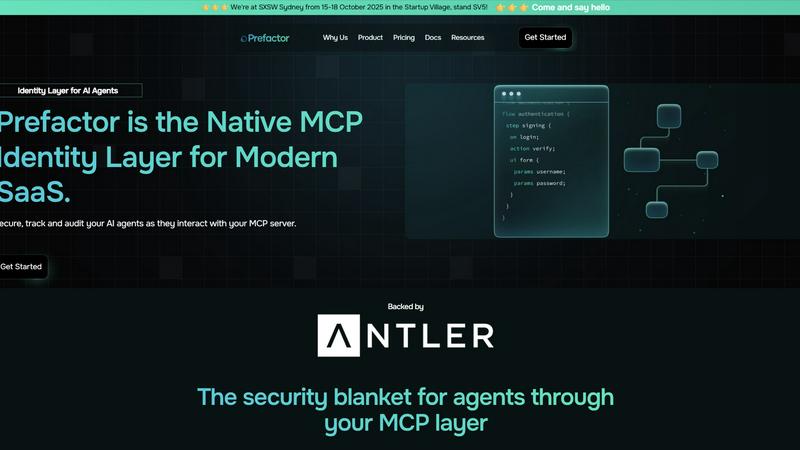
Prefactor is the essential control plane for governing AI agents in production at scale.
Last updated: March 1, 2026

qtrl.ai
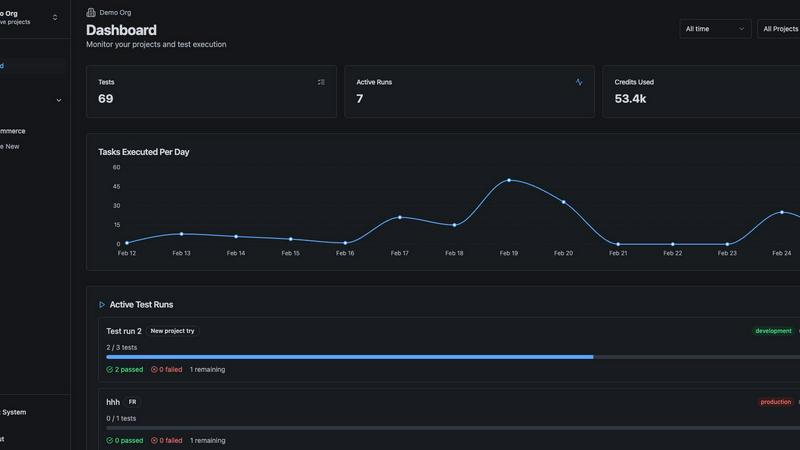
qtrl.ai empowers QA teams to scale testing with AI while maintaining complete control and governance in a unified.
Last updated: March 4, 2026
Visual Comparison
Prefactor
qtrl.ai
Feature Comparison
Prefactor
Real-Time Agent Monitoring & Dashboard
Gain complete operational visibility across your entire agent infrastructure from a centralized dashboard. Monitor all agents in one place, tracking which are active or idle, what tools and data they are accessing via protocols like MCP, and where failures or anomalies emerge in real-time. This feature provides the actionable insights needed to prevent incidents before they cascade, offering teams immediate answers to "what is this agent doing right now?".
Compliance-Ready Audit Trails
Prefactor generates detailed, business-contextual audit logs that translate raw agent actions and API calls into understandable narratives for stakeholders and regulators. This goes beyond technical event recording to answer compliance questions clearly, enabling the generation of audit-ready reports in minutes, not weeks. Every agent action is logged and attributable, creating an immutable record designed to withstand regulatory scrutiny.
Identity-First Access Control
This feature brings proven human identity governance principles to AI agents. It provides dynamic client registration, delegated access, and fine-grained role and attribute-based controls (RBAC/ABAC). Every agent is issued a unique, first-class identity, and every action it performs is authenticated. This ensures permissions are precisely scoped, eliminating over-provisioned access and creating a fundamental layer of security.
Emergency Kill Switches & Cost Tracking
Maintain ultimate control with emergency kill switches to instantly deactivate any agent exhibiting unexpected or harmful behavior. Coupled with comprehensive cost tracking, this feature allows you to monitor agent compute costs across different providers, identify expensive execution patterns, and optimize spending. It provides both financial governance and a critical safety mechanism for production environments.
qtrl.ai
Autonomous QA Agents
qtrl.ai features autonomous QA agents that can execute testing instructions both on demand and continuously. These agents operate across multiple environments, ensuring real browser execution rather than mere simulations. This feature allows teams to scale their testing efforts efficiently while adhering to their defined governance rules.
Enterprise-Grade Test Management
The platform provides a comprehensive suite for enterprise-grade test management. It centralizes all test cases, plans, and execution runs, ensuring full traceability and audit trails. This allows teams to manage both manual and automated workflows, making it ideal for organizations that prioritize compliance and accountability in their QA processes.
Progressive Automation
qtrl.ai supports a gradual transition to automation, starting with human-written instructions. As teams gain confidence, they can leverage AI-generated tests that qtrl suggests based on coverage gaps. This ensures that automation is implemented thoughtfully, allowing teams to review and refine tests at every stage.
Adaptive Memory
The adaptive memory feature builds a living knowledge base of the application by learning from various interactions, including exploration and test execution. This enhances the platform’s ability to generate smarter and context-aware tests, thus improving the effectiveness of QA efforts with each interaction.
Use Cases
Prefactor
Scaling AI Agents in Regulated Finance
A Fortune 500 financial services company can use Prefactor to move AI agent pilots from demo to approved production. The platform provides the necessary audit trails, real-time monitoring, and identity controls to satisfy internal compliance and security teams, answering critical questions about agent activity and data access before granting deployment authorization.
Governance for Healthcare AI Applications
Healthcare technology firms deploying AI agents for data analysis or patient interaction can leverage Prefactor to enforce strict access controls (like HIPAA-compliant scoping) and generate detailed audit logs. This ensures agent interactions with sensitive protected health information (PHI) are fully tracked, controlled, and explainable for compliance audits.
Managing Multi-Agent Workflows in Enterprise SaaS
SaaS companies building complex, multi-agent systems using frameworks like LangChain, CrewAI, or AutoGen can integrate Prefactor to govern cross-agent communication and tool usage. It provides a unified view and control plane, simplifying permission management across diverse agents and ensuring coherent security policy enforcement throughout automated workflows.
Cost-Optimized Agent Deployment in Mining & Resources
Industries like mining that rely on operational technology and data analysis can deploy AI agents for predictive maintenance or logistics. Prefactor helps track and optimize the cloud compute costs associated with these agents while ensuring their operations in critical environments are visible, controllable, and can be halted immediately if needed, aligning innovation with operational risk management.
qtrl.ai
Scaling QA Efforts
Product-led engineering teams can utilize qtrl.ai to scale their quality assurance efforts without losing oversight. By integrating manual and automated testing workflows, teams can enhance their testing capabilities while ensuring compliance and governance.
Transitioning from Manual to Automated Testing
QA teams looking to move beyond manual testing can leverage qtrl.ai's progressive automation capabilities. The platform allows teams to start with simple manual testing and gradually introduce AI-driven features as they become more comfortable with automation.
Modernizing Legacy QA Workflows
Companies modernizing their legacy QA workflows can benefit from qtrl.ai’s comprehensive test management and automation features. The platform supports integration with existing tools and CI/CD pipelines, making it easier for teams to adopt modern practices without overhauling their entire workflow.
Ensuring Compliance and Traceability
Enterprises that require strict compliance and audit trails can rely on qtrl.ai’s enterprise-grade test management features. With full traceability, audit trails, and governance controls, organizations can maintain quality standards while adhering to regulatory requirements.
Overview
About Prefactor
Prefactor is the enterprise-grade control plane specifically engineered for managing and governing AI agents in production, particularly within regulated environments. It solves the critical infrastructure gap that emerges when moving AI agent proofs-of-concept (POCs) into scalable, secure, and compliant deployments. The platform provides a unified source of truth for agent identity, access, and activity, aligning security, engineering, compliance, and product teams around shared governance. By integrating seamlessly into existing CI/CD pipelines and popular AI frameworks, Prefactor automates the complex authentication and permission management required for autonomous agents. Its core value proposition is transforming security from a bottleneck into a seamless layer of trust, enabling organizations in sectors like financial services, healthcare, and mining to innovate with AI agents without compromising on auditability, visibility, or control. Prefactor ensures every agent operates with a first-class, auditable identity, making it an essential piece of tech stack for any team serious about production AI agent deployments.
About qtrl.ai
qtrl.ai is an innovative quality assurance (QA) platform designed to empower software teams by enhancing their testing capabilities while maintaining robust control and governance. By integrating enterprise-grade test management with sophisticated AI-driven automation, qtrl.ai creates a centralized hub for organizing test cases, planning test runs, and tracing requirements to their coverage. This ensures that teams have clear insights into their testing processes, including what has been tested, what is passing, and where potential risks may lie. The platform is particularly beneficial for product-led engineering teams, QA groups transitioning from manual testing, and enterprises that require stringent compliance and audit trails. With qtrl.ai, organizations can effectively bridge the gap between the slow pace of traditional manual testing and the complexities associated with conventional automation, thereby achieving a faster and more intelligent quality assurance process.
Frequently Asked Questions
Prefactor FAQ
What AI frameworks does Prefactor integrate with?
Prefactor is designed for broad compatibility and integrates seamlessly with popular AI agent frameworks including LangChain, CrewAI, and AutoGen. It also supports custom-built agent architectures. The platform is built to work with the Model Context Protocol (MCP), which is becoming the default standard for agents to access tools and data, ensuring you can deploy Prefactor's governance layer in hours, not months.
How does Prefactor handle agent identity and authentication?
Prefactor treats each AI agent as a first-class citizen with its own unique identity. It provides dynamic client registration systems and uses delegated authentication models. Each agent action is authenticated against this identity, and permissions are enforced through fine-grained role-based (RBAC) and attribute-based (ABAC) controls, mirroring enterprise human identity governance but built for autonomous software.
Is Prefactor suitable for non-regulated industries?
While Prefactor is specifically engineered for the stringent demands of regulated sectors like finance and healthcare, its core benefits of visibility, control, and operational management are valuable for any organization scaling AI agents. Companies experiencing growing pains with agent sprawl, lack of auditability, or cost overruns will find its control plane essential for sustainable, secure production deployments.
How does the real-time monitoring work?
The Prefactor control plane installs lightweight connectors or utilizes SDKs within your agent environment. These components securely stream metadata about agent status, activity, and tool usage back to the central dashboard in real-time. This does not typically require intercepting sensitive data payloads but focuses on access logs, performance metrics, and execution states, providing a live operational view.
qtrl.ai FAQ
What kind of organizations can benefit from qtrl.ai?
qtrl.ai is designed for product-led engineering teams, QA teams scaling beyond manual testing, companies modernizing legacy workflows, and enterprises that need strict governance and traceability in their quality assurance processes.
How does qtrl.ai handle test automation?
qtrl.ai offers progressive automation that allows teams to start with manual test management and gradually incorporate AI-generated tests. This approach ensures teams retain control over the testing process while benefiting from automation when they are ready.
Can qtrl.ai integrate with existing tools?
Yes, qtrl.ai is built to work with existing tools and CI/CD pipelines, allowing teams to modernize their QA workflows without disrupting their current processes. This compatibility facilitates a smoother transition to more advanced QA practices.
Is there visibility into the AI's decision-making process?
Absolutely. qtrl.ai emphasizes governance by design, providing full agent visibility and permissioned autonomy levels. This transparency ensures that users can trust the AI's decisions without the risk associated with "black-box" solutions.
Alternatives
Prefactor Alternatives
Prefactor is a specialized control plane for governing and monitoring AI agents in regulated SaaS environments. It provides a unified platform for security, engineering, and compliance teams to manage agent identity, access, and audit trails at scale. Users may explore alternatives for various reasons, such as specific pricing models, the need for broader or narrower feature sets, or different integration requirements with their existing tech stack and CI/CD pipelines. Some may seek solutions that are more general-purpose or deeply embedded within a particular cloud provider's ecosystem. When evaluating alternatives, key considerations include the depth of real-time monitoring, the robustness of compliance-ready audit logs, and the flexibility of the identity and permissioning model. It's crucial to assess how well a solution integrates with your current infrastructure, its ability to provide a unified source of truth across teams, and its approach to automating security within development workflows.
qtrl.ai Alternatives
qtrl.ai is a cutting-edge QA platform that aids software teams in scaling their quality assurance processes by integrating AI automation while maintaining control and governance. This solution falls under the categories of automation and development tools, providing a structured environment for organizing test cases, managing test runs, and tracking quality metrics in real-time. Users often seek alternatives to qtrl.ai for various reasons, including pricing considerations, feature sets, and specific platform compatibility needs. When choosing an alternative, it is crucial to assess the capabilities of the platform in terms of test management, AI integration, and the level of control it offers to ensure that it meets your team's unique requirements and enhances your overall QA strategy.