
CalPerks vs Psychiatry Exams
Side-by-side comparison to help you choose the right product.

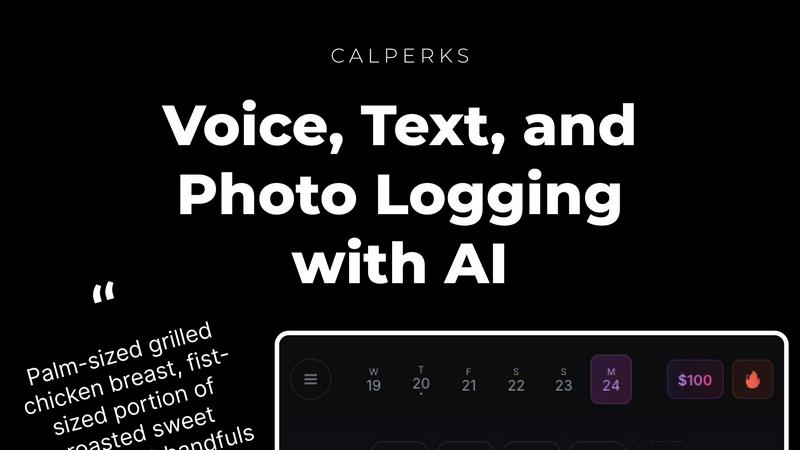
CalPerks uses USDA data and AI to instantly estimate calories from your plain-language meal descriptions.
Last updated: February 28, 2026

Psychiatry Exams
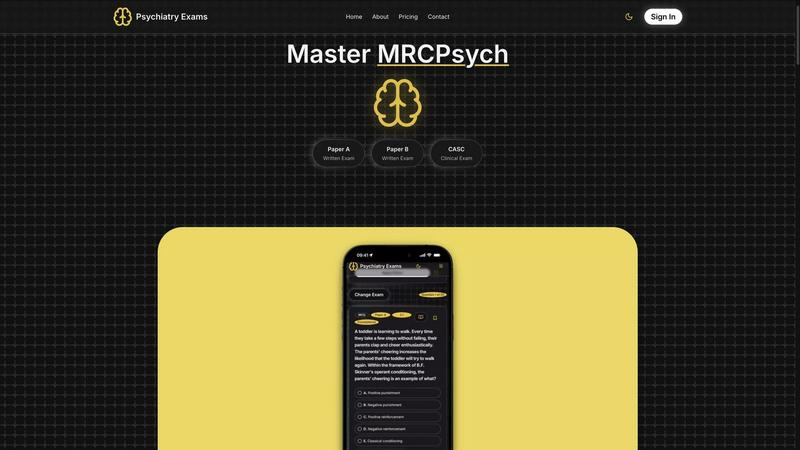
Psychiatry Exams integrates AI models like Claude and GPT with verified NHS consultant expertise for MRCPsych exam.
Last updated: March 1, 2026
Visual Comparison
CalPerks
Psychiatry Exams
Feature Comparison
CalPerks
Natural Language Processing (NLP) Engine
The core of CalPerks is its advanced NLP engine, which allows users to log food by typing or speaking a simple description, such as "medium bowl of beef pho with sriracha." This engine parses the input, identifying key components like food type, preparation style, portion size, and brand names. It then interfaces with backend databases to fetch accurate data, eliminating the need for manual barcode scanning or tedious database searches. This feature represents a significant leap in user interface design for health tech.
USDA FoodData Central Integration
For accuracy and trustworthiness, CalPerks is directly integrated with the USDA FoodData Central database, the gold-standard source for nutritional information. This API-first approach ensures that calorie and macronutrient estimates are based on verified scientific data rather than crowd-sourced or unverified entries. When a user query matches a known item in the USDA database, the system prioritizes this data, providing a level of reliability that is critical for effective dietary tracking and planning.
Transparent AI Estimation & Fallback System
Transparency is built into the architecture. When the AI makes an estimation, it clearly lays out its assumptions to the user. If a specific food item is not found in the primary USDA dataset, the system employs a sophisticated fallback AI model to provide a best-guess estimate based on contextual understanding and similar items. This dual-layer data sourcing strategy ensures coverage for any food, including international and homemade dishes, while maintaining clarity on data provenance.
Multi-Language & International Cuisine Support
Unlike databases limited to English and Western foods, CalPerks' AI model is trained to understand food descriptions in multiple languages and contextualize international cuisines. Whether a user describes "sukuma wiki," "tonkatsu ramen," or "chicken burrito from Chipotle," the system can process the request. This makes the tool compatible and effective for a globally diverse user base, breaking down a major barrier in nutritional tracking software.
Psychiatry Exams
AI-Powered Explanation Engine
This core feature is built on a robust, multi-model AI stack integrating Claude Opus 4.5, Gemini 3, and GPT 5.2. The system is specifically fine-tuned on the official MRCPsych syllabus and vetted by NHS consultants. It generates detailed, nuanced explanations for every question, providing insights into correct and incorrect answer choices, ensuring learners understand the underlying principles rather than just memorizing facts.
Recalled & Verified Question Bank
The platform hosts a dynamic repository of over 2,400 questions, including a substantial database of 1,960+ recalled questions from actual exam sittings. Each question is rigorously adapted, verified, and moderated by a panel of eight NHS consultants, ensuring clinical accuracy, relevance, and alignment with current exam patterns and standards.
Active Learning & Credit Ecosystem
Psychiatry Exams implements a gamified, contributory framework where users can submit their own questions for the community. The system awards AI credits for contributions (+2 per submission, +3 upon approval), which can be used within the platform. This API-like interaction incentivizes deep engagement with the material, turning passive study into an active, participatory knowledge-building process.
Community-Driven Learning Hub
The platform extends beyond solo study with integrated community features, including a thriving WhatsApp community segmented by exam sitting, consultant-moderated discussion forums, and group calls. This creates a supportive, collaborative network for peer-to-peer learning, doubt resolution, and shared motivation, seamlessly blending social learning with structured digital content.
Use Cases
CalPerks
For the Tech-Savvy Fitness Enthusiast
Individuals who frequent the gym and follow macro-specific diets require precise, fast logging that integrates into their busy routines. CalPerks allows them to quickly speak a post-workout meal like "2 scoops of whey protein with 200ml almond milk" and get instant macronutrient data, enabling seamless daily macro tracking without interrupting their flow. The app's accuracy and speed are critical for this data-driven user.
For Individuals Exploring Global Cuisines
Food lovers and travelers who regularly consume diverse, international dishes find most trackers inadequate. CalPerks solves this by accurately estimating meals like "rainbow roll with soy sauce" or "large bowl of kimchi chigae," which are often missing from standard databases. This allows users to maintain dietary awareness without having to avoid culturally significant or restaurant foods.
For Sustainable Habit Building with Gamification
Users who struggle with consistency benefit from CalPerks' integrated gamification layer. The app rewards logging streaks, turning a mundane task into a motivating challenge. The ease of the NLP interface reduces friction, making a 30-second daily log achievable, which is essential for building a long-term, sustainable health-tracking habit supported by behavioral tech principles.
For Budget-Conscious Health Managers
Compared to premium competitors with high annual fees, CalPerks offers a cost-effective, full-featured solution. Users seeking advanced AI logging and reliable data without a significant financial commitment can leverage CalPerks' affordable subscription to access premium features, making sophisticated nutritional tracking compatible with a wider range of personal budgets.
Psychiatry Exams
Structured Syllabus Mastery for Paper A/B
Trainees can systematically work through the complete question bank, which is fully mapped to the official Paper A and Paper B learning objectives. The AI-powered explanations and syllabus-linked study notes ensure comprehensive coverage, allowing users to identify and strengthen weak areas efficiently within a single, integrated platform.
CASC Clinical Skills Simulation
Candidates preparing for the Clinical Assessment of Skills and Competencies (CASC) can utilize the library of 15 CASC vignettes. This feature allows for realistic practice of clinical stations, with content designed to reflect the exam's format and complexity, aiding in the development of clinical reasoning, communication, and management planning skills.
Spaced Repetition for Long-Term Retention
The integrated flashcard system, featuring 108+ cards and utilizing spaced repetition algorithms, is ideal for mastering key psychiatric concepts, definitions, and criteria. This system optimizes memory consolidation, ensuring foundational knowledge is retained effectively throughout the preparation journey and beyond into clinical practice.
Collaborative Peer Review & Content Creation
Advanced users and those seeking deeper engagement can use the platform's submission framework to author and submit questions. This process involves peer and consultant moderation, providing invaluable feedback on clinical reasoning and question design, thereby cementing the submitter's own knowledge while contributing to the community's resource pool.
Overview
About CalPerks
CalPerks is a next-generation, AI-native calorie tracking application engineered to solve the core technical and usability challenges of traditional nutrition logging. It functions as a seamless interface between natural human language and structured nutritional databases, primarily leveraging the USDA FoodData Central API as its foundational data layer. The platform is architected for individuals who have found existing tracking solutions to be cumbersome, inaccurate, or demotivating due to reliance on manual searches, limited food databases, or complex interfaces. Its core value proposition is a frictionless, API-driven workflow: users input a free-text or voice description of their meal, and CalPerks' AI processing engine parses this input, queries its integrated data sources, and returns a precise calorie and macronutrient estimate. This system supports a global user base by understanding context and international cuisines across multiple languages. By combining robust data integration with a minimalist UX and a gamified reward system, CalPerks transforms calorie tracking from a chore into a sustainable, integrated component of daily health management.
About Psychiatry Exams
Psychiatry Exams is a sophisticated, AI-integrated digital platform engineered to serve as the definitive preparation suite for the MRCPsych examinations. It is architected specifically for psychiatry trainees and professionals seeking a comprehensive, efficient, and technologically advanced solution to navigate the demanding syllabus. The platform's core value proposition lies in its centralized, mobile-friendly ecosystem that consolidates high-yield study materials—including extensive question banks, flashcards, and mock exams—while directly addressing the significant financial and logistical burdens of traditional exam preparation. Its infrastructure is powered by a multi-model AI stack, featuring integrations with Claude Opus 4.5, Gemini 3, and GPT 5.2, which is meticulously trained on the latest Royal College syllabus updates to generate precise, high-quality explanations and content. Furthermore, the platform incorporates a unique community-driven and active learning model, featuring moderated question generation, peer review systems, and integrated discussion forums, fostering a collaborative environment that deepens conceptual understanding and enhances long-term knowledge retention for all users.
Frequently Asked Questions
CalPerks FAQ
How does the AI logging work technically?
The AI logging works through a integrated pipeline. First, your natural language input (text or voice-to-text) is processed by a Natural Language Understanding (NLU) model that identifies entities like food items, quantities, and brands. This structured query is then sent to our primary data layer, the USDA FoodData Central API. If a match is found, those values are returned. If not, a secondary AI estimation model provides a calculated estimate based on similar known foods, with all assumptions clearly displayed.
What is the source of your nutritional data?
Our primary and preferred data source is the USDA FoodData Central database, accessed via its official API. This is the most reliable and scientifically-backed source for nutritional information in the United States. We use this as our ground truth. For items not covered by the USDA database, our system utilizes a trained AI model as a fallback to provide an educated estimate, ensuring comprehensive coverage.
Does CalPerks support foods from outside the United States?
Yes, absolutely. Our AI model is specifically designed for compatibility with global cuisines. It can understand and estimate calories for dishes described in various languages and from any culinary tradition, such as "ramadan porridge," "sukuma wiki," or "tonkatsu ramen." This is a key differentiator from apps that rely on a static, region-limited database.
How do you ensure estimation accuracy?
Accuracy is ensured through our multi-tiered system architecture. We prioritize verified data from the USDA API. When estimating, our AI breaks down complex meals into components and compares them to known nutritional profiles. Furthermore, we build transparency directly into the user interface by showing the source of each data point and the logic behind estimates, allowing users to understand and trust the output.
Psychiatry Exams FAQ
How are the recalled questions verified for accuracy?
All recalled questions submitted by users undergo a rigorous, multi-stage verification process. They are first adapted to meet exam question standards and then reviewed by a panel of eight NHS consultants. These consultants cross-reference each question and its explanations with the latest Royal College syllabus, official reading materials, and clinical guidelines to ensure absolute accuracy and relevance.
What AI models are integrated, and how are they used?
The platform utilizes a sophisticated ensemble of large language models, specifically Claude Opus 4.5, Gemini 3, and GPT 5.2. These models are not used generically; they are trained and fine-tuned on the specific corpus of the MRCPsych syllabus and consultant-verified content. Their primary function is to generate comprehensive, paragraph-length explanations for questions, providing reasoning that mimics expert consultant teaching.
Can I use the platform effectively on mobile devices?
Yes, Psychiatry Exams is engineered as a fully responsive, mobile-first web application. The user interface and experience are optimized for smartphones and tablets, allowing you to access the entire question bank, flashcards, and community features seamlessly on-the-go, ensuring your study time is flexible and integrated into a busy clinical schedule.
How does the AI credit and contribution system work?
The system operates on a contributory model to incentivize active learning. Users earn +2 AI credits for each question they submit to the community bank. If the submission is approved by the consultant moderation panel, a bonus of +3 credits is awarded. These credits function as in-platform currency, which can be used to access premium features or content, creating a sustainable ecosystem of user-generated, high-quality material.
Alternatives
CalPerks Alternatives
CalPerks is an AI-powered calorie tracking application in the fitness and health category. It simplifies nutrition logging by allowing users to describe meals in plain language, leveraging USDA data for accuracy and offering a rewards system for engagement. Users often seek alternatives to find a solution that better aligns with their specific technical ecosystem or feature requirements. Common drivers include budget constraints, the need for deeper integration with other health platforms or wearables, a preference for different data visualization tools, or a requirement for more granular macronutrient tracking beyond core calorie estimates. When evaluating an alternative, consider its API availability for custom integrations, compatibility with your existing device and app stack, the underlying data source for nutritional information, and the flexibility of its logging interface. The ideal platform should seamlessly fit into your digital health workflow while providing the specific analytical depth you require.
Psychiatry Exams Alternatives
Psychiatry Exams is a specialized digital education platform designed for MRCPsych exam preparation. It falls within the Education & Learning category, specifically targeting medical professionals with a tech-forward approach that integrates AI models and community-driven content. Users often explore alternatives for several key reasons. These include budget constraints, as exam preparation can be costly, or a need for different feature integrations, such as specific study methodologies or platform compatibility with their existing workflow. The search for a tool that aligns perfectly with individual learning styles and technical ecosystems is common. When evaluating alternatives, candidates should prioritize platforms that offer robust, syllabus-aligned content verified by experts. Key considerations include the underlying technology stack for question generation and explanations, the flexibility of study modes like spaced repetition systems, and the security and mobility of the platform to fit a demanding clinical schedule.