
Psychiatry Exams vs SchoolGPT
Side-by-side comparison to help you choose the right product.

Psychiatry Exams
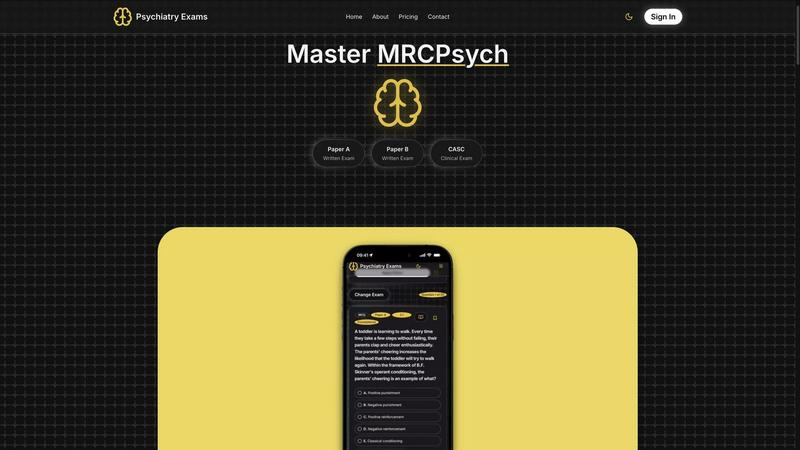
Psychiatry Exams integrates AI models like Claude and GPT with verified NHS consultant expertise for MRCPsych exam.
Last updated: March 1, 2026

SchoolGPT
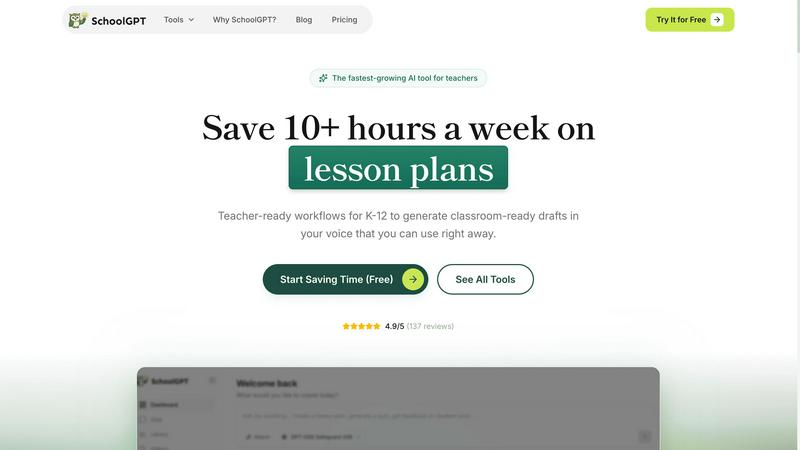
SchoolGPT is an AI teaching assistant that saves educators 10+ hours weekly on lesson planning and grading.
Last updated: February 28, 2026
Visual Comparison
Psychiatry Exams
SchoolGPT
Feature Comparison
Psychiatry Exams
AI-Powered Explanation Engine
This core feature is built on a robust, multi-model AI stack integrating Claude Opus 4.5, Gemini 3, and GPT 5.2. The system is specifically fine-tuned on the official MRCPsych syllabus and vetted by NHS consultants. It generates detailed, nuanced explanations for every question, providing insights into correct and incorrect answer choices, ensuring learners understand the underlying principles rather than just memorizing facts.
Recalled & Verified Question Bank
The platform hosts a dynamic repository of over 2,400 questions, including a substantial database of 1,960+ recalled questions from actual exam sittings. Each question is rigorously adapted, verified, and moderated by a panel of eight NHS consultants, ensuring clinical accuracy, relevance, and alignment with current exam patterns and standards.
Active Learning & Credit Ecosystem
Psychiatry Exams implements a gamified, contributory framework where users can submit their own questions for the community. The system awards AI credits for contributions (+2 per submission, +3 upon approval), which can be used within the platform. This API-like interaction incentivizes deep engagement with the material, turning passive study into an active, participatory knowledge-building process.
Community-Driven Learning Hub
The platform extends beyond solo study with integrated community features, including a thriving WhatsApp community segmented by exam sitting, consultant-moderated discussion forums, and group calls. This creates a supportive, collaborative network for peer-to-peer learning, doubt resolution, and shared motivation, seamlessly blending social learning with structured digital content.
SchoolGPT
Multi-Model AI Integration
SchoolGPT is architected on a robust backend that leverages a suite of advanced AI models, including GPT-4, Claude 3, and Gemini. This integration allows the platform to intelligently route tasks to the most capable model for the specific job, ensuring optimal output quality for everything from creative lesson ideation to analytical rubric generation. Users benefit from the combined strengths of these models without needing to manage separate accounts or complex API integrations, creating a unified and powerful assistant.
Educator-Designed Template Library
The platform hosts a continuously growing library of over 60 ready-to-use templates that codify expert teaching workflows. These are not generic prompts but specialized tools—like the Text Leveler, IEP Generator, or Choice Board Creator—built with pedagogical best practices and classroom realities in mind. This feature turns complex task creation into a simple form-fill process, guaranteeing that outputs like lesson plans include critical components such as learning objectives, differentiation strategies, and alignment to educational standards by default.
Standards Alignment and Differentiation Engine
A cornerstone feature is the automatic alignment of generated content to Common Core and state-specific educational standards. When creating a lesson plan or quiz, educators can select the relevant standard, and SchoolGPT constructs the activity around it. Furthermore, the built-in differentiation engine provides instant suggestions and modifications to adapt materials for diverse learning needs, ensuring resources are classroom-ready for all students without requiring extra hours of manual adaptation.
Compliance-First Data Security
SchoolGPT is engineered with a compliance-first architecture, adhering to critical educational data privacy regulations like FERPA (Family Educational Rights and Privacy Act) and COPPA (Children's Online Privacy Protection Act). This ensures that all data processed within the platform—including student information entered to generate personalized feedback or comments—is handled securely. This built-in compliance provides schools and districts with the necessary confidence to integrate the tool into their existing tech infrastructure.
Use Cases
Psychiatry Exams
Structured Syllabus Mastery for Paper A/B
Trainees can systematically work through the complete question bank, which is fully mapped to the official Paper A and Paper B learning objectives. The AI-powered explanations and syllabus-linked study notes ensure comprehensive coverage, allowing users to identify and strengthen weak areas efficiently within a single, integrated platform.
CASC Clinical Skills Simulation
Candidates preparing for the Clinical Assessment of Skills and Competencies (CASC) can utilize the library of 15 CASC vignettes. This feature allows for realistic practice of clinical stations, with content designed to reflect the exam's format and complexity, aiding in the development of clinical reasoning, communication, and management planning skills.
Spaced Repetition for Long-Term Retention
The integrated flashcard system, featuring 108+ cards and utilizing spaced repetition algorithms, is ideal for mastering key psychiatric concepts, definitions, and criteria. This system optimizes memory consolidation, ensuring foundational knowledge is retained effectively throughout the preparation journey and beyond into clinical practice.
Collaborative Peer Review & Content Creation
Advanced users and those seeking deeper engagement can use the platform's submission framework to author and submit questions. This process involves peer and consultant moderation, providing invaluable feedback on clinical reasoning and question design, thereby cementing the submitter's own knowledge while contributing to the community's resource pool.
SchoolGPT
Streamlining Lesson Planning and Unit Design
Educators can generate comprehensive, standard-aligned lesson plans or full unit plans in seconds by simply inputting a topic, objective, or desired standard. The tool produces a structured draft complete with activities, materials lists, and differentiation options, which the teacher can then refine. This use case transforms what was traditionally a multi-hour task into a matter of minutes, allowing for more dynamic and responsive curriculum development.
Automating Assessment Creation and Grading Feedback
Teachers use SchoolGPT to rapidly create formative and summative assessments, including multiple-choice quizzes, text-dependent questions, and custom rubrics. For grading, the Writing Feedback tool analyzes student submissions against teacher-defined criteria or a rubric to generate detailed, constructive feedback. This drastically reduces the time spent on manual grading while providing consistent, high-quality feedback to students.
Generating Administrative and Family Communications
The platform automates the creation of time-consuming administrative documents. This includes drafting professional emails, personalized report card comments that highlight strengths and growth areas, letters of recommendation, and sensitive communications to families regarding student progress or IEP meetings. This ensures communication is clear, consistent, and professional, freeing educators from tedious paperwork.
Personalizing Learning Materials and Support
With tools like the Text Leveler and Worksheet Generator, teachers can instantly adapt existing reading passages or create new activities to match the specific reading proficiency of individual students or groups. Similarly, the IEP Generator helps special education teams draft tailored program goals and accommodations. This use case is critical for efficiently meeting diverse student needs within an inclusive classroom environment.
Overview
About Psychiatry Exams
Psychiatry Exams is a sophisticated, AI-integrated digital platform engineered to serve as the definitive preparation suite for the MRCPsych examinations. It is architected specifically for psychiatry trainees and professionals seeking a comprehensive, efficient, and technologically advanced solution to navigate the demanding syllabus. The platform's core value proposition lies in its centralized, mobile-friendly ecosystem that consolidates high-yield study materials—including extensive question banks, flashcards, and mock exams—while directly addressing the significant financial and logistical burdens of traditional exam preparation. Its infrastructure is powered by a multi-model AI stack, featuring integrations with Claude Opus 4.5, Gemini 3, and GPT 5.2, which is meticulously trained on the latest Royal College syllabus updates to generate precise, high-quality explanations and content. Furthermore, the platform incorporates a unique community-driven and active learning model, featuring moderated question generation, peer review systems, and integrated discussion forums, fostering a collaborative environment that deepens conceptual understanding and enhances long-term knowledge retention for all users.
About SchoolGPT
SchoolGPT is a specialized AI teaching assistant engineered exclusively for K-12 educators, designed to integrate seamlessly into the modern educational tech stack. It functions as a centralized, purpose-built platform that aggregates the capabilities of leading AI models—including OpenAI's ChatGPT, Anthropic's Claude, and Google's Gemini—into a single, educator-focused interface. The product eliminates the need for teachers to manually navigate and prompt-engineer across disparate generic AI tools, instead providing over 60 pre-configured, classroom-ready templates. These templates, developed by and for educators, automate and accelerate the creation of lesson plans aligned to state standards, writing feedback, quizzes, rubrics, report card comments, IEPs, and administrative communications. The core value proposition is profound time savings, with users reporting over 10 hours reclaimed per week, by generating pedagogically sound, differentiated drafts in seconds. SchoolGPT is architected with compliance in mind (FERPA/COPPA) and is trusted by over 10,000 teachers, positioning it as a critical, interoperable component in the educational technology ecosystem for reducing burnout and restoring work-life balance.
Frequently Asked Questions
Psychiatry Exams FAQ
How are the recalled questions verified for accuracy?
All recalled questions submitted by users undergo a rigorous, multi-stage verification process. They are first adapted to meet exam question standards and then reviewed by a panel of eight NHS consultants. These consultants cross-reference each question and its explanations with the latest Royal College syllabus, official reading materials, and clinical guidelines to ensure absolute accuracy and relevance.
What AI models are integrated, and how are they used?
The platform utilizes a sophisticated ensemble of large language models, specifically Claude Opus 4.5, Gemini 3, and GPT 5.2. These models are not used generically; they are trained and fine-tuned on the specific corpus of the MRCPsych syllabus and consultant-verified content. Their primary function is to generate comprehensive, paragraph-length explanations for questions, providing reasoning that mimics expert consultant teaching.
Can I use the platform effectively on mobile devices?
Yes, Psychiatry Exams is engineered as a fully responsive, mobile-first web application. The user interface and experience are optimized for smartphones and tablets, allowing you to access the entire question bank, flashcards, and community features seamlessly on-the-go, ensuring your study time is flexible and integrated into a busy clinical schedule.
How does the AI credit and contribution system work?
The system operates on a contributory model to incentivize active learning. Users earn +2 AI credits for each question they submit to the community bank. If the submission is approved by the consultant moderation panel, a bonus of +3 credits is awarded. These credits function as in-platform currency, which can be used to access premium features or content, creating a sustainable ecosystem of user-generated, high-quality material.
SchoolGPT FAQ
Is SchoolGPT really free to start?
Yes, SchoolGPT offers a Free Forever plan that includes 10 AI generations per month at no cost and does not require a credit card to sign up. This allows educators to fully test core functionalities like generating a lesson plan or report card comments. For unlimited access and advanced features, users can upgrade to the paid Pro plan.
Why not just use ChatGPT or another generic AI?
While powerful, generic AI like ChatGPT requires significant "prompt engineering" expertise to produce educationally sound, classroom-ready materials. SchoolGPT eliminates this complexity by providing pre-built templates designed by educators that automatically incorporate standards, differentiation, and pedagogical structure. It is a compliant, specialized tool versus a general-purpose chatbot.
Is my data and student information safe?
Yes. SchoolGPT is built with data security as a priority and is designed to be compliant with FERPA and COPPA regulations. The platform does not use user data or student information to train its AI models. You retain ownership of all content you create, and the system implements measures to protect the privacy of all information processed within it.
How much time will I actually save?
Based on feedback from thousands of educators, users of SchoolGPT report saving an average of over 10 hours per week on tasks like lesson planning, creating assessments, grading, and drafting communications. The efficiency comes from generating first drafts and structured documents in seconds, which teachers can then personalize, rather than starting from a blank page.
Alternatives
Psychiatry Exams Alternatives
Psychiatry Exams is a specialized digital education platform designed for MRCPsych exam preparation. It falls within the Education & Learning category, specifically targeting medical professionals with a tech-forward approach that integrates AI models and community-driven content. Users often explore alternatives for several key reasons. These include budget constraints, as exam preparation can be costly, or a need for different feature integrations, such as specific study methodologies or platform compatibility with their existing workflow. The search for a tool that aligns perfectly with individual learning styles and technical ecosystems is common. When evaluating alternatives, candidates should prioritize platforms that offer robust, syllabus-aligned content verified by experts. Key considerations include the underlying technology stack for question generation and explanations, the flexibility of study modes like spaced repetition systems, and the security and mobility of the platform to fit a demanding clinical schedule.
SchoolGPT Alternatives
SchoolGPT is an AI teaching assistant in the education technology category, designed to automate lesson planning, grading, and administrative tasks for K-12 educators. It leverages multiple AI models to provide classroom-ready materials, saving teachers significant time each week. Educators often seek alternatives to tools like SchoolGPT for various reasons. These can include budget constraints, specific feature requirements not covered by the core offering, or the need for integration with existing platforms like specific Learning Management Systems (LMS) or student information systems. Compatibility with a school's current tech stack is a primary driver for evaluation. When considering an alternative, focus on the AI model's integration capabilities, the depth of its template library, and its compliance with educational data privacy standards. The ideal solution should seamlessly connect with your school's digital ecosystem, offer robust customization, and maintain strict security protocols to protect student information.