
OpenMark AI vs Quickfix AI
Side-by-side comparison to help you choose the right product.

OpenMark AI benchmarks over 100 LLMs on your tasks, delivering actionable insights on cost, speed, quality, and stability without any setup.
Last updated: March 26, 2026

Quickfix AI
Quickfix AI instantly diagnoses system health and provides AI-powered insights for Windows and macOS.
Last updated: February 28, 2026
Visual Comparison
OpenMark AI
Quickfix AI
Feature Comparison
OpenMark AI
Task-Level Benchmarking
OpenMark AI allows users to benchmark tasks by simply describing them in plain language. This user-friendly approach enables seamless testing across various models without the need for complex configurations or coding.
Real-Time Model Comparison
The platform provides side-by-side comparisons of real API calls to models, ensuring that users receive authentic performance metrics rather than relying on cached marketing data. This transparency enhances decision-making confidence.
Cost and Latency Analysis
With OpenMark AI, users can analyze the cost per API call and latency for each model tested. This feature is crucial for understanding the financial implications of using different AI models in real-world applications.
Consistency Checks
OpenMark AI emphasizes the importance of output reliability. Users can assess model performance consistency by running the same task multiple times, allowing them to make informed choices based on stability and predictability.
Quickfix AI
Comprehensive System Scan
The Quickfix AI agent performs a holistic scan of your entire system, analyzing critical components in a single click. It gathers real-time and historical data on CPU utilization, memory pressure, GPU load, storage health and capacity, battery cycles, network connection status, and core security settings like firewall status. This unified diagnostic report provides a complete snapshot of your machine's health and performance bottlenecks, eliminating the need to juggle multiple disparate system monitoring tools.
AI-Powered Analysis & Chat
Beyond raw data, Quickfix AI includes an intelligent chat interface that reads your full diagnostic report. You can ask questions about your system in plain English, such as "Why is my Mac running slow?" and receive clear, contextual answers. The AI identifies root causes, like specific applications consuming excessive CPU, and provides tailored, step-by-step recommendations for resolution, making advanced troubleshooting accessible to users of all technical skill levels.
Secure Remote Diagnostics via Sharing Code
Designed for collaborative troubleshooting, this feature allows IT support teams or individuals helping others to diagnose issues remotely without invasive software installation. Generate a secure, one-time sharing code from your Quickfix AI dashboard and share it with the user in need. They simply enter the code to initiate a scan, and you instantly gain view-only access to their anonymized diagnostic report, streamlining the support process dramatically.
Cross-Platform Compatibility & Lightweight Agent
Quickfix AI is built for broad ecosystem compatibility, offering native agents for both Windows and macOS operating systems. The agent is lightweight, requiring minimal system resources to run, and ensures full functionality across personal and professional Mac environments. This cross-platform support ensures consistent diagnostic capabilities and user experience regardless of the underlying hardware or OS version.
Use Cases
OpenMark AI
Model Selection for Development
OpenMark AI is ideal for developers who need to select the most suitable AI model for their applications. By benchmarking various models against specific tasks, teams can ensure they choose the best fit for their project requirements.
Pre-Deployment Validation
Product teams can use OpenMark AI to validate model performance before deploying AI features. This pre-deployment testing helps mitigate risks and ensures that the chosen model meets quality standards.
Cost Efficiency Analysis
Businesses can leverage OpenMark AI to analyze the cost efficiency of different models. By understanding the cost relative to output quality and latency, organizations can make informed decisions that optimize their AI investments.
Consistency in AI Outputs
For applications requiring consistent AI outputs, OpenMark AI allows users to verify model stability through repeated task runs. This is particularly useful in scenarios where reliability and accuracy are paramount.
Quickfix AI
Proactive Performance Troubleshooting
Ideal for users who experience system slowdowns, lag, or unexpected behavior but lack the technical knowledge to identify the cause. Quickfix AI automatically pinpoints resource-hungry processes, thermal throttling issues, or memory leaks and explains them in simple terms with direct recommendations, such as closing specific browser tabs or applications, to restore optimal performance immediately.
IT Support & Help Desk Operations
IT support teams can leverage Quickfix AI to triage and resolve employee tickets efficiently. Instead of relying on user-described symptoms, technicians can request a sharing code to view a precise diagnostic report from the user's machine. This enables rapid, accurate diagnosis of issues ranging from network connectivity problems to failing hardware, drastically reducing mean time to resolution (MTTR).
System Health Audit for Tech Enthusiasts
Gamers, developers, and power users who demand peak system performance use Quickfix AI for deep dives into their hardware. They can monitor GPU and CPU temperatures under load, check disk health (SSD/HDD), analyze memory bandwidth utilization, and validate security configurations, all through a unified dashboard to optimize their setup for demanding workloads or gaming sessions.
Pre-Purchase or Resale Device Inspection
When evaluating a used computer for purchase or preparing one for resale, Quickfix AI provides an objective health check. A quick scan reveals critical information like battery health and cycle count, storage drive condition, potential hardware failures, and overall system integrity, ensuring informed decision-making and transparent transactions.
Overview
About OpenMark AI
OpenMark AI is an innovative web application designed for task-level benchmarking of large language models (LLMs). Built for developers and product teams, it allows users to efficiently assess which AI model best fits their specific needs. By simply describing the task in plain language, users can test and compare multiple models in a single session. The platform provides insights into cost per request, latency, scored quality, and output stability across repeated runs, enabling users to identify variance rather than relying on a single output. OpenMark AI facilitates the decision-making process before deploying AI features, ensuring that the selected model aligns with workflow requirements and budget constraints. With hosted benchmarking that eliminates the need for configuring separate API keys, teams can focus on what matters most—validating model performance. The application supports a diverse range of models and is ideal for those who prioritize cost efficiency relative to output quality, rather than merely the cheapest token pricing. Both free and paid plans are available to accommodate different user needs.
About Quickfix AI
Quickfix AI is a comprehensive, AI-powered system diagnostics tool engineered for seamless integration into modern tech stacks. It provides instant, deep insight into hardware performance, system health, and potential issues across Windows and macOS environments. The tool operates through a lightweight agent that executes a full system scan, generating a detailed diagnostic report in under a minute. Its core value proposition lies in translating complex technical data into plain-English insights and actionable recommendations via an integrated AI chat interface. This makes it an indispensable utility for a wide range of users, from individual troubleshooters and tech enthusiasts to professional IT support teams. By offering enterprise-grade diagnostics with an intuitive user experience, Quickfix AI bridges the gap between raw system telemetry and practical understanding, enabling users to proactively manage performance, security, and stability without requiring deep technical expertise.
Frequently Asked Questions
OpenMark AI FAQ
How does OpenMark AI work?
OpenMark AI allows users to describe their tasks in plain language, testing these tasks across multiple models in a single session. It provides metrics on cost, latency, quality, and consistency to help users make informed decisions.
Do I need API keys to use OpenMark AI?
No, OpenMark AI is designed to streamline the benchmarking process. Users do not need to configure separate API keys for OpenAI, Anthropic, or Google, as the platform handles this for you.
What types of tasks can I benchmark?
OpenMark AI supports a wide range of tasks, including but not limited to classification, translation, data extraction, research, Q&A, and image analysis. This versatility makes it suitable for various applications.
Are there different pricing plans available?
Yes, OpenMark AI offers both free and paid plans to cater to different user needs. Details regarding these plans can be found in the in-app billing section when you sign up.
Quickfix AI FAQ
Is Quickfix AI free?
Yes, Quickfix AI offers a free version that includes the core system scan, comprehensive diagnostic report, and access to the AI chat for insights and basic recommendations. This allows users to perform essential health checks and troubleshooting at no cost.
Is my data secure?
Absolutely. Quickfix AI is designed with privacy and security as a priority. Diagnostic scans are processed with a focus on anonymized system metadata rather than personal files. For remote sessions using the sharing code, data is transmitted securely with encryption, and reports are accessible only to those with the unique, one-time code.
Do I need technical knowledge to use it?
No technical knowledge is required. The primary design goal of Quickfix AI is to demystify system diagnostics. The AI chat interface is built specifically to answer your questions in plain English and provide clear, actionable steps, making advanced system insights accessible to everyone.
What platforms are supported?
Quickfix AI provides full native support for both Windows and macOS operating systems. You can download a dedicated, optimized agent for your platform, ensuring comprehensive compatibility and accurate diagnostics for desktops and laptops across these ecosystems.
Alternatives
OpenMark AI Alternatives
OpenMark AI is a web-based application designed for task-level benchmarking of large language models (LLMs). By allowing users to test over 100 models based on specific parameters such as cost, speed, quality, and stability, it caters primarily to developers and product teams who need to validate model performance before deploying AI features. Users often seek alternatives to OpenMark AI for various reasons, including pricing structures, specific feature requirements, and compatibility with different platforms or workflows. When selecting an alternative, it is crucial to consider factors like the breadth of model support, the ease of integration into existing systems, and the clarity of performance metrics provided to ensure effective and efficient benchmarking.
Quickfix AI Alternatives
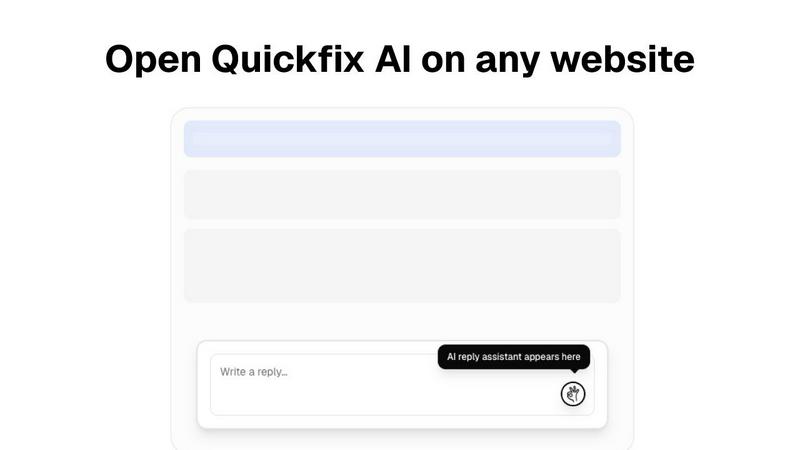
Quickfix AI is a browser extension in the productivity and management category, designed to automate and enhance online communication. It uses AI to generate contextual replies directly within platforms like Gmail, Slack, and social media, aiming to save users time and effort. Users often explore alternatives for several key reasons. These can include specific pricing models, the need for different feature sets like advanced customization or integration with a particular tech stack, and compatibility requirements with niche platforms or enterprise systems not covered by a generalist tool. When evaluating an alternative, focus on core technical compatibility. Assess the depth of API integrations, the range of supported platforms and browsers, and the tool's ability to operate within your specific workflow environment without disrupting existing processes. The ideal solution should seamlessly embed into your current tech stack.