
Decode This Text vs Skene
Side-by-side comparison to help you choose the right product.

Decode This Text
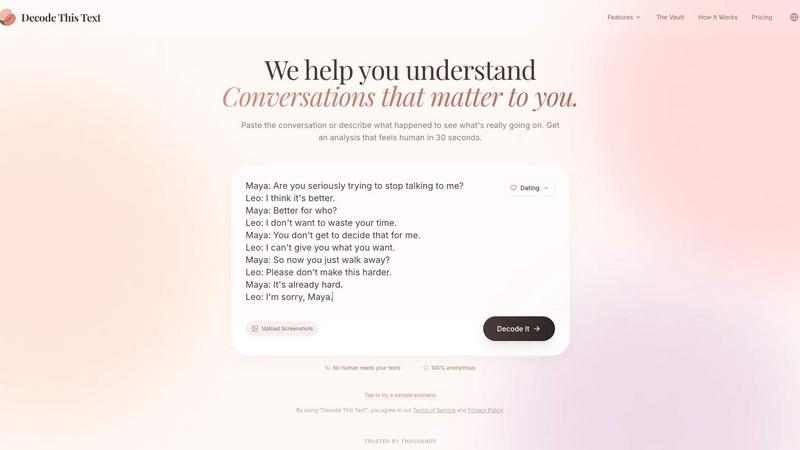
Decode This Text provides instant, human-like analysis of confusing conversations in just 30 seconds.
Last updated: February 28, 2026

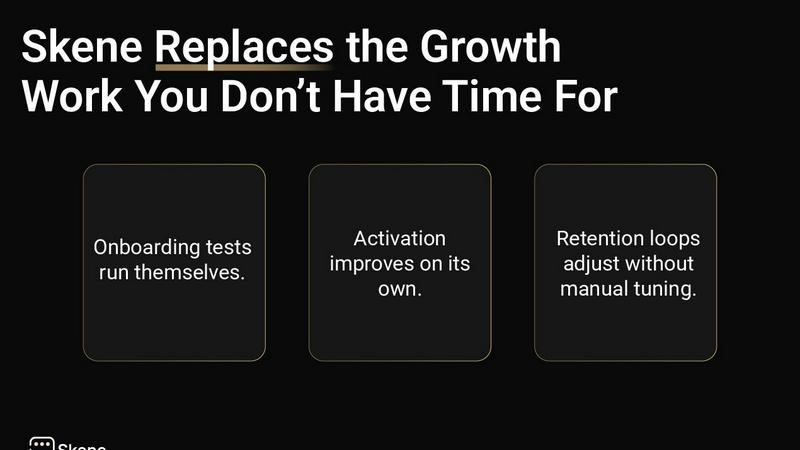
Skene is growth infrastructure you own and prompt directly into your codebase.
Last updated: February 28, 2026
Visual Comparison
Decode This Text
Skene
Feature Comparison
Decode This Text
Screenshot & Text Input Parsing
The platform supports multiple, flexible input methods for seamless integration into any user's tech stack. Users can directly paste message text or, more innovatively, upload a screenshot of their chat interface. The system's OCR (Optical Character Recognition) and parsing engine automatically extract and structure the conversation, eliminating manual transcription. This feature ensures compatibility with any messaging app (WhatsApp, iMessage, Slack, etc.), making the decoding process universally accessible and frictionless, regardless of the source platform.
Tone and Sentiment Analysis Engine
At its core, Decode This Text employs a robust sentiment analysis API that quantifies the emotional temperature of a message. It doesn't just label text as positive or negative; it provides a nuanced percentage-based score (e.g., 75% friendly, 40% effort) for tone, intent, and investment. This technical analysis identifies sarcasm, passive-aggression, or genuine warmth that might be missed by the human eye, offering an objective, data-backed read on the subtextual emotional state of the sender.
Behavioral Pattern Detection
This feature utilizes temporal and linguistic pattern recognition algorithms. It analyzes metadata and content patterns that users often overlook, such as consistent late-night messaging, avoidance of specific questions, gradual shortening of replies, or delayed response times. By flagging these behavioral cues, the tool provides insights into long-term communication trends, helping users understand if a change in interaction style is a one-off event or part of a significant pattern.
AI-Generated Response Suggestions
Integrated directly into the analysis workflow, this feature provides actionable output. After decoding a message, the system generates three tailored response options—calm, direct, or firm—formulated to align with the user's desired outcome and the analyzed context of the conversation. This turns analysis into immediate utility, offering compatible next steps that users can deploy with confidence, effectively closing the loop between interpretation and action.
Skene
Codebase Signal Analysis
Skene performs deep, automated analysis of your connected GitHub or GitLab repository to extract actionable growth signals. It scans your framework, component structure, and user flow logic to identify onboarding friction points, activation opportunities, and retention risks directly from the source code, providing a foundational context layer for all subsequent AI-driven optimizations.
AI-Prompted Growth Implementation
Growth workflows are managed through natural language prompts within your existing development environment, such as Cursor or a terminal. After analysis, you can instruct Skene to generate and implement specific improvements—like refining an onboarding tour or adjusting a activation checkpoint—turning strategic insights into shipped code without manual intervention.
Self-Optimizing User Flows
The system continuously monitors user interactions against the signals in your codebase. It automatically A/B tests different user journey variations and implements the winning flows. This creates a closed feedback loop where onboarding and activation processes become smarter and more effective over time, with no manual dashboard tuning required.
Integrated Growth Manifest & Context
Skene generates a persistent growth-manifest.json file within your project (e.g., in ./skene-context/). This file acts as a centralized, version-controlled source of truth for all your product's growth logic, analytics definitions, and user journey states, ensuring your AI agents and tools have consistent, up-to-date context.
Use Cases
Decode This Text
Decoding Romantic and Dating Ambiguity
Users can paste confusing texts from dating apps or partners (e.g., "I'll let you know," or post-date radio silence). The tool analyzes tone and intent to clarify if the sender is genuinely busy, losing interest, or being avoidant. It helps answer pressing questions like "Why did they ghost after three months?" by providing a reality-check based on linguistic and behavioral evidence, preventing over-analysis and regretful replies.
Interpreting Professional and Workplace Communication
This use case focuses on integrating clarity into professional environments. Users can decode cryptic one-word emails from a boss, vague feedback like "we'll keep your resume on file," or nuanced Slack messages. The analysis clarifies underlying tones of anger, dissatisfaction, or genuine neutrality, and provides professionally compatible response strategies to navigate office politics and communication with appropriate tact.
Navigating Friends and Family Dynamics
The tool helps analyze group chat silences, passive-aggressive comments from relatives, or changing communication patterns from friends. By inputting these social exchanges, users receive an objective breakdown of the group or individual's dynamic, identifying potential conflicts, disengagement, or simple misunderstandings, enabling more empathetic and effective personal communication.
Pre-Send Message Validation and Review
Before sending an emotionally charged or important reply, users can input their drafted response into the system to analyze its likely perceived tone and impact. This proactive use case acts as a communication firewall, allowing individuals to stress-test their messages, adjust tone, and ensure their intent is clearly and effectively communicated, thereby preventing escalation or misunderstanding.
Skene
Autonomous Onboarding Optimization
For SaaS products, Skene automatically analyzes where new users drop off during initial setup. It then generates, tests, and deploys refined onboarding tours and tooltips directly within the application's UI, significantly improving time-to-value and activation rates without any engineering overhead.
Continuous Activation Funnel Management
Startups can use Skene to perpetually audit and improve their core activation funnel. The system identifies which features are correlated with long-term retention, detects where users struggle to reach them, and prompts the implementation of guided flows or UI adjustments to boost key feature adoption.
Lifecycle Automation for Customer Success
Teams can automate complex customer lifecycle workflows based on code-level signals. For example, Skene can trigger re-engagement nudges or educational content when it detects a user has not interacted with a newly shipped feature, helping to drive adoption and reduce churn autonomously.
Tech Stack Consolidation for Developers
Development teams frustrated with managing multiple analytics, onboarding, and engagement tools can replace their entire legacy growth stack with Skene. It consolidates these functions into a single, code-native infrastructure that is owned, versioned, and modified within the same workflow used for feature development.
Overview
About Decode This Text
Decode This Text is a sophisticated AI-powered communication analysis engine designed to parse and interpret the subtext of digital conversations. It functions as a critical layer of intelligence for personal and professional communication, transforming ambiguous text messages, emails, and chat logs into actionable insights. The platform is engineered for individuals seeking to eliminate guesswork from their interactions, providing a clear breakdown of emotional tone, sender intent, and engagement patterns. Its core value proposition lies in its seamless integration into a user's daily workflow—acting as a real-time communication co-pilot. By leveraging advanced natural language processing (NLP) models, it deciphers context, detects non-obvious patterns like response timing and evasiveness, and generates contextually appropriate response options. This tool is built for anyone navigating complex digital dialogues, from analyzing a vague message from a date to interpreting a terse email from a manager, ensuring users respond with confidence and clarity, backed by data-driven analysis.
About Skene
Skene is an AI-powered Product-Led Growth (PLG) infrastructure designed for modern development teams, particularly indie developers and early-stage startups. It redefines growth tooling by integrating directly with your codebase and IDE, eliminating the need for external, siloed dashboards and brittle third-party scripts. Skene operates as a fully automated iteration engine that autonomously optimizes key growth funnels like onboarding, activation, and retention. By analyzing your repository structure and deriving signals directly from your code, it intelligently identifies friction points and activation drop-offs. It then automatically tests and implements improved user flows, creating a self-optimizing product experience. This "growth as code" philosophy allows developers to own, version, and prompt their growth infrastructure just like their core product, ensuring seamless compatibility with existing tech stacks and AI agents. The core value proposition is clear: replace a fragmented legacy growth stack with a unified, code-native system that ships growth loops instead of managing widgets, all without expanding your team.
Frequently Asked Questions
Decode This Text FAQ
How does Decode This Text ensure my privacy and data security?
The platform is built with a privacy-first architecture. As stated, no human ever reads your texts. All analysis is performed by automated AI systems. Conversations are processed anonymously and are not stored for long-term profiling or used to train public models, ensuring complete confidentiality and integration into your personal communication security protocol.
What messaging platforms and formats are compatible?
The system is platform-agnostic due to its dual input method. It is compatible with any digital text source. You can directly copy-paste text from SMS, WhatsApp, Signal, Email, Slack, Discord, and social media DMs. Alternatively, the screenshot upload feature with OCR integration means you can use it with any app or platform that displays text on your screen, ensuring universal compatibility.
Can it analyze long conversation threads or only single messages?
Yes, the engine is designed to parse and analyze full conversation threads. When you paste a multi-message exchange or upload a screenshot of a long chat, the NLP model evaluates the context, flow, and patterns across the entire dialogue. This provides a more accurate and comprehensive analysis than a single message in isolation, as it understands relational dynamics and historical context.
How accurate is the AI's analysis compared to a human perspective?
The AI is trained on vast datasets of human communication and is designed to identify consistent linguistic and psychological cues. While not infallible, it provides an objective, data-driven perspective free from personal bias. Many users report it feeling like a "wise older sibling" because it highlights patterns and tones they were too emotionally involved to see, offering a highly effective and consistently available second opinion.
Skene FAQ
How is Skene different from traditional customer experience software?
Traditional tools rely on manual tour creation, external JavaScript snippets, and brittle UI selectors that break with every deployment. Skene is fundamentally different; it reads your actual codebase to understand your application's structure and automatically generates and maintains all growth components. When you push new code, Skene's flows update themselves, ensuring robustness and deep integration.
How long does it take to set up?
Setup is designed to be completed in less than 60 seconds. You simply grant Skene read-only access to your GitHub or GitLab repository. The system then automatically analyzes your codebase to generate the initial PLG flows and context layer. No initial code changes or API modifications are required to get started.
Is my code secure?
Yes, security is a primary design consideration. Skene only ever requires read-only access to your repository. All code analysis is performed in a secure, isolated environment. Your proprietary code is not stored or used for any purpose other than generating your specific growth infrastructure and signals.
What kind of analytics do you provide?
Skene provides analytics focused on growth outcomes, not just pageviews. The dashboard shows real-time user progress through defined journeys, completion rates, engagement metrics, and bottleneck identification. You can track critical metrics like time-to-value and directly measure the impact of each automated improvement on your activation and retention goals.
Alternatives
Decode This Text Alternatives
Decode This Text is a productivity tool focused on communication analysis. It operates within the text interpretation and interpersonal intelligence software category, helping users parse ambiguous messages by providing insights into tone, intent, and suggested responses. Users often seek alternatives for various technical and operational reasons. Common drivers include budget constraints, the need for specific API integrations, or compatibility requirements with existing CRM or communication platforms like Slack or Microsoft Teams. Others may require more advanced features, such as batch processing or deeper sentiment analysis engines. When evaluating an alternative, prioritize its technical stack and integration capabilities. Assess whether it offers a RESTful API for custom workflows, supports real-time analysis within your primary communication apps, and provides data export options. Security protocols and data handling policies are also critical, especially for business use.
Skene Alternatives
Skene is an automated Product-Led Growth (PLG) iteration engine, falling into the productivity and growth management category. It integrates directly with your codebase to autonomously optimize user onboarding, activation, and retention loops, eliminating the need for manual growth teams. Users often explore alternatives for several reasons. These can include budget constraints, a need for different pricing models like subscription-based plans, or specific feature requirements not covered by Skene's automated, outcome-based approach. Platform compatibility, such as needing a solution for a different tech stack or a preference for more manual control via traditional dashboards, also drives the search. When evaluating an alternative, key considerations should be its integration method with your existing infrastructure and whether it supports your framework. Assess if the tool's automation level matches your needs, from fully autonomous optimization to manual A/B testing suites. Finally, scrutinize the pricing structure to ensure it aligns with your growth stage and budget.