
AEO lite vs Doodle Duel
Side-by-side comparison to help you choose the right product.

AEO lite
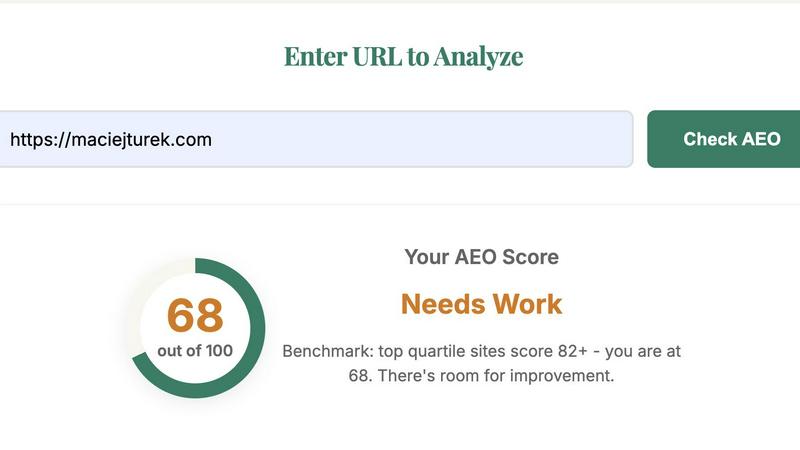
AEO Lite instantly scores your URL for AI Overviews and provides a tailored fix plan.
Last updated: March 1, 2026

Doodle Duel
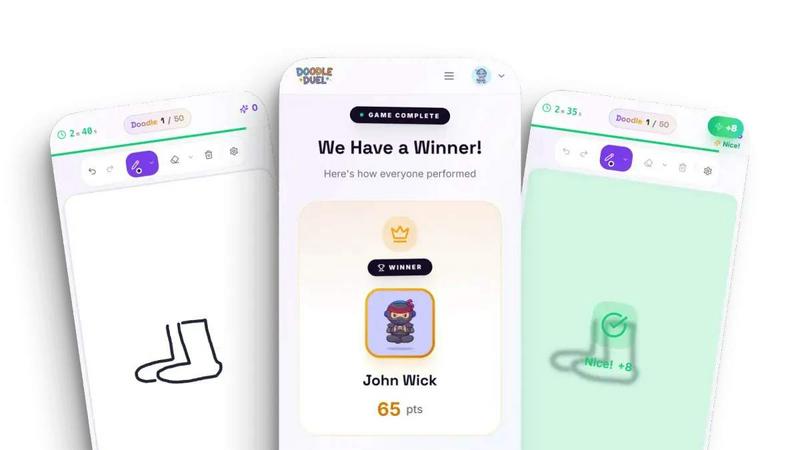
Doodle Duel is a real-time multiplayer game where you sketch prompts and an AI judges creativity to crown a winner.
Last updated: February 28, 2026
Visual Comparison
AEO lite
Doodle Duel
Feature Comparison
AEO lite
Comprehensive Six-Category AEO Scoring
AEO Lite performs a granular analysis across six foundational pillars critical for answer engine compatibility. The system allocates points (out of 100) for Answer Readiness (25 pts), Schema Essentials (20 pts), Entity & Links (15 pts), FAQ/HowTo Surfaceability (15 pts), Tech Basics (15 pts), and Trust & Author (10 pts). This structured scoring framework provides a holistic view of a page's strengths and weaknesses, moving beyond simple checks to a weighted evaluation that mirrors how AI systems prioritize and parse information.
Hard-Fail Rule Detection and Enforcement
The tool implements strict validation logic to identify critical technical blockers that would cause answer engines to completely ignore a page. It automatically assigns a score of 0 if it detects pages blocking LLM crawlers via robots.txt, using a 'noindex' meta tag, containing insufficient content (less than 150 words), or lacking any form of schema markup. This feature is crucial for developers and technical SEOs to quickly identify and remediate catastrophic compatibility issues before proceeding with finer optimizations.
Actionable, Prioritized Fix Plan Generation
Beyond providing a score, AEO Lite generates a tailored remediation report. This plan clearly highlights existing strengths, identifies specific gaps in the technical and content stack, and provides concrete, actionable recommendations for fixes. This transforms abstract AEO concepts into direct tasks for content creators (e.g., "add 40-60 word answers under question headers") and developers (e.g., "implement missing FAQPage JSON-LD schema").
Real-World, Sector-Specific Optimization Insights
The analysis engine is not based on theoretical best practices but is built on insights derived from actual AEO projects across high-value verticals like SaaS, fintech, and ecommerce. This ensures the recommendations are pragmatic, battle-tested, and relevant to competitive commercial landscapes. The tool effectively translates niche AEO strategies into a user-friendly interface, making advanced optimization accessible to non-technical marketing teams.
Doodle Duel
Real-Time Multiplayer Engine
Doodle Duel is built on a robust real-time synchronization engine that allows up to 30 players to connect and compete simultaneously. Utilizing WebSocket protocols, the platform ensures that prompts, timers, and submissions are perfectly synced across all devices. This architecture supports instant room creation via shareable codes, enabling friends to join a session in seconds without account creation, downloads, or complex lobby systems, making it a frictionless social gaming experience.
AI-Powered Judging Integration
The game's standout feature is its integration with leading AI vision models from Google Gemini and OpenAI. This system acts as an impartial judge, analyzing every submitted doodle against the given prompt. It evaluates on multiple vectors including accuracy to the theme, creative interpretation, and stylistic elements, generating a score and often witty feedback. This removes subjective bias and adds a layer of consistent, tech-driven fairness to each duel.
Cross-Platform Browser Compatibility
Doodle Duel is developed as a Progressive Web Application (PWA) with full cross-browser compatibility. It requires no native app installation and is accessible on any device with a modern web browser (Chrome, Safari, Firefox, Edge). The drawing interface is optimized for both touchscreen and mouse input, ensuring a smooth and responsive sketching experience whether on a smartphone, tablet, or desktop computer.
Dual Game Mode Architecture
The platform features a flexible dual-mode architecture. The Solo Arcade mode is a single-player experience with 50 progressive levels, local score tracking, and global leaderboard integration, built for skill development. The Multiplayer Duel mode is a separate, scalable real-time system for group play. This modular design caters to different user intents, from focused practice to chaotic social competition, all within the same application ecosystem.
Use Cases
AEO lite
Technical SEO and Development Team Integration
Development and technical SEO teams can integrate AEO Lite into their pre-launch QA and ongoing site audit processes. Before pushing new content or template updates, they can run a scan to ensure all schema markup is valid, crawlability is not blocked, and core technical prerequisites are met. This prevents the deployment of pages that are fundamentally incompatible with AI crawlers, saving costly rework.
Content Marketing and Editorial Benchmarking
Content marketers and editors use the tool to benchmark key landing pages, blog articles, and knowledge base entries. The "Answer Readiness" and "FAQ/HowTo Surfaceability" scores provide direct feedback on content structure, guiding writers to format information with clear question headers, concise answers, and step-by-step instructions that align perfectly with how answer engines extract and present data.
SEO Strategy and AEO Initiative Prioritization
SEO managers and founders leverage the tool to conduct quick competitive gap analyses and prioritize AEO initiatives alongside traditional SEO. By scoring their pages against competitors, they can identify high-opportunity, high-traffic pages where implementing structured data and optimizing content can yield the most significant visibility gains in AI overviews, informing strategic resource allocation.
Agency and Freelancer Client Reporting
Agencies and freelance consultants use AEO Lite to provide transparent, value-driven reporting for clients. The clear score and detailed breakdown offer a tangible metric for improvement, while the actionable fix plan serves as a direct scope of work for optimization projects, building trust and demonstrating expertise in the emerging AEO domain.
Doodle Duel
Virtual Team Building & Social Events
Ideal for remote teams or online friend groups, Doodle Duel serves as a powerful virtual icebreaker and team-building tool. The simple room-code system integrates seamlessly into video call meetings or social chats. The AI-judged format encourages participation regardless of artistic skill, fostering laughter, creativity, and lighthearted competition that helps break down barriers and build camaraderie in distributed groups.
Casual Party & Family Game Night
For in-person gatherings, Doodle Duel transforms into a dynamic party game. Players can quickly connect their own devices to a shared room via a code displayed on a central screen. The 60-second rounds and live AI commentary create a fast-paced, engaging spectacle perfect for parties or family game nights, where the focus is on fun and spontaneous creativity rather than high-stakes competition.
Creative Skill Warm-Up & Practice
Artists, designers, and students can use the Solo Arcade mode as a low-pressure creative exercise. The timed prompts challenge users to think and sketch quickly, improving ideation speed and conceptual communication. The AI feedback, while humorous, provides an alternative perspective on how a machine interprets visual concepts, which can be a unique tool for refining one's ability to convey ideas clearly and creatively.
Educational Engagement Tool
Educators can leverage Doodle Duel in classroom settings to make learning interactive. By crafting custom prompts related to curriculum topics (e.g., "draw a photosynthesis diagram," "sketch a historical event"), teachers can create an engaging review activity. The game format promotes active recall and allows students to demonstrate understanding in a creative, non-traditional format, with the AI providing a neutral scoring mechanism.
Overview
About AEO lite
AEO Lite is a specialized, self-service Answer Engine Optimization (AEO) diagnostic tool engineered for modern marketing and technical stacks. It provides marketers, founders, SEO specialists, and content developers with an instant, agency-grade analysis of how well their web content is structured for discovery and citation by AI answer engines like Google AI Overviews, ChatGPT, and Claude. By simply pasting a URL, users bypass the need for external consultants and receive a comprehensive, data-driven audit. The tool evaluates critical technical and content-based signals, including JSON-LD schema implementation, heading structure, FAQ coverage, entity alignment, and technical crawlability. Its core value proposition lies in translating complex AEO requirements into a clear, actionable score out of 100, accompanied by a prioritized fix plan. Built on empirical data from real-world AEO campaigns across SaaS, fintech, and ecommerce, AEO Lite integrates seamlessly into existing SEO workflows, enabling teams to benchmark performance, guide content creation, and prioritize development tasks to ensure their digital assets are fully compatible and competitive in the AI-driven search landscape.
About Doodle Duel
Doodle Duel is a cloud-native, real-time drawing game that leverages modern web technologies to deliver instant, accessible gameplay without any client-side installation. The platform is engineered for seamless integration into any social gathering, connecting up to 30 participants through a simple room code system. At its core, Doodle Duel utilizes a sophisticated AI judging stack, powered by integrations with Google Gemini and OpenAI models, to provide objective, real-time analysis of user-submitted sketches. This architecture ensures fair, consistent, and often humorous evaluations based on prompt accuracy, creativity, and artistic style. Designed for universal compatibility, the game runs directly in any modern web browser on desktop or mobile devices, removing friction and enabling immediate play. Its primary value proposition lies in merging competitive social interaction with advanced, accessible AI, creating a unique entertainment layer that is both technologically impressive and effortlessly fun for artists and novices alike.
Frequently Asked Questions
AEO lite FAQ
What are the scoring buckets and what do they mean?
The AEO Lite score is divided into six weighted categories totaling 100 points. Answer Readiness (25 pts) evaluates question-based headers and concise answers. Schema Essentials (20 pts) checks for valid JSON-LD markup. Entity & Links (15 pts) assesses topic alignment and citations. FAQ/HowTo Surfaceability (15 pts) looks for visible structured content. Tech Basics (15 pts) audits indexability and meta tags. Trust & Author (10 pts) verifies author and date signals. Each category's score indicates your page's performance in that specific area critical for AI comprehension.
How are recommendations generated?
Recommendations are generated algorithmically based on the absence or incorrect implementation of the factors within each scoring category. The system cross-references your page's current HTML, schema, and content structure against a database of requirements known to influence answer engine performance. When a gap is detected (e.g., missing FAQPage schema, no author bio), a specific, actionable recommendation is produced to address that exact issue.
What schema coverage do I need for answer engines?
Answer engines prioritize specific schema types to understand and confidently cite content. Essential schemas include FAQPage for Q&A content, HowTo for instructional guides, Article or BlogPosting for articles, Organization for brand authority, and BreadcrumbList for site context. AEO Lite checks for the presence and technical validity of these JSON-LD scripts, as proper implementation is a major signal for AI systems.
What happens if my page gets a score of 0?
A score of 0 indicates a "Hard-Fail" condition where answer engines are likely unable to process your page at all. This is triggered by critical technical blockers: using robots.txt to disallow AI user-agents, applying a noindex meta tag, having severely insufficient content (under 150 words), or having zero schema markup. Fixing these fundamental compatibility issues is the absolute first priority before any other AEO optimizations can be effective.
Doodle Duel FAQ
What technology does the AI judge use?
Doodle Duel's AI judging system is powered by integrations with advanced multimodal AI models, specifically Google Gemini and OpenAI's vision-capable APIs. These models analyze the submitted image against the text prompt, evaluating it for conceptual accuracy, creative interpretation, and stylistic elements. The scores and feedback are generated in real-time, providing a consistent and objective assessment for every duel.
Do I need to download an app or create an account?
No. Doodle Duel is a web-based application built for maximum accessibility and zero friction. It runs directly in your device's web browser without any downloads or installations. Furthermore, no account registration is required to play. You can instantly create a multiplayer room or start a solo arcade session, with progress tracked locally via your browser session.
How many people can play in one room?
The multiplayer system supports different tiers. The free version allows rooms of up to 4 players simultaneously. By upgrading to Doodle Duel Pro, you can unlock larger rooms that support up to 30 concurrent players, enabling massive, chaotic drawing battles perfect for large virtual events, classrooms, or big friend groups.
Is my drawing data stored or used for AI training?
According to the provided Privacy Policy, user privacy is a priority. While your drawing is processed in real-time by the AI judge to generate a score, Doodle Duel states that it does not permanently store individual drawings or use them to train its own AI models. The system is designed for transient gameplay, with data handling focused on session functionality like room codes and temporary scores.
Alternatives
AEO lite Alternatives
AEO Lite is a specialized Answer Engine Optimization (AEO) checker, falling into the categories of AI Assistants, Marketing, and SEO. It provides a rapid, automated analysis of a URL's readiness for AI Overviews and modern answer engines, delivering a score and a tailored fix plan. Users often explore alternatives to AEO Lite for several reasons. These can include budget constraints, the need for different feature sets like deeper technical audits or competitor tracking, or specific platform integration requirements with their existing CMS, data warehouse, or SEO tech stack. The search for a tool that fits a particular workflow or scales with team size is common. When evaluating an alternative, consider its core analysis methodology, API availability for automation, compatibility with your current marketing stack, and the depth of actionable, developer-friendly recommendations it provides. The ideal tool should not only identify gaps but also offer clear guidance that integrates seamlessly into your existing content and development pipelines.
Doodle Duel Alternatives
Doodle Duel is a real-time multiplayer drawing game that leverages AI for judging, placing it within the broader category of AI-assisted creative and social gaming platforms. It emphasizes instant, account-free play and integrates with leading AI models like Google Gemini and OpenAI to provide a unique competitive experience. Users often explore alternatives to find solutions that better align with their specific technical or social requirements. Common drivers include the need for different pricing models, such as subscription tiers or one-time purchases, a desire for more advanced drawing tools or integration capabilities, or the necessity for support on specific platforms or devices not covered by the original application. When evaluating an alternative, consider the core technology stack and its API compatibility, especially if you require integration with other creative or communication tools. Assess the multiplayer infrastructure for stability and scale, the flexibility of the AI judging engine, and whether the platform supports your preferred deployment method, such as web-based, native mobile apps, or cross-platform frameworks.