
Afterly Plan vs Skene
Side-by-side comparison to help you choose the right product.

Afterly Plan
Afterly Plan integrates expert guidance to streamline probate and estate settlement for executors.
Last updated: February 28, 2026

Skene is growth infrastructure you own and prompt directly into your codebase.
Last updated: February 28, 2026
Visual Comparison
Afterly Plan

Skene
Feature Comparison
Afterly Plan
Phase-Based Action Plan
The platform structures the entire post-loss process into clear, sequential phases, such as Immediate Steps, Funeral & Memorial, and Financial Affairs. This architectural approach breaks down monumental tasks into a defined workflow, providing a visual timeline and prioritized checklist. Users progress through a curated roadmap, ensuring no critical step is overlooked while adapting the plan to their specific situation and jurisdiction.
Secure Digital Document Hub
Afterly Plan provides an encrypted, centralized vault for organizing and storing essential documents. This feature supports the upload and categorization of wills, deeds, account statements, death certificates, and other vital records. It mitigates the risk of lost paperwork and creates a single source of truth, facilitating easier sharing with attorneys, accountants, or family members as needed during the settlement process.
Integrated Expert Guidance Library
The platform embeds a comprehensive knowledge base curated by estate professionals. This library offers plain-language explanations of probate, executor responsibilities, legal terminology, and financial procedures. It acts as an always-available reference, reducing dependency on frantic internet searches and providing trustworthy, context-sensitive information directly within the relevant step of the action plan.
Interactive Checklists & Progress Tracking
Dynamic, customizable checklists form the core of the user interface, allowing individuals to track completed, pending, and upcoming tasks. The system offers conditional logic, showing or hiding tasks based on user input (e.g., "Was there a will?"). This interactive tracking provides a sense of control and accomplishment, visually mapping progress through an otherwise daunting journey.
Skene
Codebase Signal Analysis
Skene performs deep, automated analysis of your connected GitHub or GitLab repository to extract actionable growth signals. It scans your framework, component structure, and user flow logic to identify onboarding friction points, activation opportunities, and retention risks directly from the source code, providing a foundational context layer for all subsequent AI-driven optimizations.
AI-Prompted Growth Implementation
Growth workflows are managed through natural language prompts within your existing development environment, such as Cursor or a terminal. After analysis, you can instruct Skene to generate and implement specific improvements—like refining an onboarding tour or adjusting a activation checkpoint—turning strategic insights into shipped code without manual intervention.
Self-Optimizing User Flows
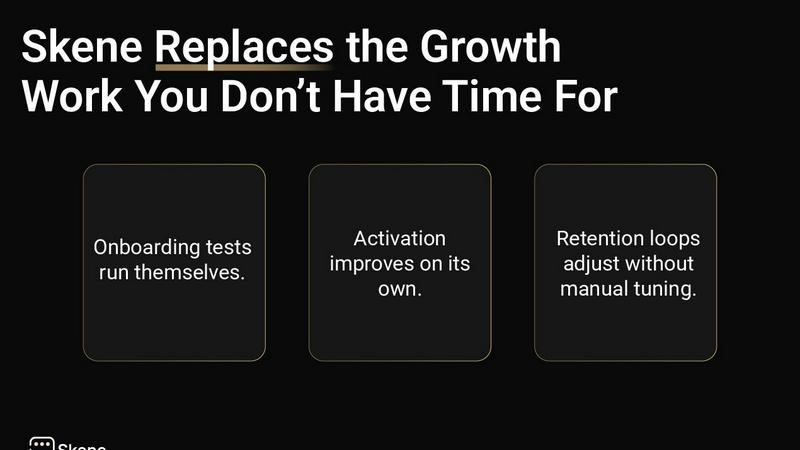
The system continuously monitors user interactions against the signals in your codebase. It automatically A/B tests different user journey variations and implements the winning flows. This creates a closed feedback loop where onboarding and activation processes become smarter and more effective over time, with no manual dashboard tuning required.
Integrated Growth Manifest & Context
Skene generates a persistent growth-manifest.json file within your project (e.g., in ./skene-context/). This file acts as a centralized, version-controlled source of truth for all your product's growth logic, analytics definitions, and user journey states, ensuring your AI agents and tools have consistent, up-to-date context.
Use Cases
Afterly Plan
The Unprepared Executor
An individual named as executor in a will but with no prior experience in estate law or administration uses Afterly Plan. The platform provides them with a definitive, step-by-step protocol, explaining their fiduciary duties, court deadlines, and the order of operations for asset collection, debt payment, and distribution, transforming an overwhelming responsibility into a managed project.
The Grieving Immediate Family
A surviving spouse or adult child is emotionally overwhelmed and unable to focus on logistical details. They use the platform's compassionate, guided workflow starting with "Immediate Steps," which helps them notify relevant parties, plan a funeral using provided checklists, and locate critical documents without having to mentally organize the chaos themselves.
Managing Digital & Financial Assets
Families struggle to locate and manage a deceased loved one's online accounts, subscriptions, and financial assets. Afterly Plan's structured modules guide them through creating an inventory, providing templates for contacting financial institutions, and offering steps for handling passwords, recurring bills, and closing accounts systematically.
Coordinating with Professional Advisors
An executor or family representative uses Afterly Plan to organize all documents and task statuses in one secure hub. This organized digital estate file can then be efficiently shared with the family's attorney, CPA, or financial advisor, streamlining communication, reducing billable hours spent on organization, and ensuring all professionals are working from the same information.
Skene
Autonomous Onboarding Optimization
For SaaS products, Skene automatically analyzes where new users drop off during initial setup. It then generates, tests, and deploys refined onboarding tours and tooltips directly within the application's UI, significantly improving time-to-value and activation rates without any engineering overhead.
Continuous Activation Funnel Management
Startups can use Skene to perpetually audit and improve their core activation funnel. The system identifies which features are correlated with long-term retention, detects where users struggle to reach them, and prompts the implementation of guided flows or UI adjustments to boost key feature adoption.
Lifecycle Automation for Customer Success
Teams can automate complex customer lifecycle workflows based on code-level signals. For example, Skene can trigger re-engagement nudges or educational content when it detects a user has not interacted with a newly shipped feature, helping to drive adoption and reduce churn autonomously.
Tech Stack Consolidation for Developers
Development teams frustrated with managing multiple analytics, onboarding, and engagement tools can replace their entire legacy growth stack with Skene. It consolidates these functions into a single, code-native infrastructure that is owned, versioned, and modified within the same workflow used for feature development.
Overview
About Afterly Plan
Afterly Plan is a specialized digital platform engineered to provide structured, step-by-step guidance through the complex administrative and logistical tasks following a death. It functions as an operational system for grief, translating the overwhelming process of estate settlement, probate, and executor duties into manageable, sequential actions. The platform is architected for individuals and families who are navigating loss, offering them clarity and organization when they need it most. Its core value proposition lies in filling the critical gap left by traditional estate plans, which are legal documents but not actionable day-by-day guides. Afterly Plan covers the immediate, practical necessities—from funeral planning and document location to managing financial accounts and understanding legal procedures—all within a secure, cloud-based environment. Built with direct input from estate professionals, it ensures reliable, expert-informed workflows. By integrating checklists, timelines, and secure document organization, Afterly Plan reduces cognitive load during a highly stressful time, allowing users to delegate mental energy from logistics to healing.
About Skene
Skene is an AI-powered Product-Led Growth (PLG) infrastructure designed for modern development teams, particularly indie developers and early-stage startups. It redefines growth tooling by integrating directly with your codebase and IDE, eliminating the need for external, siloed dashboards and brittle third-party scripts. Skene operates as a fully automated iteration engine that autonomously optimizes key growth funnels like onboarding, activation, and retention. By analyzing your repository structure and deriving signals directly from your code, it intelligently identifies friction points and activation drop-offs. It then automatically tests and implements improved user flows, creating a self-optimizing product experience. This "growth as code" philosophy allows developers to own, version, and prompt their growth infrastructure just like their core product, ensuring seamless compatibility with existing tech stacks and AI agents. The core value proposition is clear: replace a fragmented legacy growth stack with a unified, code-native system that ships growth loops instead of managing widgets, all without expanding your team.
Frequently Asked Questions
Afterly Plan FAQ
How is Afterly Plan different from an estate plan?
An estate plan (will, trust) is a set of legal documents that instructs courts on your final wishes. Afterly Plan is the operational guide that helps your family execute those wishes. It addresses the immediate, practical logistics—finding documents, planning services, managing accounts—that legal documents do not cover, ensuring the plan is actionable.
Is my sensitive data secure on the platform?
Yes. Afterly Plan employs bank-level encryption for data both at rest and in transit. The company adheres to a strict privacy-first policy, meaning your personal information and uploaded documents are never sold or shared. The platform is designed as a secure vault for organizing this critical information during the settlement process.
Do I need to be tech-savvy to use Afterly Plan?
No. The platform is designed with a user-friendly, guided interface that requires no technical expertise. It uses simple language, clear step-by-step instructions, and intuitive checklists. The complexity of the estate process is handled by the platform's backend logic, presenting users with only the next actionable task in a simple format.
Can Afterly Plan provide legal or financial advice?
Afterly Plan is not a law firm or financial advisory service. It provides educational guidance, checklists, and organizational tools built with input from professionals. For specific legal, tax, or financial advice pertaining to your unique situation, the platform guides you on when and how to consult with licensed attorneys, CPAs, or other qualified experts.
Skene FAQ
How is Skene different from traditional customer experience software?
Traditional tools rely on manual tour creation, external JavaScript snippets, and brittle UI selectors that break with every deployment. Skene is fundamentally different; it reads your actual codebase to understand your application's structure and automatically generates and maintains all growth components. When you push new code, Skene's flows update themselves, ensuring robustness and deep integration.
How long does it take to set up?
Setup is designed to be completed in less than 60 seconds. You simply grant Skene read-only access to your GitHub or GitLab repository. The system then automatically analyzes your codebase to generate the initial PLG flows and context layer. No initial code changes or API modifications are required to get started.
Is my code secure?
Yes, security is a primary design consideration. Skene only ever requires read-only access to your repository. All code analysis is performed in a secure, isolated environment. Your proprietary code is not stored or used for any purpose other than generating your specific growth infrastructure and signals.
What kind of analytics do you provide?
Skene provides analytics focused on growth outcomes, not just pageviews. The dashboard shows real-time user progress through defined journeys, completion rates, engagement metrics, and bottleneck identification. You can track critical metrics like time-to-value and directly measure the impact of each automated improvement on your activation and retention goals.
Alternatives
Afterly Plan Alternatives
Afterly Plan is a specialized productivity and management platform designed to guide individuals through the complex administrative and emotional tasks following a loss. It provides a structured, step-by-step framework for handling probate, estate duties, and memorial planning, integrating checklists and expert guidance into a single workflow. Users often explore alternatives to find a solution that better aligns with their specific technical ecosystem or budget. Common considerations include the need for deeper integration with existing legal or financial software stacks, a preference for a different pricing model, or requirements for more advanced collaborative features for dispersed family members. When evaluating an alternative, prioritize platforms with robust API support and compatibility with common cloud storage and document management systems. Assess the depth of the platform's feature set against your specific procedural needs, and ensure its security protocols and data handling policies meet the sensitive nature of estate management.
Skene Alternatives
Skene is an automated Product-Led Growth (PLG) iteration engine, falling into the productivity and growth management category. It integrates directly with your codebase to autonomously optimize user onboarding, activation, and retention loops, eliminating the need for manual growth teams. Users often explore alternatives for several reasons. These can include budget constraints, a need for different pricing models like subscription-based plans, or specific feature requirements not covered by Skene's automated, outcome-based approach. Platform compatibility, such as needing a solution for a different tech stack or a preference for more manual control via traditional dashboards, also drives the search. When evaluating an alternative, key considerations should be its integration method with your existing infrastructure and whether it supports your framework. Assess if the tool's automation level matches your needs, from fully autonomous optimization to manual A/B testing suites. Finally, scrutinize the pricing structure to ensure it aligns with your growth stage and budget.