
AI Agents Marketplace vs Your Wedding Atlas
Side-by-side comparison to help you choose the right product.

AI Agents Marketplace
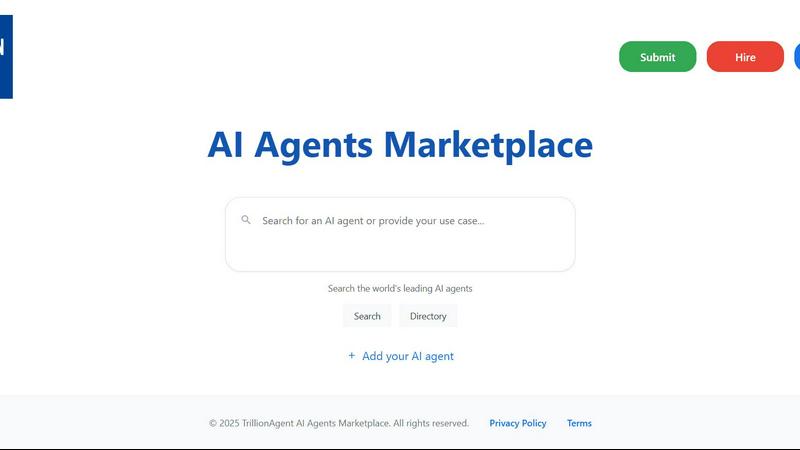
Deploy pre-built AI agents that integrate seamlessly with your existing tech stack.
Last updated: March 1, 2026

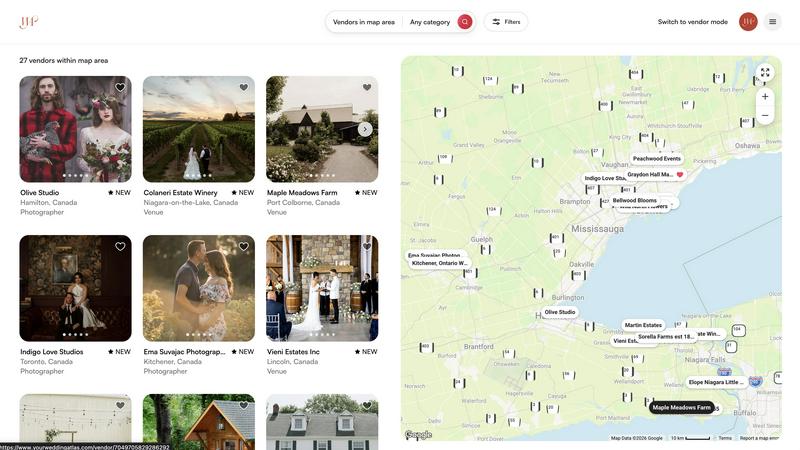
Your Wedding Atlas is an integrated map-based platform that lets couples globally discover and book compatible wedding venues and vendors.
Last updated: March 11, 2026
Visual Comparison
AI Agents Marketplace
Your Wedding Atlas
Feature Comparison
AI Agents Marketplace
Structured Role-Based Taxonomy
The marketplace is built on a meticulously engineered taxonomy of over 300 human-role-equivalent categories, such as "Data Analyst," "SEO Specialist," or "Full-Stack Developer." This structure moves beyond simple keyword tagging, enabling precise, intent-based discovery. It ensures that businesses can find agents designed for specific operational functions, guaranteeing a higher degree of compatibility and integration readiness with their existing tech stack and business processes from the outset.
AI-Powered Natural Language Search
Beyond traditional filters, the platform integrates a sophisticated natural language search engine. Users can describe their operational need or technical requirement in plain English (e.g., "an agent to clean and normalize daily Salesforce CRM data exports"). The AI parses this intent to surface the most relevant, compatible agents, dramatically reducing discovery time and improving match accuracy by understanding context, required inputs, and expected outputs.
Seamless Integration & Deployment Framework
The marketplace is designed as a transactional hub, not just a directory. It provides standardized technical schemas, API documentation, and compatibility metrics for listed agents. This allows development and operations teams to evaluate integration requirements, authentication protocols, and data handoff mechanisms directly within the platform, streamlining the procurement-to-deployment pipeline and reducing friction in embedding new AI capabilities into live environments.
Monetization & Distribution Platform for Developers
For AI developers and solution providers, the marketplace offers a robust channel to distribute and monetize agent-based products. It handles discovery, vetting, and commercial transactions, providing developers with access to a targeted audience actively seeking to integrate AI talent. This ecosystem accelerates go-to-market strategies and provides a scalable revenue model, backed by the platform's trust and structured categorization.
Your Wedding Atlas
Interactive Geospatial Search Engine
This core feature is powered by a dynamic map interface that allows users to visually explore wedding vendors by precise location. The technology enables filtering by proximity, vendor category, and price range, rendering search results geographically. This spatial analysis tool helps couples understand vendor density in desired areas and plan logistics efficiently, directly integrating location data into the decision-making framework.
Centralized Vendor Connection Management
The platform acts as a unified CRM for the wedding planning process. Users can save favorite venues and vendors, initiate contact, and manage all communications within the system. This feature ensures compatibility with user workflow by eliminating the need to switch between email, messaging apps, and notes, keeping a structured log of all interactions and details in one secure, cloud-based environment.
Comprehensive Vendor Profile & Portfolio Integration
Each vendor on Your Wedding Atlas maintains a detailed profile that integrates multimedia portfolios, service descriptions, pricing guides, and direct contact forms. The system supports rich media embedding, allowing for high-resolution photo galleries and video showcases. This provides a standardized yet comprehensive data layer for couples to perform in-depth technical and aesthetic evaluations of potential partners.
Data-Driven Planning Insights & Analytics
Leveraging aggregated market data, the platform provides users with contextual insights such as regional average costs and trends. This feature parses complex market information into actionable analytics, helping couples benchmark budgets (e.g., understanding that urban venues cost ~25% more) and make informed financial decisions compatible with their overall planning stack and financial tools.
Use Cases
AI Agents Marketplace
Augmenting DevOps & Engineering Teams
Engineering organizations can integrate specialized AI agents directly into their CI/CD pipelines and development environments. Use cases include deploying agents for automated code review, infrastructure provisioning scripts, real-time security vulnerability scanning, or production log analysis. This creates a scalable, autonomous layer within the tech stack that augments human engineers, accelerates release cycles, and maintains code quality and system reliability.
Scaling Data Operations & Business Intelligence
Data teams can discover and deploy agents for specific ETL tasks, real-time data quality monitoring, dashboard generation, or predictive analytics modeling. Instead of building one-off scripts or manual processes, teams can integrate pre-built, specialized AI agents that plug directly into their data warehouses (like Snowflake or BigQuery) and visualization tools, creating a more agile and automated data ops framework.
Automating Customer Experience & Support
Businesses can architect a hybrid customer support stack by integrating AI agents for tier-1 query resolution, sentiment analysis on support tickets, automated follow-up communications, and knowledge base article generation. These agents can be seamlessly integrated with existing CRM platforms (like HubSpot or Zendesk) and communication channels, providing 24/7 coverage and escalating only complex cases to human agents.
Enhancing Creative & Marketing Production
Marketing and creative departments can operationalize AI for content generation, graphic design asset creation, A/B test analysis, and SEO optimization. By finding and integrating role-specific agents (e.g., a "Social Media Copywriter" agent or a "Brand Design Assistant"), teams can maintain brand consistency while automating high-volume, repetitive creative tasks, freeing human talent for strategic initiatives.
Your Wedding Atlas
Initial Venue Sourcing & Location Scouting
Couples beginning their search can use the map-based engine to identify and compare potential wedding venues within a specific region or city. By applying filters for guest capacity, style, and budget, they can shortlist options and assess logistical feasibility based on geographic clustering of other needed services, streamlining the foundational phase of planning.
Coordinating Multi-Vendor Logistics
For couples managing a roster of photographers, caterers, and florists, the platform provides a single dashboard to track all contacts and details. This use case is critical for ensuring vendor compatibility, coordinating timelines, and managing contract details in a centralized hub, reducing the risk of oversight and communication errors.
Budget Planning with Real-Time Market Data
Users can leverage the platform's integrated cost guides and provincial average data to build and adjust their wedding budget. By accessing real-time, location-specific pricing information for venues, catering, and other services, couples can create a financially-informed plan that aligns with current market rates in their chosen area.
Vendor Discovery for Niche or Destination Weddings
Couples planning a wedding in a remote, rural, or destination location can utilize the global search capabilities to find specialized vendors who service that area. This use case solves the challenge of limited local options by providing a broad, searchable network of creatives willing to travel, ensuring access to quality services regardless of geography.
Overview
About AI Agents Marketplace
The AI Agents Marketplace is the definitive integration layer for the modern enterprise tech stack, engineered to operationalize autonomous AI talent at scale. It functions as a centralized, transactional hub that bridges the gap between sophisticated AI automation and tangible business outcomes by providing a structured directory for discovering, evaluating, and deploying specialized AI agents. The platform is architected for two core user groups: businesses seeking to augment their operational capabilities with pre-vetted, role-specific AI agents, and developers or AI companies aiming to distribute and monetize their agent-based solutions within a high-intent ecosystem. Its primary value proposition is a deeply structured, searchable taxonomy of over 300 human-role-equivalent categories, enabling precise, intent-based matching that ensures compatibility with existing workflows. By leveraging an AI-powered natural language search engine, the marketplace cuts through the fragmentation of standalone AI tools, allowing technical teams to seamlessly integrate agents for specific tasks—from data engineering and DevOps to customer experience orchestration and creative production. This focus on discoverability, role-based categorization, and seamless deployment makes it an essential component for organizations building a scalable, hybrid human-AI workforce, directly addressing integration complexity and accelerating time-to-value for AI-driven automation.
About Your Wedding Atlas
Your Wedding Atlas is a sophisticated, map-based discovery and logistics platform engineered for modern couples planning their wedding. It functions as a centralized, interactive ecosystem that seamlessly connects users with a comprehensive network of wedding venues and vendors. The platform's core architecture is built around a geospatial interface, transforming the traditionally fragmented search process into a visual and intuitive exploration. Beyond discovery, Your Wedding Atlas provides integrated tools for managing vendor communications, comparisons, and logistical details, consolidating the entire planning workflow into a single, compatible dashboard. It is designed for tech-savvy couples seeking an efficient, data-driven, and organized approach to wedding planning, as well as for vendors aiming to increase their visibility to a targeted, global audience. The primary value proposition lies in its ability to replace scattered spreadsheets, countless browser tabs, and disjointed communications with a unified, API-ready platform that visualizes and streamlines the journey from inspiration to execution.
Frequently Asked Questions
AI Agents Marketplace FAQ
How does the marketplace ensure the quality and reliability of listed AI agents?
The platform employs a multi-layered vetting process that includes technical validation of the agent's API and integration specs, performance benchmarking against stated capabilities, and security review of data handling practices. Additionally, a transparent review and rating system from enterprise users provides social proof and real-world performance data, allowing buyers to make informed decisions based on compatibility and proven results in similar tech stacks.
What is required to integrate an AI agent from the marketplace into my existing systems?
Integration typically requires API access, which is standardized through the marketplace's framework. Key requirements include validating authentication methods (API keys, OAuth), ensuring data schema compatibility between the agent's expected input/output and your internal systems, and configuring the agent within your workflow orchestration tool (like Zapier, n8n, or a custom middleware). Detailed technical documentation for each agent is provided to streamline this process.
Can we customize or fine-tune an AI agent after deployment?
Customization capabilities depend on the specific agent and its provider. The marketplace categorizes agents based on their flexibility: some are closed, off-the-shelf solutions, while others offer configuration panels, allow for fine-tuning on proprietary data, or provide white-label options. Filtering and search features allow you to specifically seek out agents with the customization and integration depth your use case requires.
How does the pricing and licensing model work for AI agents?
Pricing models are set by the individual agent developers and are clearly listed on each agent's profile. Common models include subscription-based SaaS pricing (monthly/annual), usage-based pricing (per API call, per task), or enterprise licensing. The marketplace facilitates the transaction and billing, providing a unified procurement experience. You can filter agents by their pricing model to align with your operational budget and cost structure.
Your Wedding Atlas FAQ
How does Your Wedding Atlas integrate with my existing planning tools?
Your Wedding Atlas is designed as a central command hub. While it is a standalone platform with robust internal tools, its web-based nature allows for easy cross-compatibility. You can export vendor lists, contact information, and notes. Future API developments aim for deeper integration with popular calendar and project management applications, facilitating a seamless workflow between systems.
What kind of vendors are listed on the platform?
The platform maintains a wide-ranging database across all major wedding categories. This includes, but is not limited to, venues (from banquet halls to rustic barns), photographers, videographers, caterers, florists, entertainment, and wedding planners. The focus is on connecting couples with a full stack of vetted creatives and services necessary to execute a complete wedding event.
Is the cost data on the blog, like the Canadian wedding averages, integrated into the platform's search?
The market insights and data-driven articles published provide valuable context for your planning. While the core search engine allows filtering by vendor-provided pricing tiers or budget ranges, the specific regional average figures (e.g., $32,000 national average) serve as educational benchmarks. We recommend using these analytics to inform your budget before using the platform's filters to find vendors whose services align with your financial parameters.
How does the map-based search improve upon traditional directory listings?
Traditional directories offer static lists, forcing you to mentally map locations. Our geospatial interface renders this data visually, allowing for intuitive discovery based on proximity and density. You can instantly see how venues relate to each other, your ceremony location, or guest accommodations. This spatial context is critical for logistical planning and is a significant technological upgrade over paginated list results.
Alternatives
AI Agents Marketplace Alternatives
The AI Agents Marketplace is a centralized platform in the AI Assistants category, designed for discovering and deploying specialized, role-based AI agents that integrate directly into your existing tech stack. It focuses on precise, taxonomy-driven matching to ensure compatibility and operational scalability for businesses building a hybrid workforce. Users often explore alternatives due to specific integration requirements, budget constraints, or a need for different feature sets like custom agent development tools or alternative deployment models. Platform lock-in, security protocols, and the depth of API documentation are also common decision drivers. When evaluating an alternative, prioritize its compatibility with your core systems, the granularity of its agent taxonomy for precise role matching, and the robustness of its integration framework. Assess the total cost of ownership, including deployment and maintenance overhead, and ensure the platform's security model aligns with your data governance policies.
Your Wedding Atlas Alternatives
Your Wedding Atlas is a map-based marketplace and vendor directory platform designed for wedding planning. It operates within the software and marketing categories, providing an interactive interface for global discovery and booking of venues and creatives. Users often explore alternatives due to specific integration needs with existing project management tools, budget constraints requiring different pricing models, or a desire for platforms with more specialized feature sets like advanced CRM capabilities or different API access levels for vendor portfolios. When evaluating an alternative, prioritize platforms with robust API documentation for potential third-party integrations, assess the underlying tech stack for scalability and mobile responsiveness, and verify data portability standards to ensure a seamless transition for your vendor listings and couple data.