
Coloring Book Engine vs Dubvid
Side-by-side comparison to help you choose the right product.

Coloring Book Engine
Coloring Book Engine locally integrates AI and GPU workflows to produce publish-ready books and videos.
Last updated: February 28, 2026

Dubvid
Dubvid is an AI dubbing API that localizes video and audio into multiple languages with natural voices and optional.
Last updated: February 27, 2026
Visual Comparison
Coloring Book Engine
Dubvid
Feature Comparison
Coloring Book Engine
BYOK AI Integration & Local GPU Processing
CBE is built on a hybrid processing architecture. You integrate your own API keys for AI-driven ideation and sketch generation, maintaining control over costs and data. For production tasks like line art cleaning, colorization previews, and video rendering, the engine utilizes your local DirectML-compatible GPU. This split ensures sensitive artwork never leaves your machine for core processing, while still providing access to powerful cloud-based AI models for creative brainstorming.
Batch Production & Project Workspace
The software is engineered for scale with a centralized project workspace that supports batch operations. You can generate, import, and manage dozens of coloring pages within a single project file. This system allows for efficient organization of entire book series, enabling creators to apply consistent styling, layouts, and exports across multiple pages simultaneously, dramatically reducing repetitive manual work.
KDP-Ready Export & Print Optimization
CBE handles the technical specifications required for platforms like Amazon KDP (Kindle Direct Publishing). It automates the configuration of correct trim sizes, bleed areas, and margins. A key technical feature is its advanced line art processing, which uses local GPU algorithms to transform fuzzy AI-generated edges into crisp, print-sharp black lines, ensuring professional physical book quality directly from the export module.
Integrated Marketing Asset Creation
Beyond book files, the engine includes a native video rendering module. It transforms your static coloring pages into animated coloring videos and short-form clips, perfectly formatted for social media platforms like YouTube Shorts and TikTok. This feature uses the local GPU to render previews with real-world color palettes, simulating how colors actually appear on paper, not just on screen.
Dubvid
Multi-Format & High-Capacity Upload Engine
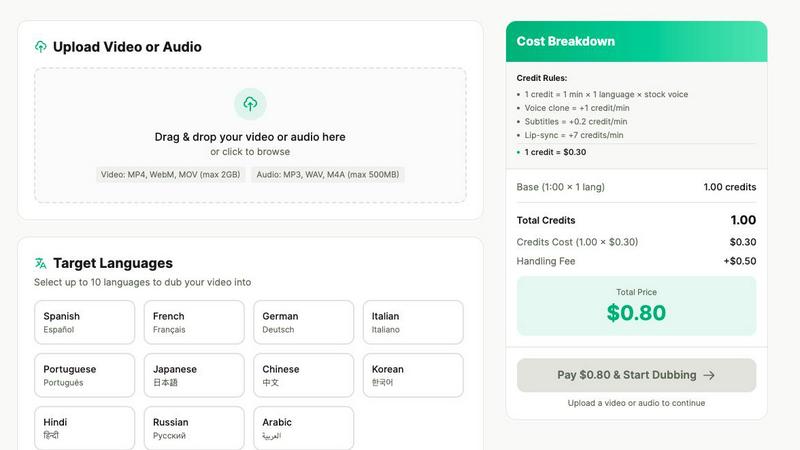
Dubvid's ingestion system is built for creator and enterprise workflows, supporting a robust range of media formats including MP4, MOV, WebM for video and MP3, WAV for audio. The platform accommodates files up to 500MB, ensuring compatibility with high-quality source material from professional cameras, editing software, and screen recording tools. This technical flexibility allows users to integrate Dubvid directly into their post-production pipeline without mandatory pre-conversion steps, streamlining the localization process from the outset.
AI Voice Library & Custom Voice Cloning
Beyond a standard library of natural-sounding stock AI voices, Dubvid offers a sophisticated voice cloning feature. This technology enables users to create a digital replica of a specific voice—such as a brand spokesperson or a course instructor—maintaining consistent vocal identity across all localized versions. This feature is critical for brand integrity and audience familiarity, providing a level of customization typically reserved for high-budget studio productions but accessible through an automated, API-driven platform.
Advanced Lip-Sync Technology
For maximum realism in talking-head videos, presentations, and actor-driven content, Dubvid offers an optional premium lip-sync engine. This feature algorithmically adjusts the dubbed audio track to match the speaker's mouth movements in the original video. The integration of this technology adds a layer of visual authenticity that significantly enhances viewer immersion and production value, making localized content feel native and professionally produced.
Automated Subtitle Generation & Integration
To ensure comprehensive accessibility and SEO benefits, Dubvid can automatically generate and burn subtitles directly into the video output. This feature supports the creation of closed captions for social platforms and is essential for content consumed in sound-off environments. The subtitles are synchronized with the AI-generated dubbing, providing a cohesive multi-lingual viewing experience that meets global accessibility standards and platform best practices.
Use Cases
Coloring Book Engine
Independent Artist & Solo Publisher
For the individual creator, CBE consolidates the entire publishing stack. An artist can start with an AI-assisted sketch using their own API key, refine the line art locally on their GPU, compile a print-ready PDF with proper bleed, and generate promotional videos-all within one application. This eliminates the need for separate subscriptions to AI services, design software, and video editors, streamlining the solo operation.
Small Publishing Studio or Team
The Organization license is structured for collaborative workflows within a small team or studio. Multiple licensed seats allow team members to work on different projects or aspects of a single large project within the shared CBE environment. The batch workflow and consistent export settings ensure brand and quality consistency across all publications managed by the team.
AI-Free Traditional Artwork Packaging
For traditional artists who avoid AI-generated content, CBE serves as a powerful packaging and production engine. Artists can import their hand-drawn sketches, utilize the software's local GPU tools for line cleaning and enhancement, then leverage the layout, KDP export, and video creation modules to professionally prepare and market their entirely original artwork.
Rapid Series and Niche Catalog Development
Creators focusing on building a large catalog or a series within a specific niche benefit from the batch workflow and AI-assisted ideation. The ability to rapidly generate thematic sketches, process them in bulk, and output uniformly styled books enables quick scaling. This use case is ideal for entrepreneurs targeting multiple specific interests or seasonal markets on publishing platforms.
Dubvid
Scalable Social Media Content Localization
Short-form video creators for platforms like YouTube Shorts, Instagram Reels, and TikTok can use Dubvid to rapidly dub their viral content into multiple languages. This multiplies potential audience reach without recreating content from scratch. The platform's fast turnaround and simple credit system are perfectly aligned with the high-volume, rapid-testing nature of social media growth strategies, allowing creators to A/B test content performance across different linguistic demographics.
Global E-Learning and Course Expansion
Online educators and course platforms can leverage Dubvid to translate and dub tutorial videos, webinars, and entire course modules. This breaks down language barriers for global learners, enabling educators to scale their business internationally. The voice cloning feature is particularly valuable here, allowing the original instructor's voice to be maintained across all languages, which preserves the personal connection and teaching style that students trust.
Technical Support and Product Onboarding
SaaS companies and tech enterprises can localize their help center videos, product demos, and user onboarding flows. Providing support content in a user's native language drastically reduces confusion, support tickets, and churn. Dubvid integrates into the product and customer success tech stack to create region-specific versions quickly, ensuring consistent and clear communication during the critical user activation and education phases.
Podcast and Interview Multilingual Distribution
Audio and video podcasters can repurpose their core content for new markets by dubbing episodes into different languages. This allows for audience growth without the logistical and financial overhead of re-recording with native-speaking hosts or guests. The platform handles the complex audio processing and synchronization, enabling creators to maintain a regular release schedule across multiple linguistic channels from a single production source.
Pricing Comparison
Coloring Book Engine
Coloring Book Engine offers two lifetime license tiers, both including the same full feature set. The choice is based on your working structure, not software capabilities.
Personal - Lifetime License: $99
Designed for individual creators and solo publishers. This license is assigned to one person, allows activations on up to 3 devices for that user, and permits commercial use for your own books and brands. It includes BYOK AI integration support and free bug-fix updates.
Organization - Lifetime License: $299 for 5 seats
Tailored for teams, studios, schools, and larger publishers. This license covers an organization and provides 5 licensed seats, encompassing all the features of the Personal license in a structure designed for collaborative use. All purchases are backed by a 30-day money-back guarantee.
Dubvid
Dubvid employs a flexible, pay-as-you-go credit system with no mandatory subscriptions. The core pricing metric is the credit, where 1 credit = $0.30 and covers 1 minute of audio/video dubbed into 1 language using a stock AI voice. Additional features modify the credit cost: Voice Clone adds +1 credit/min, Subtitles add +0.2 credits/min, and the premium Lip-Sync feature adds +7 credits/min. Every job also incurs a fixed $0.50 handling fee. Users can estimate costs using the built-in pricing calculator by configuring video length, number of target languages, and desired add-ons. The platform encourages testing with a free offer of 2 credits (enough for a 60-second dub) without requiring a credit card.
Overview
About Coloring Book Engine
Coloring Book Engine (CBE) is a comprehensive, desktop-based production suite engineered for the modern coloring book creator. It functions as a complete, integrated toolkit that moves beyond simple PDF generation to facilitate the entire commercial publishing pipeline. The software is architected for artists, independent publishers, and entrepreneurial hobbyists who demand professional-grade output without the complexity of managing disparate applications. Its core value proposition lies in a highly optimized, batch-oriented workflow that accelerates production from initial concept to final, print-ready files and marketing assets. A defining technical feature is its BYOK (Bring Your Own Key) AI integration framework, which allows users to plug in their preferred AI service APIs (like OpenAI or Anthropic) for ideation and sketching, ensuring data privacy and avoiding locked-in subscription costs. Furthermore, CBE leverages local GPU acceleration for core rendering tasks such as line art refinement and coloring video generation, keeping sensitive project data on-device. This powerful combination of flexible cloud AI and local processing provides an unparalleled, end-to-end solution for scaling a coloring book business efficiently and securely.
About Dubvid
Dubvid is a cutting-edge, API-first dubbing platform engineered to integrate seamlessly into modern content creation and localization workflows. It leverages advanced generative AI to automate the translation and voice synthesis of video and audio content, transforming monolingual media into globally accessible assets. The platform is architected for scalability and ease of use, serving a technical stack that includes independent creators, growth-focused marketing teams, e-learning developers, and customer support operations. Its core value proposition lies in dismantling traditional localization barriers—eliminating dependencies on studios, voice actors, and lengthy production cycles. By supporting a wide array of input formats (MP4, MOV, WebM, MP3, WAV) and offering both stock and cloneable AI voices, Dubvid provides a flexible, programmatically accessible solution. Users can localize content into over 10 languages through a simple, credit-based system, enabling rapid international audience expansion in minutes rather than weeks. This makes it an essential tool for any tech stack focused on content scalability, global engagement, and operational efficiency.
Frequently Asked Questions
Coloring Book Engine FAQ
Is Coloring Book Engine a desktop app or a cloud service?
Coloring Book Engine is a native desktop application for Windows. The majority of its processing, especially for GPU-accelerated tasks like line art cleaning and video rendering, occurs locally on your machine. It integrates with cloud-based AI services only when you choose to supply your own API keys for the ideation and sketching phase, giving you control over what data is processed externally.
What exactly does it speed up for coloring book creators?
CBE dramatically accelerates the end-to-end production pipeline. It eliminates context-switching between multiple tools by combining AI ideation, line art refinement, page layout, print-ready PDF export, and social media video creation into one optimized workspace. The batch processing capability allows you to apply changes and generate exports for dozens of pages simultaneously, turning a process that could take days into a matter of hours.
Is this a subscription?
No. Coloring Book Engine operates on a one-time, lifetime license model for the software itself. You pay once for your chosen license (Personal or Organization) and receive the application with free bug-fix updates. The only ongoing costs are pay-as-you-go fees for your own AI API usage when you utilize those optional features, aligning costs directly with your production volume.
Can I use this tool without AI?
Absolutely. CBE supports a complete AI-free workflow. You can import your own hand-drawn or digitally created artwork directly into the engine. From there, you can use all the local processing features: clean up lines, layout your book, export KDP-ready PDFs, and create coloring videos- all without ever connecting to an external AI service.
Dubvid FAQ
What file formats and sizes does Dubvid support?
Dubvid is engineered for broad compatibility, accepting video files in MP4, MOV, and WebM formats, and audio files in MP3 and WAV. The maximum file size for upload is 500MB. This ensures support for high-quality exports from most professional and consumer editing and recording software, facilitating a smooth integration into existing content production workflows.
How does the credit-based pricing system work?
Dubvid operates on a transparent, usage-based credit system. One (1) credit is consumed for one minute of audio/video dubbed into one language using a stock AI voice. Additional features incur extra credits: Voice Cloning adds +1 credit per minute, Subtitles add +0.2 credits per minute, and Premium Lip-Sync adds +7 credits per minute. Each credit is priced at $0.30, and a fixed $0.50 handling fee is applied per job. This model ensures you only pay for the resources you use.
Can I clone my own voice or a specific speaker's voice?
Yes, Dubvid's Voice Cloning feature allows you to create a unique AI voice model based on a sample of the target voice. This is ideal for maintaining brand consistency with a known spokesperson or preserving the original presenter's vocal characteristics in educational content. The cloned voice is then available for use in all your dubbing projects, providing a custom and recognizable audio output.
Is there a free trial available?
Yes, Dubvid offers a free trial that requires no credit card. New users receive 2 free credits, which can be used to dub up to 60 seconds of content (e.g., 30 seconds into 2 languages). This allows you to test the platform's quality, interface, and output with your own media before committing any funds, ensuring it meets your technical and qualitative requirements.
Alternatives
Coloring Book Engine Alternatives
Coloring Book Engine is a specialized desktop application within the design tools category, focusing on the end-to-end production of commercial coloring books and promotional assets. It distinguishes itself with a local workflow, batch processing, and a BYOK (Bring Your Own Key) model for AI integration, offering creators control over their tech stack and data privacy. Users may explore alternatives for various reasons, including budget constraints, specific feature requirements like different export formats or platform compatibility, or a preference for subscription-based cloud services versus a one-time desktop purchase. The need for integrated video creation tools or different AI model support can also drive the search. When evaluating other solutions, consider the core workflow: does it support batch processing for efficiency? Check export capabilities for print-on-demand platforms and digital distribution. Crucially, examine the AI integration model—whether it's proprietary, BYOK, or absent—as this impacts cost, privacy, and flexibility. Finally, assess if the tool is a standalone desktop app, a web service, or part of a larger creative suite.
Dubvid Alternatives
Dubvid is an AI-powered video and audio dubbing platform within the content creation tech stack. It automates translation and voice synthesis to localize media, eliminating traditional studio dependencies. This positions it as a key tool for creators and businesses aiming for rapid, scalable international content distribution. Users often explore alternatives to Dubvid to align with specific technical requirements. Common drivers include budget constraints, the need for different API integrations, support for niche languages or dialects, higher-fidelity lip-sync capabilities, or compliance with particular data governance and security frameworks. The search is typically for a tool that fits a unique workflow or tech ecosystem. When evaluating an alternative, prioritize core technical specs. Assess the platform's supported language models, audio output formats, and compatibility with your existing editing suite or CMS. Scrutinize the API documentation for automation potential, review the security protocols for handling sensitive content, and verify the rendering infrastructure's reliability for consistent, high-quality output.