
dmaya vs Image3D AI
Side-by-side comparison to help you choose the right product.

dmaya
dMaya is the AI design platform for agencies that generates production-ready UI and exports to any code framework.
Last updated: April 13, 2026

Image3D AI
Image3D AI instantly converts 2D images into production-ready 3D models for printing and game engines.
Last updated: March 1, 2026
Visual Comparison
dmaya
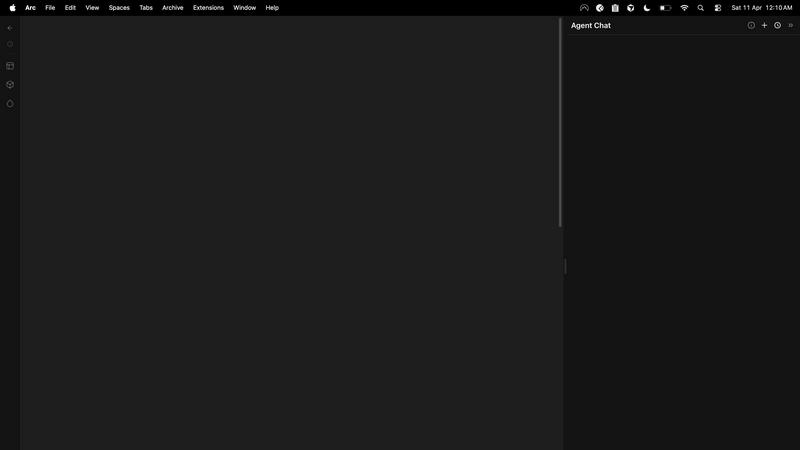
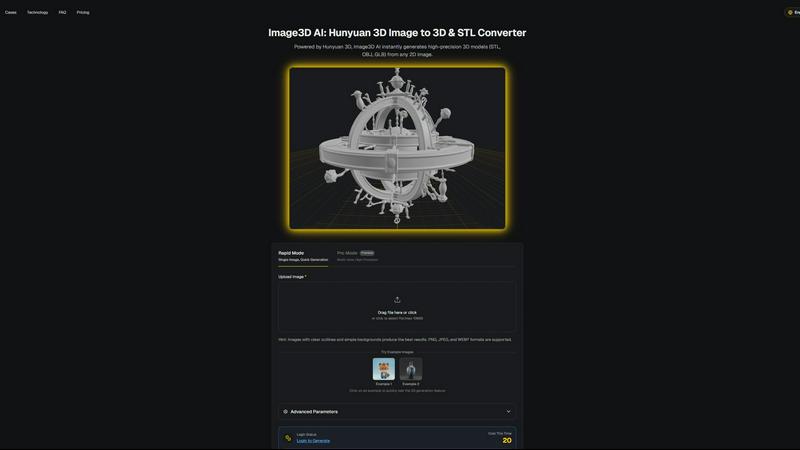
Image3D AI
Feature Comparison
dmaya
Conversational AI Design Agent
Interact with an intelligent AI agent using natural language to generate and modify designs. Describe a need like "a SaaS dashboard for analytics" or request precise changes such as "swap to a dark theme, increase padding, and use a sans-serif font." The AI interprets these commands in real-time, applying adjustments instantly across your project while maintaining design consistency through automatic token management, enabling rapid prototyping and refinement.
Multi-Screen, Multi-Device Canvas
Work on an expansive, infinite canvas that supports simultaneous design across multiple artboards for desktop, tablet, and mobile views. Organize and manage complete user flows, such as an e-commerce checkout or a multi-step onboarding process, in a single unified workspace. This feature mirrors the flexibility of traditional design tools but is supercharged with AI-assisted layout generation and responsive variant creation.
Client Presentation & Feedback Portal
Share any design via a secure, shareable preview link that requires no account for clients or stakeholders to view. They can interact with the prototype, leave contextual feedback directly on the design, and approve versions. This streamlines the review cycle from days to minutes, centralizing communication and iteration within the dmaya platform without the need for external meeting software or scattered email threads.
Framework-Agnostic Code Export
Export finalized and approved designs as production-ready, clean HTML, CSS, and JavaScript code. This output is meticulously structured and commented, making it the perfect input for AI coding assistants like Cursor, Claude Code, or GitHub Copilot. Hand off the exported code to your agent of choice to be transformed into components for your specific tech stack, whether it's React, Next.js, Flutter, or Vue.js.
Image3D AI
Hunyuan 3D Engine Integration
At the core of Image3D AI is its integration with Tencent's Hunyuan 3D engine, a cutting-edge AI model specifically trained for 3D reconstruction. This technology enables the platform to perform sophisticated depth estimation and geometry inference from a single 2D image, generating detailed, high-precision 3D models. This backend engine is what allows for the rapid, sub-60-second conversion times and the production of models with clean topology suitable for professional applications, setting it apart from basic conversion tools.
Multi-Format Export for Seamless Integration
Image3D AI is engineered for compatibility, offering export in industry-standard 3D file formats including STL, OBJ, and GLB. This ensures generated models can be directly imported into downstream software stacks without conversion hassles. STL files are optimized for 3D printing slicers, OBJ files are universally compatible with 3D editing suites like Blender and Maya, and GLB files are the modern standard for web-based viewing, AR applications, and game engines like Unity and Unreal Engine.
Dual Generation Modes (Rapid & Pro)
The platform provides two distinct operational modes to match project requirements and resource constraints. Rapid Mode is designed for speed and simplicity, generating a 3D model from a single image quickly. Pro Mode utilizes multi-view input for a physically accurate reconstruction, delivering higher precision and detail for complex objects. This flexibility allows users to optimize the balance between generation speed and model fidelity based on their specific use case.
PBR Material Support
For game development and realistic rendering workflows, Image3D AI supports Physically Based Rendering (PBR) materials. When generating models, the AI can infer and apply realistic material properties, resulting in assets that are visually accurate and ready for real-time rendering in modern game engines. This feature eliminates the need for manual material setup, further accelerating the asset creation pipeline for developers and digital artists.
Use Cases
dmaya
Agency Pitch & Concept Development
Agencies can dramatically accelerate their client acquisition process. During discovery calls or initial workshops, teams can use dmaya to generate live, visual concepts based on client descriptions. This allows for presenting multiple, polished design directions in hours instead of weeks, impressing stakeholders and winning more business by demonstrating immediate, tangible value and alignment.
Product Team Ideation & Prototyping
Product managers and designers can use dmaya to explore UI directions and validate ideas before committing engineering resources. They can quickly generate interactive prototypes for user testing, gather internal stakeholder feedback, and iterate on the visual design in real-time. This reduces risk, ensures product-market fit, and creates a single source of truth for the design before development sprints begin.
Freelancer Project Delivery
Freelancers and independent contractors can leverage dmaya to increase their project throughput and service offerings. By automating the initial design and iteration phases, they can take on more clients or deliver higher-fidelity work faster. The professional presentation tools and seamless client feedback loop enhance perceived value, allowing freelancers to command higher rates for efficient, tech-forward service delivery.
Design-to-Development Handoff
Bridge the gap between design and engineering teams. Once a design is approved in dmaya, developers receive exportable, clean code instead of static mockups or complex design files. This code can be directly utilized or fed into AI coding agents to build functional components, ensuring what was designed is what gets built with high fidelity, reducing misinterpretation and rework.
Image3D AI
Game Development & Rapid Prototyping
Game developers can use Image3D AI to rapidly generate 3D assets from concept art or reference images, drastically speeding up the prototyping phase. The tool's ability to produce models with PBR material support means these assets can be directly imported into engines like Unity or Unreal Engine for immediate testing and iteration, streamlining the pre-production workflow and enabling faster creative validation.
3D Printing & Maker Projects
For 3D printing enthusiasts and professionals, Image3D AI acts as a powerful image-to-STL converter. It transforms logos, sketches, or product photos into watertight, print-ready 3D meshes. The platform's focus on generating clean geometry ensures the resulting STL files are optimized for slicing software, reducing the need for manual repair and preparation before sending a model to the printer.
E-commerce & AR Product Visualization
E-commerce businesses can leverage Image3D AI to convert standard 2D product photos into interactive 3D models. These models can be embedded on product pages for 360-degree viewing or used in Augmented Reality (AR) applications to allow customers to visualize products in their own space. This enhances online shopping experiences, reduces return rates, and provides a significant competitive advantage.
Architectural Visualization & Design
Architects and designers can quickly generate basic 3D massing models or detailed site elements from sketches, floor plans, or inspiration images. This capability saves considerable modeling time from scratch, allowing for faster client presentations, early-stage design exploration, and efficient integration of concept models into more detailed BIM or CAD software workflows.
Overview
About dmaya
dmaya is an AI-powered design platform engineered for the modern development workflow, bridging the critical gap between conceptualization and code generation. It is purpose-built for agencies, product teams, and freelancers who operate on a design-first principle, where stakeholder alignment and visual approval are prerequisites to development. Unlike AI tools that bypass design to produce immediate code, dmaya provides a dedicated visual design environment. Here, users can generate complete, professional UI screens from simple text descriptions, iterate on them conversationally with an AI agent, and secure client sign-off—all before a single line of code is written. Its core value proposition lies in accelerating the entire front-end process: from initial brief to client-approved design and, finally, to exportable, clean code that integrates seamlessly with popular coding agents and frameworks like React, Next.js, and Flutter. By focusing on the intentional design phase, dmaya ensures teams can make critical decisions early, reduce costly rework, and ship with confidence.
About Image3D AI
Image3D AI is a professional-grade platform that revolutionizes the 3D asset creation pipeline by converting static 2D images into production-ready 3D models in seconds. Powered by Tencent's advanced Hunyuan 3D engine, it performs complex technical inference to generate high-precision 3D geometry and textures from a single input image. This AI-powered tool fundamentally democratizes high-fidelity 3D generation, making it accessible to professionals and enthusiasts without requiring deep expertise in traditional 3D modeling software like Blender or Maya. Its core value proposition lies in its seamless integration into diverse, tech-heavy workflows, offering multi-format export capabilities that ensure immediate compatibility with industry-standard tools. Whether for rapid prototyping in game development, creating watertight meshes for 3D printing, generating assets for AR/VR experiences, or building interactive 3D models for e-commerce, Image3D AI bridges the gap between 2D concepts and 3D reality with unprecedented speed, precision, and workflow efficiency.
Frequently Asked Questions
dmaya FAQ
What kind of code does dmaya export?
dmaya exports clean, semantic HTML, CSS, and vanilla JavaScript. This code is not tied to a specific framework, making it highly portable and an ideal starting point for any development environment. It is structured with clarity and best practices in mind, allowing AI coding agents (Cursor, Claude Code, etc.) or developers to easily convert it into components for React, Next.js, Flutter, or any other modern framework.
How does dmaya handle design consistency across screens?
dmaya uses a system of design tokens under the hood. When you make a change—like updating a primary color or font family—through the AI chat or direct editing, dmaya automatically propagates that change across all screens and components in the project. This ensures visual consistency at scale and eliminates the manual work of updating each screen individually.
Can clients interact with the designs I share?
Yes. When you share a preview link, clients and stakeholders can view the design in their browser. They can click through interactive elements if you've linked screens, and most importantly, they can leave pinned comments and feedback directly on specific parts of the design. All feedback is collected within your dmaya project for easy review and action.
Is dmaya a replacement for Figma or Sketch?
dmaya is built for a different phase of the workflow. It is not intended as a full replacement for granular, pixel-perfect vector editing tools. Instead, it excels at the early-stage conceptual design, rapid prototyping, and client presentation phase. Its strength is generating and iterating on high-fidelity UI concepts at the speed of thought, then facilitating approval and code export. It complements traditional tools by handling the heavy lifting of initial layout and styling.
Image3D AI FAQ
What image formats are supported for conversion?
Image3D AI supports common raster image formats including PNG, JPEG, and WEBP. For optimal results, uploaded images should be under 10MB in size. The platform works best with high-contrast images that have clear subject outlines and simple, uncluttered backgrounds to aid the AI in accurate geometry inference.
What is the difference between Rapid Mode and Pro Mode?
Rapid Mode is designed for speed, generating a 3D model from a single input image in about 60 seconds. It's ideal for logos, sketches, or simple objects. Pro Mode requires multiple views (e.g., front, side, back) of an object to perform a more accurate, physically-based 3D reconstruction. This mode yields higher precision and detail, making it suitable for converting complex real-world objects like shoes or consumer products.
Which 3D file format should I download?
The choice depends on your downstream application. Download the STL format for 3D printing, as it is the standard mesh format for slicer software. Choose OBJ for further editing in traditional 3D software like Blender, Maya, or 3ds Max, as it supports textures and is widely compatible. Select GLB for web display, AR experiences, or game engines, as it is a compact, single-file format that contains the model, textures, and material data.
How can I improve the quality of my generated 3D model?
To maximize conversion quality, start with a high-quality source image that has good lighting, clear edges, and a simple background. For object reconstruction, using Pro Mode with multiple, consistent views will yield the most accurate result. Understanding the tool's parameters, such as selecting the "Geometry" mode for 3D printing (which focuses on mesh integrity over textures), can also tailor the output to your specific workflow needs.
Alternatives
dmaya Alternatives
dMaya is an AI-powered vibe design platform that operates within the design-to-code tool category. It enables agencies and teams to generate, iterate, and approve visual UI designs through conversational AI before exporting clean, production-ready code. This workflow bridges the critical gap between conceptual design and technical implementation. Users may explore alternatives for several common reasons. These include budget constraints, specific feature requirements like advanced prototyping or native app integrations, or a need for tools that fit within a particular existing tech stack or design system. The search often centers on finding a solution that aligns with a team's unique operational and technical needs. When evaluating alternatives, key considerations should include the quality and control of AI-generated outputs, the efficiency of the client feedback and approval cycle, and the cleanliness and compatibility of the exported code with frameworks like React, Next.js, or Flutter. The ideal tool should integrate smoothly into your development pipeline, ensuring a seamless handoff from design to code.
Image3D AI Alternatives
Image3D AI is a professional-grade 3D generation platform that automates the conversion of 2D images into production-ready 3D models. It falls within the design tools category, specifically targeting workflows for 3D printing, game development, and digital content creation. Its core appeal is streamlining a traditionally complex technical process into a fast, accessible service. Users often explore alternatives for various technical and operational reasons. These can include specific budget constraints, the need for different feature sets like animation or texture painting, or requirements for integration with a particular software stack or platform. Evaluating the total cost of ownership and output quality for one's specific use case is crucial. When assessing an alternative solution, key technical considerations should guide the decision. Prioritize the engine's reconstruction accuracy, the range of supported export formats for your pipeline, and the tool's ability to generate clean, manifold meshes suitable for your end application, be it real-time rendering or additive manufacturing.