
Image3D AI vs ScreenDemos
Side-by-side comparison to help you choose the right product.

Image3D AI
Image3D AI instantly converts 2D images into production-ready 3D models for printing and game engines.
Last updated: March 1, 2026

ScreenDemos instantly creates professional product demos with automatic effects directly in your browser.
Last updated: February 28, 2026
Visual Comparison
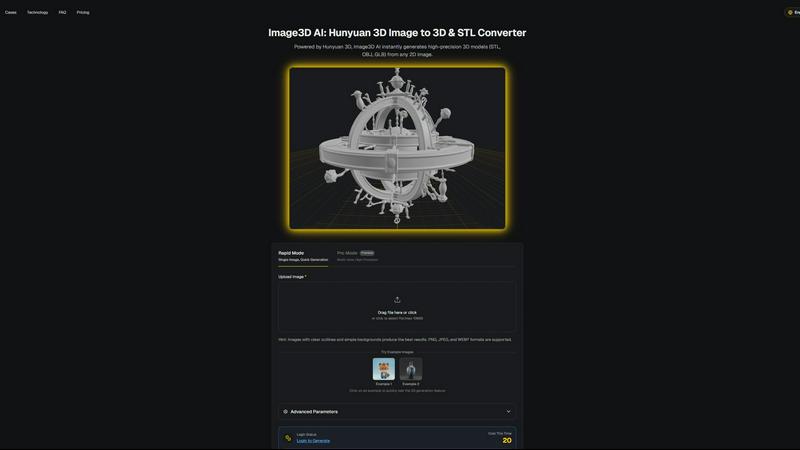
Image3D AI
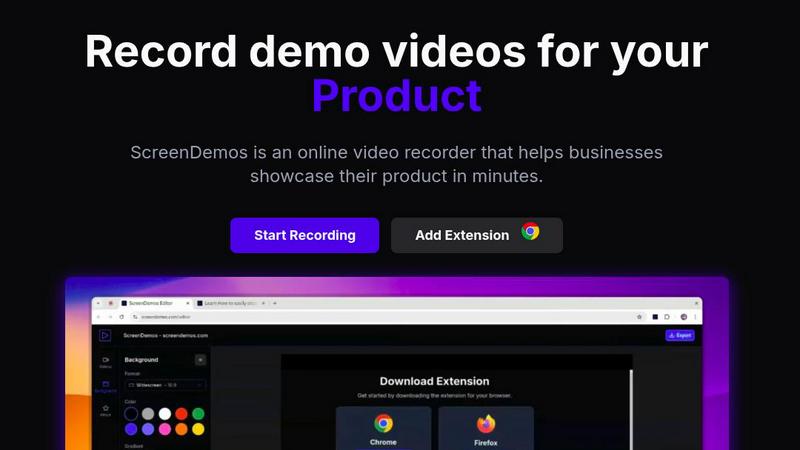
ScreenDemos
Feature Comparison
Image3D AI
Hunyuan 3D Engine Integration
At the core of Image3D AI is its integration with Tencent's Hunyuan 3D engine, a cutting-edge AI model specifically trained for 3D reconstruction. This technology enables the platform to perform sophisticated depth estimation and geometry inference from a single 2D image, generating detailed, high-precision 3D models. This backend engine is what allows for the rapid, sub-60-second conversion times and the production of models with clean topology suitable for professional applications, setting it apart from basic conversion tools.
Multi-Format Export for Seamless Integration
Image3D AI is engineered for compatibility, offering export in industry-standard 3D file formats including STL, OBJ, and GLB. This ensures generated models can be directly imported into downstream software stacks without conversion hassles. STL files are optimized for 3D printing slicers, OBJ files are universally compatible with 3D editing suites like Blender and Maya, and GLB files are the modern standard for web-based viewing, AR applications, and game engines like Unity and Unreal Engine.
Dual Generation Modes (Rapid & Pro)
The platform provides two distinct operational modes to match project requirements and resource constraints. Rapid Mode is designed for speed and simplicity, generating a 3D model from a single image quickly. Pro Mode utilizes multi-view input for a physically accurate reconstruction, delivering higher precision and detail for complex objects. This flexibility allows users to optimize the balance between generation speed and model fidelity based on their specific use case.
PBR Material Support
For game development and realistic rendering workflows, Image3D AI supports Physically Based Rendering (PBR) materials. When generating models, the AI can infer and apply realistic material properties, resulting in assets that are visually accurate and ready for real-time rendering in modern game engines. This feature eliminates the need for manual material setup, further accelerating the asset creation pipeline for developers and digital artists.
ScreenDemos
Browser-Native Recording Engine
ScreenDemos operates entirely within your browser as a lightweight extension, requiring no separate desktop application. This architecture ensures instant access, eliminates complex installation procedures, and guarantees compatibility across all major operating systems including Windows, macOS, and Linux. The recorder captures your screen, system audio, and microphone input directly through the browser's native APIs, providing a stable and resource-efficient recording experience without ever leaving your web workflow.
Automatic Zoom & Pan Effects
The platform intelligently applies professional zoom and pan effects in real-time during your recording. This feature automatically guides the viewer's attention to key areas of your screen, such as button clicks, menu interactions, or specific data points. By automating this typically manual post-production task, ScreenDemos adds a layer of polish and engagement to videos that would otherwise require hours of editing in traditional video software.
Smooth Animated Cursor & Shortcut Hints
Enhance viewer comprehension with a dynamically enlarged, smoothly animated cursor that is easy to follow. Simultaneously, ScreenDemos can display on-screen hints for keyboard shortcuts as you use them. This dual-feature is invaluable for creating clear software tutorials and product demos, as it visually communicates both mouse navigation and keyboard commands, improving the overall learning experience without any post-recording annotation.
Customizable Backgrounds & Branding
Apply custom backgrounds to your screen recordings to align the visual output with your brand identity or specific video style. This feature allows you to replace your native desktop background with a solid color, gradient, or branded image directly within the recording interface. For Pro users, this extends to removing the ScreenDemos watermark, enabling the creation of fully branded, professional assets suitable for public marketing and sales materials.
Use Cases
Image3D AI
Game Development & Rapid Prototyping
Game developers can use Image3D AI to rapidly generate 3D assets from concept art or reference images, drastically speeding up the prototyping phase. The tool's ability to produce models with PBR material support means these assets can be directly imported into engines like Unity or Unreal Engine for immediate testing and iteration, streamlining the pre-production workflow and enabling faster creative validation.
3D Printing & Maker Projects
For 3D printing enthusiasts and professionals, Image3D AI acts as a powerful image-to-STL converter. It transforms logos, sketches, or product photos into watertight, print-ready 3D meshes. The platform's focus on generating clean geometry ensures the resulting STL files are optimized for slicing software, reducing the need for manual repair and preparation before sending a model to the printer.
E-commerce & AR Product Visualization
E-commerce businesses can leverage Image3D AI to convert standard 2D product photos into interactive 3D models. These models can be embedded on product pages for 360-degree viewing or used in Augmented Reality (AR) applications to allow customers to visualize products in their own space. This enhances online shopping experiences, reduces return rates, and provides a significant competitive advantage.
Architectural Visualization & Design
Architects and designers can quickly generate basic 3D massing models or detailed site elements from sketches, floor plans, or inspiration images. This capability saves considerable modeling time from scratch, allowing for faster client presentations, early-stage design exploration, and efficient integration of concept models into more detailed BIM or CAD software workflows.
ScreenDemos
Product Demo & Feature Announcements
Ideal for product managers and developers, ScreenDemos enables the rapid creation of high-quality demo videos to showcase new features or entire product workflows. The automatic effects like zoom and cursor highlighting draw attention to specific UI elements, making it perfect for creating engaging announcement videos for blogs, release notes, or internal team updates, significantly speeding up the communication cycle.
User Onboarding & Tutorial Creation
Support and education teams can leverage ScreenDemos to build intuitive, step-by-step tutorial videos and onboarding sequences. The smooth cursor and shortcut hints make complex processes easy to follow for new users. By embedding these videos in help centers, knowledge bases, or in-app guides, teams can reduce support tickets and improve user adoption rates with scalable visual content.
Marketing & Social Media Content
Marketing professionals can use ScreenDemos to quickly produce compelling social media clips, website explainer videos, and sales collateral. The ability to add custom backgrounds and create polished videos without an editor allows for rapid content iteration. This is crucial for agile marketing teams looking to capitalize on trends, explain product benefits visually, and grow their brand's presence across digital channels.
Internal Training & Process Documentation
For agile teams across all departments, ScreenDemos serves as a powerful tool for internal knowledge sharing. Employees can easily record process walkthroughs, code reviews (for developers), design critiques, or standard operating procedures. The browser-based nature means anyone can contribute to the company's knowledge repository without a steep learning curve, fostering a culture of asynchronous communication.
Overview
About Image3D AI
Image3D AI is a professional-grade platform that revolutionizes the 3D asset creation pipeline by converting static 2D images into production-ready 3D models in seconds. Powered by Tencent's advanced Hunyuan 3D engine, it performs complex technical inference to generate high-precision 3D geometry and textures from a single input image. This AI-powered tool fundamentally democratizes high-fidelity 3D generation, making it accessible to professionals and enthusiasts without requiring deep expertise in traditional 3D modeling software like Blender or Maya. Its core value proposition lies in its seamless integration into diverse, tech-heavy workflows, offering multi-format export capabilities that ensure immediate compatibility with industry-standard tools. Whether for rapid prototyping in game development, creating watertight meshes for 3D printing, generating assets for AR/VR experiences, or building interactive 3D models for e-commerce, Image3D AI bridges the gap between 2D concepts and 3D reality with unprecedented speed, precision, and workflow efficiency.
About ScreenDemos
ScreenDemos is a browser-native screen recording platform engineered to streamline the creation of professional-grade video content directly within your web environment. It functions as a lightweight browser extension, eliminating the need for bulky, platform-dependent desktop software installations. The core value proposition lies in its ability to automate complex post-production effects during the recording process itself. Users can generate engaging demos, tutorials, and social media clips featuring automatic zoom effects, smooth cursor animations, and custom backgrounds without any manual editing skills. Built for modern, agile teams, it integrates seamlessly into the workflows of product, marketing, design, and support departments who rely on visual communication. Its architecture prioritizes cross-platform compatibility, operating across major browsers like Chrome and Firefox on Windows, macOS, and Linux systems. By leveraging the browser as its runtime, ScreenDemos transforms the technical process of video production into a simple, efficient, and integrated task, enabling professionals to create high-impact visual assets in minutes rather than hours.
Frequently Asked Questions
Image3D AI FAQ
What image formats are supported for conversion?
Image3D AI supports common raster image formats including PNG, JPEG, and WEBP. For optimal results, uploaded images should be under 10MB in size. The platform works best with high-contrast images that have clear subject outlines and simple, uncluttered backgrounds to aid the AI in accurate geometry inference.
What is the difference between Rapid Mode and Pro Mode?
Rapid Mode is designed for speed, generating a 3D model from a single input image in about 60 seconds. It's ideal for logos, sketches, or simple objects. Pro Mode requires multiple views (e.g., front, side, back) of an object to perform a more accurate, physically-based 3D reconstruction. This mode yields higher precision and detail, making it suitable for converting complex real-world objects like shoes or consumer products.
Which 3D file format should I download?
The choice depends on your downstream application. Download the STL format for 3D printing, as it is the standard mesh format for slicer software. Choose OBJ for further editing in traditional 3D software like Blender, Maya, or 3ds Max, as it supports textures and is widely compatible. Select GLB for web display, AR experiences, or game engines, as it is a compact, single-file format that contains the model, textures, and material data.
How can I improve the quality of my generated 3D model?
To maximize conversion quality, start with a high-quality source image that has good lighting, clear edges, and a simple background. For object reconstruction, using Pro Mode with multiple, consistent views will yield the most accurate result. Understanding the tool's parameters, such as selecting the "Geometry" mode for 3D printing (which focuses on mesh integrity over textures), can also tailor the output to your specific workflow needs.
ScreenDemos FAQ
Is ScreenDemos privacy-friendly?
Yes, ScreenDemos is designed with privacy as a core principle. The platform does not collect or store your personal data or recording content without your explicit action. All video processing for automated effects happens locally within your browser session where possible. You maintain full control, choosing to save final videos directly to your device or to your private account on the ScreenDemos website. We recommend avoiding recording sensitive information as a general best practice.
What devices and browsers are supported?
ScreenDemos is built for maximum compatibility and operates as a browser extension. It is fully supported on all major browsers that support extensions, primarily Google Chrome and Mozilla Firefox. Because it runs in the browser, it is compatible with all underlying operating systems, including Windows, macOS, and Linux, ensuring a consistent experience across different tech stacks and hardware.
Why does the extension require certain permissions?
The ScreenDemos extension requires permissions to access your tabs, screen, and microphone to provide its core functionality. These permissions are standard for screen recording software and are necessary to capture your browser tabs, entire screen, or application windows, as well as system and microphone audio. These permissions are used solely for the recording function within your browser and are not abused.
Can I edit my videos after recording?
Yes, ScreenDemos includes basic editing capabilities within its workflow. After you stop a recording, you are taken to a preview interface where you can trim the beginning and end of your clip to remove any unwanted footage. This integrated step allows for quick refinements before finalizing and downloading or sharing your video, maintaining the platform's all-in-one, efficient ethos.
Alternatives
Image3D AI Alternatives
Image3D AI is a professional-grade 3D generation platform that automates the conversion of 2D images into production-ready 3D models. It falls within the design tools category, specifically targeting workflows for 3D printing, game development, and digital content creation. Its core appeal is streamlining a traditionally complex technical process into a fast, accessible service. Users often explore alternatives for various technical and operational reasons. These can include specific budget constraints, the need for different feature sets like animation or texture painting, or requirements for integration with a particular software stack or platform. Evaluating the total cost of ownership and output quality for one's specific use case is crucial. When assessing an alternative solution, key technical considerations should guide the decision. Prioritize the engine's reconstruction accuracy, the range of supported export formats for your pipeline, and the tool's ability to generate clean, manifold meshes suitable for your end application, be it real-time rendering or additive manufacturing.
ScreenDemos Alternatives
ScreenDemos is a browser-native screen recording platform in the content creation and design tools category. It automates professional video effects directly within your browser, eliminating the need for separate editing software and catering to agile, tech-stack oriented teams. Users often evaluate alternatives for several reasons. These include specific pricing models, the need for advanced native desktop features, different collaboration workflows, or requirements for integrations outside the browser ecosystem. Platform compatibility and deployment method are also key decision points. When assessing alternatives, consider your primary tech stack and integration needs. Key factors include whether a browser-based or desktop-native architecture fits your workflow, the depth of automated versus manual editing control required, and compatibility with your team's operating systems and existing software tools.