
KeywordKick vs MemMachine
Side-by-side comparison to help you choose the right product.

KeywordKick
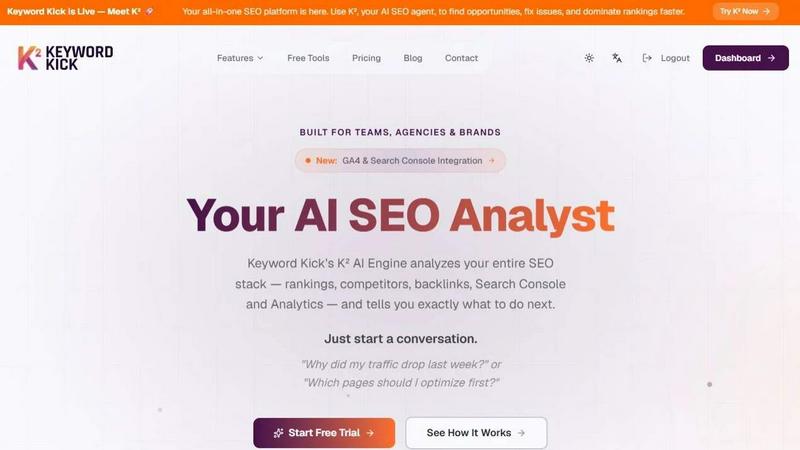
KeywordKick's K² AI agent integrates your entire SEO tech stack to deliver clear, actionable insights and recommendations.
Last updated: April 13, 2026

MemMachine
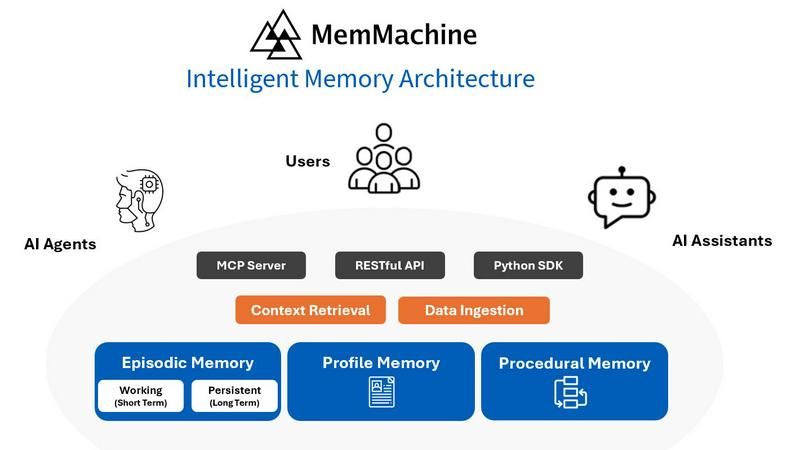
MemMachine is an open-source memory layer that enables AI agents to learn, store, and recall user preferences.
Last updated: February 28, 2026
Visual Comparison
KeywordKick
MemMachine
Feature Comparison
KeywordKick
K² AI SEO Agent
The K² AI Agent is the intelligent interface of the platform, acting as a conversational analyst. Instead of navigating complex reports, users can ask direct questions about their SEO performance. The agent analyzes connected data from GA4, Search Console, rankings, and backlinks to provide plain-English insights and prioritized action items, turning data sprawl into a clear roadmap for execution.
Unified SEO Data Workspace
This feature consolidates your entire SEO tech stack into a single dashboard. It seamlessly integrates data from Google Analytics 4, Google Search Console, keyword rank tracking, backlink profiles, and technical site audits. This eliminates the need to cross-reference multiple tools, providing a comprehensive, real-time view of site health, keyword performance, and competitive positioning in one location.
AI-Powered Rank Tracking & SERP Analysis
Go beyond basic position tracking. This module monitors daily keyword rankings with historical trends and competitive context. It specifically tracks visibility across critical SERP features like Featured Snippets and "People Also Ask" boxes. The system compares your positions against selected competitors to identify content gaps and opportunities for improved visibility.
Automated Site Health Auditing
The platform includes a comprehensive technical SEO auditor that continuously monitors your website. It generates a clear Site Health Score (e.g., 94/100), categorizing issues as Passed, Warnings, or Critical. This provides teams with an immediate, prioritized list of technical problems to fix, from meta tags to page speed, ensuring the foundation for SEO success is solid.
MemMachine
Persistent Memory Layer
MemMachine's core feature is its ability to maintain a persistent memory of user interactions. This allows AI applications to recall past preferences and data, ensuring continuity across sessions. This feature is essential for creating intelligent systems that adapt to user behavior over time.
Contextual Understanding
With MemMachine, AI agents can understand the context of conversations more effectively. This capability enables them to engage users with a deeper understanding of their history and preferences, leading to more relevant and human-like interactions.
Easy Integration
MemMachine is designed to be easily integrated into existing AI applications and frameworks. Developers can leverage its robust API to enhance their systems without the need for extensive modifications, allowing for rapid deployment and scalability.
Open-Source Flexibility
As an open-source solution, MemMachine offers developers the flexibility to customize and extend its functionality to meet specific project needs. This encourages innovation and collaboration within the developer community, leading to continuous improvements and new features.
Use Cases
KeywordKick
Diagnosing Organic Traffic Drops
When a sudden traffic decline occurs, SEO professionals can query the K² agent directly. The AI cross-references Analytics traffic data with Search Console impressions/clicks, ranking fluctuations, and recent site changes to pinpoint the root cause—whether it's a ranking drop for key terms, a technical indexing issue, or a competitor surge—and recommends specific recovery actions.
Prioritizing Page Optimization Efforts
Marketing teams can ask K², "Which pages should I optimize first?" The agent analyzes ranking data, search volume, intent, and current performance metrics across all site pages. It then returns a prioritized list of URLs with the highest potential ROI for optimization, focusing efforts where they will have the greatest impact on traffic and conversions.
Conducting Competitive Content Gap Analysis
SEO agencies managing client portfolios can use the competitor analysis features to benchmark performance. By connecting competitor domains, the platform identifies keywords where competitors rank highly but the client does not. This reveals strategic content gaps and opportunities to create or improve content to capture valuable, missed organic traffic.
Streamlining Client Reporting for Agencies
For digital agencies, the unified dashboard and AI insights simplify reporting. Instead of manually compiling data from 5+ tools, they have one source of truth. The clear Site Health Score, trend graphs, and AI-generated recommendations can be easily packaged into client reports, saving hours of manual work and providing clear, actionable narratives.
MemMachine
Personalized Chatbots
MemMachine can be used to create chatbots that remember user interactions, preferences, and previous queries. This allows chatbots to provide tailored responses, improving user satisfaction and engagement.
Intelligent Customer Support
In customer support applications, MemMachine can enhance agents by recalling previous customer interactions, ensuring that agents provide consistent and informed responses. This leads to faster resolution times and improved customer experience.
Healthcare Assistants
AI agents in healthcare can utilize MemMachine to remember patient histories and preferences. This capability allows agents to provide personalized care recommendations, enhancing the overall patient experience and improving health outcomes.
Educational Tools
MemMachine can be implemented in educational applications to track students' progress and learning preferences. This ensures that the learning experience is customized to each student, fostering better engagement and knowledge retention.
Overview
About KeywordKick
KeywordKick is an AI-powered SEO execution platform engineered to replace fragmented data dashboards with actionable intelligence. At its core is K², a conversational AI agent that serves as your dedicated SEO analyst. The platform is built for a modern tech stack, offering deep, native integrations with essential data sources like Google Search Console and Google Analytics 4, alongside rank tracking, backlink, and site audit data. By unifying these disparate signals into a single workspace, KeywordKick's K² engine performs a holistic analysis of your entire SEO ecosystem. It cuts through the noise to deliver clear, prioritized, and executable recommendations. Designed for founders, in-house marketing teams, and SEO agencies, KeywordKick shifts the focus from passive data monitoring to active growth. Users can simply ask questions like "Why did my traffic drop?" or "What should I optimize first?" and receive direct, context-aware answers, enabling faster decision-making and demonstrable improvements in organic rankings and traffic.
About MemMachine
MemMachine is a cutting-edge open-source memory layer designed to enhance AI agents and applications, transforming them into intelligent, personalized assistants. By enabling applications to learn, store, and recall data from previous interactions, MemMachine significantly enriches the context and relevance of every user engagement. Unlike traditional AI systems that reset at the beginning of each session, MemMachine establishes a persistent memory that evolves with user interactions, creating a sophisticated and tailored experience. This capability is crucial for developers aiming to create applications that require continuity and depth, such as personalized chatbots, intelligent customer service agents, or any AI-driven interface that benefits from historical user data. By leveraging MemMachine, teams can develop solutions that not only respond accurately but also anticipate user needs, fostering deeper connections and greater satisfaction.
Frequently Asked Questions
KeywordKick FAQ
What data sources does KeywordKick integrate with?
KeywordKick is built for integration with core components of the modern SEO and analytics tech stack. It connects natively with Google Search Console and Google Analytics 4 for official performance and traffic data. Additionally, the platform incorporates data from its own rank tracking, backlink analysis, and site audit engines, unifying everything into a single analysis environment for the K² AI agent.
How does the K² AI Agent differ from a standard SEO dashboard?
Standard dashboards present raw data, leaving interpretation and prioritization to the user. The K² AI Agent is an active analyst. You interact with it conversationally, asking specific questions about your SEO performance. It then synthesizes all connected data to provide direct answers, causal explanations, and a clear list of next steps, moving from data presentation to guided execution.
Is KeywordKick suitable for small businesses or solo founders?
Yes, absolutely. KeywordKick is designed for anyone seeking execution over data overload. For founders and small teams with limited SEO bandwidth, the AI agent's ability to provide clear, prioritized actions is invaluable. It eliminates the need for deep expertise to interpret complex data, making professional-grade SEO insights accessible and actionable for smaller operations.
How does the platform handle technical SEO monitoring?
KeywordKick includes an automated site audit tool that continuously crawls your website. It checks for hundreds of technical factors, from crawlability and indexation to on-page elements like H1 tags and meta descriptions. Issues are categorized by severity and compiled into a single Site Health Score, giving teams a constant, prioritized view of their technical SEO foundation.
MemMachine FAQ
What is MemMachine?
MemMachine is an open-source memory layer designed to enhance AI applications by allowing them to learn, store, and recall data from user interactions, creating more personalized and context-aware experiences.
How does MemMachine improve AI interactions?
By maintaining persistent memory across sessions, MemMachine allows AI agents to understand user preferences and context better, leading to more relevant and empathetic interactions.
Can MemMachine be integrated with existing applications?
Yes, MemMachine is designed for easy integration with existing AI frameworks and applications, enabling developers to enhance their systems with minimal effort.
Is MemMachine a paid product?
MemMachine is an open-source solution, which means it is available for free. Developers can access the source code, customize it, and contribute to its evolution within the community.
Alternatives
KeywordKick Alternatives
KeywordKick is an AI-driven SEO execution platform that moves beyond traditional analytics dashboards. It falls into the category of conversational AI agents for SEO, designed to provide direct, actionable recommendations by synthesizing data from connected sources like Google Search Console and analytics platforms. Users often explore alternatives for several practical reasons. These can include budget constraints, specific feature requirements not covered by the core offering, or the need for integration with a particular existing tech stack, such as a specific CRM, project management tool, or data warehouse. When evaluating other solutions, prioritize platforms that offer robust API connectivity and seamless compatibility with your essential data sources. The ideal alternative should not only provide insights but also fit cleanly into your workflow, enabling clear action items without creating data silos or additional reporting overhead.
MemMachine Alternatives
MemMachine is an open-source memory layer that belongs to the category of AI-enhancing tools, specifically designed to improve personalized interactions within applications. It allows AI agents to learn, store, and recall user preferences, thereby creating a more engaging experience. However, users often seek alternatives due to various reasons such as pricing models, specific feature sets, or compatibility with different platforms and development environments. When considering an alternative, it is essential to evaluate the flexibility of deployment options, integration capabilities with existing technologies, and the overall scalability of the solution. A suitable alternative should also offer robust memory features to ensure continuity in user interactions, enhancing personalization and context-awareness.