
Magic Hour vs Nani
Side-by-side comparison to help you choose the right product.

Magic Hour
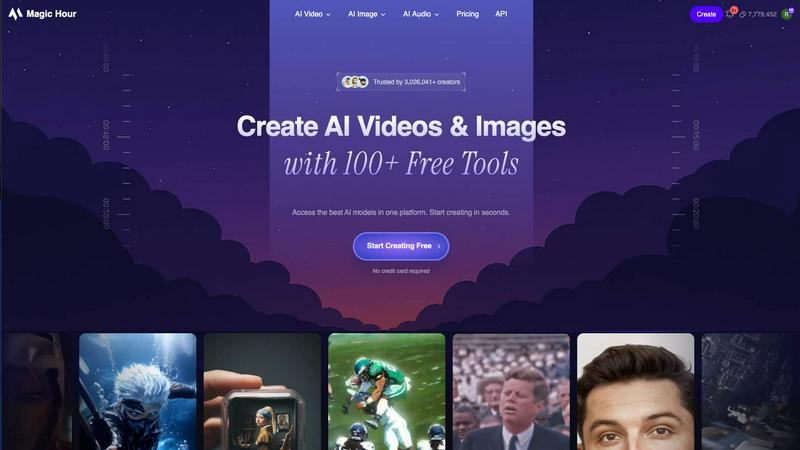
Magic Hour is a unified AI studio API for developers to integrate video, image, and audio generation into their tech.
Last updated: March 4, 2026

Nani
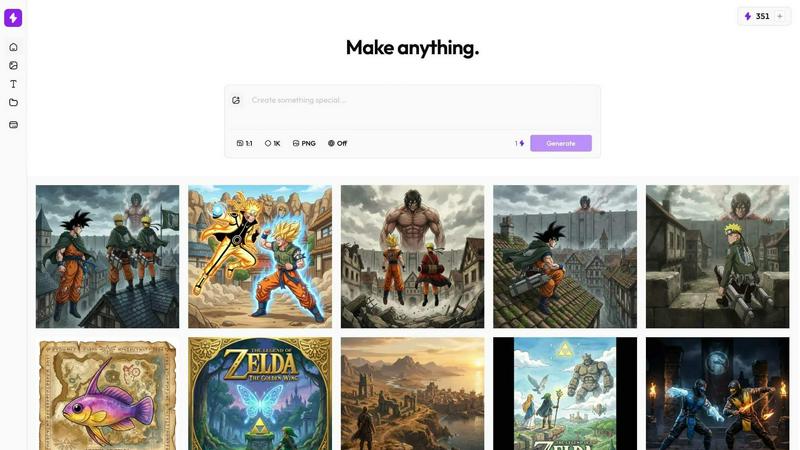
Nani streamlines AI image generation by organizing prompts and images into reusable sets for effortless creativity.
Last updated: February 27, 2026
Visual Comparison
Magic Hour
Nani
Feature Comparison
Magic Hour
Unified AI Studio API
Magic Hour provides a single, cohesive API endpoint that grants access to its entire suite of over 100 AI tools. Developers can integrate advanced media generation capabilities like text-to-video, image-to-video, and face swapping into their own applications using drop-in SDKs for Node.js, Python, Go, and Rust. This unified API architecture simplifies the tech stack, allowing for installation, authentication, and first generation in under 60 seconds, with scalable, usage-based pricing that supports traffic from 10 to 10 million requests.
Text-to-Video & Video-to-Video Generation
The platform leverages state-of-the-art generative models to create cinematic 4K video scenes directly from text descriptions. Furthermore, its video-to-video feature allows users to apply new artistic styles and effects to existing footage. This enables rapid content variation and brand consistency, transforming source material into multiple engaging formats suitable for ads, social clips, and presentations without the need for reshoots or complex editing software.
AI-Powered Image & Audio Suite
Beyond video, Magic Hour includes a full spectrum of image and audio manipulation tools. This encompasses AI image generation and editing via text prompts, professional AI headshot generation, image upscaling, and background removal. For audio, it offers voice cloning, generation, and changing, as well as tools like lip sync to perfectly match new audio to video footage, creating a fully integrated media production environment.
Scalable Template & Asset System
Magic Hour offers a library of over 10,000 pre-designed templates that are perfectly sized for various social media channels and marketing formats. This system, combined with the AI UGC (User-Generated Content) generator and batch asset creation features, allows teams and agencies to personalize and scale content production efficiently. Users can drag, drop, and publish, enabling the rapid deployment of live campaigns and thousands of unique assets for paid media and experiential marketing.
Nani
User-Friendly Interface
Nani boasts a simple, intuitive interface that minimizes the learning curve. Users can jump straight into the creative process without facing complex navigation or overwhelming options, making it accessible for everyone, from beginners to seasoned professionals.
Reusable Prompt Sets
Users can group images and save prompts as reusable sets, ensuring that consistent characters, styles, and workflows are maintained across all generations. This feature significantly reduces the time spent on re-creating prompts, allowing for a more fluid creative experience.
Organized Folders
Nani provides powerful organizational tools, enabling users to create folders, filter by favorites, and bulk-select images. This keeps your library tidy and manageable, ensuring that you can quickly find and access specific images as your workflow scales.
Seamless Workflow Integration
With Nani, users can drag and drop images as references, easily share creations via public links, and allow others to recreate their work in their own accounts. This collaborative feature enhances the creative process and fosters community engagement.
Use Cases
Magic Hour
Scalable Marketing & Ad Campaigns
Marketing teams and agencies use Magic Hour to power live campaigns by generating personalized video ads and social media content at scale. The API facilitates virtual try-ons, face-swapped endorsements, and region-specific edits, driving higher engagement. The ability to quickly produce thousands of unique assets from a single template or prompt integrates directly into agile marketing tech stacks for rapid A/B testing and deployment.
Developer-Led Media Integration
Developers building content platforms, editing tools, or social apps integrate Magic Hour's API to ship advanced AI video and image features without building ML infrastructure. By calling endpoints for text-to-video or image upscaling, they can enhance their product's capabilities in minutes, offering users professional media generation powered by a reliable, scalable backend with a 99.9% uptime SLA.
Rapid Corporate & Training Content
Internal communications and L&D teams utilize Magic Hour to quickly produce consistent training videos, onboarding materials, and corporate announcements. The talking photo and lip sync tools can animate presentations, while the template system ensures brand compliance. This eliminates the cost and delay of traditional video production, allowing for easy updates and iterations directly from a web browser.
Personalized Social Media & UGC
Content creators and influencers leverage the platform's free tools to produce a high volume of engaging content. They can use face swap for humorous skits, apply video-to-video for trendy styles, generate AI headshots for professional profiles, and create animations from images. This democratizes high-production-value content creation, making it accessible without expensive software or equipment.
Nani
Graphic Design Projects
Graphic designers can leverage Nani to efficiently generate multiple design iterations. By using reusable prompt sets, they can maintain stylistic consistency across various projects while saving time on the prompt-writing process.
Social Media Content Creation
Content creators can utilize Nani to produce eye-catching images for social media platforms quickly. The intuitive interface allows for rapid generation of visuals tailored to specific campaigns, enabling creators to keep their content fresh and engaging.
Art and Illustration
Artists can benefit from Nani by creating a library of reusable prompts that reflect their unique styles. This enables them to generate illustrations efficiently without losing the essence of their artistic voice across different pieces.
Educational Materials
Educators and instructional designers can use Nani to create visual aids and illustrations for teaching materials. The ability to organize images and prompts allows them to produce consistent educational content that enhances the learning experience.
Overview
About Magic Hour
Magic Hour is a comprehensive, browser-based AI studio engineered to consolidate professional-grade media creation into a single, accessible platform. It serves as a unified tech stack for generating, editing, and enhancing videos, images, and audio, eliminating the dependency on disparate, complex software and hardware. The platform is architected for a broad user base, from solo creators and digital marketers to development teams and large-scale agencies, by providing scalable, API-driven tools. Its core value proposition lies in integrating over 100 specialized AI models—including Stable Video Diffusion, Flux, and others—into a cohesive workflow accessible via a web interface or a robust API. This allows users to initiate projects from text prompts, images, or video clips and transform them into polished, shareable content for social media, advertising, training, and more. Magic Hour is built for rapid iteration and compatibility, supporting seamless integration into existing production pipelines and enabling features like AI Face Swap, Lip Sync, and style transfer without requiring machine learning expertise.
About Nani
Nani is an advanced workflow tool specifically crafted to enhance the AI image generation experience for users engaged in repetitive tasks. Unlike conventional AI image tools that focus on one-off creations, Nani is engineered to streamline workflows, allowing users to sidestep the tedious process of rewriting prompts and navigating through endless image feeds. Built on Google's state-of-the-art Nano Banana Pro (Gemini) technology, Nani delivers a comprehensive solution tailored for artists, designers, and content creators seeking to amplify their creative processes. Its user-friendly interface is designed for rapid image generation, enabling users to concentrate on creativity rather than administrative tasks. With features like reusable prompt sets and organized folders, Nani promotes consistency and efficiency, making it a valuable asset for anyone involved in regular image creation.
Frequently Asked Questions
Magic Hour FAQ
What is Magic Hour's primary tech stack compatibility?
Magic Hour is a cloud-native, browser-based platform with a backend built for broad compatibility. For direct integration, it offers official, well-documented SDKs for Node.js, Python, Go, and Rust. Its RESTful API can be consumed by any programming language capable of making HTTP requests, and its web studio requires only a modern browser, making it OS-agnostic for end-users.
Do I need machine learning expertise to use the API?
No, machine learning expertise is not required. Magic Hour's API is designed as a developer-friendly abstraction layer over complex AI models. You only need basic programming knowledge to install the SDK, authenticate with an API key, and make calls to endpoints like image-to-video or face-swap. The platform handles all model training, inference, and optimization on its infrastructure.
How does Magic Hour handle scalability and high traffic?
The platform is engineered for elastic scalability. It operates on a usage-based pricing model and an infrastructure designed to automatically scale with demand, supporting from 10 to over 10 million requests. Magic Hour guarantees consistent performance and offers a 99.9% uptime Service Level Agreement (SLA), making it suitable for both startups and enterprise-grade applications with fluctuating traffic loads.
Can I use Magic Hour for commercial projects?
Yes, Magic Hour is built for commercial use. Its tools and API are specifically designed to help businesses, creators, and agencies produce content for ads, social media, client work, and integrated applications. Users retain the rights to the content they generate, and the scalable plans and API pricing are structured to support commercial production at any volume.
Nani FAQ
How does Nani enhance the AI image generation process?
Nani streamlines the workflow by allowing users to save reusable prompts, organize their images, and generate content quickly, thus minimizing the time spent on repetitive tasks and maximizing creativity.
Is there a learning curve associated with using Nani?
No, Nani is designed with a user-friendly interface that allows users to start creating without any significant learning curve. It is intuitive enough for beginners while still robust for experienced users.
What technology does Nani use for image generation?
Nani is built on Google's advanced Nano Banana Pro (Gemini) technology, which ensures high-quality image generation with customizable resolutions and aspect ratios.
How does the credit-based billing system work?
Nani operates on a simple credit-based billing model, where users pay only for what they generate. There are no subscriptions or commitments, making it cost-effective and flexible for users. Each generation costs approximately 30 cents for 1K or 2K resolution images.
Alternatives
Magic Hour Alternatives
Magic Hour is a browser-based AI studio for creating professional videos and images. It consolidates a wide array of generative AI tools into a single platform, streamlining workflows for content creation, video production, and image generation. This all-in-one approach is designed for rapid iteration and accessibility directly from a web browser. Users often explore alternatives for several technical and operational reasons. These can include specific budget constraints, the need for different pricing models, or requirements for particular advanced features not covered in a consolidated suite. Platform compatibility is another key factor, as some teams may require dedicated desktop applications, specific API access for custom integrations, or tools that fit into an existing enterprise software stack. When evaluating other solutions, consider the core technology stack and its integration capabilities. Assess whether the tool offers the necessary AI model specialization, such as superior text-to-video or image upscaling engines. Also, examine its compatibility with your current workflow tools, its output format support for your distribution channels, and the scalability of its rendering and collaboration features for team environments.
Nani Alternatives
Nani is a cutting-edge workflow tool in the category of AI assistants, specifically designed to streamline the process of AI image generation. It organizes prompts and images into reusable sets, making it ideal for artists, designers, and content creators who frequently require consistent outputs. Users often seek alternatives to Nani for various reasons, including pricing concerns, specific feature requirements, or platform compatibility. When searching for an alternative, it's essential to consider factors such as ease of use, the ability to manage and organize creative assets, and the overall efficiency of the image generation process to ensure it meets your creative needs.