
OGimagen vs quickseo.ai
Side-by-side comparison to help you choose the right product.

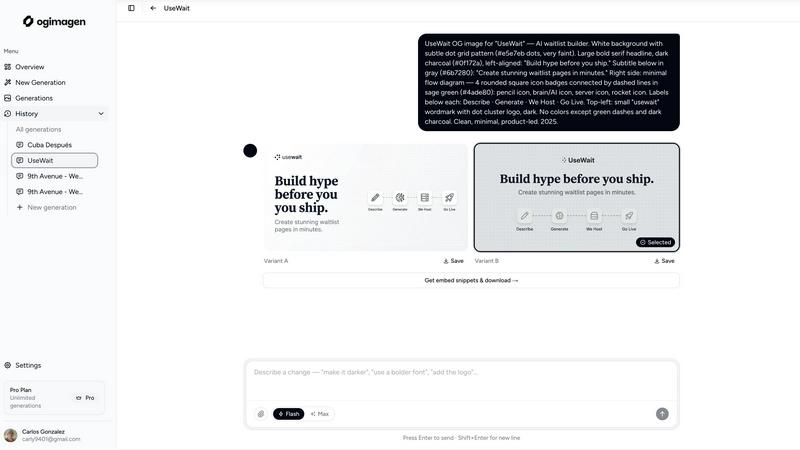
OGImagen instantly generates and delivers optimized Open Graph images with ready-to-paste meta tags for your framework.
Last updated: March 11, 2026

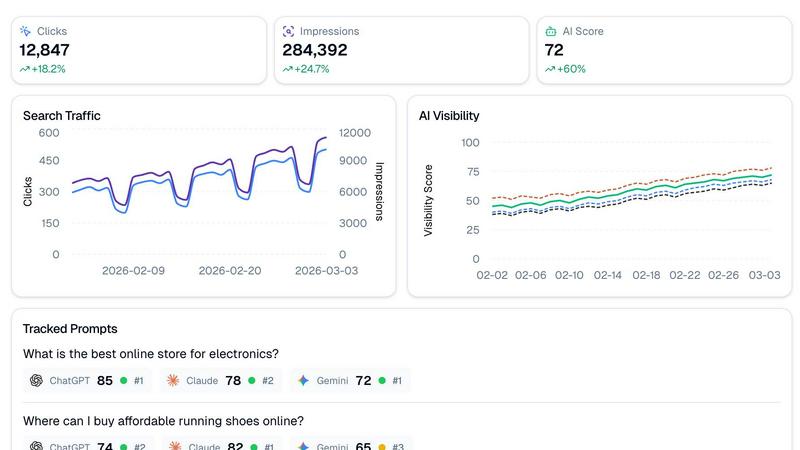
QuickSEO.ai integrates Google Search Console with AI visibility tracking across ChatGPT, Claude, and Gemini in a unified dashboard.
Last updated: March 11, 2026
Visual Comparison
OGimagen
quickseo.ai
Feature Comparison
OGimagen
AI-Powered Multi-Platform Generation
OGimagen uses artificial intelligence to create two unique visual variants (A & B) for your content based on a simple title and description input. The AI automatically tailors the output to meet the exact pixel dimensions and aspect ratios required by major social platforms. This means a single generation yields three optimized images: a standard Open Graph image for Facebook and messaging apps, a Twitter Card, and a LinkedIn Card, ensuring perfect display everywhere without manual resizing or cropping.
Framework-Specific Meta Tag Snippets
After generation, OGimagen provides ready-to-paste code snippets tailored to your project's stack. Free users receive standard HTML meta tags, while Pro users unlock specialized snippets for modern frameworks including Next.js (App Router and Pages Router), Astro, SvelteKit, and Remix. This feature eliminates the guesswork in implementing openGraph and twitter: metadata objects, ensuring correct integration and faster shipping.
MCP (Model Context Protocol) Integration
A flagship feature for Pro users, MCP integration allows developers to generate and manage OG images without leaving their code editor. By connecting OGimagen to MCP-compatible tools like Claude Code, Cursor, or Windsurf, you can trigger image creation, list previous generations, and fetch embed snippets directly from your IDE, streamlining the development workflow and maintaining focus.
Global CDN Hosting & Asset Management
All generated images are automatically uploaded and served via Cloudflare's global CDN, ensuring fast, reliable delivery worldwide. Pro plans include permanent hosting, while one-time packs offer 45 or 90-day hosting. This managed infrastructure removes the burden of storing, optimizing, and serving image assets from your own servers, simplifying deployment and improving page performance.
quickseo.ai
Unified Search & AI Dashboard
This core feature seamlessly integrates Google Search Console data with AI visibility tracking, presenting clicks, impressions, CTR, and ranking trends alongside AI performance metrics in a single interface. It eliminates the need to juggle multiple platforms, providing a holistic view of your organic performance across the entire search spectrum, from traditional queries to conversational AI prompts.
AI Visibility Scoring & Prompt Tracking
The platform automatically generates daily visibility scores for your brand across ChatGPT, Claude, and Gemini, tracking performance trends over time. Users can define and monitor specific prompts (e.g., "best online store for electronics") to see exactly where their brand ranks in AI-generated answers, providing actionable insights into conversational search visibility.
Sentiment Analysis & Cited Page Monitoring
QuickSEO.ai goes beyond mere mention tracking by analyzing the sentiment (positive, neutral, negative) of AI chatbot responses regarding your brand. Furthermore, it identifies which specific pages on your website are cited as sources by these AI models, allowing you to understand which content is authoritative and driving AI-driven referrals.
Page Group Organization & Competitor Tracking
Organize your website pages into logical groups (e.g., blog posts, product pages, documentation) to analyze which sections drive the most search and AI traffic. The tool also automatically extracts and lists competitor brands that appear alongside yours in AI responses, providing clear competitive intelligence within your niche.
Use Cases
OGimagen
Rapid Prototyping for Development Teams
Development teams and solo developers can instantly generate professional social previews for new features, landing pages, or blog posts during the build phase. By using the MCP integration or the web tool, they can iterate on designs and immediately copy-paste the correct meta tags into their components, significantly speeding up the development and staging process without needing a designer.
Content Marketing & Blog Management
Content creators and marketing teams can ensure every new blog post, article, or news update shared on social media has a unique, engaging preview image. By simply entering the post's title and description, they can generate on-brand visuals that improve click-through rates, all without relying on graphic design software or waiting for a designer's availability.
SaaS Product Launch & Documentation
SaaS companies launching new products or updating documentation can use OGimagen to create consistent, polished link previews for every feature announcement, changelog, or help article shared in communities like Twitter, LinkedIn, or Discord. This maintains a professional brand image and drives engagement from shared links in release notes and community updates.
Agency Workflow for Client Projects
Digital agencies managing multiple client websites can standardize their OG image creation process. OGimagen allows them to quickly generate client-specific images by adjusting brand colors and styles, then seamlessly implement them across different frameworks (Next.js, Astro, etc.) used for various client projects, ensuring quality and saving billable hours.
quickseo.ai
SEO Agencies Managing Client Portfolios
Agencies can leverage quickseo.ai to provide enhanced reporting for clients, demonstrating value not just in Google rankings but also in emerging AI search visibility. The unified dashboard allows for efficient management of multiple accounts, tracking branded vs. non-branded performance and proving ROI in a shifting search landscape.
E-commerce Brands Optimizing for Commercial Queries
Online retailers can track rankings for key commercial prompts in AI chatbots, such as "where to buy affordable running shoes." By monitoring their position and sentiment, they can optimize product pages and content to capture high-intent AI-driven traffic, directly impacting sales opportunities.
SaaS Companies Building Brand Authority
Software companies can use the cited page monitoring and sentiment analysis to identify which help documentation, blog posts, or landing pages are referenced by AI. This informs content strategy to strengthen brand authority, ensure accurate AI representation, and drive qualified sign-ups from AI search results.
Content Teams Driving Organic Growth
Content marketing teams can analyze page group performance to see which blog sections or content hubs generate the most impressions and AI citations. This data-driven approach helps prioritize content creation, update existing pieces for better visibility, and align topics with what users are asking AI assistants.
Overview
About OGimagen
OGimagen is an AI-powered developer tool engineered to generate production-ready Open Graph (OG) images and social cards in seconds. It solves a critical yet often tedious front-end task: creating visually compelling and technically correct preview images for shared links. The platform is built for developers, content teams, and indie makers who need to ensure their web pages, blog posts, or applications look professional when shared on platforms like Facebook, X (Twitter), LinkedIn, Discord, and Slack. Its core value proposition lies in automating the entire workflow—from AI image generation to framework-specific meta tag delivery—within a developer-centric ecosystem. By integrating directly into modern coding workflows via MCP (Model Context Protocol) for editors like Cursor and Claude Code, OGimagen eliminates context switching. It ensures pixel-perfect compliance with each platform's unique specifications (1200x630 for OG, 1200x600 for Twitter, 1200x627 for LinkedIn) and delivers globally cached images via Cloudflare's CDN for instant load times. This tool is not just an image generator; it's an infrastructure layer for your site's social identity, designed to boost click-through rates by ensuring every shared link is backed by a high-quality, on-brand preview.
About quickseo.ai
quickseo.ai is a comprehensive analytics platform engineered for the modern search landscape, unifying traditional SEO performance with critical AI visibility metrics. It integrates directly with Google Search Console to provide foundational search analytics, while simultaneously tracking a brand's presence and performance across leading AI chatbots like OpenAI's ChatGPT, Anthropic's Claude, and Google's Gemini. This dual-data approach addresses a fundamental gap for marketers and SEO professionals, as AI becomes a primary consumer search source. The platform is built for technical marketers, SEO agencies, and growth teams who need to move beyond guesswork and make data-driven decisions to capture traffic from both conventional and AI-powered search. Its core value proposition is delivering a single, unified dashboard where you can monitor clicks, impressions, and rankings from Google alongside daily AI visibility scores, prompt rankings, and sentiment analysis, ensuring no traffic opportunity is missed in the evolving digital ecosystem.
Frequently Asked Questions
OGimagen FAQ
What is the difference between Starter, Growth, and Pro plans?
The Starter plan is a one-time purchase of 10 generations with 45-day CDN hosting. The Growth plan is also one-time, offering 25 generations and 90-day hosting. The Pro plan is a monthly subscription providing 50 generations per month, permanent CDN hosting, and exclusive access to MCP integration for editor workflows. All plans include both AI image variants and framework snippets, with Pro offering priority queue access.
What happens when my CDN hosting expires on a one-time plan?
When the CDN hosting period (45 or 90 days) expires on a Starter or Growth pack, the generated images will no longer be served from the OGimagen CDN. The image URLs will return an error, which will cause social platforms to show a broken or default image preview. To maintain the links, you must regenerate new images or upgrade to a Pro plan for permanent hosting before the expiry date.
What is MCP integration and which tools support it?
MCP (Model Context Protocol) integration allows OGimagen to connect directly to your code editor, enabling you to generate images and fetch code snippets via the editor's AI assistant. This is supported in any MCP-compatible tool, including Claude Code, Cursor, Windsurf, and others. It lets you manage OG images entirely within your development environment.
Which frameworks are supported for meta tag snippets?
OGimagen provides ready-to-paste meta tag snippets for a wide range of modern frameworks. This includes Next.js (for both the App Router and Pages Router), Astro, SvelteKit, and Remix. A plain HTML fallback snippet is always included for all users, ensuring compatibility with any web project.
quickseo.ai FAQ
How does quickseo.ai track rankings in AI chatbots?
Quickseo.ai uses proprietary technology to simulate queries and analyze responses from major AI platforms like ChatGPT, Claude, and Gemini. It processes these responses to identify brand mentions, determine ranking position for tracked prompts, assess sentiment, and extract cited source URLs, providing a structured data feed of your AI visibility.
What is the difference between branded and non-branded tracking?
Branded tracking focuses on keywords and prompts that include your company or product name (e.g., "quickseo.ai features"). Non-branded tracking monitors generic, industry-related queries (e.g., "best SEO analytics tool"). The platform allows you to filter data by these segments to understand how you attract new audiences versus retain existing ones.
Can I track my competitors with this tool?
Yes. The competitor tracking feature automatically identifies and lists other brands that are mentioned in the AI responses to your tracked prompts. This provides direct insight into who your main competitors are within AI search landscapes for specific topics, without requiring manual setup for each competitor.
How do I get started with connecting my Google Search Console data?
Getting started involves signing up for a quickseo.ai account and navigating to the integrations section. The platform uses Google's secure OAuth protocol to request read-only access to your Search Console data. This established API connection ensures your search performance data is imported safely and updated automatically.
Alternatives
OGimagen Alternatives
OGimagen is an AI-powered developer tool designed to automate the creation of Open Graph images. It falls into the category of dev tools focused on social media integration and front-end asset generation. By producing production-ready social cards, it helps ensure shared links from websites and applications have professional, engaging previews. Developers often seek alternatives to such tools for various reasons. These can include budget constraints, specific feature requirements like custom API access or advanced template control, and the need for compatibility with particular tech stacks or hosting environments. The search is driven by finding the right balance between automation, customization, and seamless workflow integration. When evaluating an alternative, key considerations should be its API design and documentation quality, the level of customization available for branding, and how well it integrates with your existing framework or static site generator. Security and data handling policies are also crucial, as is the overall developer experience and the tool's ability to scale with your project's needs.
quickseo.ai Alternatives
quickseo.ai is a specialized analytics platform in the marketing technology category, designed to track and improve brand visibility across both Google and major AI platforms like ChatGPT, Claude, and Gemini. It merges traditional search analytics with AI-specific metrics, offering a unified view of performance in an evolving digital landscape. Users often explore alternatives for various reasons, including budget constraints, the need for different feature sets, or specific integration requirements with their existing tech stack. Some may require deeper analytics in one area, such as pure Google SEO, while others might seek broader platform compatibility or a different pricing model that aligns with their business scale. When evaluating an alternative, key considerations should include the depth of AI platform coverage, the robustness of data integration from sources like Google Search Console, and the tool's ability to provide actionable insights. It's crucial to assess how well a solution fits into your current marketing stack and whether it can scale with your brand's growth in both traditional and AI-driven search environments.