
Picool.ai vs Postproxy
Side-by-side comparison to help you choose the right product.

Picool.ai
Picool.ai is an advanced AI image generator and editor that integrates seamlessly into your creative tech stack.
Last updated: March 1, 2026

Postproxy
Postproxy simplifies social media publishing by unifying multiple platform integrations into a single efficient API.
Last updated: February 27, 2026
Visual Comparison
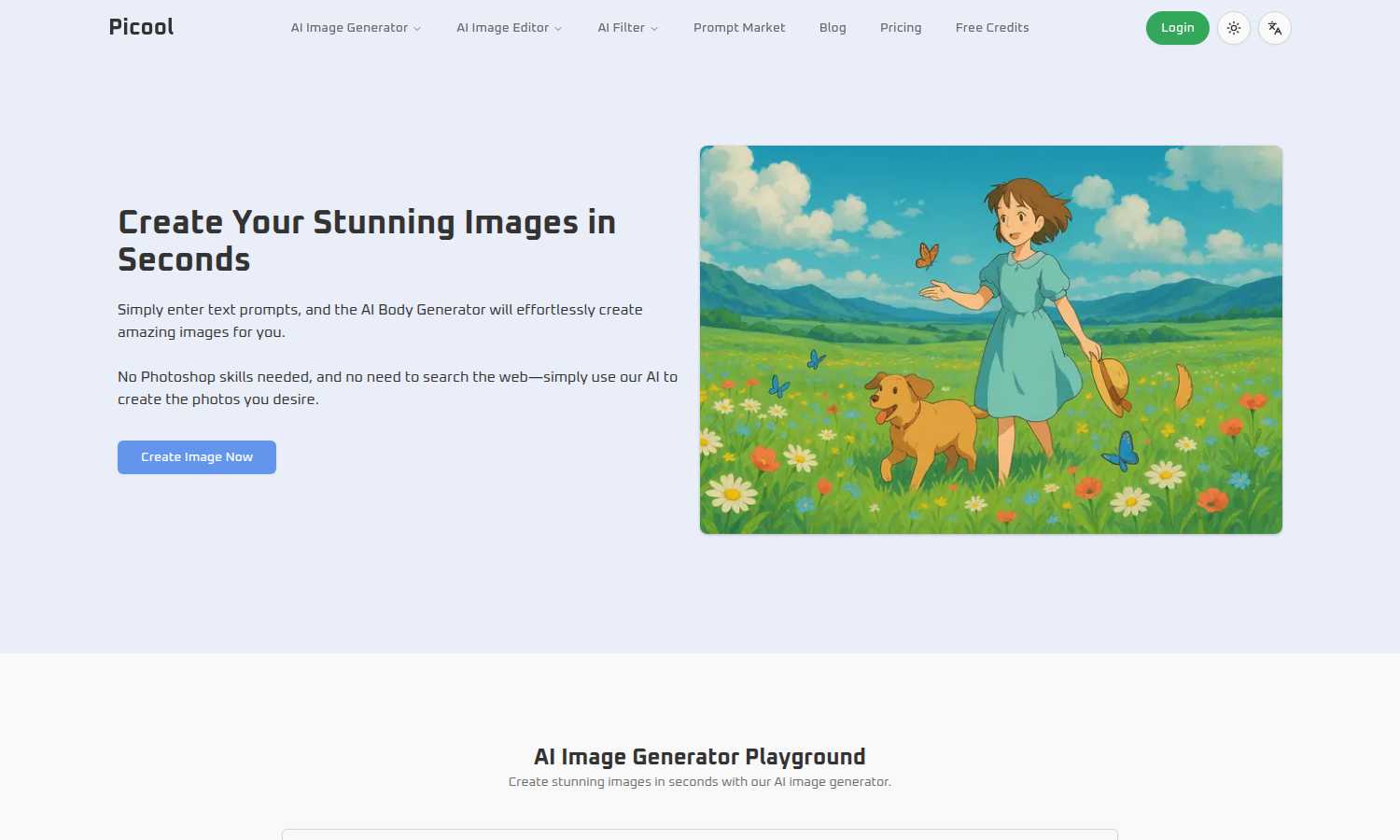
Picool.ai
Postproxy

Feature Comparison
Picool.ai
Advanced Text-to-Image Generation Engine
Powered by cutting-edge diffusion models, this core feature translates complex textual prompts into high-fidelity images. It offers granular control over artistic style (Realistic, Cartoon, Anime, Digital Art), aspect ratio (1:1, 16:9, 9:16, 4:3, 3:4), and batch output, enabling the generation of multiple assets simultaneously for efficient, scalable content production directly from descriptive language.
AI-Powered Image Editing Suite
This integrated suite provides a programmatic approach to common post-production tasks. It includes tools for precise background removal, watermark elimination, and object erasure, all powered by specialized neural networks. These features allow for non-destructive, automated editing within the same cloud environment as generation, eliminating the need for separate, disparate software applications.
Cloud-Native & API-First Architecture
Built as a fully cloud-native platform, Picool.ai requires zero local installation or GPU management, offering instant scalability and reliability. Its API-first design ensures seamless integration into existing tech stacks, allowing developers to automate image generation and editing workflows within custom applications, CMS platforms, and marketing automation systems with minimal overhead.
Developer-Centric Controls and Customization
The platform provides technical users with fine-grained control over the creative process. This includes adjustable parameters for style, aspect ratio, and the number of images generated per job. This level of customization ensures output aligns precisely with brand guidelines and technical specifications, making it suitable for embedding into structured, repeatable production pipelines.
Postproxy
Unified API
Postproxy offers a single API endpoint that handles publishing to all supported social media platforms simultaneously. This eliminates the need for multiple integrations, allowing users to streamline their publishing processes and reduce operational complexity.
Automated Content Adaptation
With Postproxy, content is automatically transformed to meet the specific requirements of each platform. This means users do not have to manually adjust their posts for different formats, media limits, or text validations, ensuring a more efficient workflow.
Error Handling and Delivery Guarantees
Postproxy incorporates robust error handling mechanisms, including automatic retries and rate limit management. Users can trust that their posts will be delivered reliably, with comprehensive reporting on publish states, helping identify successes and failures without manual intervention.
Simplified Authentication Management
Postproxy takes the hassle out of authentication by managing OAuth flows, token storage, and automatic refreshes. This streamlined process allows developers to focus on creating and publishing content rather than navigating complex authentication protocols.
Use Cases
Picool.ai
Automated Marketing Content Production
Marketing teams can integrate Picool.ai's API into their content management systems to automatically generate unique, on-brand social media graphics, blog illustrations, and ad creatives based on campaign briefs or product descriptions. This drastically reduces dependency on stock photos and manual design work, accelerating campaign deployment.
E-commerce Product Visualization
E-commerce platforms can leverage the text-to-image and image-to-image capabilities to generate lifestyle shots, alternative product colors, or contextual backgrounds for catalog items. The background removal tool can also be automated to create clean, white-background product images for listings, enhancing visual consistency at scale.
Software and Application Integration
Developers can embed Picool.ai's functionalities directly into their applications. Use cases include allowing users to generate custom profile pictures within a social app, creating dynamic article headers in a publishing platform, or enabling automated thumbnail creation for user-generated content, all without leaving the primary application environment.
Streamlined Design Workflow Augmentation
Designers and content creators can use the unified web interface as a powerful ideation and rapid prototyping tool. They can quickly generate visual concepts from text, then immediately refine them using the built-in AI editing tools for tasks like cleaning up compositions or removing unwanted elements, consolidating multiple steps into a single, efficient workflow.
Postproxy
Automated Social Media Campaigns
Businesses can leverage Postproxy to automate their social media campaigns, ensuring that content is published consistently across various platforms without the need for manual intervention.
Cross-Platform Content Distribution
Content creators can use Postproxy to distribute their posts across multiple social media channels simultaneously, ensuring a wider reach and consistent messaging across their audience.
Integration with Automation Tools
Developers can easily integrate Postproxy with automation platforms like n8n and Zapier, allowing for seamless workflows that trigger content publishing based on events or schedules, enhancing productivity.
Scaling Publishing Efforts
Organizations looking to scale their social media presence can utilize Postproxy to handle increased publishing demands without the complexity and overhead of managing multiple integrations, thus facilitating growth.
Overview
About Picool.ai
Picool.ai is a cloud-native, API-first AI image processing platform engineered to consolidate and streamline visual content creation for modern development and marketing stacks. It functions as a unified, serverless suite that integrates advanced generative AI and intelligent editing capabilities into a single, accessible web interface and developer-friendly API. At its technical core, Picool.ai leverages state-of-the-art neural network architectures, including diffusion models, to power a robust text-to-image generation engine. This allows users and integrated systems to translate detailed textual prompts into high-quality, production-ready visuals across diverse styles like photorealistic, anime, and digital art. Beyond generation, the platform extends its utility with a suite of AI-powered editing tools for programmatic tasks like background removal, watermark elimination, and object erasure, completing the post-production pipeline. Its primary value proposition is operational efficiency and seamless technical integration; it requires no local GPU infrastructure, complex installation, or deep machine learning expertise, democratizing professional-grade image creation. Designed for scalability, Picool.ai is particularly valuable for developers and product teams seeking to embed AI visual capabilities directly into existing applications, CMS platforms, marketing automation tools, and design pipelines, thereby accelerating creative workflows and enhancing content velocity at an enterprise scale.
About Postproxy
Postproxy is an innovative API solution designed to simplify and unify social media publishing across multiple platforms, including Instagram, Facebook, YouTube, LinkedIn, and X. It serves as a centralized hub for developers and automators, enabling seamless integration with existing workflows without the need to handle the complexities of individual platform APIs. By automating OAuth processes, managing rate limits, and providing robust analytics, Postproxy replaces the chaotic environment of multiple platform-specific integrations with a single reliable endpoint. This makes it an ideal choice for businesses and developers who utilize automation tools like n8n, Zapier, and CI/CD systems. With Postproxy, users can effortlessly generate AI content, apply routing rules, and publish at scale, all while ensuring a consistent and reliable publishing experience. The free plan allows users to get started easily, providing the flexibility to scale as their needs grow.
Frequently Asked Questions
Picool.ai FAQ
What is the AI Image Generator and how does it work?
The AI Image Generator is an advanced text-to-image tool that uses state-of-the-art neural networks, specifically diffusion models, to interpret and visualize textual prompts. You provide a detailed description, and the AI model generates corresponding high-quality images by iteratively refining random noise into a coherent visual representation that matches your prompt, style, and aspect ratio selections.
What are the different styles available in the AI Image Generator?
Picool.ai's generator supports a versatile range of pre-configured artistic styles to suit various project needs. Key available styles include Realistic (for photorealistic renders), Cartoon, Anime, and Digital Art. This allows users and integrated systems to maintain consistent visual branding and aesthetic direction across all generated assets programmatically.
How long does it take to generate an image?
Generation time is typically a matter of seconds, thanks to the platform's optimized, cloud-based infrastructure. The exact speed can vary slightly based on the complexity of the prompt, the selected style, and the number of images requested in a batch. The system is engineered for high throughput, making it suitable for real-time or near-real-time integration scenarios.
Is Picool.ai suitable for integration into my existing software?
Absolutely. Picool.ai is built with an API-first, developer-centric architecture specifically for integration. Its cloud-native, stateless APIs allow you to seamlessly embed both image generation and editing capabilities into your existing applications, marketing stacks, CMS, or design pipelines, enabling automated visual content creation within your established workflows.
Postproxy FAQ
What platforms does Postproxy support?
Postproxy currently supports major social media platforms including Instagram, Facebook, YouTube, LinkedIn, and X, allowing users to publish across multiple channels simultaneously.
How does Postproxy handle errors during publishing?
Postproxy is designed with robust error handling features, including automatic retries for failed posts and clear reporting on publish states. This ensures users are informed about the status of their content without needing to manually check each platform.
Is there a free trial available for Postproxy?
Yes, Postproxy offers a free plan that allows users to get started without the need for a credit card. This plan is designed for users to explore the capabilities of the API before scaling up their usage.
How can I integrate Postproxy into my existing workflows?
Integrating Postproxy is straightforward. Simply create an account to obtain an API key, connect your social media accounts, and then use the unified API to publish content. This seamless integration minimizes the need for complex setup procedures.
Alternatives
Picool.ai Alternatives
Picool.ai is a cloud-native AI image generation and editing platform designed for seamless integration into modern creative and marketing tech stacks. It combines advanced text-to-image synthesis with a suite of AI-powered editing tools, offering a unified workflow for creators, developers, and teams who need scalable, API-accessible visual content production. Users often evaluate alternatives to Picool.ai for several key reasons. These include specific budget constraints or pricing model preferences, the need for different generative model architectures or editing capabilities, and requirements for deeper integration with particular software ecosystems like Adobe Creative Cloud or specific CMS platforms. The search is typically driven by a need to optimize a specific operational workflow. When assessing an alternative, focus on technical compatibility and workflow efficiency. Key criteria should include the robustness of the API and SDK offerings for custom integration, the underlying AI model's output quality and consistency for your use case, and the platform's ability to handle batch processing and automation to fit within your existing content pipeline without creating friction.
Postproxy Alternatives
Postproxy is a unified API designed for seamless social media publishing across multiple platforms, including Instagram, Facebook, YouTube, LinkedIn, and X. It simplifies the complexities of individual platform integrations by automating processes such as OAuth handling, rate limiting, and content adaptation, making it particularly valuable for developers and those in automation roles. Users often seek alternatives to Postproxy for reasons such as pricing structures, specific feature sets, or compatibility with different platforms. When evaluating alternatives, it is crucial to consider factors such as integration capabilities, ease of use, scalability options, and whether the service aligns with the specific needs of your social media strategy.