
SERPView vs Skippership
Side-by-side comparison to help you choose the right product.

SERPView
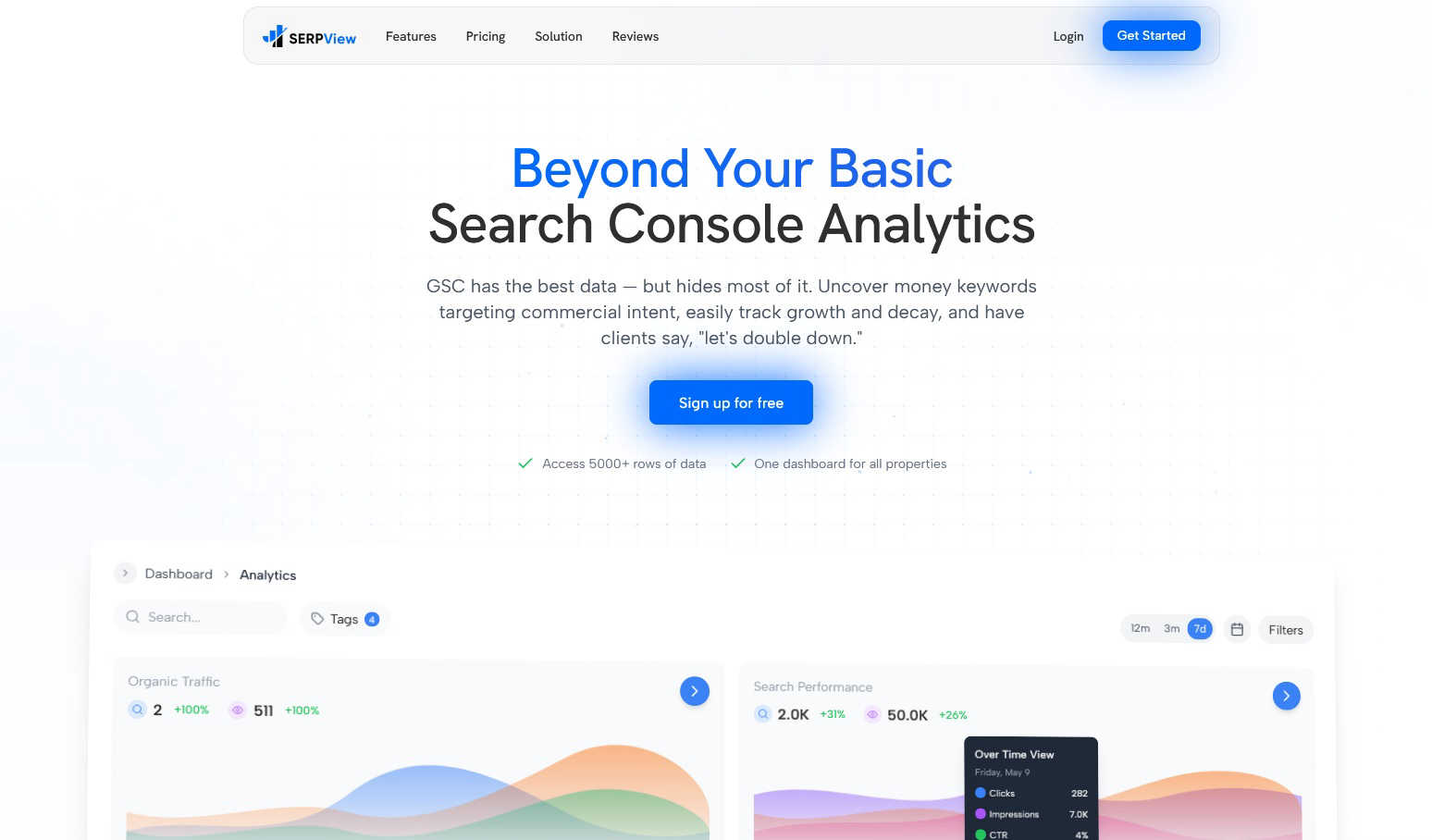
SERPView integrates with Google Search Console to unlock hidden SEO data and advanced analytics.
Last updated: March 1, 2026

Skippership
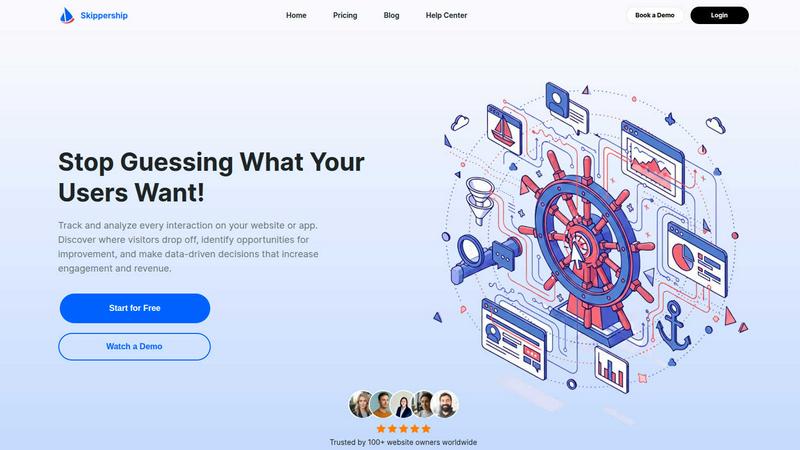
Skippership uses AI to analyze user behavior and fix friction points across your tech stack.
Last updated: March 1, 2026
Visual Comparison
SERPView
Skippership
Feature Comparison
SERPView
Expanded Data Access & Performance Tracking
SERPView bypasses Google Search Console's most significant constraint by providing access to over 50,000 rows of search performance data, compared to the standard 1,000-row limit. This feature ensures comprehensive tracking of clicks, impressions, CTR, and average position over time without data sampling or truncation. It allows for complete historical analysis and trend identification, offering a full-funnel view of SEO performance that is critical for accurate reporting and strategic planning.
Advanced Keyword & Page Analysis
This feature enables granular investigation into keyword and page-level performance. Users can uncover high-intent, commercial keywords, track precise ranking movements over time, and identify new opportunities. Concurrently, page analysis highlights top-performing content and pinpoints underperforming pages that require optimization. The system correlates keyword data with specific URLs, providing a clear roadmap for content enhancement and targeted SEO efforts.
Cross-Device & International SEO Insights
SERPView provides segmented analytics to compare search performance across device types (mobile vs. desktop) and geographical locations. This allows SEOs to identify device-specific optimization opportunities and tailor strategies for different user behaviors. For global businesses, the international insights feature tracks performance by country and language, enabling data-backed decisions for region-specific SEO and content localization strategies.
Topic Cluster Tracking & Query Counting
Moving beyond single-page analysis, this feature aggregates performance data around thematic topic clusters, giving a holistic view of content strategy effectiveness across entire subject areas. The complementary Query Counting tool analyzes how many unique search queries generate impressions, broken down by ranking position ranges (e.g., 1-3, 4-10). This reveals visibility breadth and helps prioritize ranking improvement efforts for queries on the cusp of higher positions.
Skippership
AI-Powered Behavior Analytics
Skippership's AI engine automatically processes and analyzes vast amounts of session data to surface actionable insights without manual effort. It intelligently identifies patterns, pinpoints critical friction points like unexpected drop-offs or rage clicks, and provides contextual suggestions for improvement. This transforms raw interaction data into clear, prioritized recommendations, enabling teams to focus on fixes that have the highest impact on conversion and user experience.
Session Replay & Journey Analysis
Gain complete visibility into the user experience with full session recordings that capture every click, scroll, and input. This feature allows you to watch real user journeys to uncover usability issues, understand context behind behaviors, and identify exactly where visitors encounter confusion or friction. It provides the qualitative context needed to complement quantitative data, making it an essential tool for diagnosing conversion blockers and optimizing flows.
Interactive Heatmaps (Click, Scroll, Move)
Visualize aggregate user interaction data with dynamic heatmaps that reveal exactly where users click, how far they scroll, and where their mouse moves. These visual tools highlight which page elements attract attention and which are ignored, enabling data-backed decisions for layout optimization, content placement, and call-to-action effectiveness to directly boost engagement and guide users toward conversion goals.
Seamless Platform Integrations
Built for compatibility, Skippership offers out-of-the-box, no-code integration with over 50 essential platforms in the modern tech stack. This includes CMS platforms like WordPress and Shopify, analytics tools like Google Analytics, e-commerce systems like WooCommerce and Magento, and project management tools like Jira. These integrations ensure data flows effortlessly between systems, unifying insights and streamlining workflows without disrupting existing operations.
Use Cases
SERPView
Agency SEO Reporting and Client Management
SEO agencies managing multiple client accounts utilize SERPView to unify all GSC properties into a single dashboard. This eliminates the need to switch between dozens of GSC accounts, streamlining monthly reporting, performance reviews, and opportunity identification. The expanded data access ensures agencies can deliver deep, insightful analysis to clients, justifying strategy and demonstrating clear ROI from SEO activities.
In-House Technical SEO Deep Dive
Technical SEO specialists and webmasters use SERPView to conduct thorough diagnostic analyses. The ability to access 50,000+ rows of data is crucial for identifying crawl budget issues, pinpointing pages with thin content, and understanding the full scope of keyword rankings after a site migration or major technical update. The detailed positional data and query analysis inform precise technical optimizations.
Content Strategy Development and Optimization
Content managers and strategists leverage the Topic Cluster and Page Analysis features to audit existing content performance at scale. They can identify which topics drive the most valuable traffic, spot content gaps within clusters, and prioritize updating underperforming pages that have ranking potential. This data-driven approach ensures content development aligns directly with search demand and commercial intent.
E-commerce and Global SEO Strategy
E-commerce sites and businesses with international audiences use SERPView's device and country analysis to optimize user experience and market-specific strategies. They can determine if mobile usability issues are hurting conversions in key markets or identify which countries have untapped search demand for their product categories, guiding both on-site SEO and broader digital marketing investments.
Skippership
E-commerce Conversion Rate Optimization
For online stores, Skippership is instrumental in diagnosing and fixing checkout abandonment. Teams can use session replays to watch failed purchase attempts, employ heatmaps to see if key product information is missed, and leverage AI insights to identify common errors like form field confusion or unexpected shipping costs. Integrating with platforms like Shopify or Magento allows for direct correlation between user friction and sales data.
SaaS Product UX Improvement
Product teams at SaaS companies use Skippership to understand how users navigate complex applications. By analyzing session recordings and journey paths, they can identify where users struggle with new features or get stuck in onboarding flows. The AI's ability to flag rage clicks on non-interactive elements helps quickly pinpoint UI/UX flaws, leading to faster iterations and improved user retention.
Marketing Landing Page Performance
Marketing teams leverage Skippership to A/B test and optimize landing page effectiveness. Heatmaps show if visitors are engaging with primary CTAs or scrolling past vital content. Session replays reveal whether the page copy matches user intent. By tracking goals for form submissions or clicks, marketers can make data-driven design and copy changes to improve lead generation quality and volume.
Technical Debugging & Issue Triage
Development and support teams use session replays as a powerful diagnostic tool. When users report bugs or strange behavior, teams can instantly replay the exact session to see the issue in context, including console errors and network activity. This accelerates the debugging process, reduces back-and-forth communication, and provides clear evidence for bug reports in integrated systems like Jira.
Overview
About SERPView
SERPView is a sophisticated, API-driven analytics platform engineered to overcome the inherent limitations of Google Search Console (GSC). Designed for SEO professionals, digital marketers, and technical SEOs, it serves as a powerful augmentation layer for GSC data. The platform directly integrates with the Google Search Console API to ingest raw search performance data, but then processes, enriches, and visualizes it far beyond GSC's native interface. Its core value proposition lies in unlocking the full depth of your search data, providing access to over 50,000 rows of data compared to GSC's restrictive 1,000-row limit. This allows for deep-dive analysis into keyword trends, page performance, and topic clusters that are otherwise inaccessible. SERPView consolidates multiple GSC properties and accounts into a single, unified dashboard, streamlining workflow and enabling holistic strategy management. Built for the modern tech stack, it empowers users to move from basic reporting to actionable intelligence, identifying commercial keyword opportunities, tracking performance across devices and countries, and correlating ranking changes with Google's algorithm updates. For teams serious about data-driven SEO, SERPView transforms fragmented GSC data into a centralized, insightful command center.
About Skippership
Skippership is an all-in-one, AI-powered user behavior analytics platform engineered for modern product, marketing, and UX teams. It eliminates the guesswork from digital optimization by providing complete, actionable visibility into how visitors interact with your website or application. Designed to integrate seamlessly into existing tech stacks, Skippership consolidates critical tools—including session recordings, interactive heatmaps, goal tracking, and user journey analysis—into a single, intuitive dashboard. Its core differentiator is a sophisticated AI engine that automatically analyzes session data to identify critical pain points, such as rage clicks or checkout errors, and suggests practical, real-time solutions. Built with performance and compliance at its foundation, Skippership offers a lightweight implementation that safeguards site speed, alongside robust security features aligned with GDPR and CCPA standards. With native integrations for over 50 platforms like Shopify, WordPress, Jira, and Google Analytics, it empowers businesses of all sizes to make precise, data-driven decisions that directly boost engagement, strengthen customer retention, and increase revenue.
Frequently Asked Questions
SERPView FAQ
How does SERPView connect to my Google Search Console data?
SERPView connects securely via the official Google Search Console API using OAuth 2.0 authentication. This is the same secure protocol used by many third-party SEO tools. You grant SERPView read-only access to your GSC data, allowing the platform to fetch, process, and display your search analytics without ever storing your Google account credentials.
What is the difference between the 1,000-row limit in GSC and SERPView's 50,000+ rows?
Google Search Console's interface limits data exports and table views to a maximum of 1,000 rows, which can obscure long-tail keywords and detailed historical trends. SERPView uses the API to request and compile much larger datasets, allowing it to present up to 50,000 rows of performance data in its reports. This provides a more complete and accurate picture of your search presence.
Can I track multiple websites and properties in one dashboard?
Yes, a core functionality of SERPView is the consolidation of multiple Google Search Console properties. You can connect numerous websites (both domain and URL-prefix properties) from different Google accounts into a single SERPView dashboard. This creates a unified reporting and analytics environment, ideal for agencies or businesses with multiple brands or regional sites.
Does SERPView store my historical GSC data?
Yes, once you connect your GSC property, SERPView begins storing historical data from that point forward. This allows for long-term trend analysis, performance comparisons over different periods, and the ability to track the impact of Google algorithm updates or your own site changes over time, which is limited in the standard GSC interface.
Skippership FAQ
How does Skippership ensure it doesn't slow down my website?
Skippership is built with a lightweight, asynchronous tracking script that has a minimal performance footprint. The code is optimized for efficiency, ensuring data collection does not block page rendering or impact core web vitals. Our architecture leverages modern cloud infrastructure to handle processing externally, keeping your site's speed and user experience intact.
Is Skippership compliant with data privacy regulations like GDPR and CCPA?
Yes, privacy and compliance are foundational to Skippership. We are built to align with GDPR, CCPA, and other major privacy frameworks. We employ data minimization, do not track sensitive personal information, provide easy opt-out mechanisms, and secure all data with SSL/TLS encryption. You can configure cookie consent banners and manage data processing to meet your regional requirements.
Can I integrate Skippership with my existing analytics and marketing stack?
Absolutely. Skippership offers seamless, no-code integrations with over 50 popular platforms, including Google Analytics, WordPress, Shopify, HubSpot, Jira, and more. These integrations allow you to correlate behavior analytics with other data sources, create unified dashboards, and trigger actions in other tools, ensuring Skippership fits perfectly into your existing workflow without creating data silos.
What kind of insights does the AI engine provide?
The AI engine automates the analysis of user sessions to surface actionable insights. It identifies specific pain points such as rage clicks, dead clicks, form field errors, and sudden checkout exits. Beyond just identifying issues, it provides contextual suggestions—for example, it may recommend making a non-clickable element interactive or simplifying a multi-step form based on observed user behavior patterns.
Alternatives
SERPView Alternatives
SERPView is a specialized analytics platform designed to unlock and enhance data from Google Search Console for SEO professionals. It operates within the SEO analytics and data visualization category, focusing on providing deeper insights than the native GSC interface allows. Users often explore alternatives to SERPView for various reasons. These can include budget constraints, specific feature requirements not covered, or the need for integration with a different tech stack, such as a particular CRM, project management tool, or broader marketing suite. Platform compatibility and the desire for a more comprehensive all-in-one SEO tool are also common drivers. When evaluating an alternative, key considerations should include its API connectivity and ability to integrate with your existing martech ecosystem. Assess the depth of GSC data access, the flexibility of reporting, and the tool's scalability to handle multiple properties. Security protocols for data handling are equally critical for any platform managing sensitive search performance data.
Skippership Alternatives
Skippership is an AI-powered user behavior analytics platform within the broader digital analytics and optimization category. It provides comprehensive visibility into user interactions by combining session replays, heatmaps, and funnel analysis, all driven by an AI engine that automatically identifies friction points across your website or application. Users often explore alternatives to find a solution that aligns precisely with their budget, specific feature requirements, or existing technology ecosystem. Common considerations include the depth of integration with a current tech stack, the need for specialized analytics like mobile app support, or different pricing models that better suit a company's scale and workflow. When evaluating alternatives, focus on core capabilities like session replay fidelity, the sophistication of heatmap tools, and the strength of platform integrations. Equally important is assessing how the tool fits into your specific stack, its implementation complexity, and whether its data processing and security protocols meet your compliance standards. The goal is to find a solution that delivers actionable insights without creating technical debt or performance overhead.