
Mesostrength vs Wheyindex
Side-by-side comparison to help you choose the right product.

Mesostrength is a mesocycle-native app that auto-adjusts training volume and tracks performance for optimized hypertrophy.
Last updated: March 18, 2026

Wheyindex
WheyIndex integrates objective data APIs to analyze and compare protein powders for optimal selection.
Last updated: March 1, 2026
Visual Comparison
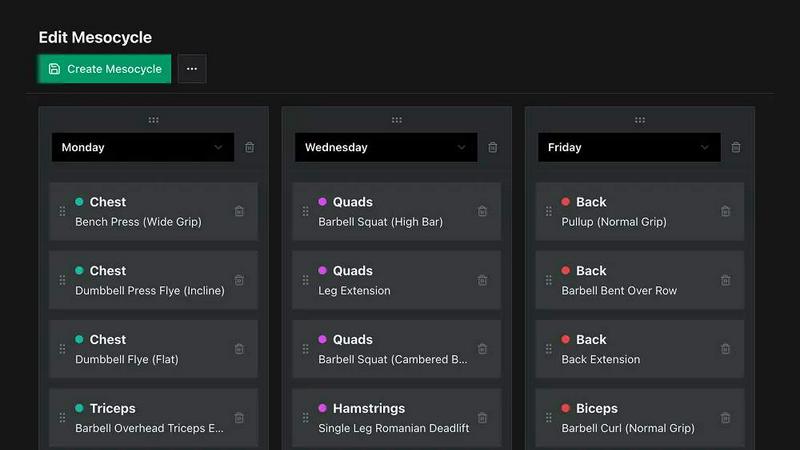
Mesostrength
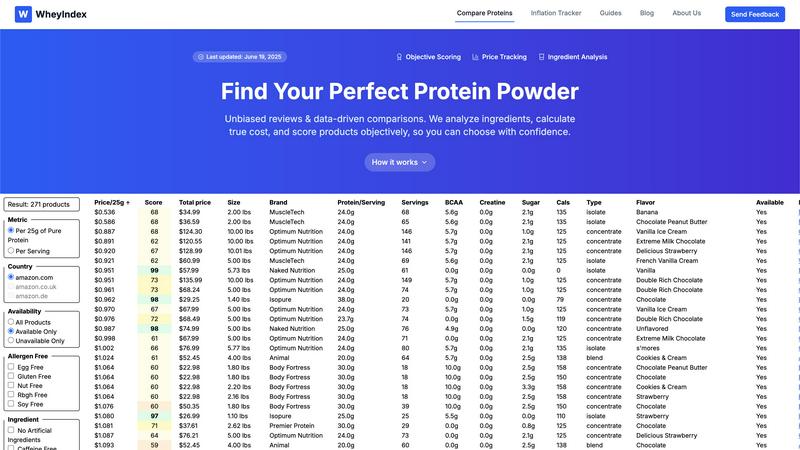
Wheyindex
Feature Comparison
Mesostrength
Mesocycle-Native Architecture
Unlike generic fitness apps that retrofit periodization concepts, Mesostrength is architected from the ground up around the mesocycle. This foundational design allows for true block periodization management, enabling users to plan, launch, and execute multi-week training blocks with defined emphasis, automatically generated workouts, and structured progression. The system treats the mesocycle as the primary unit of training, ensuring every feature integrates with this methodology for a cohesive experience.
Adaptive Volume Algorithm
The platform's core intelligence is its adaptive volume algorithm. By ingesting quantitative data (performance on sets, reps, and weight) and qualitative feedback (user-reported recovery and effort levels), the system performs weekly analysis to determine the optimal training load for the upcoming week. This automated adjustment removes guesswork, systematically applying the principles of autoregulation to tailor volume to the user's current physiological state, thereby maximizing growth potential while minimizing overtraining risk.
Cross-Platform Progressive Web App (PWA)
Mesostrength is deployed as a high-fidelity Progressive Web App, ensuring full compatibility and a native-like experience across all major operating systems and devices. This technology stack eliminates the need for separate codebases for iOS and Android, providing consistent, instant access via any web browser on smartphones, tablets, and desktops. Users enjoy always-updated functionality without manual downloads from app stores, guaranteeing they are always on the latest version.
Integrated Analytics & Muscle-Specific Tracking
The platform features robust analytics tools that transform raw workout data into actionable insights. It provides detailed visualizations of performance trends, strength progression, and—critically—tracks training volume on a per-muscle group basis. This granular analysis allows users to identify imbalances, track growth metrics for specific muscle groups, and pinpoint exact stalling points in their training, facilitating precise program adjustments.
Wheyindex
Objective 100-Point Scoring Engine
The platform's core is a deterministic scoring algorithm that operates like a continuous integration pipeline for product quality. Each product is ingested, its nutritional label and ingredient list are parsed, and points are automatically assigned based on pre-configured, health-first criteria. This system removes subjective bias, providing a consistent, repeatable, and comparable metric across all products, much like a benchmark score for hardware or a code quality audit.
Granular Filtering & Query API
Wheyindex exposes a powerful filtering interface that functions as a user-friendly query builder for the supplement database. Users can execute complex, multi-parameter searches across categories like Allergen Free (e.g., Gluten Free, Soy Free), Ingredient Purity (e.g., No Artificial Ingredients, No Fillers), Protein Type (Isolate, Concentrate, Blend), and Dietary Claims (Keto, Vegan). This allows for precise subset selection from the dataset, ensuring only compatible products are returned.
Real-Time Price & Inflation Tracking
The engine integrates with e-commerce APIs to dynamically track and calculate the true cost of protein. The key metric "Price per 25g of Pure Protein" normalizes cost across different serving sizes and protein densities, enabling direct financial comparison. The Inflation Tracker module monitors price fluctuations over time, providing users with data-driven insights for budget-aware purchasing decisions.
Normalized Product Data Schema
Every product in the Wheyindex database is mapped to a unified schema, ensuring consistency. Specifications like flavor, brand, protein content per serving, and dietary flags are standardized into discrete, filterable fields. This structured data layer is what powers the platform's comparison functionality, allowing for apples-to-apples evaluations free from inconsistent marketing terminology.
Use Cases
Mesostrength
Systematic Hypertrophy Programming for Intermediate Lifters
A lifter who has exhausted novice gains and is struggling to progress can use Mesostrength to implement structured hypertrophy programming. By building a science-backed split, running it as a mesocycle, and leveraging the app's automatic volume management, the user can ensure consistent progressive overload without the planning overhead, breaking through plateaus with data-driven adjustments.
Autoregulated Training for Advanced Athletes
Advanced athletes who understand their body's nuanced response to stress can utilize the adaptive algorithm for precise autoregulation. The app acts as an intelligent co-pilot, interpreting daily performance and recovery signals to modulate weekly volume, allowing for highly individualized training that aligns with real-time recovery capacity and performance readiness.
Block Periodization Management for Coaches
Coaches managing multiple athletes can employ Mesostrength to create and distribute standardized training templates. They can then monitor each athlete's mesocycle execution, logged data, and the app's automated volume adjustments remotely. This provides scalable oversight and ensures each athlete is following a periodized plan tailored to their feedback, enhancing coaching efficiency.
Data-Driven Technique and Imbalance Analysis
A detail-oriented lifter can use the per-muscle volume tracking and exercise analytics to audit their training balance. By reviewing long-term data, they can identify if certain muscle groups are being neglected or if strength gains are lagging on specific compound movements, enabling them to make evidence-based modifications to their exercise selection and volume distribution.
Wheyindex
Protocol-Specific Supplement Sourcing
For users following strict dietary protocols like Ketogenic, Vegan, or Lactose-Free diets, Wheyindex acts as a compatibility layer. By setting filters for "Keto Friendly," "Vegan," and "Lactose Free," the platform instantly returns only products that meet these technical requirements, eliminating manual label reading and ensuring adherence to the dietary stack.
Cost-Optimized Procurement for High-Volume Users
Athletes and fitness enthusiasts consuming protein powder regularly can utilize the price tracking and "Price per 25g Protein" metric to optimize their supplement budget. Filtering by the lowest cost per protein gram and setting availability alerts allows for automated, cost-effective bulk purchasing, integrating supplementation into a predictable monthly expense model.
Allergen & Sensitivity Avoidance Engineering
Individuals with specific allergies or sensitivities (e.g., nuts, soy, gluten, artificial dyes) can use the granular filter system as a safety protocol. By selecting the corresponding "Free From" flags, they create a whitelist of safe products, effectively debugging their supplement options to prevent adverse reactions and ensure system (bodily) compatibility.
Clean-Label Product Research & Due Diligence
Consumers prioritizing ingredient purity can deploy Wheyindex's ingredient analysis filters to audit products. Combining filters like "No Artificial Ingredients," "No Added Sugar," "Third Party Tested," and "Grass Fed" facilitates deep due diligence, enabling users to select products with a minimalist, high-integrity ingredient profile that aligns with a clean-label philosophy.
Overview
About Mesostrength
Mesostrength is a sophisticated, cloud-native training platform engineered for the modern strength athlete. It is not merely a workout logger; it is a comprehensive system built on the principles of evidence-based hypertrophy and periodization. The platform is designed for intermediate to advanced lifters who have moved beyond random workouts and require a structured, data-driven approach to muscle growth. Its core value proposition lies in automating the complex process of managing progressive overload and recovery within a mesocycle framework. Users can architect detailed training templates, deploy them as focused training blocks (mesocycles), and log performance data. The platform's proprietary algorithm then processes this data—including sets, reps, weight, and subjective recovery feedback—to dynamically adjust weekly training volume. This creates a closed-loop, adaptive training system that intelligently scales intensity up during periods of strong recovery and down-regulates volume to mitigate fatigue, optimizing the stimulus-recovery-adaptation cycle. Accessible via any modern web browser on iOS, Android, macOS, and Windows without app store dependencies, Mesostrength provides a seamless, cross-platform experience focused purely on delivering measurable physiological results.
About Wheyindex
Wheyindex is a sophisticated, API-like comparison engine engineered for the whey and plant-based protein supplement ecosystem. It functions as a centralized data aggregation and normalization platform, parsing complex product specifications from a database of over 300 verified items into a structured, queryable format. The system is architected for health-conscious consumers and biohackers who demand granular control over their nutritional intake, cutting through marketing noise with pure data. Its core value proposition is providing an objective, programmatic interface to supplement selection. By implementing a transparent, health-first 100-point scoring algorithm and enabling deep filtering across dozens of technical parameters—from protein isolate concentration and absence of rBGH to specific allergen profiles and sugar alcohol content—Wheyindex transforms subjective choice into a deterministic query. It seamlessly integrates real-time price tracking from major e-commerce platforms, allowing for cost-per-macroeconomic analysis. This tool is built for users who treat supplementation as a precise input in their health stack, requiring compatibility with specific dietary protocols, budget constraints, and purity standards.
Frequently Asked Questions
Mesostrength FAQ
Is Mesostrength suitable for beginners?
Mesostrength is specifically optimized for intermediate and advanced lifters who are familiar with structured training programs and the concept of progressive overload. Beginners are better served by first establishing consistent training habits and learning fundamental movement patterns before adopting a periodization-focused tool with advanced features like autoregulated volume management.
Is there a dedicated mobile app for download?
Mesostrength is built as a Progressive Web App (PWA), which provides a full application experience directly through your mobile or desktop web browser without requiring a download from the Apple App Store or Google Play Store. This ensures instant access, automatic updates, and full compatibility across iOS, Android, Windows, and macOS devices.
Can I cancel my subscription at any time?
Yes, you have full control over your subscription. You can cancel your monthly or annual plan at any time directly from your account settings. Upon cancellation, you will retain access to all features until the end of your current billing period, after which your account will revert to a free state.
How does the adaptive volume feature work technically?
The feature operates on an algorithmic backend that analyzes your logged workout data (volume, intensity, progression) and post-session recovery feedback. It uses this dataset to calculate a weekly adaptive response, algorithmically determining whether to increase, maintain, or decrease the target sets for your upcoming workouts to optimize the training stimulus relative to your recovery status.
Wheyindex FAQ
How does the Wheyindex scoring algorithm work?
The scoring algorithm is a deterministic function that analyzes multiple data points from a product's nutritional and ingredient profile. It assigns weighted values to factors such as protein purity per serving, absence of unwanted additives (fillers, artificial sweeteners, dyes), sugar content, and verification of claims like third-party testing or grass-fed sourcing. The result is a normalized score out of 100, providing a consistent benchmark for comparison, independent of brand marketing.
Can I compare prices across different retailers and countries?
Yes, Wheyindex is designed with multi-platform compatibility in mind. The comparison table displays current pricing and availability from integrated retailers like Amazon's U.S., U.K., and German domains (.com, .co.uk, .de). The "Price per 25g protein" metric standardizes cost across all products and regions, allowing for true global price comparison and helping you identify the most cost-effective sourcing option.
What does "Price per 25g of Pure Protein" mean and why is it important?
This is a normalized cost-efficiency metric calculated by the platform. It determines how much you pay specifically for 25 grams of protein from any given product, adjusting for varying serving sizes and protein concentrations. This is critical for accurate comparison because it eliminates the distortion caused by different scoop sizes, filler content, and marketing claims, giving you a direct financial benchmark for the core macro-nutrient you're purchasing.
How often is the product data and pricing updated?
The platform's data ingestion pipeline is designed for regular synchronization. Product specifications and dietary claims are verified and updated systematically. Pricing is pulled in real-time or at high frequency from connected e-commerce APIs, ensuring the cost data and availability status you see are current, which is essential for making a timely and informed purchasing decision.
Alternatives
Mesostrength Alternatives
Mesostrength is a specialized fitness application in the advanced workout planning and analytics category. It focuses on structured mesocycle programming with automated volume adjustments based on user performance and recovery data, targeting lifters who prioritize systematic, data-driven muscle growth. Users may explore alternatives for various reasons, including different pricing models, specific feature requirements like integration with other health platforms, or distinct user interface preferences. Platform compatibility, such as native mobile app availability versus web-based access, is also a key decision factor. When evaluating alternatives, consider the core technical stack: look for robust API integrations with wearables and nutrition apps, cross-platform synchronization capabilities, and the depth of analytics for tracking progressive overload. The ideal solution should offer a seamless data flow and adapt to your existing digital fitness ecosystem.
Wheyindex Alternatives
WheyIndex is a specialized API-driven comparison engine for the fitness and health tech stack, designed to parse and analyze whey protein supplement data. It functions as a decision-support layer, integrating product databases with user-defined filters for ingredients, dietary needs, and pricing. Users often seek alternatives due to specific integration requirements, such as needing a different data schema, a custom scoring algorithm, or a white-label solution for their own platform. Others may require a broader API that includes plant-based proteins or deeper supply-chain analytics beyond the core whey focus. When evaluating an alternative, prioritize its API documentation, data freshness, and the flexibility of its filtering parameters. Ensure the service's architecture aligns with your application's stack, offering robust compatibility, clear data ownership policies, and scalable endpoints for your user base's query volume.