
Microplastic Intake App
Deplasto's Microplastic Intake App tracks your daily consumption from food, drinks, and air using data-driven assessments to help you minimize.
Visit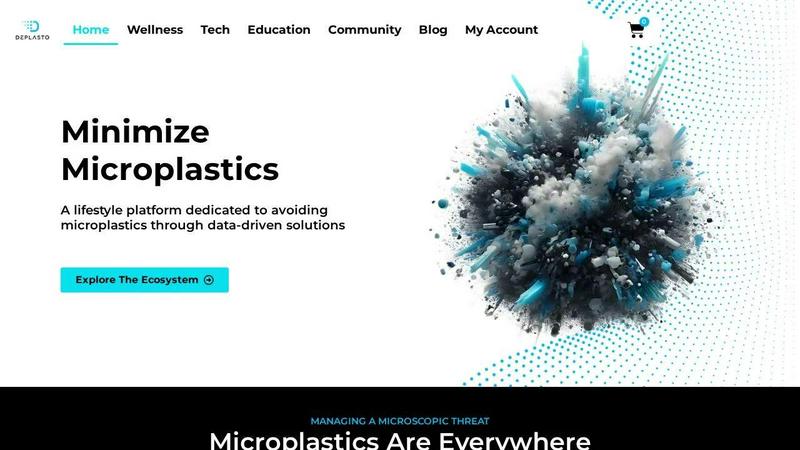
About Microplastic Intake App
The Microplastic Intake App is a data-driven wellness platform engineered to bridge the critical gap in your health tracking stack. While you meticulously monitor your macros, calories, and steps, you are overlooking a pervasive environmental toxin: microplastics. Peer-reviewed studies confirm that humans ingest and inhale tens of thousands of these particles annually, with detection rates reaching 100% in blood samples. This app provides a proprietary, science-backed model that quantifies your estimated daily microplastic intake based on your specific food, beverage, and activity choices. It is designed for health optimizers, biohackers, and environmentally conscious individuals who want to move beyond general awareness and into precise, actionable data. By integrating the latest academic research from over 150+ sources, the app translates complex toxicology data into a simple, trackable metric. You can identify the biggest contributors to your personal intake, understand how these particles may impact your gut health, energy levels, hormonal balance, and antioxidant production, and ultimately make informed decisions to minimize exposure. The platform is part of a larger ecosystem that includes a nutritional supplement for defense, educational resources, and a community, making it a comprehensive solution for managing this microscopic threat. It is the missing piece in your personal health data infrastructure, offering peace of mind through verifiable, peer-reviewed insights.
Features of Microplastic Intake App
Proprietary Intake Estimation Model
The core engine of the app is a proprietary algorithm built upon data from hundreds of peer-reviewed publications. This model translates the concentration of microplastics found in common foods (like seafood, bottled water, and salt), beverages (including tap water and beer), and activities (like wearing polyester clothing) into a personalized, estimated daily particle count. Unlike generic statistics, this feature provides a specific baseline for your unique lifestyle, allowing you to see the direct impact of your choices on your intake score.
Comprehensive Food and Activity Library
The app features an extensive, continuously updated library of over 1,000+ food and drink items, each with a microplastic contamination score derived from scientific literature. Users can log their meals, snacks, and beverages from this database. Beyond diet, the library also includes activities such as washing synthetic clothes or using plastic food containers, which are known to release significant microplastic particles. This holistic tracking ensures no major source of intake is missed.
Daily Intake Dashboard and Trend Analysis
Your estimated microplastic intake is visualized on a clear, intuitive dashboard that breaks down contributions by category (e.g., seafood, beverages, airborne particles). The app tracks your intake over time, generating trend charts that correlate with your logged wellness metrics like energy levels, digestive comfort, and mood. This longitudinal data empowers you to see the real-world impact of reducing your intake, providing powerful feedback that reinforces positive behavioral changes.
Integration with Wellness and Supplement Stack
The app is designed to work seamlessly with the broader Deplasto ecosystem. It offers direct integration with the Microplastic Defense supplement, allowing you to log your intake of protective ingredients like Fenugreek, NAC, and Berberine. The app can correlate your supplement usage with your daily intake data, helping you understand how your defense stack is supporting your body against environmental toxins. This creates a closed-loop system between tracking and active mitigation.
Use Cases of Microplastic Intake App
Optimizing Daily Dietary Choices for Reduced Intake
A user can log their typical breakfast, lunch, and dinner into the app. The dashboard immediately highlights that their daily sushi lunch (high in seafood) and the bottled water they drink contribute over 60% of their total estimated intake. Armed with this data, the user can explore alternative lunch options with lower scores and switch to a filtered water system, directly reducing their daily particle count by a measurable amount.
Correlating Intake with Personal Wellness Metrics
A biohacker tracking their energy and cognitive function notices a pattern of afternoon lethargy. By reviewing their Microplastic Intake App data, they see that days with high intake from packaged foods correlate with lower energy scores. They use this insight to experiment with a week of whole, unpackaged foods, logging their intake and energy levels. The trend analysis confirms a significant improvement, providing data-driven validation for a dietary change.
Parental Monitoring for Childrens Health
A parent concerned about the cumulative exposure for their family uses the app to log their child's typical diet, including fruit pouches, juice boxes, and plastic-wrapped snacks. The app reveals that these common kid-friendly items have surprisingly high microplastic scores. The parent can then use the app's library to find lower-impact alternatives, such as fresh fruit and reusable pouches, effectively managing their child's intake from an early age.
Pre- and Post-Supplement Protocol Assessment
A user begins taking the Deplasto Microplastic Defense supplement. They use the app to log their daily intake for two weeks, establishing a baseline. After starting the supplement protocol, they continue tracking. While their intake score may remain similar, the app allows them to track subjective wellness markers like gut comfort and antioxidant status. The data helps them assess if the supplement is effectively supporting their body's natural defenses against their specific exposure level.
Frequently Asked Questions
How does the app estimate my microplastic intake?
The app uses a proprietary model that draws from hundreds of peer-reviewed studies. For each food, drink, or activity in our library, we have assigned an estimated microplastic particle count based on the average findings from scientific literature (e.g., particles per liter of water or per gram of seafood). When you log an item, the app multiplies the quantity you specify by this scientifically-derived concentration to calculate your estimated contribution. It is an estimation tool designed for awareness and trend tracking, not a precise medical measurement.
Is the data in the app scientifically accurate and up-to-date?
Yes, accuracy is our top priority. Our research team continuously monitors the latest publications from journals like Environmental Science & Technology and the Journal of Hazardous Materials. The app's database is updated with new findings as they are published. We cite over 150+ sources, and every score in the library is backed by a peer-reviewed study. Our proprietary model is a synthesis of the best available science, making it a reliable tool for understanding relative risks.
Can I use this app without the Deplasto supplement?
Absolutely. The Microplastic Intake App is a standalone tool for tracking and awareness. You can use it to log your diet and activities, view your estimated intake, and identify areas for improvement. The integration with the Microplastic Defense supplement is an optional, value-added feature for users who want to combine data tracking with active nutritional support. The core tracking functionality is fully operational on its own.
What types of microplastics does the app track?
The app aggregates data on the most commonly studied microplastic types, including fragments, fibers, and films. Our model accounts for the total particle count found in studies, which often includes a mix of polymers like polyethylene (PE), polypropylene (PP), and polyethylene terephthalate (PET). The primary metric is the estimated number of particles, providing a single, actionable score. We do not currently differentiate by polymer type in the main dashboard, but our educational resources provide deeper dives into the specific types.
Explore more in this category:
Similar to Microplastic Intake App

Real-time App Store analytics with an AI copilot for portfolio owners.

SnapPChart grades a trading chart screenshot A+ to F, with an entry, stop, targets, and risk/reward. Works on stocks, forex, crypto, futures.

Turn your work into a presentation. Upload a document, paste your notes, or start from a prompt. TchoAI creates clear, editable slides in minutes.

Real-time ASO tool with Apple Search Ads data for keyword research, rank tracking and opportunity scoring across 60+ storefronts.

Spreadsheet-native work management with AI formulas, dashboards, automation, reporting, and project views for growing teams.


Managed remote build cache for Nx, Lerna, Turbo, Gradle, and Bazel. Reuse artifacts across CI and developer machines.