
Afterly Plan vs rfpaihub
Side-by-side comparison to help you choose the right product.

Afterly Plan integrates expert guidance to streamline probate and estate settlement for executors.
Last updated: February 28, 2026

rfpaihub
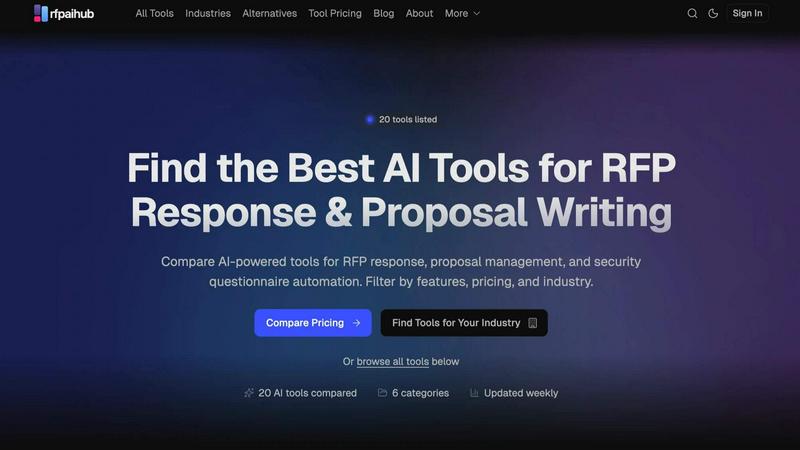
Rfpaihub is a tech stack hub to find and compare AI tools that automate RFP responses and integrate with your proposal workflow.
Last updated: April 13, 2026
Visual Comparison
Afterly Plan

rfpaihub
Feature Comparison
Afterly Plan
Phase-Based Action Plan
The platform structures the entire post-loss process into clear, sequential phases, such as Immediate Steps, Funeral & Memorial, and Financial Affairs. This architectural approach breaks down monumental tasks into a defined workflow, providing a visual timeline and prioritized checklist. Users progress through a curated roadmap, ensuring no critical step is overlooked while adapting the plan to their specific situation and jurisdiction.
Secure Digital Document Hub
Afterly Plan provides an encrypted, centralized vault for organizing and storing essential documents. This feature supports the upload and categorization of wills, deeds, account statements, death certificates, and other vital records. It mitigates the risk of lost paperwork and creates a single source of truth, facilitating easier sharing with attorneys, accountants, or family members as needed during the settlement process.
Integrated Expert Guidance Library
The platform embeds a comprehensive knowledge base curated by estate professionals. This library offers plain-language explanations of probate, executor responsibilities, legal terminology, and financial procedures. It acts as an always-available reference, reducing dependency on frantic internet searches and providing trustworthy, context-sensitive information directly within the relevant step of the action plan.
Interactive Checklists & Progress Tracking
Dynamic, customizable checklists form the core of the user interface, allowing individuals to track completed, pending, and upcoming tasks. The system offers conditional logic, showing or hiding tasks based on user input (e.g., "Was there a will?"). This interactive tracking provides a sense of control and accomplishment, visually mapping progress through an otherwise daunting journey.
rfpaihub
Curated Tool Comparison Engine
The platform's core feature is its detailed comparison matrix, allowing users to filter and evaluate AI RFP tools side-by-side based on specific technical attributes. Users can filter by integration capabilities (e.g., CRM like Salesforce, document repositories like SharePoint), core features such as AI drafting or security libraries, target industry, and team size. This goes beyond basic listings to provide a stack-oriented analysis, crucial for ensuring new software complements existing infrastructure without creating data silos or workflow disruptions.
Industry and Role-Based Filtering
Understanding that needs vary drastically between a fintech company handling complex DDQs and a SaaS startup crafting narrative proposals, RFP AI Hub offers advanced categorization. Users can browse tools specifically tagged for industries like Healthcare, Finance, or Government, or filter by primary user role such as Proposal Manager, Security Officer, or Sales Engineer. This ensures the recommendations are contextually relevant and address the unique compliance, terminology, and process requirements of different verticals and team functions.
In-Depth Tool Profiles and Analysis
Each listed tool features a comprehensive profile that breaks down its technical specifications and operational fit. Details typically include supported import/export formats, API availability, knowledge base structuring methodology, AI model partnerships, and granular feature lists for response drafting, collaboration, and analytics. This depth transforms the directory from a simple list into a research platform, giving technical evaluators the necessary data to assess long-term viability and scalability within their tech ecosystem.
Vendor-Neutral Directory with Clear Methodology
RFP AI Hub operates as an unbiased, free directory. Its editorial policy and published methodology ensure that comparisons are based on factual feature analysis and user-reported data, not paid placements. This vendor-neutral stance is a critical feature for buyers seeking objective information. The platform encourages tool submissions at no cost, fostering a comprehensive and current database that reflects the true state of the market, allowing for a trustworthy evaluation free from commercial bias.
Use Cases
Afterly Plan
The Unprepared Executor
An individual named as executor in a will but with no prior experience in estate law or administration uses Afterly Plan. The platform provides them with a definitive, step-by-step protocol, explaining their fiduciary duties, court deadlines, and the order of operations for asset collection, debt payment, and distribution, transforming an overwhelming responsibility into a managed project.
The Grieving Immediate Family
A surviving spouse or adult child is emotionally overwhelmed and unable to focus on logistical details. They use the platform's compassionate, guided workflow starting with "Immediate Steps," which helps them notify relevant parties, plan a funeral using provided checklists, and locate critical documents without having to mentally organize the chaos themselves.
Managing Digital & Financial Assets
Families struggle to locate and manage a deceased loved one's online accounts, subscriptions, and financial assets. Afterly Plan's structured modules guide them through creating an inventory, providing templates for contacting financial institutions, and offering steps for handling passwords, recurring bills, and closing accounts systematically.
Coordinating with Professional Advisors
An executor or family representative uses Afterly Plan to organize all documents and task statuses in one secure hub. This organized digital estate file can then be efficiently shared with the family's attorney, CPA, or financial advisor, streamlining communication, reducing billable hours spent on organization, and ensuring all professionals are working from the same information.
rfpaihub
Technical Stack Integration Research
A company using a specific CRM (e.g., HubSpot), a cloud storage solution (e.g., Google Drive), and a project management tool (e.g., Jira) needs an RFP AI tool that integrates seamlessly. A sales operations manager uses RFP AI Hub to filter tools by these specific integration capabilities, comparing API documentation and pre-built connectors to identify solutions that will sync bid data, automate content pulls, and update records without manual intervention, ensuring a cohesive tech stack.
Security Compliance Team Tool Selection
A security team overwhelmed by completing hundreds of vendor security questionnaires annually needs an automation solution. The CISO directs a team member to use RFP AI Hub, filtering for the "Security Questionnaire Automation" category and further by compliance frameworks like SOC 2 or ISO 27001. They compare tools based on their curated library of pre-vetted security answers, audit trail features, and ability to handle complex question-answer mappings to select a platform that reduces review cycles and maintains answer integrity.
Scaling Proposal Operations for Growth
A fast-growing SaaS company's proposal team is bottlenecked by manual processes. The VP of Sales seeks to implement an AI-powered proposal management platform. Using RFP AI Hub, they filter tools by "Proposal Writing" features, team size ("Enterprise"), and look for advanced functionality like conditional formatting, brand control, and analytics dashboards. This enables them to compare solutions that not only draft content but also provide the governance and insight needed to scale operations efficiently.
Industry-Specific Solution Sourcing
A healthcare technology provider responding to RFPs from hospital systems must address highly specific regulatory and operational questions (e.g., HIPAA, EHR integration). A proposal specialist uses RFP AI Hub's industry filter for "Healthcare" to discover tools whose AI models and content libraries are trained on or cater to healthcare terminology and compliance requirements, significantly improving answer relevance and reducing the regulatory review burden.
Overview
About Afterly Plan
Afterly Plan is a specialized digital platform engineered to provide structured, step-by-step guidance through the complex administrative and logistical tasks following a death. It functions as an operational system for grief, translating the overwhelming process of estate settlement, probate, and executor duties into manageable, sequential actions. The platform is architected for individuals and families who are navigating loss, offering them clarity and organization when they need it most. Its core value proposition lies in filling the critical gap left by traditional estate plans, which are legal documents but not actionable day-by-day guides. Afterly Plan covers the immediate, practical necessities—from funeral planning and document location to managing financial accounts and understanding legal procedures—all within a secure, cloud-based environment. Built with direct input from estate professionals, it ensures reliable, expert-informed workflows. By integrating checklists, timelines, and secure document organization, Afterly Plan reduces cognitive load during a highly stressful time, allowing users to delegate mental energy from logistics to healing.
About rfpaihub
RFP AI Hub is a specialized, free-to-use online directory designed for technical sales, proposal, and security teams navigating the complex landscape of AI-powered response automation. It functions as a centralized, curated platform for comparing software solutions that streamline the response process for Requests for Proposals (RFPs), security questionnaires (like SIG, CAIQ, VSA), and vendor assessments. The platform serves professionals who need to integrate these tools into their existing tech stack, focusing on compatibility, feature depth, and workflow-specific functionality. Its core value proposition lies in its ability to cut through market noise by providing a filtered, structured comparison based on critical technical and operational criteria, enabling teams to make informed, efficient software selection decisions that align with their specific integration needs and response workflows.
Frequently Asked Questions
Afterly Plan FAQ
How is Afterly Plan different from an estate plan?
An estate plan (will, trust) is a set of legal documents that instructs courts on your final wishes. Afterly Plan is the operational guide that helps your family execute those wishes. It addresses the immediate, practical logistics—finding documents, planning services, managing accounts—that legal documents do not cover, ensuring the plan is actionable.
Is my sensitive data secure on the platform?
Yes. Afterly Plan employs bank-level encryption for data both at rest and in transit. The company adheres to a strict privacy-first policy, meaning your personal information and uploaded documents are never sold or shared. The platform is designed as a secure vault for organizing this critical information during the settlement process.
Do I need to be tech-savvy to use Afterly Plan?
No. The platform is designed with a user-friendly, guided interface that requires no technical expertise. It uses simple language, clear step-by-step instructions, and intuitive checklists. The complexity of the estate process is handled by the platform's backend logic, presenting users with only the next actionable task in a simple format.
Can Afterly Plan provide legal or financial advice?
Afterly Plan is not a law firm or financial advisory service. It provides educational guidance, checklists, and organizational tools built with input from professionals. For specific legal, tax, or financial advice pertaining to your unique situation, the platform guides you on when and how to consult with licensed attorneys, CPAs, or other qualified experts.
rfpaihub FAQ
What types of tools does RFP AI Hub compare?
RFP AI Hub provides comparisons across a focused spectrum of AI-powered response automation software. Primary categories include dedicated RFP Response software, comprehensive Proposal Management platforms, and specialized Security Questionnaire Automation tools. The directory also covers supporting solutions for Knowledge Base management, Document Generation, and Contract & Bid Management, allowing users to find tools for every stage of the response lifecycle.
How does the platform ensure its comparisons are accurate and unbiased?
The platform operates on a clear, published editorial policy and methodology. It functions as a free directory, and tool inclusion is not contingent on payment. Comparisons are built on factual, verifiable data regarding features, integrations, and pricing gathered from vendor materials, product documentation, and user feedback. This vendor-neutral model is designed to eliminate commercial bias, providing a trusted resource for objective technical evaluation.
Is RFP AI Hub free for both tool seekers and software vendors?
Yes, the platform is completely free for end-users to browse, filter, and compare tools without requiring an account. For software vendors, submitting a product for listing and review on RFP AI Hub is also conducted at no cost. This approach aims to build a comprehensive and current market overview that benefits the entire ecosystem by lowering the barrier to information and discovery.
Can I use RFP AI Hub to find tools for my specific tech stack?
Absolutely. A core functionality of RFP AI Hub is its focus on integration and compatibility. The filtering system allows you to seek out tools based on their supported integrations with popular CRMs (Salesforce, Microsoft Dynamics), cloud storage services, communication platforms (Slack, Teams), and other business software. This enables you to prioritize solutions that will connect natively with your existing infrastructure.
Alternatives
Afterly Plan Alternatives
Afterly Plan is a specialized productivity and management platform designed to guide individuals through the complex administrative and emotional tasks following a loss. It provides a structured, step-by-step framework for handling probate, estate duties, and memorial planning, integrating checklists and expert guidance into a single workflow. Users often explore alternatives to find a solution that better aligns with their specific technical ecosystem or budget. Common considerations include the need for deeper integration with existing legal or financial software stacks, a preference for a different pricing model, or requirements for more advanced collaborative features for dispersed family members. When evaluating an alternative, prioritize platforms with robust API support and compatibility with common cloud storage and document management systems. Assess the depth of the platform's feature set against your specific procedural needs, and ensure its security protocols and data handling policies meet the sensitive nature of estate management.
rfpaihub Alternatives
RFP AI Hub is a specialized platform in the productivity and proposal management category. It serves as a centralized directory for comparing AI-powered tools that automate RFP responses, proposal creation, and security questionnaire handling. The platform allows users to filter options based on features, pricing, and industry fit to find the right technical solution. Users often explore alternatives to find a tool that aligns perfectly with their existing tech stack and workflow requirements. Common reasons include seeking different pricing models, more advanced or specific automation features, or better integration capabilities with their current CRM, document management, and collaboration systems. The need for a tool that seamlessly embeds into their operational environment is a primary driver. When evaluating alternatives, focus on core technical compatibility. Key considerations include the tool's API availability for custom integrations, its native connectors to essential platforms like Salesforce or Microsoft 365, and the depth of its AI customization for your specific industry knowledge base. The ideal solution should not only automate content but also fit invisibly into your established proposal tech stack.