
Avina vs Storydoc
Side-by-side comparison to help you choose the right product.

Avina uses AI to discover and automate outreach to high-intent prospects, ensuring your sales team engages leads at the.
Last updated: February 28, 2026

Storydoc is an AI-driven platform that streamlines the creation of interactive business documents and presentations for professionals.
Last updated: March 26, 2026
Visual Comparison
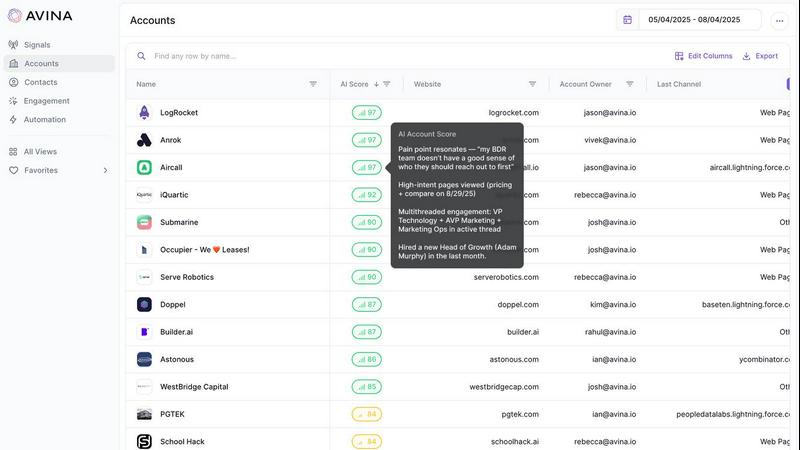
Avina
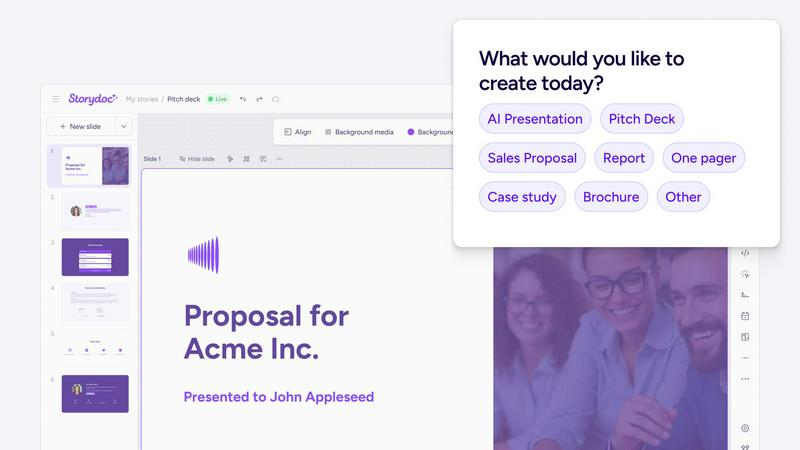
Storydoc
Feature Comparison
Avina
AI Signals Agent
Avina’s AI Signals Agent continuously monitors first-party, third-party, and web data to discover buying signals tailored to specific buyer behaviors. This feature allows users to describe desired buying behaviors in plain language, enabling Avina to create custom signals for various scenarios such as feature launches and tech stack changes.
Web Visitor Identification
With Avina’s X-Ray Pixel, a combination of data providers like RB2B, Vector, and Clearbit, the platform identifies anonymous website visitors. This powerful feature enriches contact data and routes high-intent prospects to sales teams in real time, ensuring no potential lead goes unnoticed.
Out-of-the-box Signals
Avina offers immediate access to a variety of pre-configured signals, including website visitor tracking, job postings, hiring surges, and social media engagement. This feature enables teams to start capturing intent as soon as they connect their data sources, eliminating the need for lengthy setups.
Automated Workflows
Avina automates the next best actions based on buying signals, including sequence enrollment, personalized outreach, and CRM updates. This feature ensures that sales representatives can engage with prospects promptly, minimizing manual handoffs and maximizing efficiency.
Storydoc
AI Creation
With Storydoc's AI-driven capabilities, users can effortlessly generate visually appealing and well-structured documents in mere seconds, eliminating the need for specialized design or writing skills.
Interactive & Dynamic Elements
Storydoc allows users to enhance their documents with interactive features such as embedded videos, buttons, dynamic call-to-actions (CTAs), and forms, making presentations more engaging and effective in capturing audience attention.
Personalization & Automation
The platform offers smart workflows that enable the creation and sharing of documents at scale. Users can deliver personalized content using dynamic fields and real-time CRM data, ensuring that every audience member receives tailored information.
Deep Analytics
Storydoc provides comprehensive analytics tools that track every interaction, including opens, clicks, and scrolls. This deep insight helps users understand which content resonates with their audience and what aspects may need improvement.
Use Cases
Avina
B2B Sales Optimization
Avina can significantly improve B2B sales processes by identifying and prioritizing leads that exhibit genuine buying intent. This allows sales teams to focus their efforts on prospects more likely to convert, enhancing overall sales effectiveness.
Lead Enrichment
With its ability to enrich contact data and filter out low-fit accounts, Avina allows businesses to maintain a clean and prioritized pipeline. This increases the likelihood of successful engagements and improves the efficiency of sales outreach.
Real-time Insights
Sales teams can leverage Avina to gain real-time insights into account activity, enabling them to respond to potential buyers at the right moment. This capability ensures that opportunities are not missed and that sales reps can act on the most relevant information.
Competitive Advantage
By automating the identification of in-market prospects and delivering timely notifications to sales teams, Avina provides a competitive edge. Organizations can engage prospects before their competitors do, maximizing their chances of closing deals.
Storydoc
Sales Presentations
Sales teams can utilize Storydoc to create compelling and interactive sales presentations that not only showcase their products but also engage potential clients through multimedia and personalized content.
Marketing Proposals
Marketing professionals can leverage Storydoc to craft innovative proposals that stand out. By incorporating interactive elements and real-time data, teams can deliver persuasive presentations that address client needs effectively.
Corporate Reports
Businesses can use Storydoc to produce dynamic corporate reports that present data in an engaging format. This approach enhances readability and keeps stakeholders informed and interested in the company's performance.
Training and Educational Material
Organizations can create interactive training materials using Storydoc, making the learning experience more engaging. By incorporating videos and interactive assessments, users can enhance knowledge retention and engagement among trainees.
Overview
About Avina
Avina is an advanced AI-powered buying signals and account prioritization engine tailored for modern revenue teams. It consolidates diverse data and signals from various sources such as web intent, CRM activities, email interactions, call engagements, advertising responses, job changes, and important company news. By doing so, Avina effectively identifies accounts that are actively in-market. The platform leverages large language models (LLMs) to interpret the context of each interaction, enabling it to assess the significance of prospect actions. This results in a prioritized, real-time list of warm leads that sales teams can engage with immediately. With seamless integration capabilities into popular platforms like Salesforce, HubSpot, LinkedIn, Salesloft, and Outreach, Avina automates the transformation of raw intent data into actionable insights. In a competitive landscape where timing is critical, Avina empowers teams to detect in-market buyers early, respond swiftly, and ultimately enhance their win rates.
About Storydoc
Storydoc is an innovative AI platform designed to revolutionize the creation of business presentations and documents, including proposals, pitch decks, and reports. Tailored for sales and marketing teams, Storydoc transforms conventional static files into dynamic, interactive storytelling experiences that engage decision-makers effectively. The platform allows users to embed multimedia elements such as videos, forms, and calendars directly within their documents, thereby turning passive reading into active engagement. By centralizing the document creation process, Storydoc enables teams to personalize content for various leads and deal stages without starting from scratch each time. Additionally, integrations with tools like Zapier and Make facilitate the use of live data, enabling users to personalize materials at scale. With robust data security measures including ISO 27001 compliance and GDPR adherence, along with secure single sign-on (SSO) authentication, Storydoc ensures that your business data remains protected while you create impactful presentations that drive results.
Frequently Asked Questions
Avina FAQ
How does Avina identify buying signals?
Avina uses a combination of first-party and third-party data, along with web signals, to identify accounts displaying buying intent. This comprehensive approach ensures that no potential lead is overlooked.
Can I integrate Avina with my existing CRM?
Yes, Avina seamlessly integrates with popular CRM platforms such as Salesforce, HubSpot, and others. This allows for efficient data synchronization and ensures that sales teams can leverage Avina's insights through their existing workflows.
What types of data does Avina analyze?
Avina analyzes a wide range of data sources including web intent, CRM activities, email interactions, call engagements, advertising responses, job changes, and relevant company news. This holistic view helps in accurately identifying in-market prospects.
How quickly can I start using Avina?
Avina is designed for quick implementation. Once you connect your data sources, it starts capturing signals immediately, allowing your sales team to benefit from insights right away without extensive setup processes.
Storydoc FAQ
What types of documents can I create with Storydoc?
Storydoc allows users to create a variety of business documents, including presentations, proposals, pitch decks, reports, and one-pagers, all designed to be interactive and engaging.
How does Storydoc ensure data security?
Storydoc prioritizes data security by adhering to ISO 27001 standards, GDPR regulations, and employing secure single sign-on (SSO) authentication to protect user information and business data.
Can I integrate Storydoc with other tools?
Yes, Storydoc offers integration capabilities through platforms like Zapier and Make, allowing users to connect with other software and pull live data into their documents for enhanced personalization.
Is there a free trial available for Storydoc?
Yes, Storydoc offers a 14-day free trial with no credit card required, enabling users to explore the platform's features and capabilities before committing to a subscription.
Alternatives
Avina Alternatives
Avina is an advanced AI-powered platform designed specifically for modern revenue teams, focusing on streamlining prospect outreach by identifying high-intent leads through a comprehensive analysis of various data sources. It belongs to the marketing technology category, offering features that integrate seamlessly with popular platforms like Salesforce, HubSpot, and LinkedIn, among others. Users often seek alternatives to Avina for a variety of reasons, including pricing considerations, specific feature requirements, or compatibility with their existing tech stack. When selecting an alternative, it is crucial to assess the platform's ability to integrate with your current systems, the robustness of its AI capabilities, and the overall user experience to ensure that it meets the specific needs of your sales team.
Storydoc Alternatives
Storydoc is an AI-powered platform designed to automate the creation of business presentations and documents, such as proposals and pitch decks. This tool is categorized under marketing technology and aims to enhance the way sales and marketing teams create and manage their collateral. Users often seek alternatives due to various reasons, including pricing constraints, specific feature requirements, or compatibility with existing platforms. When evaluating alternatives, it's essential to consider aspects such as integration capabilities, user experience, data security, and the ability to personalize content at scale to meet evolving business needs.