
Dubvid vs Picool.ai
Side-by-side comparison to help you choose the right product.

Dubvid
Dubvid is an AI dubbing API that localizes video and audio into multiple languages with natural voices and optional.
Last updated: February 27, 2026

Picool.ai
Picool.ai is an advanced AI image generator and editor that integrates seamlessly into your creative tech stack.
Last updated: March 1, 2026
Visual Comparison
Dubvid
Picool.ai
Feature Comparison
Dubvid
Multi-Format & High-Capacity Upload Engine
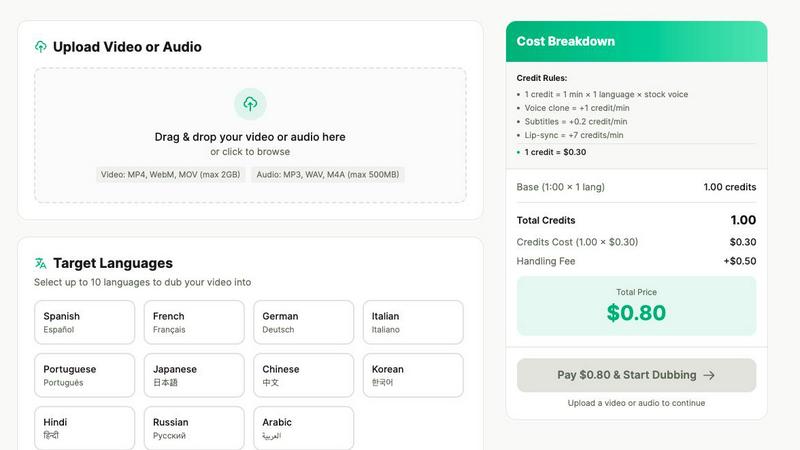
Dubvid's ingestion system is built for creator and enterprise workflows, supporting a robust range of media formats including MP4, MOV, WebM for video and MP3, WAV for audio. The platform accommodates files up to 500MB, ensuring compatibility with high-quality source material from professional cameras, editing software, and screen recording tools. This technical flexibility allows users to integrate Dubvid directly into their post-production pipeline without mandatory pre-conversion steps, streamlining the localization process from the outset.
AI Voice Library & Custom Voice Cloning
Beyond a standard library of natural-sounding stock AI voices, Dubvid offers a sophisticated voice cloning feature. This technology enables users to create a digital replica of a specific voice—such as a brand spokesperson or a course instructor—maintaining consistent vocal identity across all localized versions. This feature is critical for brand integrity and audience familiarity, providing a level of customization typically reserved for high-budget studio productions but accessible through an automated, API-driven platform.
Advanced Lip-Sync Technology
For maximum realism in talking-head videos, presentations, and actor-driven content, Dubvid offers an optional premium lip-sync engine. This feature algorithmically adjusts the dubbed audio track to match the speaker's mouth movements in the original video. The integration of this technology adds a layer of visual authenticity that significantly enhances viewer immersion and production value, making localized content feel native and professionally produced.
Automated Subtitle Generation & Integration
To ensure comprehensive accessibility and SEO benefits, Dubvid can automatically generate and burn subtitles directly into the video output. This feature supports the creation of closed captions for social platforms and is essential for content consumed in sound-off environments. The subtitles are synchronized with the AI-generated dubbing, providing a cohesive multi-lingual viewing experience that meets global accessibility standards and platform best practices.
Picool.ai
Advanced Text-to-Image Generation Engine
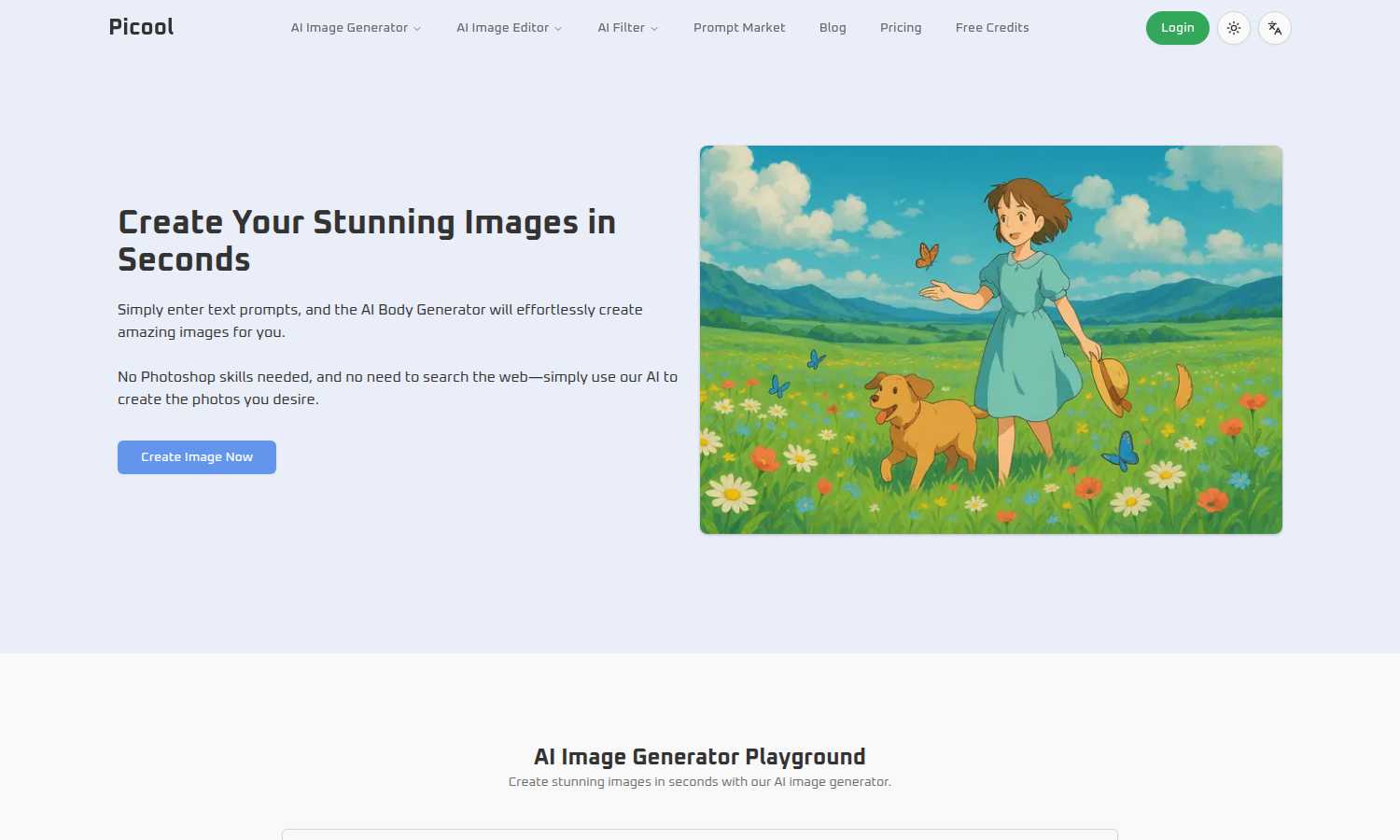
Powered by cutting-edge diffusion models, this core feature translates complex textual prompts into high-fidelity images. It offers granular control over artistic style (Realistic, Cartoon, Anime, Digital Art), aspect ratio (1:1, 16:9, 9:16, 4:3, 3:4), and batch output, enabling the generation of multiple assets simultaneously for efficient, scalable content production directly from descriptive language.
AI-Powered Image Editing Suite
This integrated suite provides a programmatic approach to common post-production tasks. It includes tools for precise background removal, watermark elimination, and object erasure, all powered by specialized neural networks. These features allow for non-destructive, automated editing within the same cloud environment as generation, eliminating the need for separate, disparate software applications.
Cloud-Native & API-First Architecture
Built as a fully cloud-native platform, Picool.ai requires zero local installation or GPU management, offering instant scalability and reliability. Its API-first design ensures seamless integration into existing tech stacks, allowing developers to automate image generation and editing workflows within custom applications, CMS platforms, and marketing automation systems with minimal overhead.
Developer-Centric Controls and Customization
The platform provides technical users with fine-grained control over the creative process. This includes adjustable parameters for style, aspect ratio, and the number of images generated per job. This level of customization ensures output aligns precisely with brand guidelines and technical specifications, making it suitable for embedding into structured, repeatable production pipelines.
Use Cases
Dubvid
Scalable Social Media Content Localization
Short-form video creators for platforms like YouTube Shorts, Instagram Reels, and TikTok can use Dubvid to rapidly dub their viral content into multiple languages. This multiplies potential audience reach without recreating content from scratch. The platform's fast turnaround and simple credit system are perfectly aligned with the high-volume, rapid-testing nature of social media growth strategies, allowing creators to A/B test content performance across different linguistic demographics.
Global E-Learning and Course Expansion
Online educators and course platforms can leverage Dubvid to translate and dub tutorial videos, webinars, and entire course modules. This breaks down language barriers for global learners, enabling educators to scale their business internationally. The voice cloning feature is particularly valuable here, allowing the original instructor's voice to be maintained across all languages, which preserves the personal connection and teaching style that students trust.
Technical Support and Product Onboarding
SaaS companies and tech enterprises can localize their help center videos, product demos, and user onboarding flows. Providing support content in a user's native language drastically reduces confusion, support tickets, and churn. Dubvid integrates into the product and customer success tech stack to create region-specific versions quickly, ensuring consistent and clear communication during the critical user activation and education phases.
Podcast and Interview Multilingual Distribution
Audio and video podcasters can repurpose their core content for new markets by dubbing episodes into different languages. This allows for audience growth without the logistical and financial overhead of re-recording with native-speaking hosts or guests. The platform handles the complex audio processing and synchronization, enabling creators to maintain a regular release schedule across multiple linguistic channels from a single production source.
Picool.ai
Automated Marketing Content Production
Marketing teams can integrate Picool.ai's API into their content management systems to automatically generate unique, on-brand social media graphics, blog illustrations, and ad creatives based on campaign briefs or product descriptions. This drastically reduces dependency on stock photos and manual design work, accelerating campaign deployment.
E-commerce Product Visualization
E-commerce platforms can leverage the text-to-image and image-to-image capabilities to generate lifestyle shots, alternative product colors, or contextual backgrounds for catalog items. The background removal tool can also be automated to create clean, white-background product images for listings, enhancing visual consistency at scale.
Software and Application Integration
Developers can embed Picool.ai's functionalities directly into their applications. Use cases include allowing users to generate custom profile pictures within a social app, creating dynamic article headers in a publishing platform, or enabling automated thumbnail creation for user-generated content, all without leaving the primary application environment.
Streamlined Design Workflow Augmentation
Designers and content creators can use the unified web interface as a powerful ideation and rapid prototyping tool. They can quickly generate visual concepts from text, then immediately refine them using the built-in AI editing tools for tasks like cleaning up compositions or removing unwanted elements, consolidating multiple steps into a single, efficient workflow.
Overview
About Dubvid
Dubvid is a cutting-edge, API-first dubbing platform engineered to integrate seamlessly into modern content creation and localization workflows. It leverages advanced generative AI to automate the translation and voice synthesis of video and audio content, transforming monolingual media into globally accessible assets. The platform is architected for scalability and ease of use, serving a technical stack that includes independent creators, growth-focused marketing teams, e-learning developers, and customer support operations. Its core value proposition lies in dismantling traditional localization barriers—eliminating dependencies on studios, voice actors, and lengthy production cycles. By supporting a wide array of input formats (MP4, MOV, WebM, MP3, WAV) and offering both stock and cloneable AI voices, Dubvid provides a flexible, programmatically accessible solution. Users can localize content into over 10 languages through a simple, credit-based system, enabling rapid international audience expansion in minutes rather than weeks. This makes it an essential tool for any tech stack focused on content scalability, global engagement, and operational efficiency.
About Picool.ai
Picool.ai is a cloud-native, API-first AI image processing platform engineered to consolidate and streamline visual content creation for modern development and marketing stacks. It functions as a unified, serverless suite that integrates advanced generative AI and intelligent editing capabilities into a single, accessible web interface and developer-friendly API. At its technical core, Picool.ai leverages state-of-the-art neural network architectures, including diffusion models, to power a robust text-to-image generation engine. This allows users and integrated systems to translate detailed textual prompts into high-quality, production-ready visuals across diverse styles like photorealistic, anime, and digital art. Beyond generation, the platform extends its utility with a suite of AI-powered editing tools for programmatic tasks like background removal, watermark elimination, and object erasure, completing the post-production pipeline. Its primary value proposition is operational efficiency and seamless technical integration; it requires no local GPU infrastructure, complex installation, or deep machine learning expertise, democratizing professional-grade image creation. Designed for scalability, Picool.ai is particularly valuable for developers and product teams seeking to embed AI visual capabilities directly into existing applications, CMS platforms, marketing automation tools, and design pipelines, thereby accelerating creative workflows and enhancing content velocity at an enterprise scale.
Frequently Asked Questions
Dubvid FAQ
What file formats and sizes does Dubvid support?
Dubvid is engineered for broad compatibility, accepting video files in MP4, MOV, and WebM formats, and audio files in MP3 and WAV. The maximum file size for upload is 500MB. This ensures support for high-quality exports from most professional and consumer editing and recording software, facilitating a smooth integration into existing content production workflows.
How does the credit-based pricing system work?
Dubvid operates on a transparent, usage-based credit system. One (1) credit is consumed for one minute of audio/video dubbed into one language using a stock AI voice. Additional features incur extra credits: Voice Cloning adds +1 credit per minute, Subtitles add +0.2 credits per minute, and Premium Lip-Sync adds +7 credits per minute. Each credit is priced at $0.30, and a fixed $0.50 handling fee is applied per job. This model ensures you only pay for the resources you use.
Can I clone my own voice or a specific speaker's voice?
Yes, Dubvid's Voice Cloning feature allows you to create a unique AI voice model based on a sample of the target voice. This is ideal for maintaining brand consistency with a known spokesperson or preserving the original presenter's vocal characteristics in educational content. The cloned voice is then available for use in all your dubbing projects, providing a custom and recognizable audio output.
Is there a free trial available?
Yes, Dubvid offers a free trial that requires no credit card. New users receive 2 free credits, which can be used to dub up to 60 seconds of content (e.g., 30 seconds into 2 languages). This allows you to test the platform's quality, interface, and output with your own media before committing any funds, ensuring it meets your technical and qualitative requirements.
Picool.ai FAQ
What is the AI Image Generator and how does it work?
The AI Image Generator is an advanced text-to-image tool that uses state-of-the-art neural networks, specifically diffusion models, to interpret and visualize textual prompts. You provide a detailed description, and the AI model generates corresponding high-quality images by iteratively refining random noise into a coherent visual representation that matches your prompt, style, and aspect ratio selections.
What are the different styles available in the AI Image Generator?
Picool.ai's generator supports a versatile range of pre-configured artistic styles to suit various project needs. Key available styles include Realistic (for photorealistic renders), Cartoon, Anime, and Digital Art. This allows users and integrated systems to maintain consistent visual branding and aesthetic direction across all generated assets programmatically.
How long does it take to generate an image?
Generation time is typically a matter of seconds, thanks to the platform's optimized, cloud-based infrastructure. The exact speed can vary slightly based on the complexity of the prompt, the selected style, and the number of images requested in a batch. The system is engineered for high throughput, making it suitable for real-time or near-real-time integration scenarios.
Is Picool.ai suitable for integration into my existing software?
Absolutely. Picool.ai is built with an API-first, developer-centric architecture specifically for integration. Its cloud-native, stateless APIs allow you to seamlessly embed both image generation and editing capabilities into your existing applications, marketing stacks, CMS, or design pipelines, enabling automated visual content creation within your established workflows.
Alternatives
Dubvid Alternatives
Dubvid is an AI-powered video and audio dubbing platform within the content creation tech stack. It automates translation and voice synthesis to localize media, eliminating traditional studio dependencies. This positions it as a key tool for creators and businesses aiming for rapid, scalable international content distribution. Users often explore alternatives to Dubvid to align with specific technical requirements. Common drivers include budget constraints, the need for different API integrations, support for niche languages or dialects, higher-fidelity lip-sync capabilities, or compliance with particular data governance and security frameworks. The search is typically for a tool that fits a unique workflow or tech ecosystem. When evaluating an alternative, prioritize core technical specs. Assess the platform's supported language models, audio output formats, and compatibility with your existing editing suite or CMS. Scrutinize the API documentation for automation potential, review the security protocols for handling sensitive content, and verify the rendering infrastructure's reliability for consistent, high-quality output.
Picool.ai Alternatives
Picool.ai is a cloud-native AI image generation and editing platform designed for seamless integration into modern creative and marketing tech stacks. It combines advanced text-to-image synthesis with a suite of AI-powered editing tools, offering a unified workflow for creators, developers, and teams who need scalable, API-accessible visual content production. Users often evaluate alternatives to Picool.ai for several key reasons. These include specific budget constraints or pricing model preferences, the need for different generative model architectures or editing capabilities, and requirements for deeper integration with particular software ecosystems like Adobe Creative Cloud or specific CMS platforms. The search is typically driven by a need to optimize a specific operational workflow. When assessing an alternative, focus on technical compatibility and workflow efficiency. Key criteria should include the robustness of the API and SDK offerings for custom integration, the underlying AI model's output quality and consistency for your use case, and the platform's ability to handle batch processing and automation to fit within your existing content pipeline without creating friction.