
iGPT vs Threat Watch
Side-by-side comparison to help you choose the right product.

iGPT transforms enterprise emails into structured, context-aware data for seamless AI integration and automation.
Last updated: March 1, 2026

Threat Watch
Threat Watch integrates with your tech stack to instantly scan for compromised credentials and dark web exposures.
Last updated: March 1, 2026
Visual Comparison
iGPT
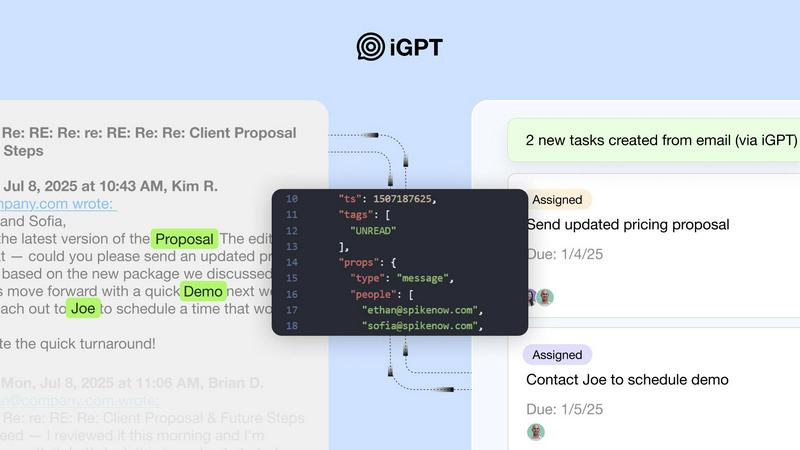
Threat Watch
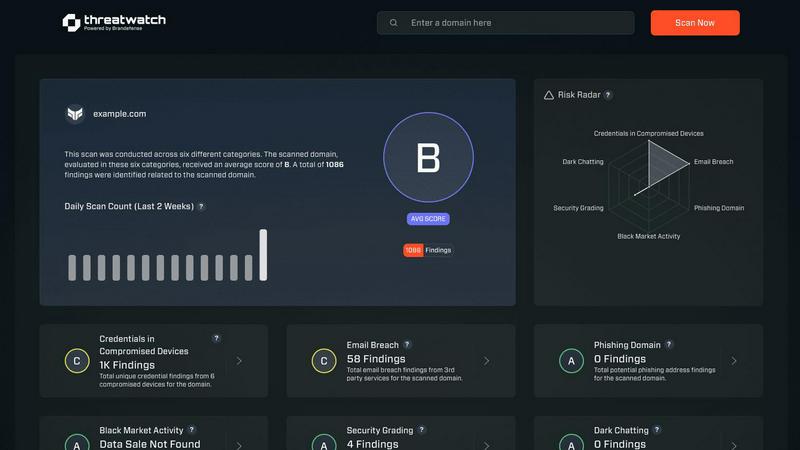
Feature Comparison
iGPT
Immediate Integration
iGPT provides an SDK and a live playground that allows developers to quickly test requests and responses. This feature ensures minimal setup time, enabling teams to integrate email data into their workflows seamlessly.
Unified Endpoint
With iGPT, users can send a single request that manages retrieval, context shaping, and reasoning all in one pipeline. This streamlined approach eliminates the need for multiple endpoint calls, simplifying the integration process for developers.
Hybrid Retrieval
The API utilizes a hybrid retrieval mechanism that combines semantic understanding with keyword searching and filtering. This ensures that responses are relevant and accurately scored and reranked, providing precise answers based on complex email interactions.
Continuous Data Indexing
iGPT continuously indexes new messages and attachments in real-time, ensuring that data and answers remain current. This feature allows enterprises to rely on up-to-date information for decision-making and workflow automation.
Threat Watch
Compromised Credential Monitoring
This feature continuously scans underground forums, paste sites, and breach databases to identify corporate credentials that have been exposed. It correlates email domains and usernames against real-time leak intelligence, providing immediate alerts with the context of the breach source. Integration capabilities allow for automated ticket creation in ITSM tools and credential revocation workflows in Active Directory or Okta, enabling swift containment of account takeover threats.
Dark Web Content Analysis
Threat Watch deploys advanced crawlers and natural language processing to monitor dark web marketplaces, illicit Telegram channels, and hacker forums for mentions of your organization, key personnel, or critical assets. This goes beyond simple keyword matching to understand context and intent, providing early warnings of planned attacks, data dumps, or insider threats discussed in hidden corners of the internet.
Breached Account Detection
The platform actively identifies corporate accounts that have been compromised in third-party data breaches, even if the primary domain's systems are secure. It assesses the risk level based on the sensitivity of the breached service and the password reuse patterns, feeding this intelligence directly into your IAM (Identity and Access Management) system to trigger mandatory password resets or multi-factor authentication enforcement.
Automated Security Health Scoring
Threat Watch synthesizes data from all its monitoring vectors into a dynamic, quantifiable Cyber Health Score. This score is calculated based on the volume and severity of exposures across credentials, phishing addresses, and dark web presence. The scoring engine integrates with dashboard tools like Grafana or Power BI, providing a real-time KPI for executive reporting and compliance audits.
Use Cases
iGPT
Email Assistants
iGPT enables the creation of intelligent email assistants that can draft, prioritize, and take action on emails with complete context. This capability enhances productivity by automating repetitive tasks and managing communications effectively.
Workflow Automation
Organizations can leverage iGPT to transform lengthy email threads into actionable tasks, deadlines, and approvals. By flagging issues or delays, teams can ensure that projects progress smoothly and efficiently.
Customer Support Copilots
The API helps build support copilots that can reconstruct full customer stories from long email chains, including attachments and tone shifts. This contextual understanding enhances customer interactions and improves overall service quality.
CRM Integration
iGPT allows for the extraction of critical information, such as decisions, owners, and deal momentum, directly from email threads. This feature is invaluable for CRM systems, providing sales teams with essential insights to drive engagement and close deals.
Threat Watch
Proactive Threat Intelligence for SOC Teams
Security Operations Centers integrate Threat Watch's API feeds directly into their SIEM (e.g., Splunk, Elastic) and SOAR platforms. This enriches internal alerts with external threat context, allowing analysts to prioritize incidents where internal detection events correlate with known external exposures, dramatically reducing mean time to respond (MTTR) to active compromises.
IT Administrator Account Hygiene Enforcement
IT teams leverage the platform's compromised credential alerts to automate user account lifecycle management. By connecting Threat Watch to Microsoft Entra ID (Azure AD) or other directory services, they can automatically flag high-risk accounts for password resets or temporarily disable them pending review, enforcing a consistent security policy at scale.
Third-Party and Supply Chain Risk Assessment
Organizations use Threat Watch to monitor not only their own domains but also those of critical vendors and partners. By assessing the external cyber health of third parties, they can quantify supply chain risk, mandate specific security controls in contracts, and receive alerts if a partner's breach could impact their own environment.
Compliance and Audit Reporting
Compliance officers utilize the platform's historical data and health scoring to generate evidence for frameworks like ISO 27001, SOC 2, and NIST CSF. The automated reports demonstrate continuous monitoring of digital exposures, satisfying audit requirements for proactive threat management and risk assessment processes.
Overview
About iGPT
iGPT is a cutting-edge email intelligence API specifically designed for enterprise use, aiming to bridge the gap in AI's understanding of complex, unstructured email data. This tool is ideal for developers and engineering teams who require a reliable solution to extract meaningful context from messy email threads, documents, and attachments. iGPT operates as a foundational context layer for AI-driven systems, providing a unified API endpoint that simplifies the traditionally cumbersome tasks of data parsing, chunking, and prompt engineering. By transforming emails into structured, context-aware answers, it facilitates automation and informed decision-making. The API is built with a strong emphasis on security and compliance, ensuring that enterprises can deploy intelligent workflows and autonomous agents while maintaining control over their sensitive communication data.
About Threat Watch
Threat Watch is a comprehensive cybersecurity intelligence and exposure management platform engineered for modern IT and security stacks. It provides organizations with a continuous, automated assessment of their external cyber health by analyzing digital assets, vulnerabilities, and exposures across the public internet and dark web. The platform is specifically designed for IT administrators, SOC teams, and compliance officers who need to integrate robust threat intelligence into their existing security workflows without operational overhead. Its core value proposition lies in its API-first architecture and real-time data correlation, which delivers prioritized, actionable insights. By seamlessly integrating with SIEM systems, SOAR platforms, and IT service management tools like Jira and ServiceNow, Threat Watch enables teams to automate the identification, validation, and remediation of risks, transforming raw data into enforceable security policy.
Frequently Asked Questions
iGPT FAQ
How does iGPT handle unstructured email data?
iGPT transforms unstructured email data into structured, context-aware answers by utilizing advanced data processing techniques that include hybrid retrieval and continuous indexing.
What security measures does iGPT implement?
iGPT employs enterprise-grade security measures, including zero data retention, role-based access control, and full audit trails, ensuring that sensitive information remains protected at all times.
Can iGPT be integrated with existing workflows?
Yes, iGPT is designed for seamless integration with existing systems through its SDK and unified API endpoint, which simplifies the process of incorporating email intelligence into various applications.
Is there a limit to the volume of emails iGPT can process?
iGPT is built to handle large volumes of email data efficiently, with real-time ingestion and indexing capabilities that ensure performance remains robust, even with extensive datasets.
Threat Watch FAQ
How does Threat Watch integrate with our existing security stack?
Threat Watch is built with a robust REST API and supports out-of-the-box integrations for leading SIEMs (Splunk, IBM QRadar), SOAR platforms, ITSM tools (ServiceNow, Jira), and cloud identity providers (Microsoft Entra ID, Okta). This allows for bidirectional data flow, enabling automated alert ingestion and remediation action execution without manual intervention.
What is the deployment model and does it require an agent?
Threat Watch is a cloud-native SaaS platform that requires no on-premise hardware or endpoint agents for its core exposure monitoring functions. Deployment involves API key configuration and domain registration, allowing you to gain visibility within minutes. This agentless approach minimizes IT overhead and scales effortlessly with your organization.
How does the platform ensure data privacy and security?
Threat Watch operates under a strict data processing agreement. It only monitors publicly available data and information from breach corpuses. For credential monitoring, it typically uses hashed identifiers (like email prefixes) to search databases without transmitting or storing full plaintext credentials. All data is encrypted in transit and at rest within a SOC 2 compliant infrastructure.
What kind of support and SLAs are offered with the service?
The platform offers tiered support levels aligned with enterprise needs, including 24/7 technical support for critical incident response. Service Level Agreements (SLAs) cover platform uptime, data feed freshness (often within minutes of discovery), and API response times, ensuring the intelligence provided is both reliable and actionable for time-sensitive security operations.
Alternatives
iGPT Alternatives
iGPT is a sophisticated enterprise-grade email intelligence API that transforms unstructured email data into structured, context-aware information for AI applications. Its primary function is to bridge the gap in AI capabilities by providing a reliable context layer that enables intelligent decision-making and automation. Users often seek alternatives to iGPT for various reasons, including pricing considerations, specific feature requirements, or integration capabilities with existing platforms and workflows. When evaluating alternatives, it’s essential to consider the ease of integration, scalability, data security, and the overall effectiveness of the solution in managing complex email data. Choosing the right alternative involves assessing the API's ability to handle real-time data ingestion, manage extensive email threads, and provide accurate contextual responses. Additionally, it’s important to explore the support for compliance and security measures, especially for enterprise environments. Understanding your specific use case and operational needs will help you identify an alternative that aligns well with your business objectives and technical requirements.
Threat Watch Alternatives
Threat Watch is a cybersecurity intelligence and business intelligence platform designed to provide real-time insights into an organization's security posture. It focuses on actionable data like compromised credentials, dark web exposures, and vulnerability assessments to help teams prioritize and mitigate risks. Users often explore alternatives to find a solution that better aligns with their specific tech stack, budget, or feature requirements. Common drivers include the need for deeper integration with existing SIEM, SOAR, or IT service management tools, a different pricing model, or more specialized capabilities like advanced threat hunting or regulatory compliance reporting. When evaluating other platforms, key technical considerations should include API availability for custom integrations, compatibility with your current security ecosystem, the granularity of real-time data feeds, and the automation depth for response workflows. The ideal alternative should seamlessly connect to your existing infrastructure while filling any specific functional gaps.