

Alternatives to OpenMark AI
OpenMark AI benchmarks over 100 LLMs on your tasks, delivering actionable insights on cost, speed, quality, and stability without any setup.
Explore 20 alternatives to OpenMark AI. Compare features, pricing, and find the best fit for your needs.
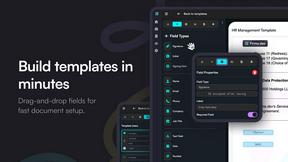
Firma.dev
Pay-as-you-go e-signature API and no-code sending. €0.049 per envelope, no monthly minimums, legally valid in 55+ countries.
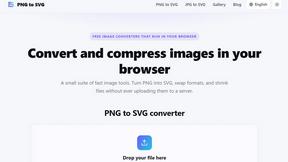
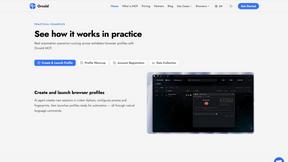
Ornold
Ornold MCP lets AI agents control Chromium and antidetect browsers: click, type, read screens, record workflows, replay profiles without scripts.
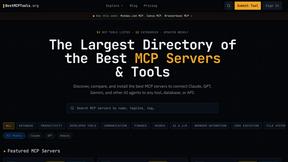
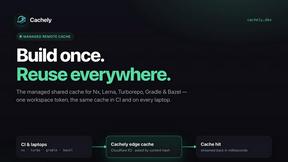
Cachely
Managed remote build cache for Nx, Lerna, Turbo, Gradle, and Bazel. Reuse artifacts across CI and developer machines.
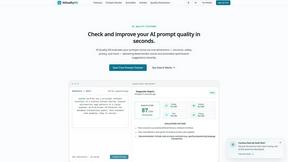
AIQualityHQ
AIQualityHQ is a free browser-based tool that instantly checks your AI prompts for structure, safety, privacy, and accuracy with zero server tracking.
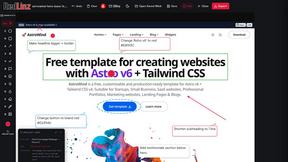
RedLinz
RedLinz turns screenshots into AI prompts by letting you circle and annotate exactly what you want an LLM to change.

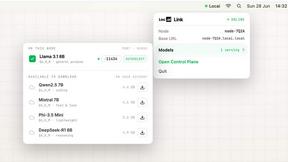
Locai
Locai lets you run powerful AI models on your own hardware, keeping data private and cutting cloud costs.
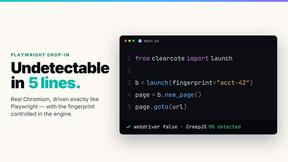
Clearcote
Clearcote is an open-source, de-Googled Chromium drop-in for Playwright and Puppeteer that gives you engine-level fingerprint control for a single.

WordPalette Brand Kit
WordPalette generates a complete brand visual identity from a single word or image, running entirely in your browser with no data uploads.

JustLaunched
JustLaunched connects indie makers with buyers through curated SaaS directories and a single launch blast.
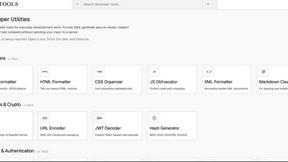
JavaScript Tools
JSTools.Space provides privacy-first developer utilities for formatting code, inspecting data, and generating secure values without server uploads.
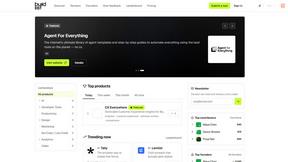
Buildlist
Buildlist turns any AI API key into an instant SaaS directory listing to discover, launch, and improve tools.

Push My App
Push My App writes ASO metadata, scans for rejection risks, and submits directly to Apple and Google from one dashboard.
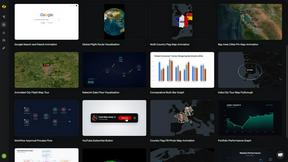
Easymotion - AI Motion Graphic Generator
Easymotion is an AI motion graphic generator that turns static images, data, and maps into polished videos for any platform.
About OpenMark AI Alternatives
OpenMark AI is a web-based application designed for task-level benchmarking of large language models (LLMs). By allowing users to test over 100 models based on specific parameters such as cost, speed, quality, and stability, it caters primarily to developers and product teams who need to validate model performance before deploying AI features. Users often seek alternatives to OpenMark AI for various reasons, including pricing structures, specific feature requirements, and compatibility with different platforms or workflows. When selecting an alternative, it is crucial to consider factors like the breadth of model support, the ease of integration into existing systems, and the clarity of performance metrics provided to ensure effective and efficient benchmarking.
FAQs about OpenMark AI Alternatives
What is OpenMark AI?
OpenMark AI is a web application that benchmarks over 100 large language models on various tasks, focusing on cost, speed, quality, and stability.
Who is OpenMark AI for?
OpenMark AI is designed for developers and product teams who need to evaluate and validate AI models before integrating them into their projects.
Is OpenMark AI free?
OpenMark AI offers both free and paid plans, with details available in the in-app billing section.
What are the main features of OpenMark AI?
Key features include side-by-side benchmarking of models, real API call results, and a focus on cost efficiency and output consistency.